
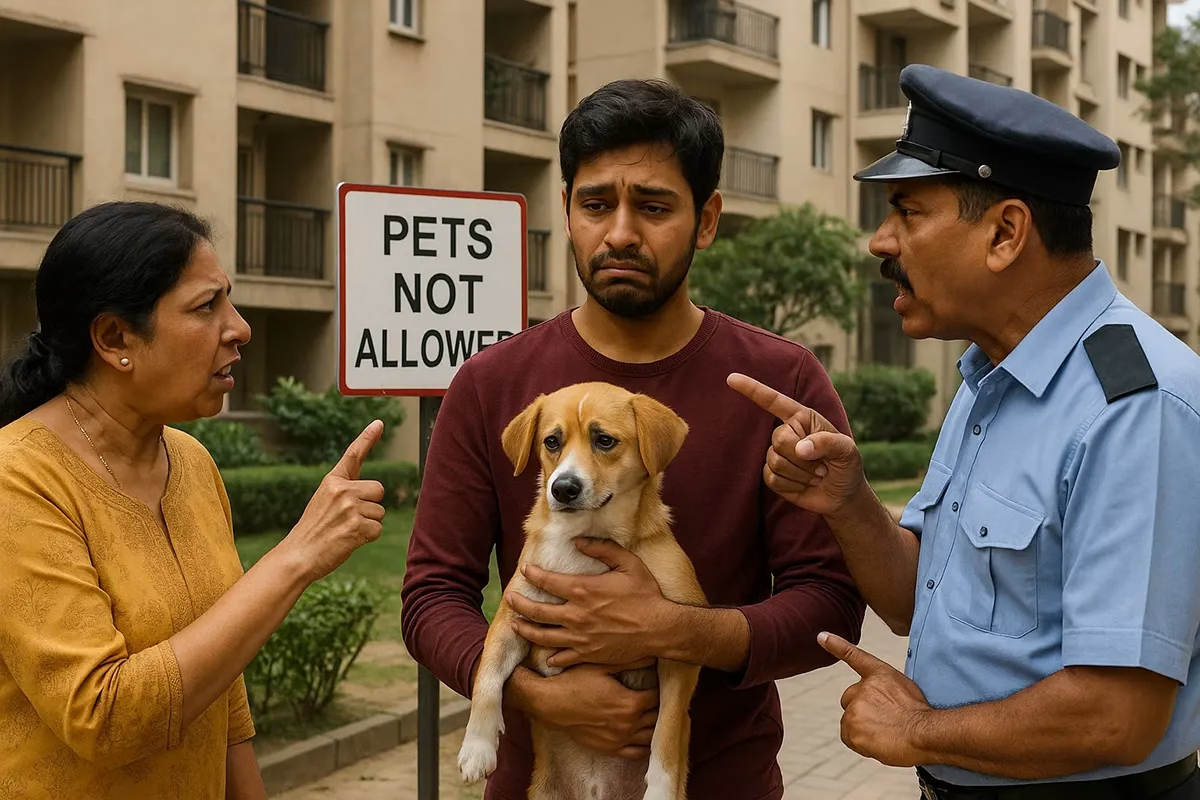
The Battle Between Rules, Rights, and Pets
The story of dogs in India is a tale of conflict, misunderstanding, and uncomfortable truths. And this story extends to the societies of the city. Residents, guards, and committees stand divided over stray dogs in India, pet rules, and who holds the absolute authority, the RWA or the Constitution.
Signboards like “No Dogs Allowed”, “Dogs Not Allowed in Lift”, and “No Pets in Garden” appear across residential spaces. At first glance, they seem harmless. But beneath these restricting rules that do not control humans, lies a deeper issue rights versus fear, compassion versus control, and law versus assumption.
This is not just a story about pets. It is about dignity, legality, and the attempt to coexist, especially in cities where human life intersects constantly with stray dogs in India and other metros.
Origin of the Conflict: Where Did These Rules Come From?
The idea that an RWA can decide everything in a housing society has evolved over time through practice rather than law. Many assumed management bodies function like mini-governments. But legally, the rules set by RWAs do not stand above constitutional rights.
Under Article 21 (Right to Life) and Article 51A(g) (compassion for living beings), keeping pets, even in densely populated cities like Delhi, is a protected right. The Animal Welfare Board of India has repeatedly clarified through circulars and guidelines since 2015 that:
- RWAs cannot ban pets from lifts
- They cannot stop walking pets in common areas
- They cannot issue blanket bans on dogs or threaten relocation
And most importantly, the Constitution does not allow discrimination against animals or their caretakers. Still, many societies continue to place boards, enforce bans, or verbally police dog owners simply because of practice and not law.
How the Situation Plays Out: From Notice Boards to Harassment
When rules escalated, confrontations began. Pet parents were stopped at the lifts. Feeders were shouted at for offering food to street dogs in various Indian metro cities like Delhi and Mumbai. Some individuals threatened to throw away or relocate animals. And in extreme cases, physical assault occurred, not only on animals, but on people protecting them.
The response framework in such cases was common:
- Formal written objection to the RWA
- If ignored, escalation to the Animal Welfare Board of India or the local SPCA
- In harassment, threats, or violence, a police complaint under existing cruelty and criminal intimidation provisions
The truth is that even if a notice board claims authority, India’s legal system does not support hostility or unlawful restrictions, especially regarding stray dogs and their caretakers.
Meaning and Implications: Why the Issue Matters
This debate is not only emotional, but it is structural. The Supreme Court on stray dogs has repeatedly acknowledged the need for a balance of safety, compassion, and regulated feeding. Recent judicial discussions, including those from 2023–2025, emphasise that people can continue feeding the stray dogs and other pets only in identified locations assigned by municipal bodies. This prevents chaos, reduces conflict, and promotes civic responsibility.
However, feeding bans or relocation orders, which many RWAs attempt, go against these directives. The Supreme Court and multiple High Courts have maintained that animals have the right to exist in their natural habitat. For large cities like Delhi, where stray dogs live alongside millions of residents, coexistence is not optional; it is inevitable.
Modern Interpretations: Towards Law, Logic, and Compassion
In the present time, more people are pursuing dog adoption instead of purchasing breeds. Many young citizens advocate training, veterinary care, and responsible ownership. Society committees are also evolving by replacing bans with structured rules, such as:
- Mandatory leashing
- Cleaning pet waste
- Behavioural training support
- Vaccination tracking
Some municipal bodies now run sterilisation, vaccination, and community dog care programs, bridging the gap between fear and understanding. The conflict, therefore, is shifting. What once seemed like a personal imposition is now guided by legal awareness, city planning, and welfare principles. And slowly, solution-driven conversations are replacing arguments.
A Debate settled by Law
The debate around stray dogs, society rules, and the role of the RWA is not just about animals; it reveals how we interpret rights, responsibility, and compassion in shared living spaces.
The cities are changing, laws are being acknowledged, and awareness is increasing. But the future depends on whether people choose fear or coexistence. Because at the end, humanity is measured not by how we treat those who serve us, but how we treat those who cannot speak for themselves.