Thrikkakara Temple Kerala: The Land Where Onam Begins!
One of the most sacred and acknowledged shrines and temples of Hindus is located at extraordinary places like Amarnath in the midst of hills, Nishkalank Mahadev Temple submerged in the sea, or Anusuya Devi Temple in the middle of the forest. But there are some temples that feel very domestic and are yet extremely extraordinary in their approach.
One such temple is the Thrikkakara Temple, located in the middle of the suburbs in Kochi, surrounded by city life. If you visit this temple on an ordinary day, it will hardly feel exceptional, but if you visit this temple at the time of Onam, the magic of spirituality and festivity begins because this is where Onam begins!
A Temple Built Around a Footstep
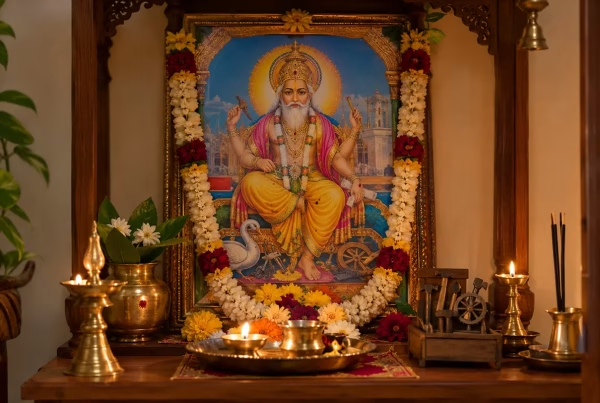
The formal name of the Thrikkakara Temple Kerala is Sree Vamana Moorthy Kshetram. The name is enough to explain to whom the temple is dedicated. This temple belongs to Lord Vamana, who was the fifth avatar of Lord Vishnu. Vamana was the dwarf incarnation who tricked the demon King Bali into granting him three paces of land. The condition was that Vamana would be able to take over the land on which he kept his three steps. Lord Vishnu, incarnated as Vamana, measured the entire universe in those three steps to restore balance and free the world from the depredations of the demon king.
The name Thrikkakara is a derivation of an old phrase, which means, “the place where the sacred foot was placed”. Thus, it is believed that this is where Vamana’s feet were placed. Uniquely, this is the only major temple in India that is dedicated to the fifth avatar of Lord Vishnu, Vamana. It celebrates a dwarf Brahmin boy, holding an umbrella, with his one foot placed on the ground, signifying humility and divine power.
Temple Older Than the Festival
The Thrikkakara Temple Kerala is 1400 years old with inscriptions tracing its history back to the 9th Century CE. It is believed that the idol in the temple here was placed by the Sage Parshurama after he reclaimed the state of Kerala from the sea. The laterite soil of the land and the lack of even surfaces on the ground support this faith that has been passed down through the generations.
The ground dip at the temple is also attributed to the depression in the land that was created due to the placement of Lord Vamana’s foot. Stories of belief suggest that Vamana pressed his foot here, which leads to these uneven surfaces. While the records miss these stories and explanations, locals believe that the land remembers.
Keralites hardly argue on which explanation is plausible to reason that the ground dips at the Thrikkakara Temple Kerala. For them, both explanations are acceptable as the physical state of the temple supports them both. But the truth is that these are just religious folklore, and there are no inscriptions or manuscripts that back them.
Architecture That Does Not Compete With Nature
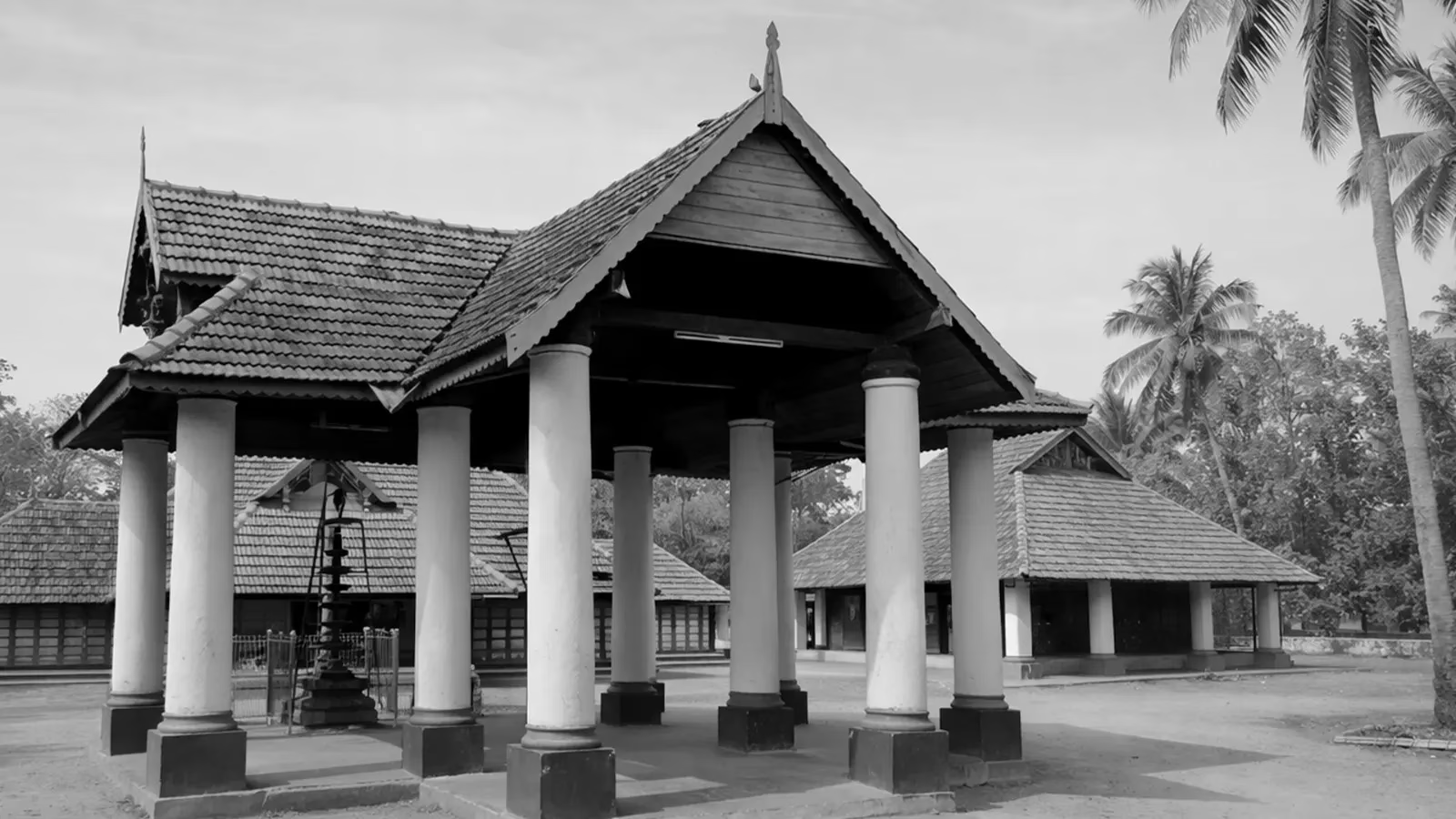
The Thrikkakara Temple follows the well recognised Kerala temple architecture. Marked by the sloping tiled roofs, granite foundations, shaded corridors, and open courtyards that let light and wind move freely, this temple looks very familiar to many temples in the state of Kerala.
The five-foot Lord Vamana idol is carved in dark stone and stands inside the sanctum. It also features a small idol of Mahabali offering his head to Vamana. His expressions are composed and fearless, signifying acceptance. The idol does not represent violent defeat. It is rather symbolic of the balance that the demon king accepts.
The main idol is surrounded by various other smaller idols, including Lord Shiva, Serpents, and Yakshi. Yakshi is the guardian spirit that protects fertility and abundance. Additionally, there are wooden carvings across the temple that depict cosmic patterns, vines, and animals, further signifying the close association of Hindu Temples with nature. Thus, every detail of this temple feels purposeful.
Why Onam Begins at Thrikkakara Temple
When the month of Chingam arrives in Kerala, the entire state starts preparing for the festivities of Onam. However, the Thrikkakara Temple Kerala or Vamana Moorthy Temple does not prepare for the festivities, it prepares to host them because Onam begins here.
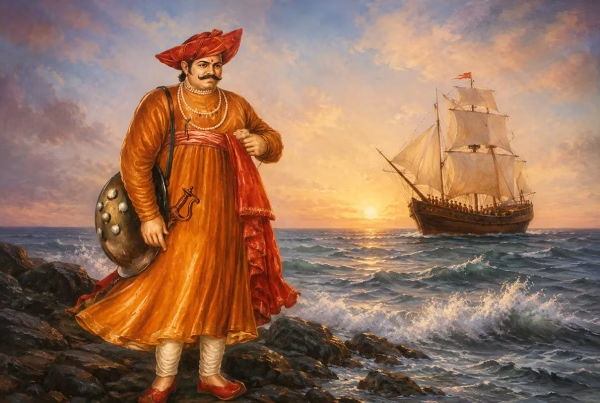
The reason behind the commencement of festivities at this temple is that the demon King Bali was never punished. He accepted the will of Lord Vishnu and thus, was honoured. As per the beliefs, he was allocated the underworld to rule but with one promise and condition, that he could only return once. The return was thus planned on the day of Onam and Thrikkakara is the place where he is welcomed.
Onam at Thrikkakara: A Festivity to Remember
When the ten days of festivities of Onam strike this Onam festival temple, the environment completely changes. There are large scale sadhyas. Everyone prays in sync, bending down and commemorating the spiritual significance of the festival. Pookalam boom, elephants walk around, and Kathakali performances take over the premise of the temple. These performances retell the Onam Mahabali Vamana legend and by Thiruvonam, the temple appears less like a religious place but more like a home hosting a celebratory event.
The festivities at the Vamana Moorthy Temple are very celebrated across Kochi and recognised throughout Kerala. Thus, there is a large turnout of pilgrims. However, no matter how many devotees turn out, there is such a quiet at the temple that one could even hear the lamps. In 2025, five lakh people attended the Kerala Onam traditions at this Onam festival temple. But, there was a religious calm and silence that was unmatched.
Stories That Live Between Rituals
There are many stories that revolve around the Vamana Moorthy Temple apart from the Onam Mahabali Vamana legend. Some locals believe that Mahabali’s palace lies beneath the temple, sealed by Vamana’s step while others feel that the Yakshi shrine marks the point where nature itself agreed to protect the land. Additionally, there is a belief that during certain harvest mornings, sunlight falls directly on the raised foot of the idol of Lord Vamana. However, these are just the beliefs and no science backs them.
A Temple That Reflects Kerala Itself
One of the striking facts about the Onam festival temple, which is the Thrikkakara Temple Kerala, is that the festivities at the temple are not only limited to the Hindus. People from any faith and background can join the celebration. This inclusive nature of the festival is why the Onam at this temple is so remarkable. Muslims and Christians join sadhyas and women lad rituals. Equality is where the Kerala Onam traditions thrive at the Thrikkakara temple.
Why Thrikkakara Still Feels Necessary
In recent years, after floods, climate anxieties, and rapid urban growth, people have returned to Thrikkakara with new questions about balance, humility and if prosperity can exist without arrogance. The Onam festival temple has always responded quietly with eco-friendly rituals, solar lamps, fewer plastic offerings, and old stories.
This is why Kerala Onam traditions begin here. Not as a celebration, but as a footstep.