Velu Nachiyar: India’s Anti-Colonial Warrior Queen
Way before the control over Indian subcontinent was tightened by the Britishers, a queen in the southern region started her rebellion against the British Raj. She chose resistance over submission and this is her story of strength, struggle, and courage that often gets overshadowed by the valour and stories of Rani Laxmi Bai.
This queen who reigned before Rani Laxmi Bai and shook the British empire with her resilience was no other than Velu Nachiyar. Much before 1857, she turned her love for motherland into one of the initial and organised challenges to the British expansion and this earned her a spot in the list of the most impactful Freedom Fighters of India.
Who was Queen Velu Nachiyar?
On 3 January 1730, Velu Nachiyar was born in the royal family of the Sethupathi dynasty of Ramanathpuram. She went on to rule the Sivaganga estate. While many monarchs are often remembered in the history and legacy for the inherited power, she is commemorated for her strategy, determination, discipline, and defiance. Recognised as one of the first Indian rulers, and potentially the first woman ruler, to defeat the British East India Company through military power, she remains to be one of the prominent yet underrated freedom fighters of India.
A Queen Prepared for Resistance
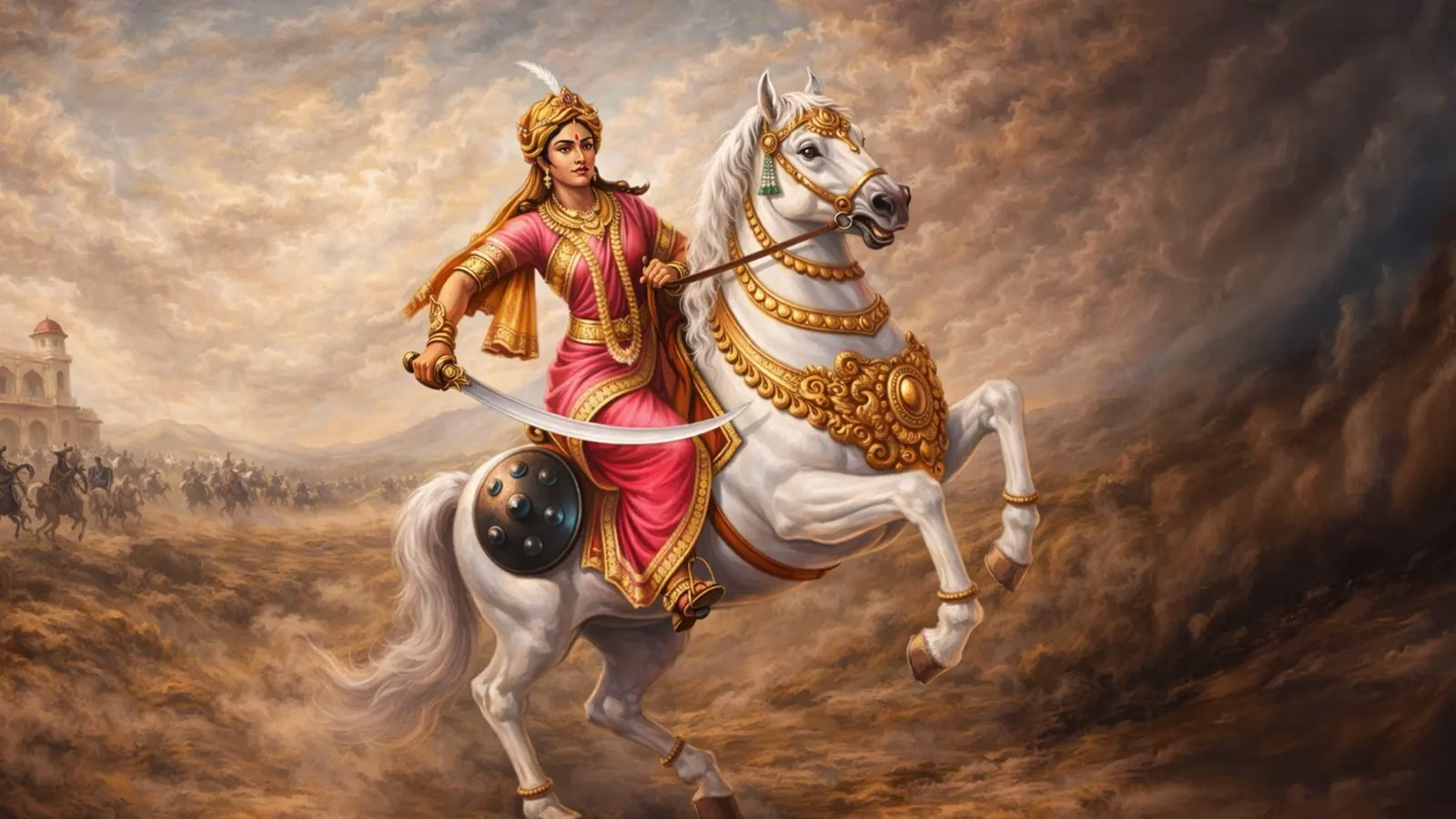
Ever since young age, Velu Nachiyar was trained in warfare. While administration education was much common, she was taught to participate in war tactics and strategies. Being the only child of her father and the king, Raja Chellamuthu Vijayaragunatha Sethupathy, she was exposed to an education system that was highly unpopular in the women of her era. During this training, she mastered Silambam, Valari, Kalaripayattu, archery, and horse riding, building physical endurance alongside battlefield skill.
Additionally, she was also educated in terms of linguistic skills. While she was fluent in Tamil, she was also very conversant in English, French, as well as Urdu. Thus, she easily understood the colonial tactics and was able to participate in conversations beyond political tramlines.
When Velu was only sixteen years old, she was married to Muthu Vaduganatha Periyavudaya Thevar, the ruler of Sivaganga. Thus, she became the queen of the region. However, her position was not limited to the name of it. She actively concentrated on governance and military planning.
This easily established that she was not a ceremonial figure but a dependable leader.
Defeat, Exile, and Strategy
In the year of 1772, the British East India Company and Nawab of Arcot started an alliance and eventually demanded tribute from Sivaganga. The kingdom refused and this refusal did not sit well with the British, thus resulting in a battle.
During the Battle of Kalaiyar Kovil, King Muthu Vaduganatha was not only defeated but also killed by the Britishers who later exercised their capture of Sivaganga. Velu Nachiyar was forced into an exile and this she retreated with her daughter and loyal supporters.
What Britishers assumed was a defeat nothing but for Velu Nachiyar, it was an opportunity to prepare. In the next eight years, she reorganised forces, built alliances with local warrior communities. During this time, she joined hands with Hyder Ali, the king of Mysore. He recognised her leadership.
With support from Hyder Ali, she gained military resources, training, and logistical backing that strengthened her resistance.
Kuyili and the Turning Point
In 1780, Velu Nachiyar launched her campaign to reclaim Sivaganga. The most decisive moment came through her commander, Kuyili. A woman from the Arunthathiyar community, Kuyili played a central role in altering the course of the war.
Disguised as a devotee during a temple festival, Kuyili entered the British ammunition depot. She set herself on fire and destroyed the stockpile, crippling British defences. This act is considered India’s first recorded suicide mission, carried out not for spectacle but for strategic victory. The sacrifice of Kuyili remains one of the most powerful episodes among the Unsung Heroes of India Freedom Struggle, yet it is still rarely acknowledged in mainstream history.
The destruction of the arsenal allowed Velu Nachiyar to reclaim Sivaganga and restore indigenous rule. Alongside allies such as the Marudhu brothers, she ensured that resistance was collective rather than individual.
Rule, Legacy, and Memory
After her victory, Velu Nachiyar focused on rebuilding Sivaganga, strengthening local administration, and safeguarding the region against future colonial threats. She later delegated authority to trusted commanders, prioritising stability over personal glorification. She passed away in 1796, leaving behind a legacy that challenged the belief that organised resistance began only in the nineteenth century.
Today, she is increasingly recognised among the Freedom Fighters of India for her military leadership and political foresight. Alongside figures like Kuyili, she represents the Unsung Heroes of India Freedom Struggle whose contributions shaped early anti-colonial resistance.
Remembering Velu Nachiyar is not merely an act of historical correction. It is a reminder that India’s fight for freedom began long before it entered textbooks—and that courage, strategy, and sacrifice often emerged far ahead of their time.