Bhogi Bonfire Ritual: Letting go of the old and welcoming the new!
When most of India celebrates Makar Sankranti with kites and sweets, Tamil Nadu and Andhra border villages celebrate the festival with a different spirit and tradition. While the north welcomes the new season and expresses gratitude by honouring and offering, the South starts the festivities of Sankranti with Fire, folk songs, and the powerful ritual of letting go of the old.
This ritual is known as the Bhogi bonfire ritual, where the fire carries away the old and welcomes the new.
The night of burning the past
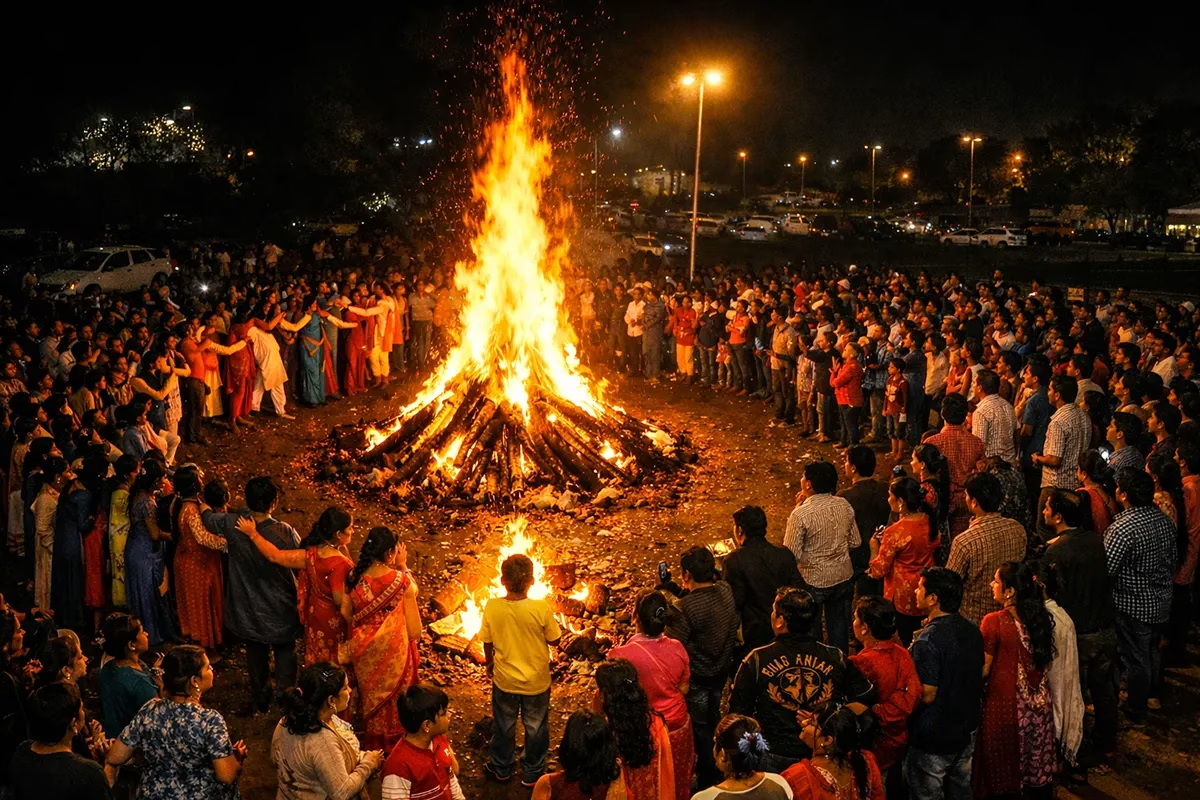
On the eve of Bhogi, traditions in the rural regions of Tamil Nadu and Andhra Pradesh begin. People start gathering old clothes, mats, broken furniture, dried crops, and farm waste, and anything else that is no longer useful to them. Once the dawn begins, they start a bonfire in the street corners or open courtyards. By surrounding these flames, the families circulate and start singing, age-old folk songs that have been passed down through generations. Elders also chant blessings and some mantras in certain regions. While they pray, sing, and celebrate, they put all these gathered old things into the fire.
By offering these old things to the fire, they move on from the heaviness, stagnation, and misfortune of the past year and make space to welcome new and fresh beginnings. This ritual is not merely house cleansing, but it is also spirit cleansing.
In the region that celebrates Sankranti with the Bhogi ritual, it is believed that holding on to the past ensures that the future finds no space. In order to offer space and a welcoming spirit to the future, this ritual is followed. This space is not only created in homes of the people but also in their spirits because they let go of their emotions that they have attached to worldly things that are no longer useful to them.
Bhogi ritual and its link to Indra
The most striking thing about this ritual, or the boogie festival, is that it is also dedicated and linked to Lord Indra, who is the ancient rain God in Indian mythology. For Agra communities, rainfall is equivalent to life. For the sustainment of life, it is important that rain aligns with the crops and their requirements. Thus, there have been age-old traditions in India that have been dedicated to Lord Indra and rain. Bhogi ritual is also one of them.
In the Bhogi Festival, there is an important tradition of circling the fire and taking rounds around it. While doing so, folk songs are sung, and prayers are chanted. Many of these folk songs and prayers are dedicated to Lord Indra. These dances around the bonfire in the Bhogi festival are offered as a sign of gratitude for the past rains that ensure the fertility of fields. Not only that, these dances and songs are also offered as prayers for fertile fields ahead.
A festival deeply rooted in the land
While many rituals and traditions are followed in temples and associated with idols, the Bhogi ritual belongs to the land. It is deeply associated with the forces of nature, be it celebrating on the street or fields, praying for crops and nature, honouring the fire, or expressing gratitude for rain. The festivities carry the scent of dried husk, the warmth of communities, and the wisdom of aligning life with nature. While today’s world is deeply linked and associated with digital upgrades and fancy celebrations, the Bhogi ritual takes people back to nature. The beauty of the ritual is that it has remained consistent through decades and ages.
Dawn of a new season
Once the bonfires of the Bhogi ritual during the Bhogi festival are out, the households of Tamil Nadu and Andhra Pradesh start preparing for Pongal. Buy new clothes, revamp their household with new and necessary furniture, and start preparing for the next crop season. In order to celebrate, the communities prepare a pot of sweet rice and celebrate Pongal in a traditional and cultural manner.
The Bhogi festival is an expression of gratitude. This harvest festival is not only a channel for releasing old energy, but also for welcoming the new. And the households in Tamil Nadu and Andhra Pradesh prepare for it a day before Pongal.