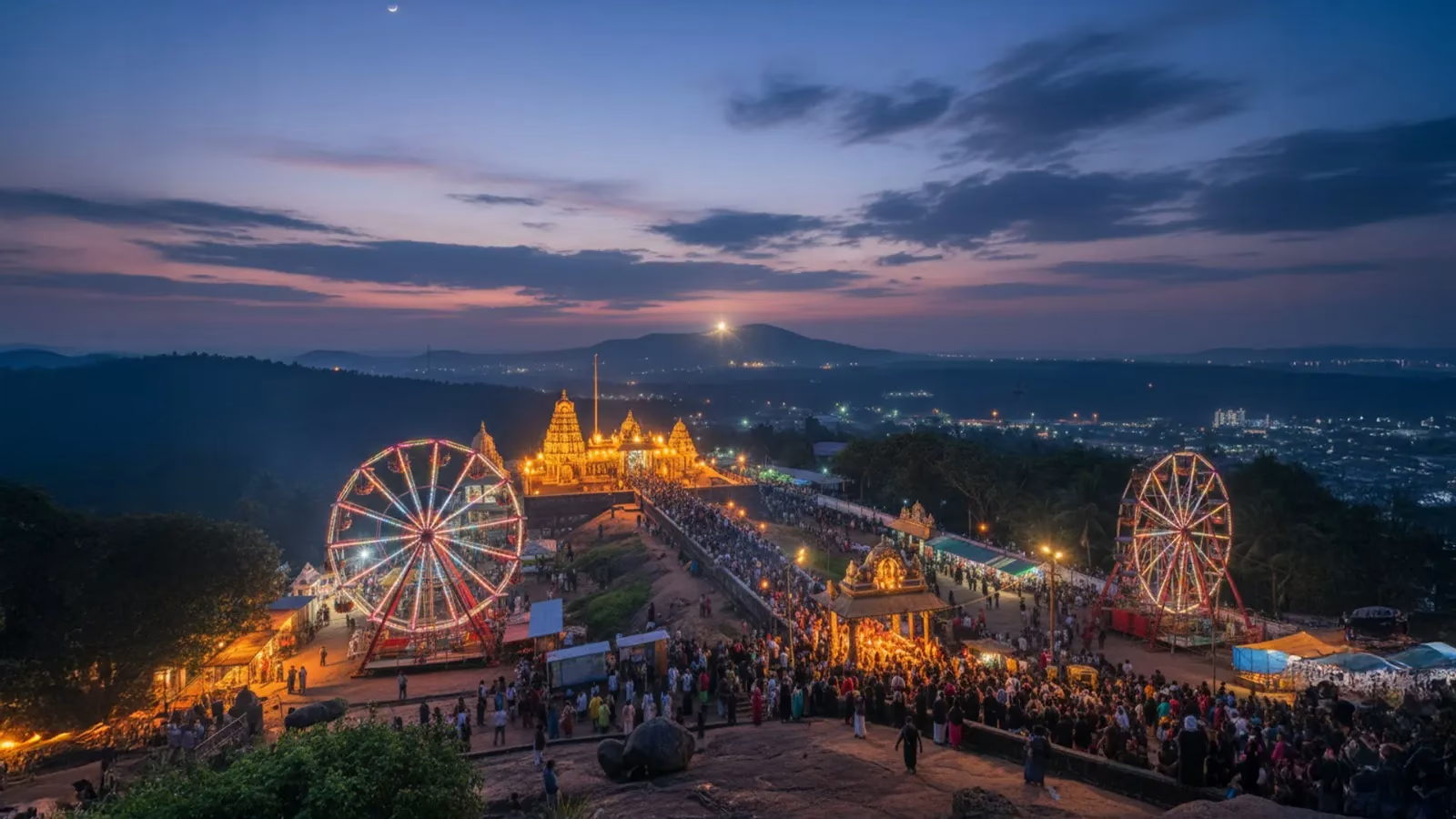
Makara Mela: The Heartbeat of Tribal Celebration in Odisha
In the forest villages of Odisha across districts such as Mayurbhanj, Keonjhar, Koraput, Kalahandi, and Sundarnagar, Makar Sankranti is celebrated in a different style. While the rest of India focuses on celebrating the festival with kites, crowded temples, jaggery and sesame delicacies, and fire rituals, these regions of Odisha celebrate the festival of Sankranti with Makara Mela.
The villages turn into spaces of music, dance, and community celebrations. The tribal communities celebrate this far with tribal traditions in order to express their gratitude for the harvest season and nature that supports agriculture.
What is Makara Mela?
Deeply rooted in the cultural soul of Odisha, Makara Mela is often organised on 14th January or 15th January. The date of this fare coincides with the entry of the sun into Capricorn, which is also known as Uttarayan in India. This is a transition that is usually associated with lengthening of days, renewal ofthe agricultural cycle, and welcoming of warmth. Tribal communities such as Santhal, Ho, Munda, Kurmi, and Oraon celebrate this festival or fair for the completion of the agrarian cycle and the beginning of a new communal rhythm. While many urban Sankranti celebrations focus on commercial festivity, Makara Mela focuses on celebrations, storytelling, and the sharing of gratitude and abundance.
But what is the real story behind this mela and its existence, and why is it still so relevant in the tribal communities, and certain reasons of Odisha are an interesting story. It is a blend of tradition, culture and science.
Origins Rooted in the Land and the Sun
The reason why Makara Mela is celebrated on Makar Sankranti is that? It lies very carefully at the intersection of solar worship and the indigenous customs. The festival of Sankranti holds significance across the entire India as per Hindu Astrology. And tribal communities of Odisha have attempted the same over time. Since the belief systems are very carefully focused on nature, spirits, forest deities, and ancestral guardians, Makara Sankranti is not just a harvest festival; it is an acknowledgement of nature. For these communities, the sun is not just a star that Earth revolves around; it is the reason for life, agriculture, and seasonal balance.
In the north of Odisha, especially in the regions of Mayurbhanj and Keonjhar, Makara Mela is considered the tribal New Year. The kudu community has similar traditions and festivities like Tusu Parba, where womanhood and a maiden deity are celebrated. The Makara Mela represents a whole space for all the different kinds of traditions that run throughout the communities of Odisha. Therefore, it also deserves the identities of the communities and prevents the erosion of age-old traditions.
Preparing for the Mela
The preparations for Makara Mela in Odisha start right after the winter harvest. Villagers clean their homes and paint the walls with natural pigments that are derived from red soil and the best rice. They decorate the entrances with leaves of mango trees and gather for communal bonfires. In these traditions, women lead the rituals. They prepare traditional dishes with newly harvested produce and wear traditional clothes. Moreover, they engage in singing and dancing activities.
One of the most significant and signature Sankranti dishes in the Makara Mela is the Makara Chaula. This dish is a mix of uncooked rice, banana, coconut, jaggery, sesame, and chhena. Families usually serve it with rice cakes or pitha, laddu, and rice beer.
The elders in the villages alongside the priests perform rituals at sacred places or open ground and offer the first grains of the harvest to the local gods or the Sun God. In certain regions, clay or bamboo idols of Maa Tusu are also worshipped. The ritual also includes fasting and early bathing in rivers.
The Fair Comes Alive
The main focus of the Makara Mela is the communal fair, which lasts one to three days. The fair is filled with stalls that sell elements associated with tribal cultures like handicrafts, toys, food, and produce from the forest. There are cultural performances of folk dancers, such as the iconic. Chhau dance, Dalkhai, Ho tribal dances, and other rhythmic, tribal dances and folk songs. These folk songs are written and performed in tribal languages. And they usually talk about various natural and symbolic stories.
Feasting, Games, and Community Bonding
Makara Mela, organised during the Makar Sankranti festival, is an opportunity for the community to gather and share meals with each other and celebrate festivities, circling the festive bonfire. The celebrations are marked by traditional games, friendly gambling, and kite flying. In certain regions of Odisha, processions are carried out, displaying decorated idols over harvest symbols. The fair also becomes an opportunity for artisans to sell handmade tools handicraft, jewellery and textiles. Thus, Makara Mela keeps the tribal tradition alive in one way or the other.