Kallanai Dam: 2,000-Year-Old Architecture Still Stands Strong
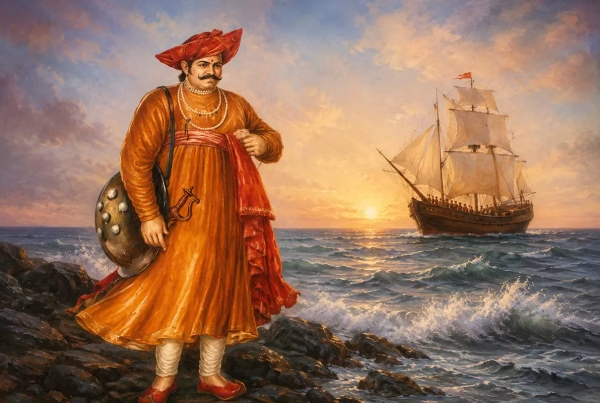
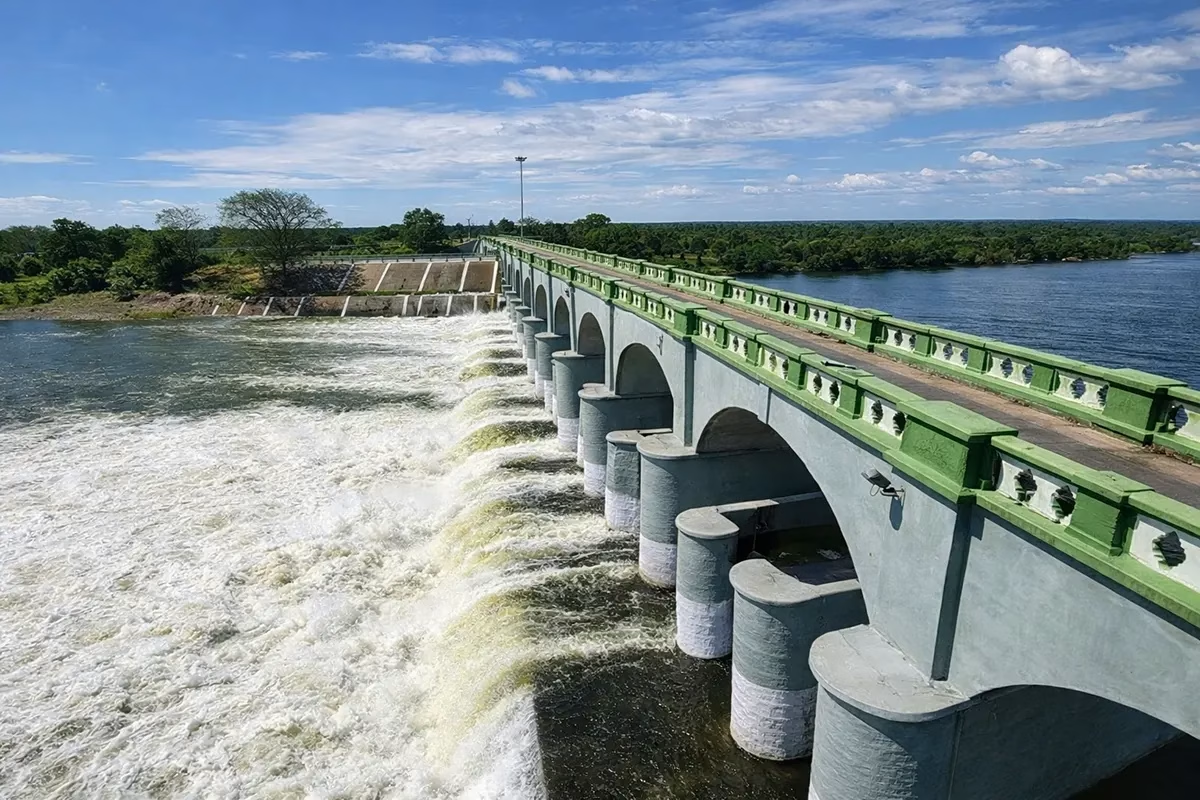
In the state of Tamil Nadu stands a structure that defies time, trends, and technology. This is the Kallanai Dam, an architectural structure, also known as the Grand Anicut. Built over the Kaveri River, this dam was constructed by the Chola King Karkala in 150 CE. What sets this dam apart from other architecture is that it has borne the test of time, evolving history, and gushing water,s and today it stands as one of the oldest functioning hydraulic structures in the world.
Standing strong, even after two millennia from its construction, Kallanai Dam still regulates river flow and irrigates farmlands. It has been a source of life for centuries and still is. And its true strength lies in its simplicity and structural brilliance.
Origin of the Kallanai Dam
Historical sources such as the Sangam literature describe that the Chola King Kari Kala was a visionary ruler. He wanted to transform the Kaveri Delta into an agricultural land that inspired prosperity. Thus, after devastating floods ravaged the region of the Delta, he decided that he would utilise the power of the river and not fight, which is why he constructed the Kallanai Dam.
The main aim was to regulate the flow of the Kaveri River and inspire controlled irrigation, flood prevention, and agricultural productivity. The construction of this dam sustained the agriculture in such a way that the Delta was named as Rice Bowl of South India.
A Construction without Mortar
One of the striking features of the Kallanai Dam is its construction technique. The dam is a structure that respects gravity and is built using granite stones without any use of mortar or cement. The technique was carefully interlocking the stones in a curved formation in order to allow the structure to absorb and disperse the flowing water.
The dam is 329 m long and 20 m wide with abroad base in order to provide stability. It is slightly sloped in order to reduce the pressure of water during floods and the absence of any binding material allows calculated movement of water through the stones, preventing any cracks or collapse.
What astonishes the architects today is the technical aspects of the dam construction compared to the time it was built. The structure proves the acumen of architects and workers centuries ago, as it reflects a comprehensive understanding of the river movement and the behaviour of the material.
It must be noted that Kallanai Dam does not intend to block the river, but slightly divert the water towards a canal named the Kallanai channel. This ensures controlled irrigation without causing any disruption to the natural flow of the river, balancing human intervention with the natural existence of rivers.
Enhancement during the British era
The architectural marvel of Kallanai Dam was first recognised by the British colonial administration during the early 19th century. Sir Arthur Cotton who was recognised for his work on the Godavari and Krishna rivers, headed improvements to the Kallanai Dam between 1836 and 1850. The British architects added undersluices in order to manage the slit and raise the crest height for refining the water distribution systems to larger agricultural areas. But they hardly dismantle the original structure and focus on enhancing it while acknowledging the intelligence of its design and engineering.
Significance of Kallanai Dam and its Living Legacy
The Grand Anicut System irrigates over 1.5 million acres across Tamil Nadu and parts of the neighbouring states today. Kallanai Dam is a part of this system. It stands today not just as a historical monument, but also as a living piece of ancient engineering. It has survived floods, political changes, and many revolutions and still continues to serve the farmers of the Kaveri Delta. Additionally, it inspires engineering studies today and is considered for the UNESCO World Heritage status. Over time, it has shaped the cultural, economic, and agricultural identity of the state of Tamil Nadu.