Chand Baori of Rajasthan: Where Geometry, Water, and History Meet
Rajasthan is a state in India that brings its own culture and tradition in the form of food, dance, attire, and even architecture. From unique force to incredible sand dunes, Rajasthan is home to many distinctive sites. While some of these sites are extremely crowded and famous, some of them remain unknown. One such place is located in the rural region of Abhaneri Village and is known as Chand Baori. Engineered as a striking structure, this ancient step well is not only a very historic water Reservoir, but also a spectacle, a solution for the climate, and an interesting site for the villagers and the visitors.
Often known as the Abhaneri stepwell, it is an example of water architecture that was historically constructed in the Indian regions. But, there is a lot more about Chand Baori than it simply being a reservoir. There are stories, architectural notes, and much more.
Where is Chand Baori located?
The water reservoir of Chand Baori is located in the Dausa district of Rajasthan, which is east of its capital city, Jaipur. Easily accessible from the Jaipur Agra Highway, it is located in the village of Abhaneri, surrounded by dry and sparse landscapes. Near this Reservoir, the Harshat Mata Temple is also located, which is considered the sacred spot of the goddess of joy.
The Origin of Abhaneri Stepwell
The Chand Baori or Abhaneri stepwell traces its origin back to the eighth and ninth centuries. It is believed that King Chanda of the Nikumbh Rajput Dynasty commissioned this stepwell. While there are no scriptures or inscriptions to confirm the exact date of the construction of this stepwell, it is believed that its architectural notes and medieval style suggest this timeline. It can be inferred that this stepwell or reservoir was built at a time when Rajasthan was facing frequent and severe droughts, and the construction of stepwells was a necessity.
While there are many ancient Indian stepwells throughout the country, the stepwells in Rajasthan explain their role in sustaining the survival of the people. Additionally, they also served as resting places for travellers and event spaces for community gatherings. Moreover, the striking architectural notes of the Abhaneri stepwell suggest the creative front of ancient architects and engineers.
Geometry of Chand Baori
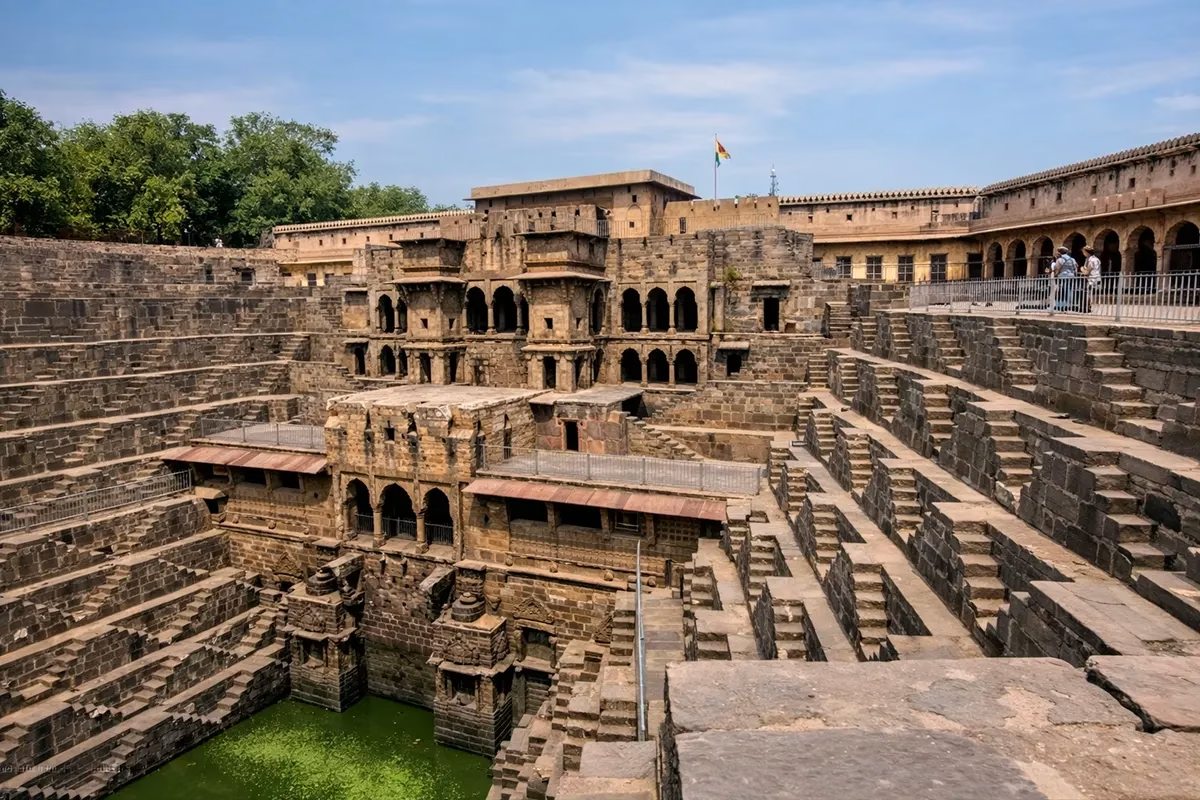
One thing that strikes about Chand Baori stepwell is its geometry and symmetry. Unlike any other Rajasthan stepwell, the Chand Baori follows a fixed pattern where there are 3500 narrow steps arranged in a crisscross pattern across 13 levels, nearly 30 m into the ground. There is a reputation of angular lines which creates a hypnotic visual effect, which astonishes not only the villagers but also attracts a lot of tourists and photographers. To access the steps, has been saved from three sides while the remaining fourth side hasa pillared pavilion and chambers.
It can be believed that the pavilion and Chambers were once used by the Royals and priest. India has had a long history of water-related rituals, and the detailed carving of deities, celestial beings, and dancers not only suggests artistic detailing but also possibilities of rituals.
The depth of Chand Baori suggests that the lower levels of this step were built steeply in order to make them significantly cooler than the surface, offering relief from the extreme temperatures of Rajasthan. Thus, the cooling effect made this stepwell a relevant space for social activities in summers. The architecture and detailing of the Abhaneri stepwell clearly suggest the importance of reservoirs and such architecture beyond just water storage in Rajasthan.
Abhaneri Stepwell Today
The present state of Chand Baori clearly signifies the architectural intelligence of ancient times. Despite dating back over 1200 years, this step is still standing strong. With time, India and the globe have recognised the architecture and structure of the Abhaneri stepwell. Films like The Fall and The Dark Knight Rises were shot at this step, well, exposing it further to the international audience and the world.
Today, Chand Baori is protected by the Archaeological Survey of India. It is being preserved and is open for visiting from sunrise to sunset. Even though the visitors are not allowed to step down, considering safety and preservation of the architecture, this structure is still a striking example of symmetry, history, and architecture.