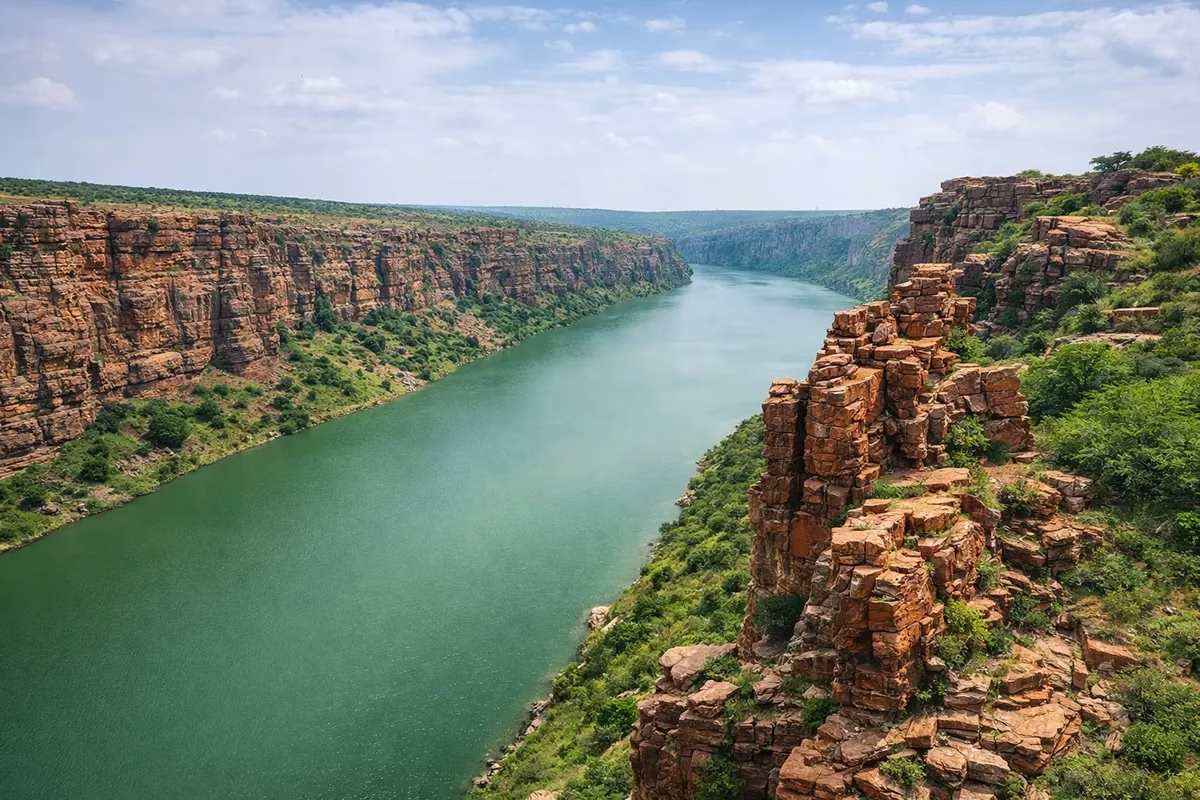
Located somewhere in the middle of the landscapes of Andhra Pradesh, Gandikota feels both Indian as well as other worldly. Often known as the Grand Canyon of India, Gandikota has dramatic red cliffs that are surrounded by the deep river gorge. The centuries-old ruins tell a tale of forgotten empires of the region of Andhra Pradesh. This destination offers a rare sight where nature and history exist in perfect harmony.
A Canyon Carved by Time
One of the most striking features of Gandikota is the huge gorge carved by the surrounding streams of the Pennar River, passing through the Erramala hills. Over the countless centuries, the force of the river has carved the red sandstone to create the ravines with drops of about 300-400 feet.
Gandikota Grand Canyon stands as one of India's most breathtaking yet forgotten architectural marvels.
While many Indian landscapes are primarily formed by the movement of the tectonic plates, Gandikota stands out because the canyon are built on was formed mainly through slow river erosion, making it a geological rarity in India. When the sun rises and sets, the cliffs turn golden and copper, glowing. This beautiful panorama very closely resembles Arizona’s famous Grand Canyon.
Meaning Behind the Name Gandikota
The name Gandikota comes from two Telugu words. Gandi, which means gorge and kota, which means fort, form the word Gandikota together, implying “the fort at the gorge”. This is the perfect description of the dramatic landscape of Andhra Pradesh, which is crowned by an ancient fortress.
The Rise of Gandikota Fort
Gandikota Fort dates back to 1123 CE, when Kapa Raja, a subordinate of the Chalukya dynasty, built the initial structure. However, the true golden era for the fort came during the Vijayanagara Empire in the 14th century. The strong Pemmasani Nayaks ruled the region for over 200 years and transformed Gandikota into a formidable military stronghold. They built a 5-mile-long fort wall with 101 bastions. This turned the Gandikota fort into one of the most strategic forts of the Deccan region.
The fort is located on the edge of a deep gorge. This makes it nearly impossible to invade. It can be believed that nature itself acts as the first line of defence in case of the region. The fort also witnessed a string of battles and attacks. It was attacked and invaded by the Tughlaq Sultanate. Later, Vijayanagara rulers reclaimed it.
A Fort That Was Once a City
Today, Gandikota stands strong as a fort, but it was once a thriving fortified city. While today only the ruins remain, one can also get a glimpse into royal life and architectural brilliance through the remains.
- The Grand Entrance Gate: A towering gateway that once welcomed kings and traders.
- Jumma Masjid: A large mosque with Persian architectural elements, reflecting Islamic influence.
- Ranganatha Swamy Temple: A Hindu temple dedicated to Lord Vishnu, with intricate Vijayanagara carvings.
- Madhavaraya Temple: Known for its detailed sculptures and artistic craftsmanship.
- Palaces and Granaries: Massive structures with advanced water systems and perennial springs.
- Pigeon Tower and Charminar-like Structures: Unique and mysterious architectural features.
The fort had an advanced water management system with underground channels and springs, and this offers an insight into the architectural magnificence and engineering intelligence of the people at that time.
Nature, Birds, and the Pennar River
Below the fort, the Pennar River flows through the gorge, creating perfect views. The Erramala Hills surrounding Gandikota are home to eagles, kingfishers, and many bird species, making it a hidden birdwatching destination. At night, the absence of city lights turns the sky into a stargazer’s paradise, with constellations clearly visible.
A Forgotten Kingdom Rediscovered
For centuries, Gandikota remained largely unknown, overshadowed by famous forts like Golconda and Chittorgarh. Only in recent years has it gained recognition among travellers and history enthusiasts. Historians believe many parts of Gandikota remain unexplored, and there could be undiscovered structures buried beneath the ruins.
Best Time to Visit Gandikota
The ideal time to visit the Gandikota fort is from September to February, when the weather is pleasant, and the landscape turns lush after the monsoon. Summers can be extreme, with temperatures crossing 40°C. A full moon night at Gandikota is magical when the canyon cliffs glow under moonlight, creating a mesmerising experience.
Why Gandikota is Different
Gandikota is not just a tourist spot. It is a journey through time. Standing on the edge of the canyon, with ancient ruins behind you and the river flowing silently below, you feel the weight of centuries. It is a place where nature tells one story, and history tells another, both carved in stone, water, and silence.