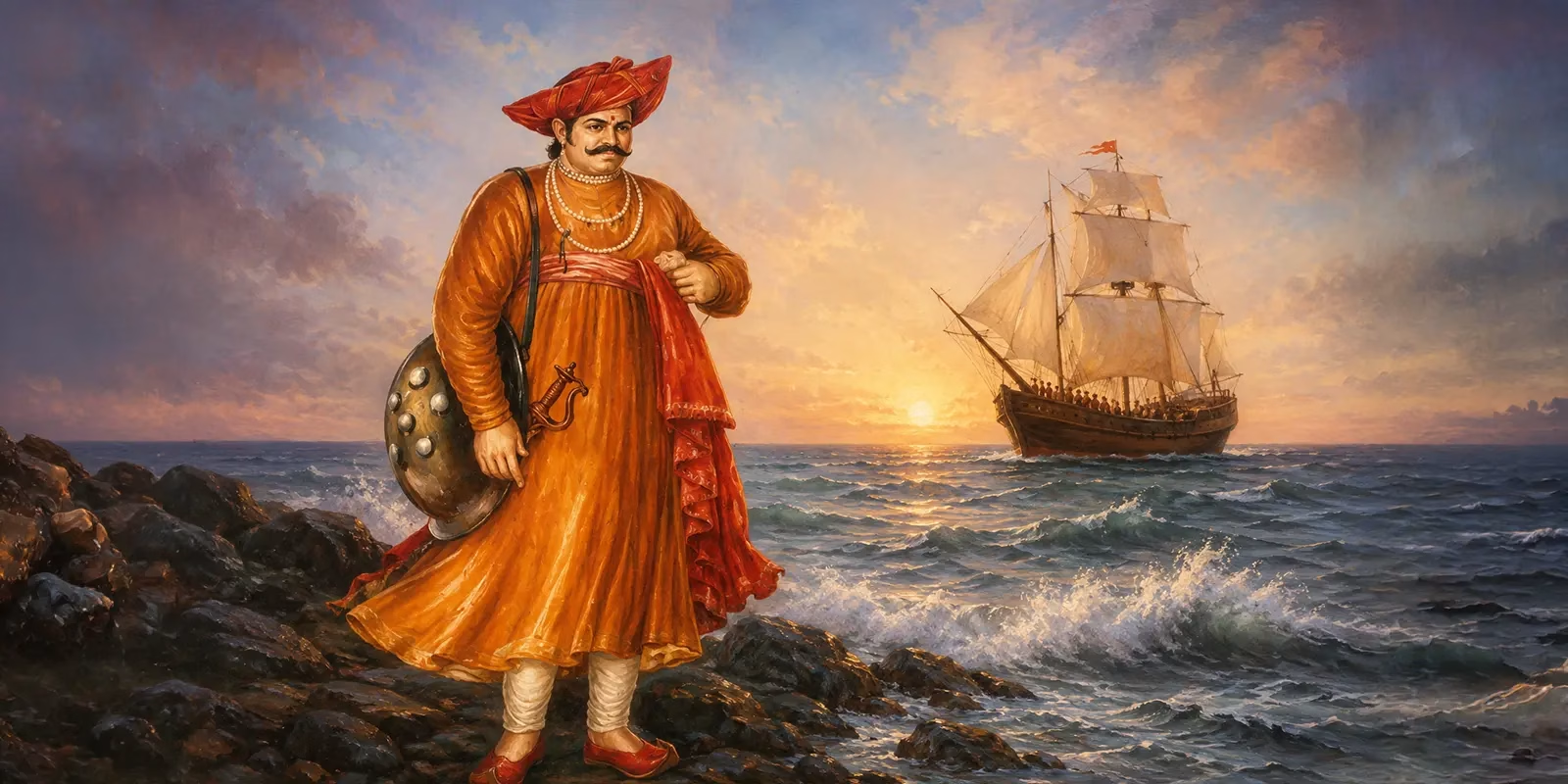
Kanhoji Angre: The Admiral Three Empires Couldn't Conquer
How does a regional power hold off three global empires at once?
Usually, it doesn’t. Usually, bigger ships, deeper pockets and better-trained crews decide these fights before the first cannon is even fired. That is how naval history is supposed to work.
Except along India’s Konkan coast in the early 1700s, it did not work that way.
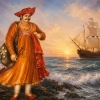
One admiral, working with far fewer resources than the British, Dutch or Portuguese, managed to hold them off for more than three decades. His name was Kanhoji Angre.
A Coastline Every Empire Wanted
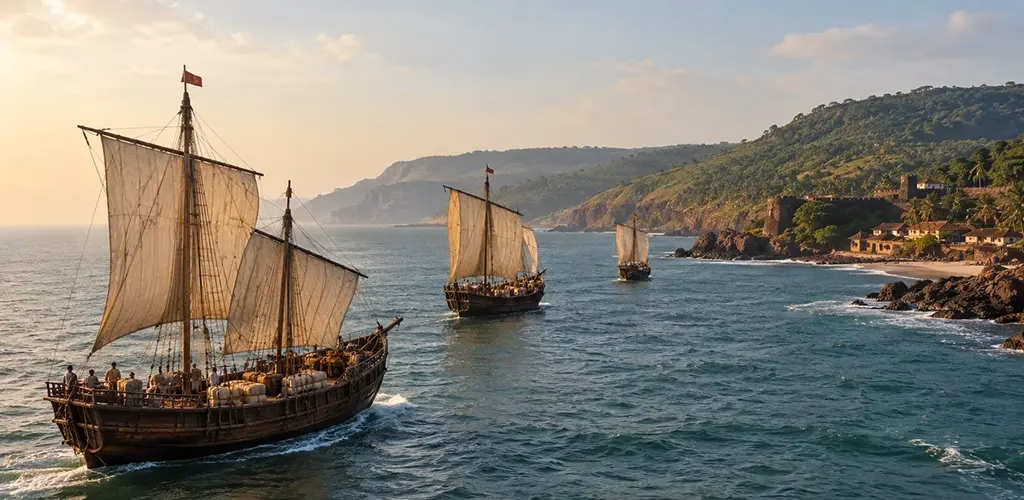
By the mid-1600s, the Konkan coast, stretching roughly from Bombay to Goa, had become a busy trading route. Whoever controlled its ports had a say in the region’s wealth.
The Portuguese was already controlling Goa. The Siddis of Janjira, a strong naval power first linked to the Adilshahi sultans and later the Mughals, controlled important stretches of the coast. And by the late 1600s, the English East India Company was steadily expanding from Bombay.
Chhatrapati Shivaji sensed the danger early. A land empire without a navy, he understood, was an empire permanently exposed. Around 1654, he began building the Maratha Navy from almost nothing.
It was this navy that Kanhoji Angre would one day inherit. He would turn it into something far more dangerous.
Before He Commanded a Fleet, He Seized a Fort
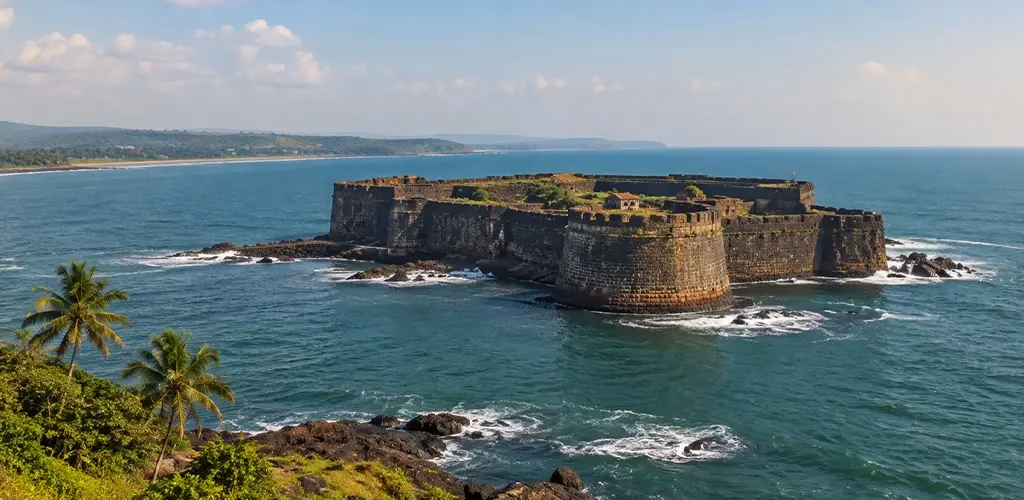
Kanhoji Angre was born in August 1669 at Suvarnadurg, near present-day Ratnagiri. His career did not begin with a slow climb through the ranks.
In 1685, the commander of Suvarnadurg made a move that could have cost the Marathas the fort. He tried to switch sides and join the Siddis of Janjira.
Kanhoji was just eighteen at this time, but he did not wait for orders. He seized the fort himself and captured the man who was trying to hand it over.
This news reached Chhatrapati Sambhaji, who made the eighteen-year-old the fort’s new commander on the spot.
It was a remarkable way to begin a career but was also a difficult time to begin one. Sambhaji’s reign would soon end with his execution by the Mughals, and the Maratha kingdom would spend the following decades simply trying to survive.
The Man Who Took On The Sea
The years that followed were messy and uncertain. The Mughals had taken control of large parts of Maratha territory, and on the ground, who actually held the power often mattered more than formal titles.
Kanhoji saw an opportunity in this confusion. He began building his own influence along the coast, slowly turning his position into a force that others had to reckon with.
Eventually, he came into conflict with the Peshwa’s authority. The dispute ended not in war, but through negotiation.
Kanhoji pledged loyalty to the young Chhatrapati Shahu I. In return, he was given control of several forts and fortified posts and was recognised as Sarkhel, or Admiral of the Maratha fleet.
By 1698, Vijaydurg had become his base and capital. From here, Kanhoji controlled the entire coastline from Bombay to Vengurla.
A Toll System the Europeans Called Piracy
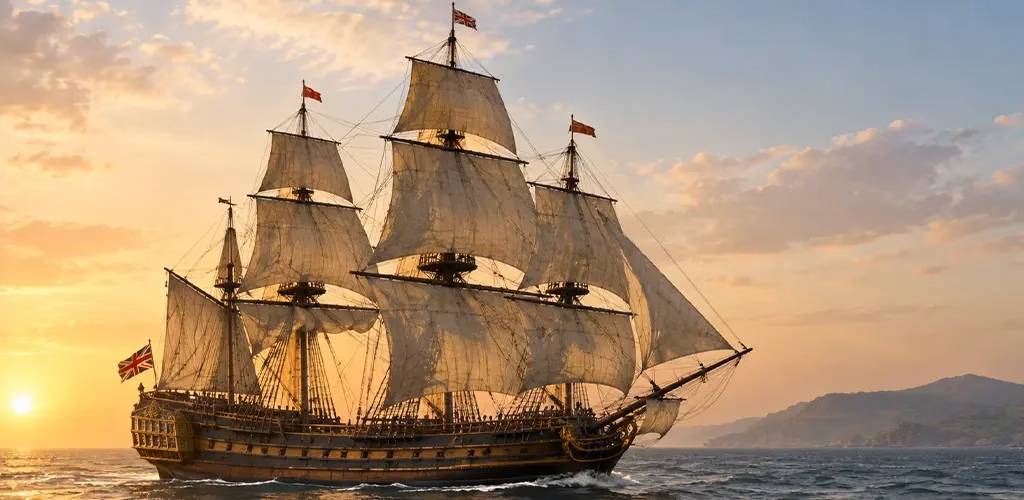
Kanhoji did not stop at holding forts. He built the machinery needed to keep a navy running.
At his coastal bases, ships were built and repaired, using timber from the region. His fleet regularly intercepted European trading vessels, including East Indiamen belonging to the British, Dutch and Portuguese.
European accounts called this piracy.
From the Maratha side, it looked entirely different, closer to a toll enforced on waters they considered their own to protect and tax.
Kanhoji became one of the most feared naval commanders on the Arabian Sea. His control over the coast also brought him considerable wealth and influence. And soon, the European powers began trying to remove him.
Three Navies, One Impossible Record
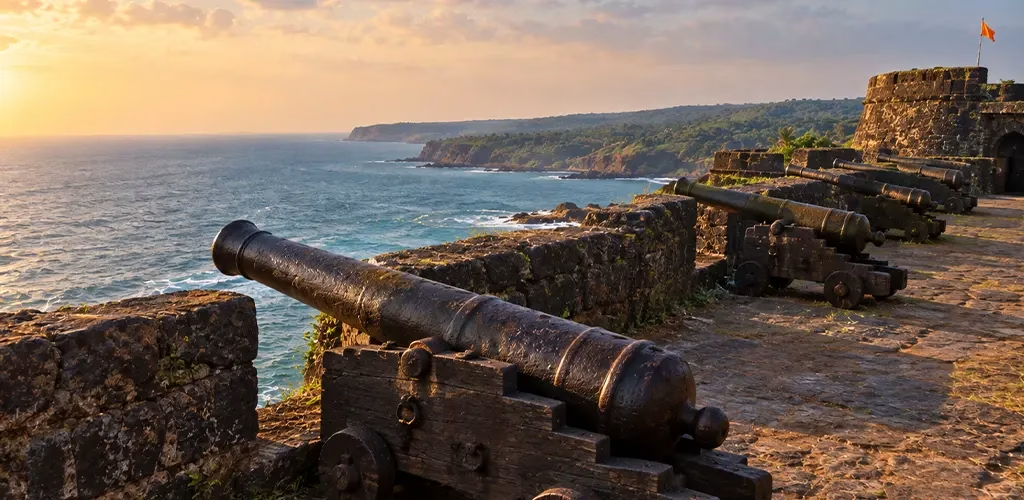
What set Kanhoji apart wasn’t simply that he fought Europe’s naval powers. It was how often he beat them, one after another, in a single decade.
The British tried again and again to break Kanhoji’s hold over the coast, but each attempt ended the same way.
In 1718, a British squadron attacked Khanderi but failed to capture the fort. Two years later, they attacked Vijaydurg, only to be pushed back again. Then, in 1721, the British joined forces with the Portuguese and attacked Kolaba.
Even together, they could not take it.
For a regional Indian navy facing some of the strongest maritime powers of the time, that was remarkable.
The Fall That Came After Him
Kanhoji Angre died on 4 July 1729 at Colaba. By then, he had spent more than thirty years building and defending his power along the western coast.
But what he left behind was not easy to hold together.
After his death, his sons became involved in rivalries and divisions. The Angre territories were eventually split between different members of the family, weakening the naval power Kanhoji had built.
In 1756, the British East India Company joined forces with the Peshwa and attacked Vijaydurg. Tulaji Angre was defeated and taken prisoner.
The naval power built by the Angre family came to an end.
Why Kanhoji Still Matters
Kanhoji Angre never had an empire’s resources behind him. He had a handful of forts, a fleet built by local hands, and an understanding of his own coastline that no outsider could match.
For over thirty years, that was enough to hold off the British, the Dutch, and the Portuguese, all at once.
Today, the Indian Navy still carries his name through INS Angre, its shore establishment in Mumbai. Long before India had a navy of its own, one admiral from the Konkan coast had already shown exactly what defending it could look like.