
Did Ayatollah Ali Khamenei, Iran’s Supreme Leader, Have Indian Roots?
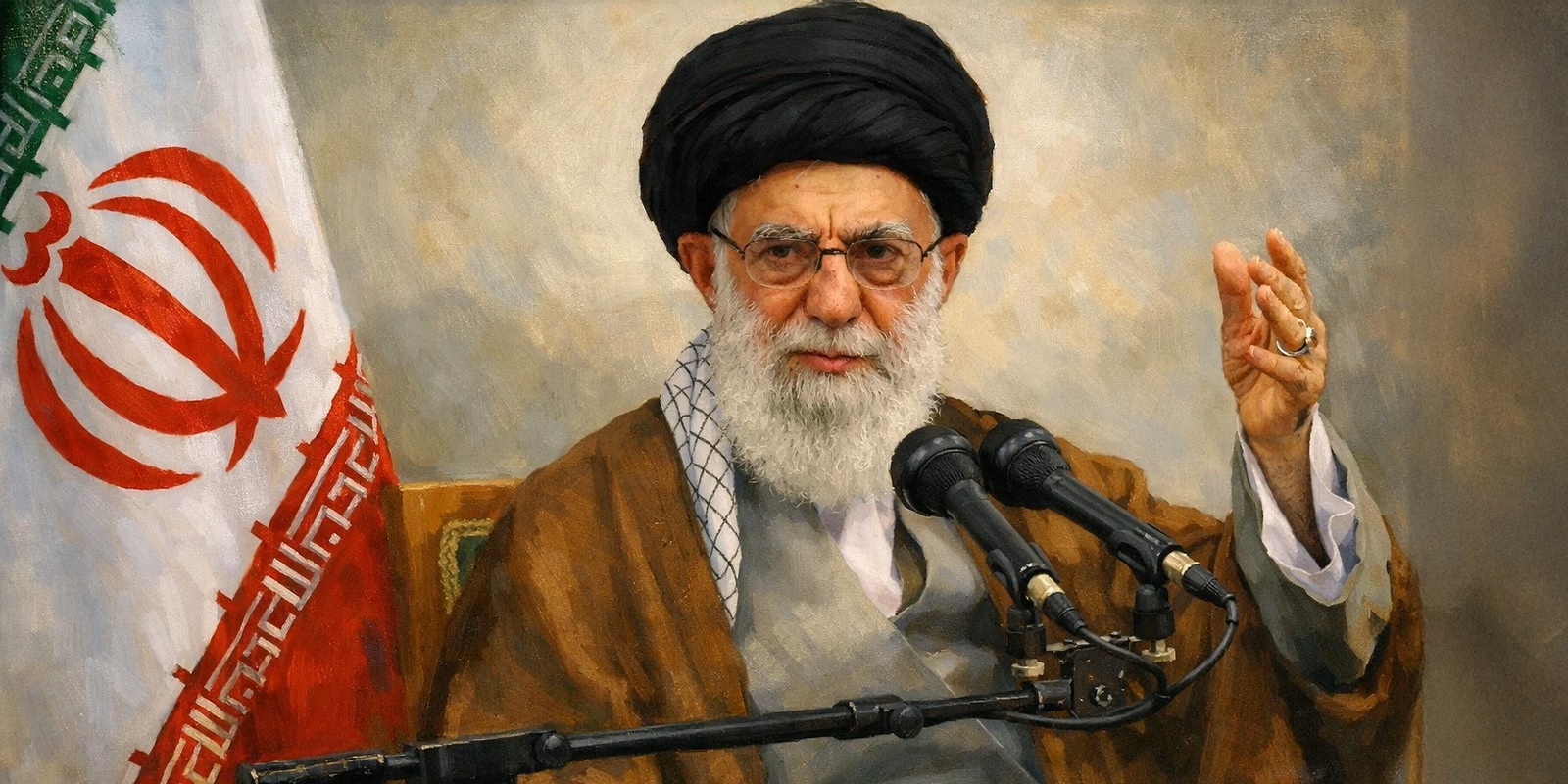
“Do you know Ayatollah Ali Khamenei, Iran’s supreme leader, who was eliminated during Israel-Iran warfare, had Indian roots?” reports almost every other social media frenzy today. From Twitter threads and YouTube videos to Instagram comment sections and WhatsApp forwards, this one bandwagon belief is pushing through notifications on every other phone.
The hearsay – Khamenei’s grandfather hails from Uttar Pradesh.
But the question is – did he?
A Speculation, an Echo Chamber Effect
A section of Indians, especially a few Muslims, more categorically- Shia Muslims, are mourning the loss of Ayatollah Ali Khamenei. To them, the loss feels personal. Khamenei might not have contributed immensely to the lives of Indian Muslims, but his occasional words of narrative-driven victimisation and recognition within the Sharia law made him illustrious among the people.
But suddenly, a statement broke the internet – Ayatollah Ali Khamenei’s grandfather was Indian, a boy from Barabanki in Uttar Pradesh, India.
And, now this unsubstantiated claim of his connection with India is suddenly trending on the internet, his slain in the battle draws more empathy and emotion from Indians. It is just like the mere origin story of Rishi Sunak, Vivek Ramaswamy, Kamala Harris, and Zohran Mamdani that urges every Indian to celebrate their political victories. People across the nation, irrespective of their faiths and political alignment, have suddenly found a common ground with this leader of the religious regime in Iran.
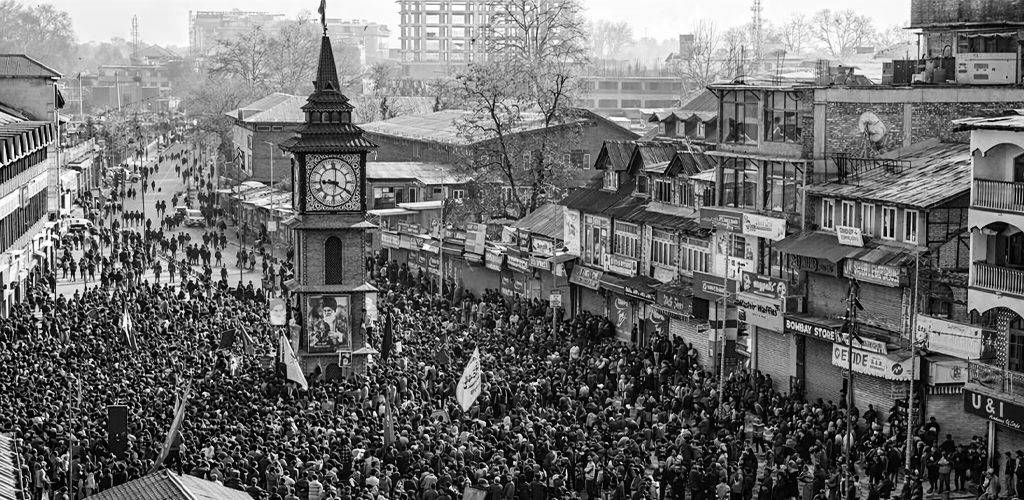
“He was a man of our soil” – a very usual rush of vehemence that has taken the Indian hearts by storm.
But this self-reinforcing narrative that has struck a chord online is untrue.
Khamenei has no ancestral roots in India. He has no such legacy that ties him deeply to the soil that is home to thousands who grieve for him today.
But someone prominent in Iran did and still does.
The Indian Roots of an Iranian Luminary
So, who has Indian roots in their ancestry, and why do people associate their identity with Ayatollah Ali Khamenei instead?
This might be the question triggering your curiosity at this point.
The man who shares an Indian legacy is Hassan Khomeini, the grandson of Ruhollah Musavi Khomeini, the first Supreme Leader and the founder of the Islamic Republic of Iran. Khomeini shares a very homophonic essence with Khamenei, which has initiated the rumour that the Supreme Leader, who was recently tyrannicided in Iran by Israel, shares an Indian connection by blood.
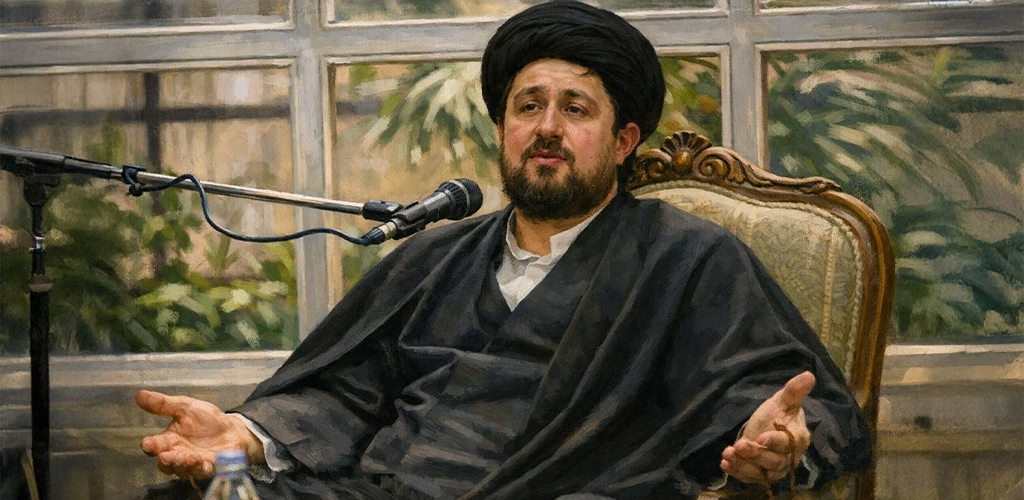
Hassan Khomeini is the fifth generation of the Khomeini family, sharing lineage with eminent Iranian leaders such as Ahmed Khomeini and Ruhollah Khomeini. He was one of the prime candidates under consideration during the 2026 election of the Supreme Leader of Iran, following the assassination of Ayatollah Ali Khamenei on 28 February 2026.
Hassan’s grandfather, Ruhollah, is a prominent name in the heritage and political as well as religious history of Iran. Ruhollah’s grandfather was the Indian man in question, who is presently garnering immense social media traction and being reminisced about as Iran enters a political imbroglio.
The Indian Man who changed the History of Iran
It was Ahmad Hindi, a boy born and brought up in Barabanki of Uttar Pradesh, whose ensuing generation went ahead to change the course of history in the politics and existence of Iran.
Ahmad Hindi or Sayed Ahmad Musavi Hindi was the son of Din Ali Shah and the great-great-grandson of Zayn al-‘Abidin al-Musavi. He was born in 1800 to the Syeds of Kintoor, who trace their lineage to the Islamic prophet Muhammad. The family moved from the regions of present-day Iran to Kintoor in Uttar Pradesh in the 18th century. The family of his great-grandfather, Zayn al-‘Abidin al-Musavi, is now known through the family names of the Abaqati family and the Khomeini family. This also makes Ahmad a relative of Syed Hamid Hussain Musavi Kintoori Lakhnavi Hindi Neshapuri, an eminent Indian scholar.
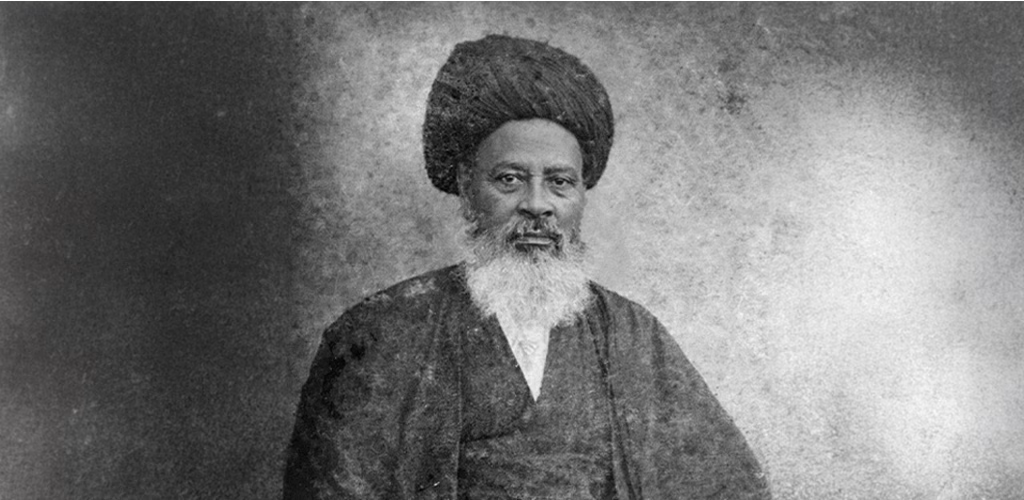
Ahmad Hindi was deeply concerned about the political developments prominent in British India. In order to escape colonial rule, he migrated from India to trace his ethnic connections to regions in the Middle East. What started as a pilgrimage to the tomb of Ali in Najaf, Iraq, in 1830 turned into an elopement from India and its imperial rule of the British.
He visited Iran in 1834 and bought a house in Khomeyn, and soon after purchasing exorbitant properties in the city, he became an influential establishment. His son, Mustafa Musawi, was a cleric who was vociferous against the atrocities of the local wealthy landowners. And this activism cost him his life shortly after the birth of his son, Ruhollah Musavi Khomeini, the first Supreme Leader and founder of Iran.
A man, Ahmad Hindi, who was ethnically never Indian but with a strong Indian heritage and a stronger connection to India, simply transposed to the Middle East. His generations and decisions back in the day changed the course of history, especially in Iran.
The “Hindi” Heritage
To be unaware of the Khomeini family’s connection to Indian soil is inequitable. The family carried the title, “Hindi” with pride, no matter what century or what country. Sayed Ahmad Musavi Hindi was always mindful of the Indian culture that raised him. He honoured his birthplace by always recognising the nisba. He named his grandson Nur ed-Din Hindi in order to continue and commemorate his linkage to his birthplace, India.
In fact, the first Supreme Leader and the founder of the Islamic Republic of Iran valued the title, “Hindi” throughout his life. Ruhollah Khomeini was passionate about writing poetry. While indulging in his recreational versifying of Ghazals, he used the pen name “Hindi”.
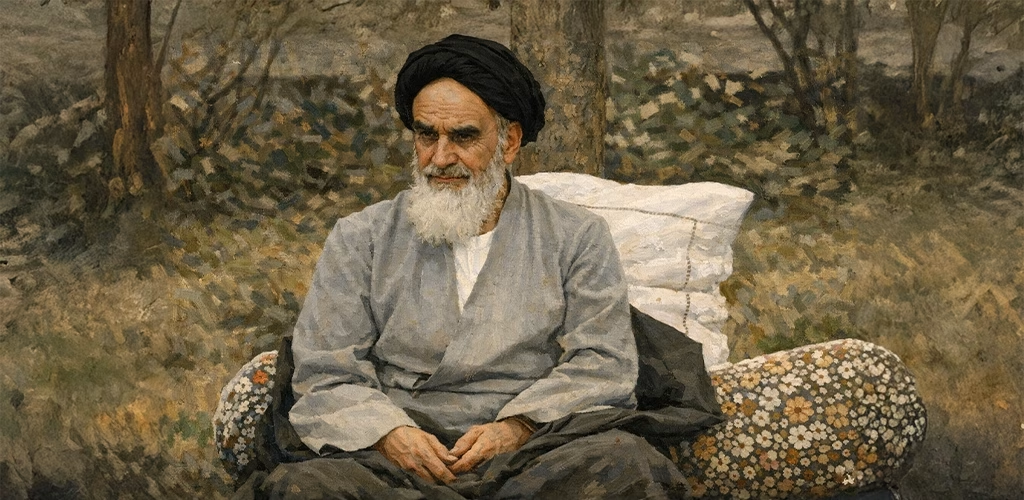
In fact, the first Supreme Leader and the founder of the Islamic Republic of Iran valued the title, “Hindi” throughout his life. Ruhollah Khomeini was passionate about writing poetry. While indulging in his recreational versifying of Ghazals, he used the pen name “Hindi”.
The Khomeini and Khamenei Paradox
Simple similarities in the pronunciation of Khomeini and Khamenei have inspired the absurdity where Indians today are confusing the lineage of Ayatollah Ali Khamenei with the Khomeini family.
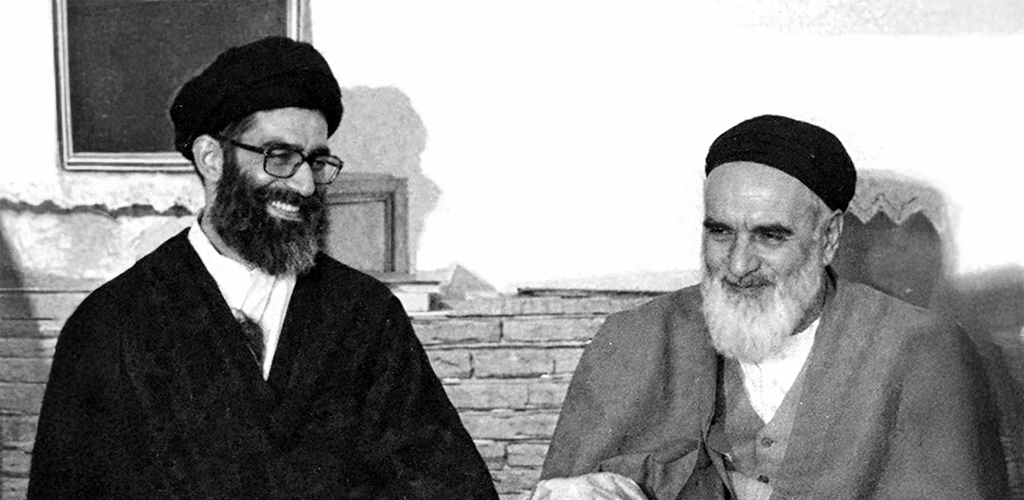
While the Khomeini and Khamenei families are not linked by blood, a strong connection lies between the two that binds them to each other. Ruhollah Musavi Khomeini held the title of Ayatollah till his death, but he was always fond of Ali Khamenei. Ruhollah was fond of Ali, which is why he favoured him to the extent of dismissing the religiously justified candidate to succeed him. Ruhollah declared Ali Khamenei as the second Supreme Leader of Iran, and this was opposed by several prominent Ayatollahs, as Khamenei was neither a marja’ nor an Ayatollah. The Assembly of Experts was at the behest to modify the Constitution just to position Ali Khamenei as the next Supreme Leader of Iran.
The Khomeini and Khamenei families have been close allies for decades, and this friendship, in a way, can connect the eliminated leader, Ayatollah Ali Khamenei, to India, but his ancestry does not.