
Banjhakri: The Shaman of the Himalayas
Across India, there are many mysteries hidden and many tales that are followed religiously like faith. One such story of filled with mysticism, ancient beliefs comes from the Himalayas, where the thin line between folklore and reality diminishes very intricately.
In the mist-covered forests stretching from Nepal to Sikkim and Darjeeling lives the legend of Banjhakri, a spiritual healer who is believed to exist like a bridge between the human and supernatural world. For generations, his presence has shaped rituals, healing practices, and aspects of Sikkim culture, becoming a symbol of protection and spiritual balance.
Origin of Banjhakari and its Folklore
The word Banjhakri is derived from two terms: ban, meaning forest, and jhākri, meaning healer or shaman. According to folklore from Tamang and Limbu communities of the Himalayas, Banjhakri is not merely a character from myth. He is believed to be a spirit healer who dwells in caves, waterfalls, and dense forests.
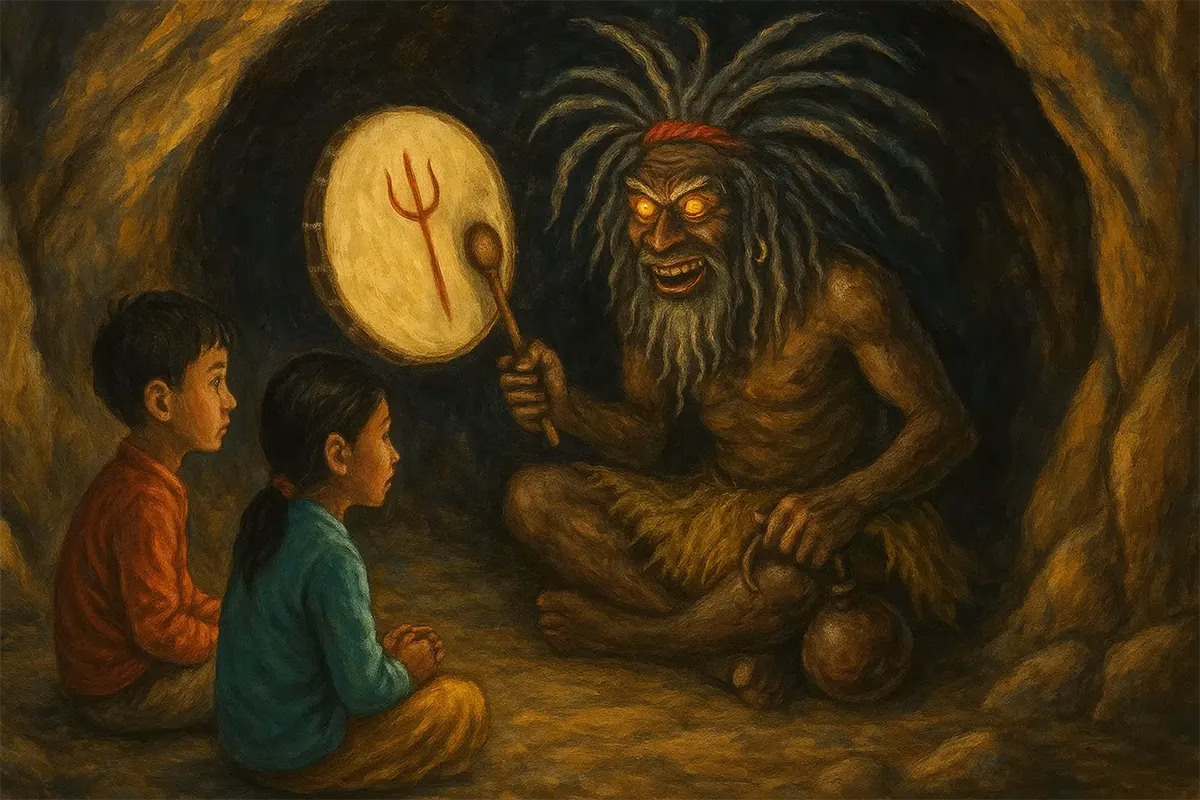
Various communities across Nepal, Darjeeling, and Sikkim ideentify him as a small, child-sized creature with long matted hair, sharp ears, and luminous eyes. Animals like birds, monkeys, and wild creatures are considered his true companions who teach him the unknown language of nature. Thus, Banjhakri is not only considered as a healer but also as the ecological guardian.
There is a belief that his presence helped shape ritual systems that survive today through shamans in the Himalayas, especially within Sikkim culture, where spiritual healing remains deeply respected.
How the Ritual of Banjhakri Is Performed
The most distinctive element associated with Banjhakri is the sound of the dhyāngro, a sacred drum crafted from rhododendron wood. Shamans say that when the dhyāngro echoes through the forest, its vibrations reach the spiritual plane. The drumbeat acts like an invitation, calling the mystical healer from his world.
During healing ceremonies, flowers, incense, and grains are offered, while the dhyāngro is played in rhythmic patterns. Some communities believe that when the ritual reaches its peak, the spirit of Banjhakri enters the shaman, guiding prayers and healing energies.
One striking belief is that Banjhakri selects his own disciples. Legends describe nights when he appears in dreams or leads chosen children into caves to train them as healers. The path to becoming a shaman is marked by spiritual tests, including facing Banjhakrini, also known as Lemlemey, a powerful feminine force who tests the disciple’s courage and integrity.
Meaning and Beliefs Behind Banjakhri
The ritual represents the ongoing relationship between humans and nature. For the communities of the Himalayas, the forest is not merely a resource, it is breathing world with protectors, spirits, and unseen forces.
Through the figure of Banjhakri, people find a symbol of balance:
- Between the natural and spiritual world
- Between healing and discipline
- Between fear and faith
This belief also encourages people to care for the forests, animals, and the balance of nature. It is why Banjhakri Falls in Sikkim carries his name today. The site has become a well-known tourist spot, yet it still reflects the cultural importance of the spirit healer. Shrines, statues, and traditional symbols around Banjhakri Waterfalls remind visitors that this connection with nature remains strong.
Modern Interpretations of the Banjhakri Folklore
Even in the present day, the legend of Banjhakri holds meaning for the people of Sikkim and the wider Himalayan region. Many traditional healers continue to use the dhyāngro during rituals, festivals, and ceremonies. In some communities, the belief remains that when the drumbeat begins, Banjhakri, the spirit healer, listens and protects both the living and wandering souls. Storytelling, cultural events, and tourism have helped this folklore stay alive in the modern world.
Sikkim culture presently honours the legend not just through rituals, but also through performances, monuments, and heritage preservation. The creation of places such as Banjhakri Falls shows how ancient beliefs have become part of the region’s contemporary identity.
In the hills of the Himalayas, the story of Banjhakri continues to exist, quietly but powerfully. For many, he is not just a character from old tales but a symbol of guidance, healing, and cultural memory. And even today, when the sacred drum is played, people still believe the spirit healer watches over the land and the communities that have carried his story forward.
Disclaimer:
This content is for educational and awareness purposes only. Information may be interpretative, culturally influenced, or drawn from multiple sources. The Unknown India does not claim absolute accuracy in all cases.