
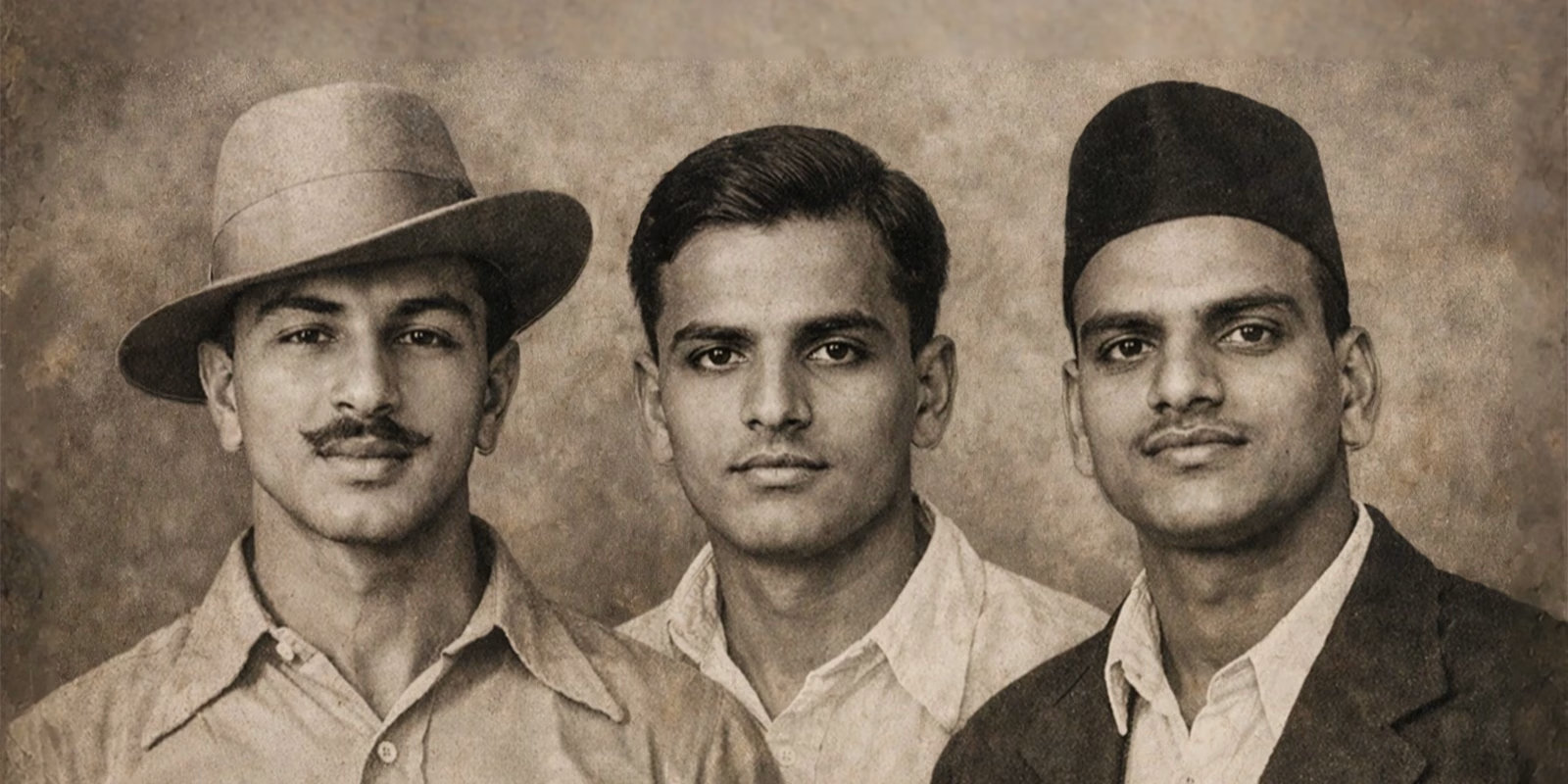
They Were Built Differently: Childhoods That Created Bhagat Singh, Sukhdev, and Rajguru
Since childhood, we have been reading and listening about three young men who stepped into the gallows of British brutality with an unshaken resolve. Their courage, bravery and sacrifice in India’s struggle for freedom are etched in the hearts of Indians with a feeling of gratitude and spirit of pride.
By this time, you must have guessed their names right – Bhagat Singh, Sukhdev Thapar, and Shivaram Rajguru.
Their martyrdom is commemorated as a turning point in India’s rebellion against the British. It was not simply the courage with which they faced the death sentence that set them apart. It was their stories and how their unwavering patriotism inspired millions to join the revolution.
But they did not turn revolutionaries in the slip of a moment or an incident. They were shaped into them, or rather born into it. The signs of their rebellion were early but always balanced by logic, love for the motherland, and unmatched ethics.
This is the unknown story of the early days that made Bhagat Singh, Sukhdev Thapar, and Shivaram Rajguru what they are remembered as today!
Bhagat Singh: A Childhood That Breathed Revolution
It is often said that you are born into what you need to be. The same was the case for Bhagat Singh. It did not take emotional turmoil for him to realise that the country’s power needed to operate differently and not with tyranny in order to shape the lives of Indians. He was simply born into and raised with this idea. He lived the reality of the freedom struggle early on with his family. In his village in Punjab, political discussions were not occasional conversations or incidental; discussions. They were part of daily life.
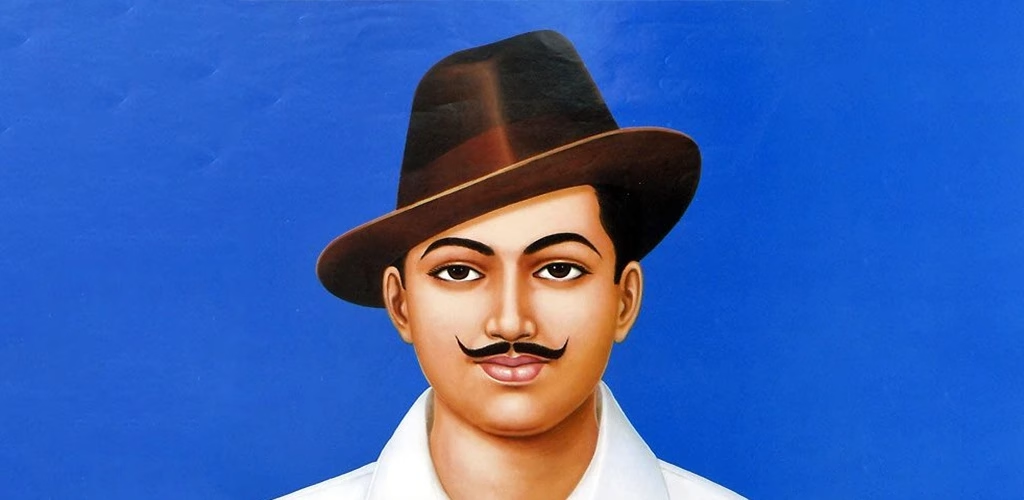
His father and uncles were already involved in the freedom struggle, and at the time of his birth, they were in British prisons serving sentences for their rebellion. Thus, his life story never started with defiance against family before the power. It started with joining his family in that defiance. Patriotism and love for the motherland were undying emotions that were passed through generations in case of Bhagat Singh. Because the stories that surrounded him were not of ordinary life, but of sacrifice, resistance, and unfinished rebellion.
But some stories stayed with him longer than many others. The tale of Kartar Singh Sarabha left the deepest impact on the young mind of Bhagat Singh. A young revolutionary hanged at just nineteen, Sarabha inspired Bhagat to carry forward his path in rebellion against the British brutality that was constantly pinching his bones. He carried the photograph of Sarabha with him wherever he went, recited his words, and internalised a vision of courage. Carrying forward his legacy, Singh went beyond just courage because this was not admiration, but identification.
The Day Childhood Ended at Jallianwala Bagh
At the tender age of twelve years, Bhagat Singh did something that no ordinary child would have. This story is sheer evidence of how Bhagat Singh showed the signs of feeling mutual pain for his countrymen very early.
After the Jallianwala Bagh massacre, Bhagat Singh was deeply affected like any other Indian. He was terrified of the thought of how the British were absolutely unaffected by them, inflicting the pain on innocent Indians. While many people sat in their homes, affected, praying, and petrified with the thought of the massacre at the Bagh, Bhagat Singh was different.
As a twelve-year-old kid, he let his scepticism slide and bunked school only to visit the site. He skipped school and travelled kilometres just to reach Amritsar and visit the massacre-hit Jallianwala Bagh site. What he found there was not just a site of tragedy, but a reality he could no longer condone.
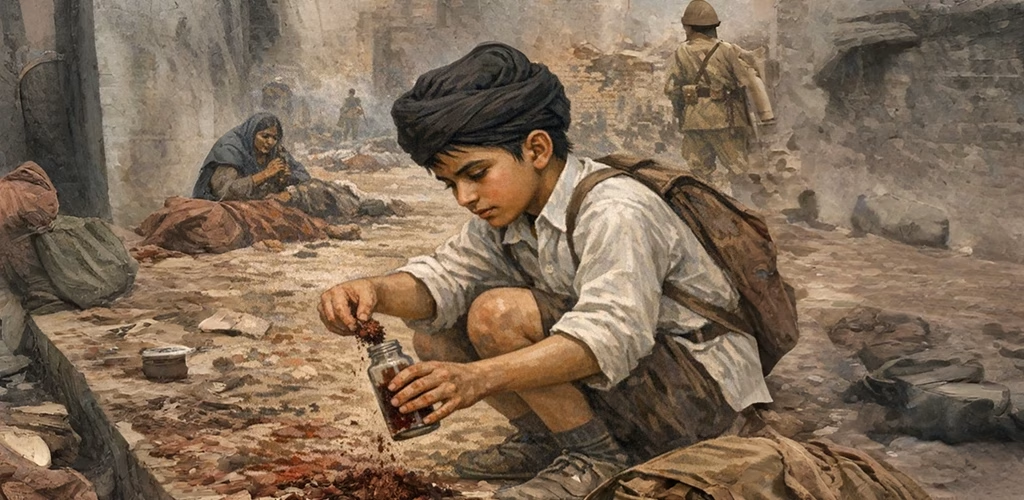
He was pensive, but from that sadness rose a spirit that shaped him into the revolutionary Bhagat Singh. He collected blood-soaked soil from the ground and preserved it in a small bottle. This was not a symbolic act but was a personal vow.
From that point onwards, his relationship with the idea of freedom changed. He joined the Non-Cooperation Movement as a young boy, but when it was withdrawn, he began questioning the limits of non-violence. Even as a teenager, he imagined a different path, one that demanded action rather than patience.
Bhagat Singh did not grow into rebellion. He just recognised it early.
Rajguru: Courage That Began with Questioning
Shivaram Rajguru is a name that is symbolic of struggles and resilience. He grew up in a modest household in Maharashtra, in a state entirely different and far away from the rebellion of Bhagat Singh. He was in a much different state, and his story stems from loss by circumstance. He was only a boy, six years old, when he lost his father. What was left behind was more than just a family. Rajguru’s father was outlived by hardships that challenged his family every day.
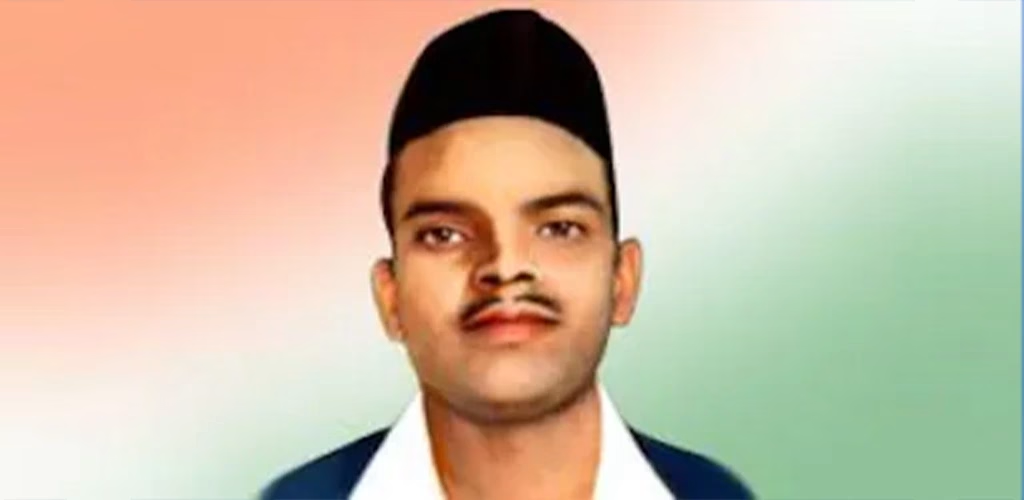
There was consistent fear and solitude that could have haunted Rajguru, but he simply refused to accept fear disguised as belief. He was strong-willed and brave, and that bravery was rooted in him since his young days. It was not developed over time. It always existed. It just kept meeting ethics, logic, and intelligence, and this shaped his rebellion years later.
A Child Who Challenged Superstition with Action
In the village of Rajguru was an infamous bridge – the one that repeatedly came down, crumbling. It simply sank into the Bheema River every now and then. For the villagers, there was only one explanation – the bridge is cursed. They refused to step on it, and that became a very significant obstacle for their villagers in moving on their paths. But Rajguru was no ordinary child who would get frightened by the potential of a bridge being cursed. He was simply built differently.
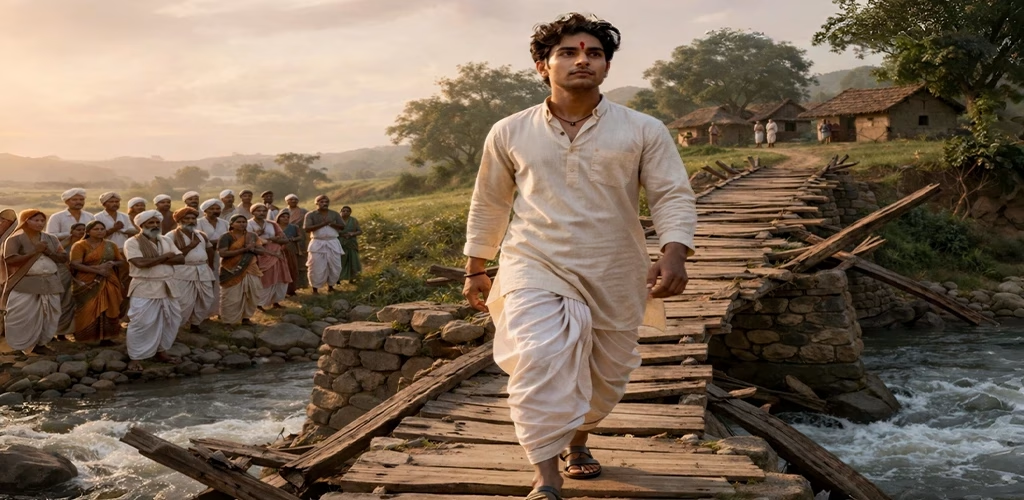
Instead of avoiding the bridge, he walked over it repeatedly. He was opposed, even frowned upon, but was it going to stop him? No. He simply kept doing what he wanted to – cross the bridge repeatedly. Not once, not twice, but again and again. At times, he would even sleep near it among strangers, simply to prove that nothing supernatural controlled it.
For the villagers, it was a story of recklessness, but for Rajguru, it was defiance, guided by pure logic.
At an age when most children absorb beliefs without question, Rajguru chose to confront them. This incident, remembered in local memory, was more than a childhood story. It was a glimpse into the mind of someone who would never bow to fear, whether social or political.
But to imagine that Rajguru stood against the tradition is unfair. Because he was just against the antiquated norms that the society perpetually operated on. He was just against blind faith, and as he grew older, he became both a skilled wrestler and a student of Sanskrit. He pursued traditional education rather than contemporary education, proving that it was not the modern trend that attracted him but a vivid rationality.
When he later rejected non-violence and chose armed resistance, it was not a sudden shift. It was a continuation of a mindset he had carried since childhood.
Sukhdev: Discipline Before Defiance
Sukhdev Thapar is not remembered as someone who took on dramatic steps to prove his point or pursue his rebellion. His strength lay in something quieter, yet far more enduring. Born and brought up in a household influenced by Arya Samaj ideals and nationalist thought, just like Rajguru, he lost his father at a very young age. But like Bhagat Singh, rebellion ran in his blood, through generations.
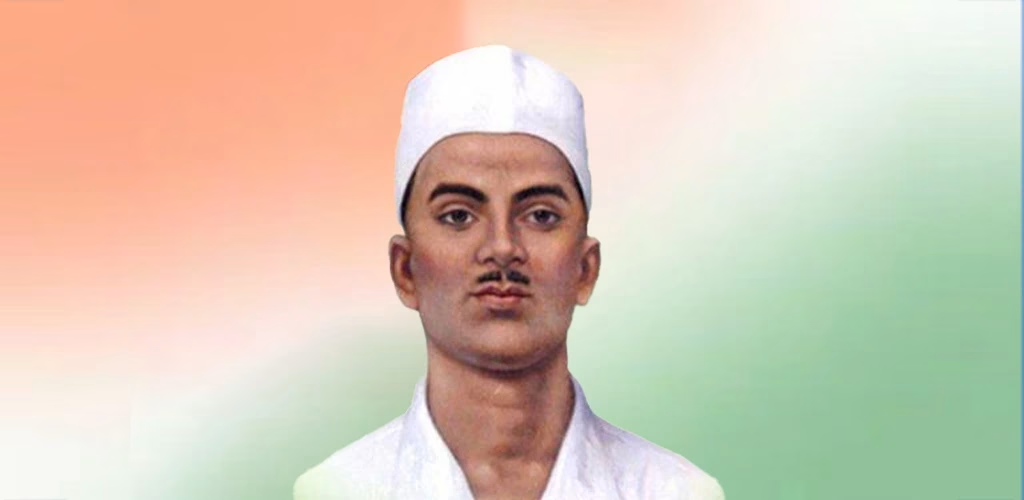
His uncle, a Congress activist frequently imprisoned by the British, was the one who became his guiding light. Through him, Sukhdev witnessed not just resistance but also the cost of it.
This prepared him for something far more mature – responding and not reacting impulsively.
Training Himself for a Future He Had Already Chosen
As a child, the strength of Sukhdev was rooted in doing what he knew was right and not simply succumbing to the societal norms. For him, it was his truth that mattered and not what the world expected him to do. There were signs that he showed early on in his childhood. As a school-going child, he learned rebellion against the power that he knew was only built on the tears of his countrymen.
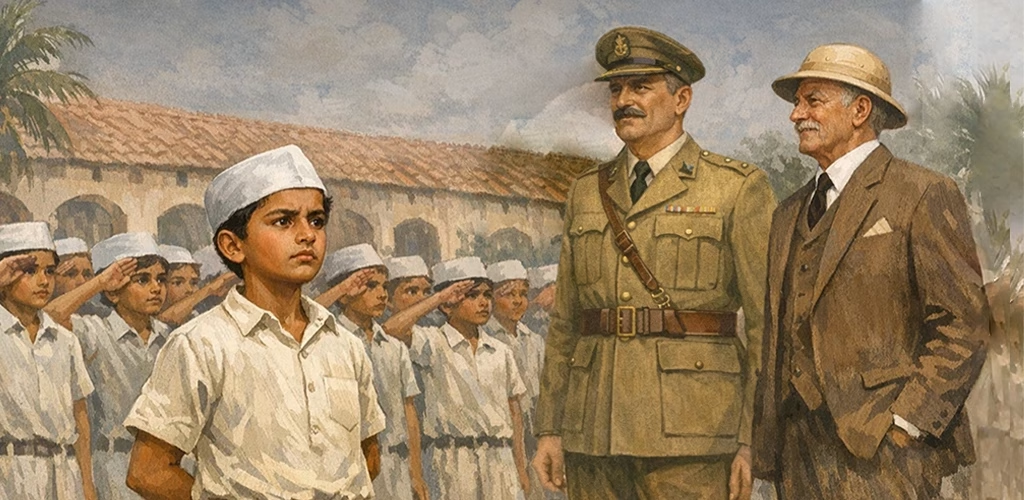
At his school, British officials visited very often. It was then that the kids were expected to salute, but there stood Sukhdev, indulging in his mental strength and consciousness, refusing to accept what the world was following. He chose dissent. He refused to salute the British officials, no matter what consequences might be inflicted upon him. He accepted punishment, no matter how tough it was for him to sustain. He quietly used his own money to buy books for children denied education and helped those affected during the influenza epidemic. This was the earliest sign of his rebellion, not rooted in ego but in awareness.
Even as a teenager, Sukhdev subjected himself to physical and emotional endurance. He understood that the path he wished to walk would demand more than courage. It would demand control. One incident stands out with unsettling clarity. He used nitric acid to burn off an “Om” tattoo on his arm, enduring the pain without flinching. This was not an act of rejection of religion or any tradition. It was a simple attempt at self-discipline, a test of how much he could withstand.
This defiance was not rooted in an attention-seeking spirit but in a simple character growth.
When Three Paths Became One
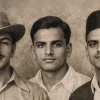
Their journeys, though different in nature, converged in Lahore. At the National College, these three young men, Bhagat Singh, Rajguru, and Sukhdev, found a common ground, and together, they transformed the Hindustan Socialist Republican Association into a force driven not only by nationalism but by ideas of social and economic justice.
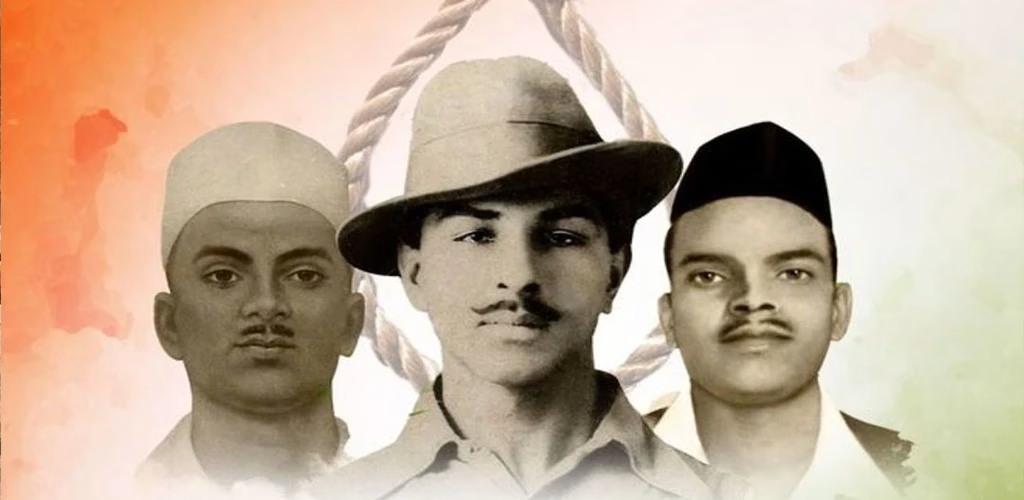
Their bond was not accidental; it was inevitable because they were meant to collaborate since childhood. There was a pattern that each followed. Bhagat Singh’s exposure to sacrifice made him question passivity, Rajguru’s defiance of superstition made him reject fear, and Sukhdev’s discipline prepared him for sacrifice.
On 23 March 1931, Bhagat Singh, Sukhdev, and Rajguru were executed by the British. But to understand them only through that moment is to miss the story entirely. Their courage did not begin at the gallows. It began in classrooms, in villages, in quiet personal decisions that no one noticed at the time. It began in the way they questioned, resisted, endured, and chose.