
Biju Patnaik: The Indian Who Flew Beyond Borders
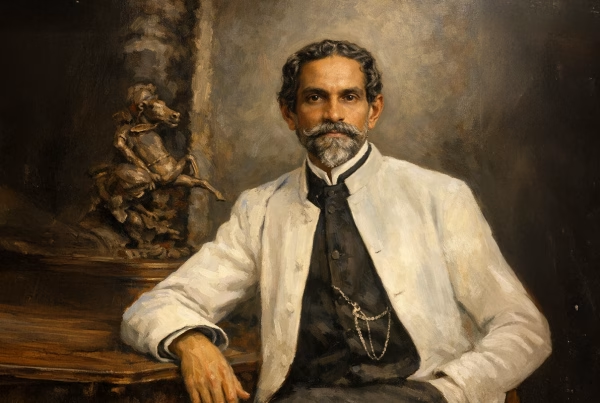
Bijayananda Patnaik, also known as Biju Patnaik or Biju Babu, was one of India’s most extraordinary people to have existed. But today, his story is simply hidden and unknown in the age of internet trends and viral content.
Biju Patnaik was not just any man. He was an aviator, freedom fighter, industrialist, and statesman, and was one of the defining forces in India’s independence movement, going on to shape the modern identity of Odisha. His physical personality and exceptional vision earned him the title “Tall Man of Odisha.” While he is hardly talked about in the present years, his legacy lives on.
Early Life and Education
Born on March 5, 1916, in Cuttack, Bihar and Orissa Province, Biuju Patnaik belonged to an aristocratic family. His father, Laxminarayan Patnaik, was the Dewan of the Paralakhemundi Estate, and his family traced their origin back to Ghumusar Nuagam in Ganjam district. As a young child, Biju Patnaik was intelligent, courageous, and had an inclination for adventure. He completed his formal education in Cuttack, followed by higher education at Ravenshaw College. But he was exclusively fascinated by aviation, and that led him to drop out and enrol at the Aeronautical Training Institute of India.
And this decision that defined his destiny.
Aviation Career, Wartime Feats, and a Story of Secretive Nationalism
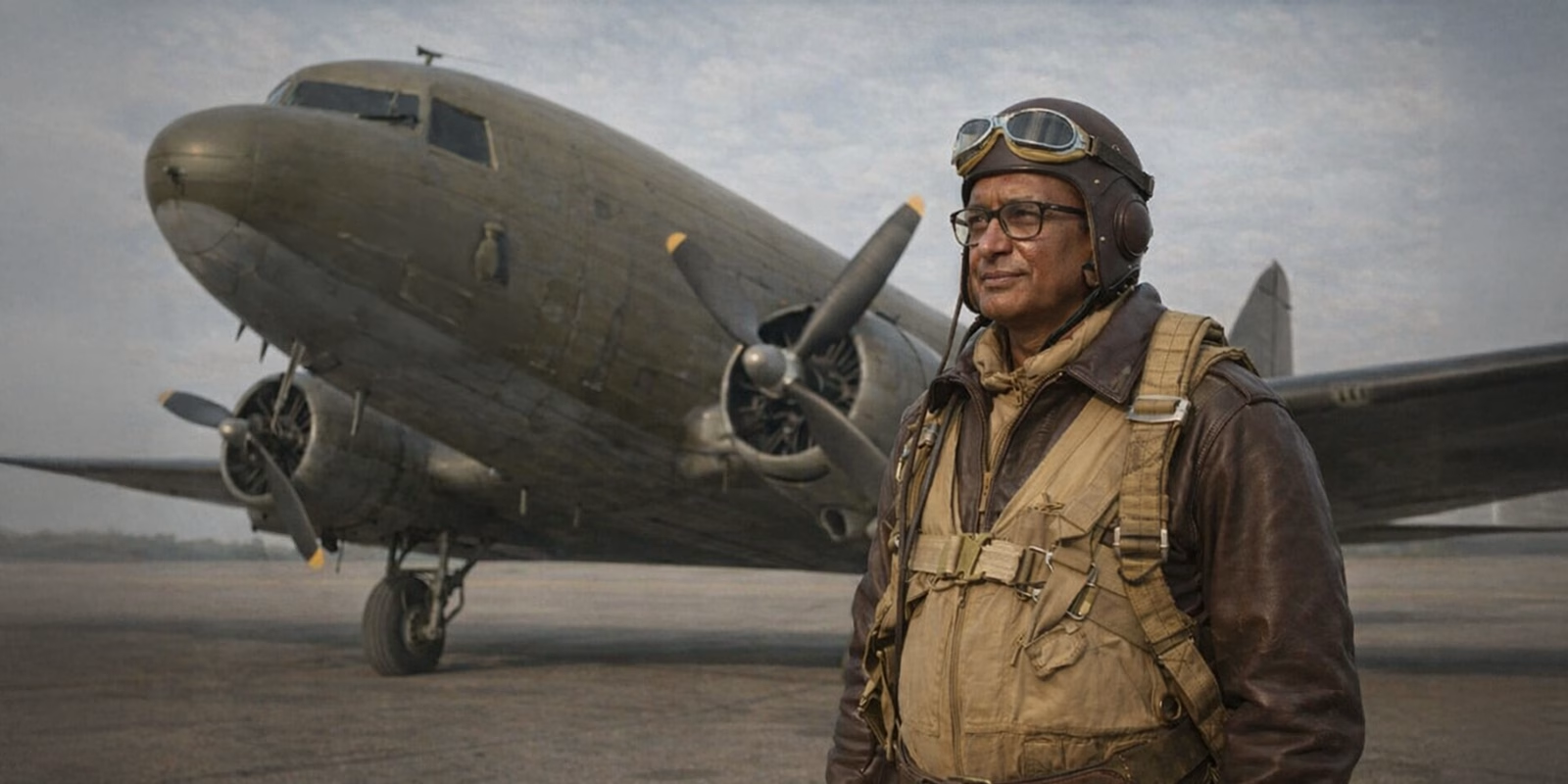
Biju Patnaik began his aviation career with private airlines such as Indian National Airways. During World War II, he joined the Royal Indian Air Force RIAF and rose to lead the air transport command. He flew numerous missions in a Dakota DC-3 aircraft under dangerous conditions.

And one of his most historic missions was on October 27, 1947, when he piloted the first flight from Delhi to Srinagar after Jammu and Kashmir’s accession to India. Carrying 17 soldiers of the 1st Sikh Regiment, he flew low over the Srinagar airstrip to ensure it was safe from enemy raiders.
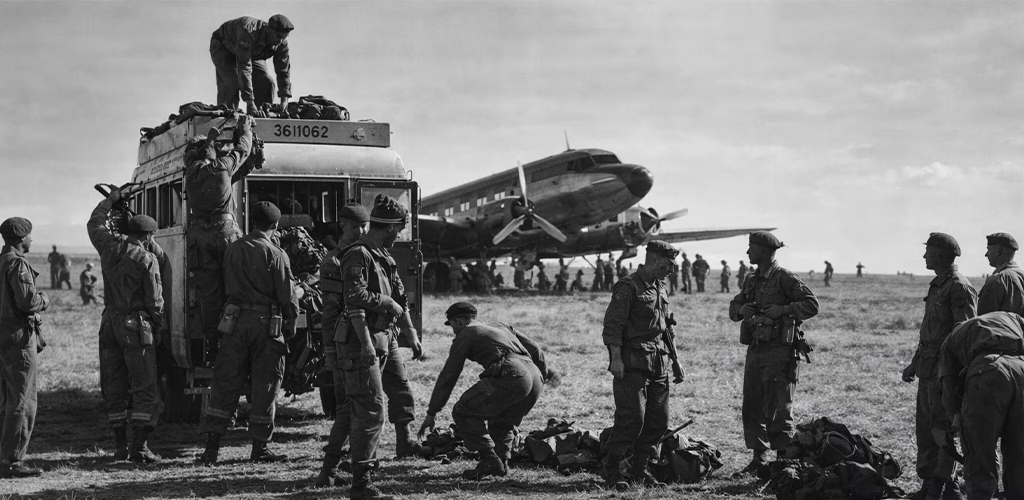
His wife, Gyan Patnaik, was herself a trailblazer. She was the first Indian woman to obtain a commercial pilot’s license, and together, they undertook daring wartime missions, including evacuating civilians from Rangoon during the Japanese advance. After independence, he founded Kalinga Airlines, which served several historic missions.
While serving in the RIAF, Patnaik secretly supported India’s independence movement. He distributed anti-British literature among Indian troops, an act considered subversive by colonial authorities, and for this, he was even imprisoned by the British. But, despite his detention, he continued supporting the Quit India Movement while also fighting the Axis powers. His dual role as a pilot and freedom fighter made him a legendary anti-colonial freedom fighter for India.
The Legendary Indonesian Rescue Mission
In 1947, at Jawaharlal Nehru’s request, Biju Patnaik undertook one of the boldest rescue missions in modern history. During the Indonesian National Revolution, Dutch forces had blockaded Indonesian leaders. Patnaik flew a Dakota aircraft into an improvised airstrip near Jakarta, rescued President Sukarno, Vice President Mohammad Hatta, and Prime Minister Sutan Sjahrir, and brought them to India.
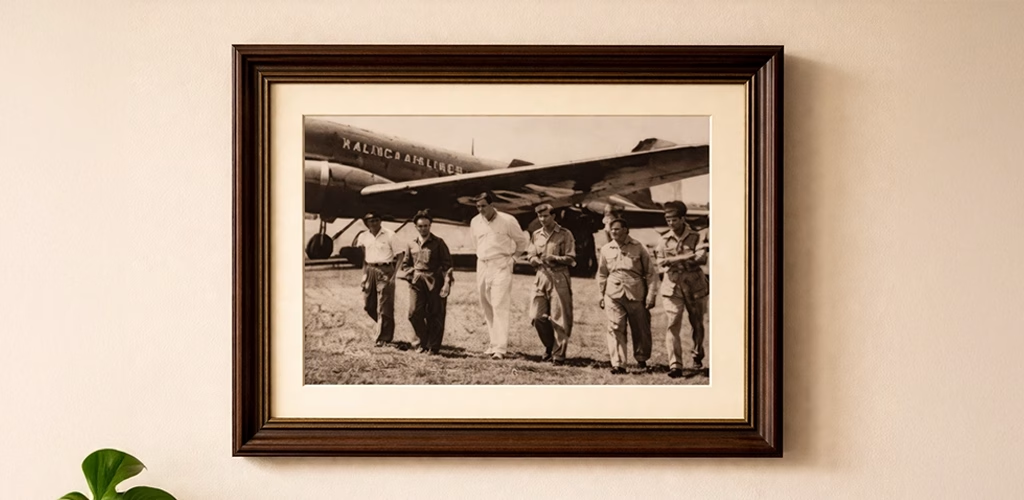
This daring mission defied Dutch blockades and strengthened India-Indonesia ties. Indonesia honoured him with its highest civilian awards, and the aircraft used in the mission is now displayed at Bhubaneswar Airport.
A Memorable Political Career
Biju Patnaik entered politics in 1946 and emerged as a powerful leader. He served as Chief Minister of Odisha twice, from 1961 to 1963 and again from 1990 to 1995. He also served as Union Minister for Steel, Mines, and Coal and was elected multiple times to the Lok Sabha. Recognised for his federalist and socialist ideals, he advocated equitable resource distribution among Indian states.
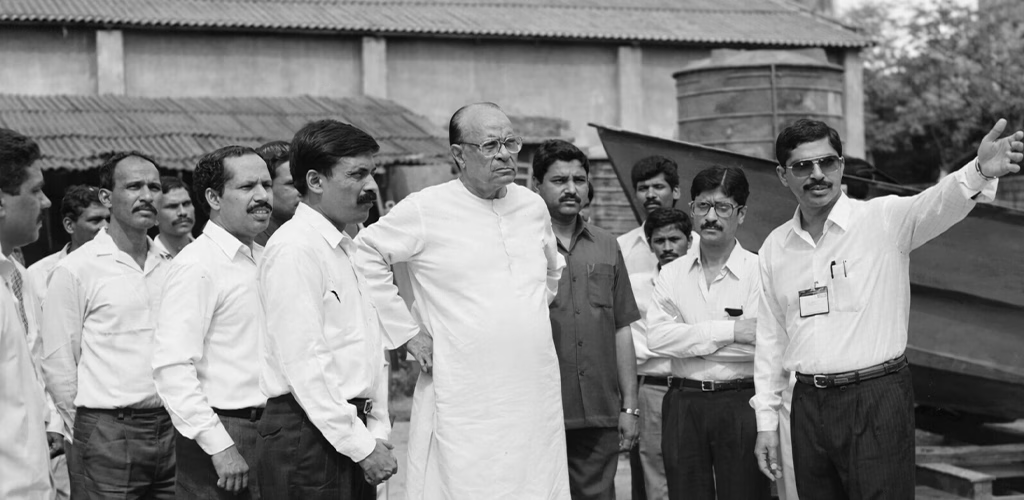
He founded the Biju Janata Dal (BJD) in 1997, shortly before his death. And, this party went on to dominate Odisha politics under the leadership of his son Naveen Patnaik, who also turned into a very major political figure and beloved Chief Minister of Odisha. He was not just simply a politician but a visionary. He laid the foundation for Odisha’s modern infrastructure and industrial base. His contribution to the infrastructure of Odisha shifted the state’s growth over the years. Under his leadership, the following infrastructure was established in Odisha:

- Paradip Port
- Bhubaneswar Airport, now Biju Patnaik International Airport
- National Aluminium Company NALCO
- Talcher Thermal Power Station
- Balimela Hydel Project
- Regional Engineering College, now NIT Rourkela
- Sainik School Bhubaneswar
- Odisha University of Agriculture and Technology
- Industrial belts at Choudwar and Barbil
He also instituted the Kalinga Prize, administered by UNESCO, to promote science and technology.
Awards, Death, and Legacy
Patnaik received numerous international honours, including Indonesia’s Bintang Jasa Utama and Russia’s Order of Lenin. India commemorated him with a postage stamp and a coin. He passed away on April 17, 1997, at the age of 81. His coffin was draped with the flags of India, Indonesia, and Russia, which is a rare tribute to his global legacy.
Biju Patnaik’s dream was an Odisha filled with confident, self-reliant citizens. His vision continues to shape the state’s identity, making him not just a leader but a symbol of courage, ambition, and progress.