
Bommala Koluvu: A Harvest Tradition of Rural Andhra Pradesh
Makar Sankranti brings a lot of new energy, freshness, and refreshed beginnings for communities across India. This harvest festival is one of the most celebrated and diverse festivals for the entire nation. While many states celebrate with fire, crops, dances, folk songs, and so much more, Andhra Pradesh celebrates it with dolls.
In the rural regions of Andhra Pradesh, Makar Sankranti is celebrated with an artistic tradition called Bommala Koluvu. While the Makar Sankranti celebrations continue with kite flying, Pongal, Potts, and cattle worship, this ritual is carried out with the display of dolls. But what is the exact reason behind this ritual and its significance?
What is Bommala Koluvu?
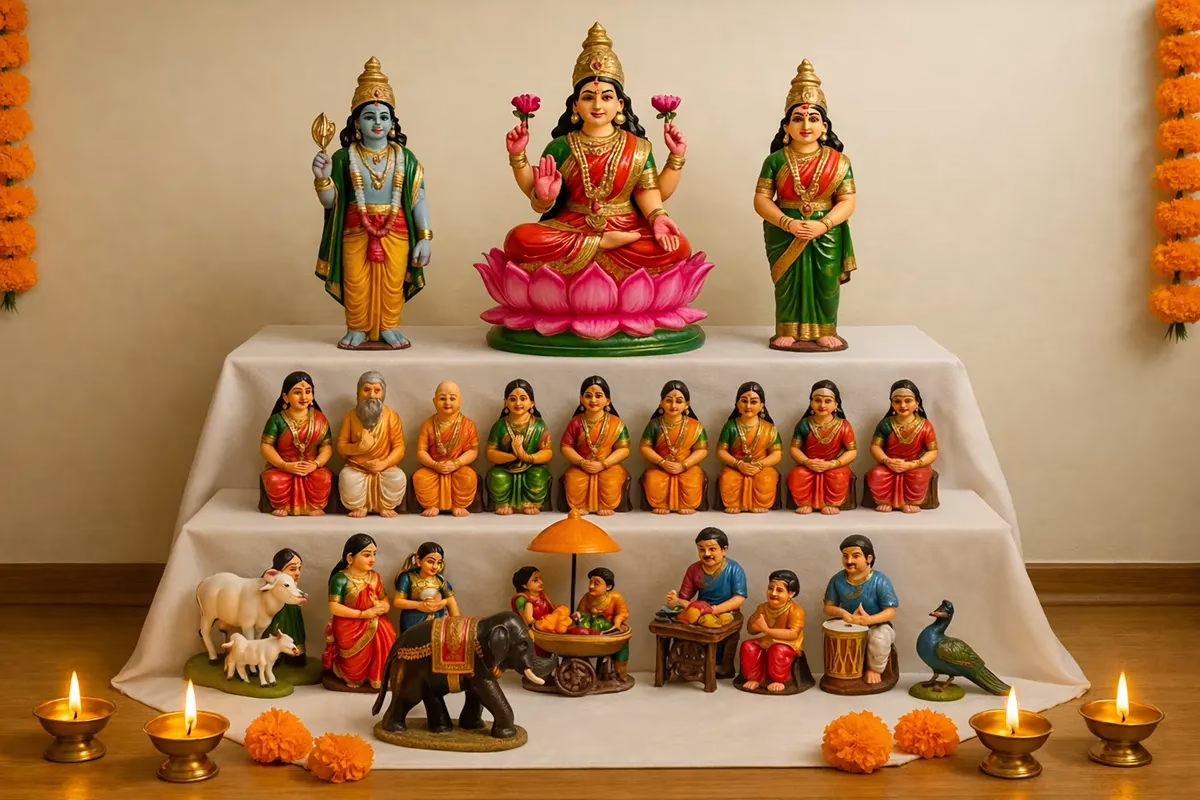
In the villages of Andhra Pradesh, an elaborate doll display is arranged in homes. This tradition is known as Bommala Koluvu. In Telugu, the word Bommala Koluvu means court of dolls. Every home in these villages set up tiered platforms and placed mud or clay dolls in a hierarchy to display the coexistence of gods, humans, and nature. This ritual is widely popular across rural Andhra Pradesh.
How did Bommala Koluvu start?
The Bommala Golu tradition started during the Vijayanagara Empire. The Royal courts often engaged in a display of festive storytelling. To promote Hindu celebrations, more and more, the Empire often relied on distinctive and artistic approaches. One of these approaches was Bommala Koluvu. This tradition gradually started and aligned itself with Makar Sankranti and further evolved into Sankranti Bommala Koluvu or Bommala Nomu.
There is a reason why Sankranti was chosen for this tradition. Makar Sankranti or Uttarayanam are the times when harvest is completed, and agricultural labour is paused. Thus, the families are able to gather, reflect, and celebrate the occasions together. Therefore, Bommala Koluvu was the perfect time for the display of art, celebration, storytelling, and religious messaging.
How is Bommala Koluvu executed?
In Andhra Pradesh, the Makar Sankranti festival lasts for at least four days. On the first day of this festival spree, houses are cleaned, and colourful muggulu or rangoli designs are drawn at entrances using rice flour, turmeric, and kumkum. This is done in order to honour, invite, and welcome prosperity and peace. The families set up a tiered platform, which is called the koluvu padi. This padi or platform has an odd number of steps, like three, five, seven, or more. This symbolises the cosmic order and progression.
The Bommala Koluvu dolls are made of clay, wood, or sola. These are created in order to depict Indian stories; thus, the dolls are arranged in a l hierarchy. Gods and Goddesses such as Durga, Lakshmi, Saraswati, Rama, and Krishna occupy the top tiers, while scenes of village life, like farmers harvesting paddy, potters at work, weddings, cattle grazing, and market scenes, fill the lower levels. Fresh flowers, fruits, miniature utensils, and oil lamps complete the display, turning it into a vibrant narrative of divine and earthly coexistence.
Rituals that inspire community bonding
One striking thing about the ritual of Bommala Koluvu is that it inspires community bonding. The villages celebrate the ritual with prayers, sweets, offerings, pongal dishes, and dances. On the final day of Makar Sankranti, also known as Mukkanuma, married women engage in the tradition or ritual of Bommala Nomu. This is done in order to ensure prayers for the well-being and prosperity of their families.
In the evening, neighbours, relatives, and children visit each other’s houses and commemorate the occasion with sweets, fruits, and betel leaves. They have conversations about the stories that the doll display intends to depict. Moreover, there is a feeling of nostalgia that also strikes the elders. This is how the social values and traditional stories pass from one generation to the next in the villages of Andhra Pradesh. Thus, the display of dolls on Makar Sankranti in Andhra Pradesh turns into an educational tool and a social bridge.
Symbolism and Relevance of Bommala Koluvu
The significance of Bommala Koluvu is that it represents the divine assembly welcoming Uttarayanam and the new agricultural cycle. It celebrates womanhood by acknowledging their central role in cultural continuity and expresses gratitude for harvest abundance. Further, it teaches about the harmony and coexistence between the forces and entities of nature.
Even though the urbanisation and rapid change in the world are causing this tradition to fade in the cities, Bommala Koluvu is surviving in the regions of Andhra Pradesh. Artisans and cultural groups continue to promote this ritual that inspires stories, values, and shared memories of an agrarian way of life.
Recognition Without the Spotlight
Ashoke Sen was honoured with the Fundamental Physics Prize, one of the most prestigious and financially acclaimed awards in science. The prize came with a reward of $3 million, earning him the nickname “India’s Million-Dollar Scientist.” While the award is often highlighted for its financial magnitude, its true value lies in the recognition of ideas that fundamentally transformed the field of theoretical physics worldwide.
Despite his global acclaim, Ashoke Sen leads a deeply private life. He avoids the spotlight, and even today, many people remain unaware of his day-to-day life or whereabouts. As a living legend, he continues to share his knowledge by mentoring young scientists and contributing quietly to the world of physics. He chooses curiosity over fame and depth over visibility.
Even though he may not be a household name, Ashoke Sen’s ideas echo across the universe he spent his life trying to understand.