
Brij Ki Holi: More than A Festival Of Colours!
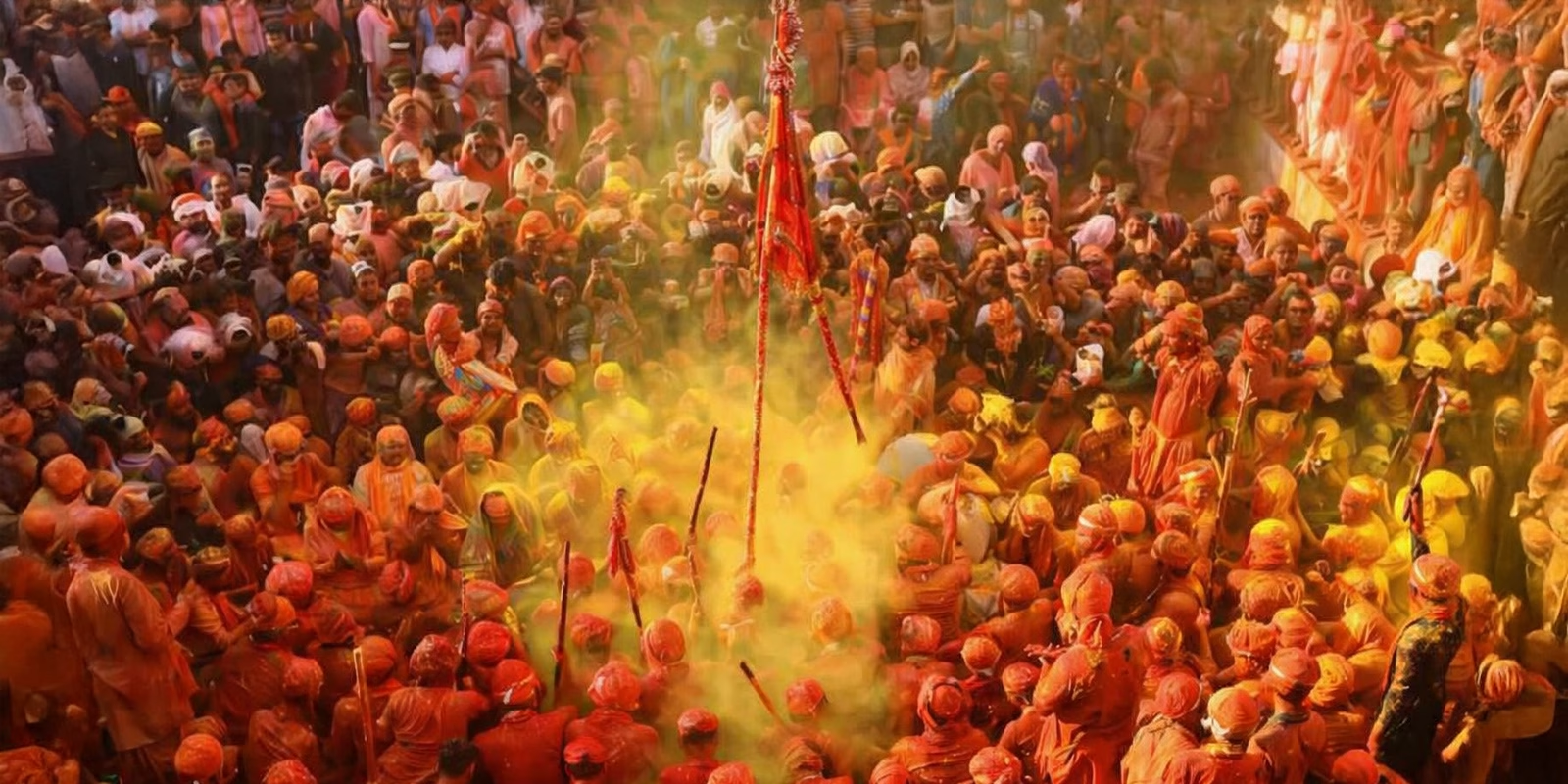
When most people think of Holi celebrations, they imagine one day of colours, music, and sweets. But in the Brij region of Mathura, the land of Radharani and Shri Krishna — Holi is not a single day festival. It is a 40-day cultural and spiritual celebration that blends mythology, devotion, theatre, and community participation.
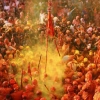
In Brij ki Holi, colours are only one part of the story. Before the main day of Dhulendi when the region gets covered in gulal, there are several interesting events that take place. Like in laddoo holi, laddoos rain from temple balconies; in lathhmaar holi, sticks clash in playful battles; in flower holi, people play with flowers and centuries-old legends come alive in real time.
This is why Vrindavan Holi and Braj’s surrounding towns are considered the most immersive Holi celebrations in India.
Let’s explore the many layers of this extraordinary festival.
Basanti Holi: The Spiritual Beginning
The holi celebrations in the brij region begin on Basant Panchami, which marks the arrival of spring and the ceremonial start of Brij ki Holi.
Temples across Vrindavan, Mathura, Gokul, and Barsana apply yellow (basanti) gulal to the idols of Radha and Krishna. Yellow symbolises new beginnings, harvest, and divine joy. Lord Krishna is dressed in yellow garments, and bhajans echo through temple courtyards.
Unlike the energetic celebrations that brij ki holi is associated with, the basanti holi celebration is devotional and calm. Devotees lightly offer gulal at the feet of the deities, signalling that Holi has begun
Laddu Holi: When Laddus Rain in The Temple
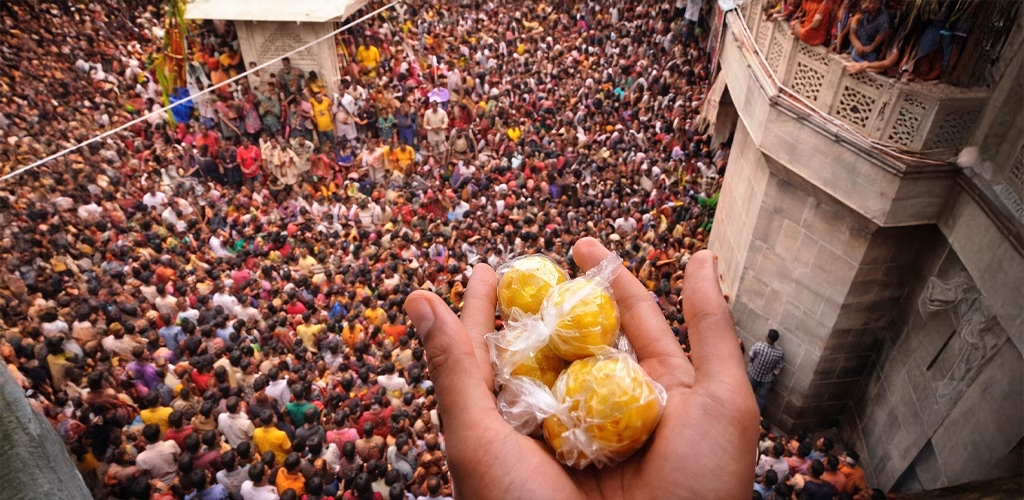
Before colours take centre stage, Barsana hosts one of the most unique traditions of Brij ki Holi — Laddu Holi at the Radha Rani Temple.
Here, instead of colour, thousands of laddoos are showered on the devotees from the temple rooftops and balconies. Devotees catch them, throw them back, and celebrate the festival with singing and dancing and the divine chants of Radhe Radhe. It is, undoubtedly, a sight to behold and fascinate!
The Legend Behind Laddu Holi
According to locals, a priest from Barsana once travelled to Nandgaon (Krishna’s village) to invite them to play holi in Barsana. When the invitation was accepted and he returned with the good news, people were elated and celebrated the news of acceptance by welcoming the priest with laddoos.
Today, this ritual marks the sweet beginning of Holi celebrations and takes place just a day before the more famous Lathmar Holi.
Lathmar Holi: Where Mythology Turns Into Theatre
Among all the Holi celebrations in India, Lathmar Holi is undisputedly the most iconic, energetic and widely recognised.
Day 1 of Lathmar Holi
Barsana: The Playful Attack
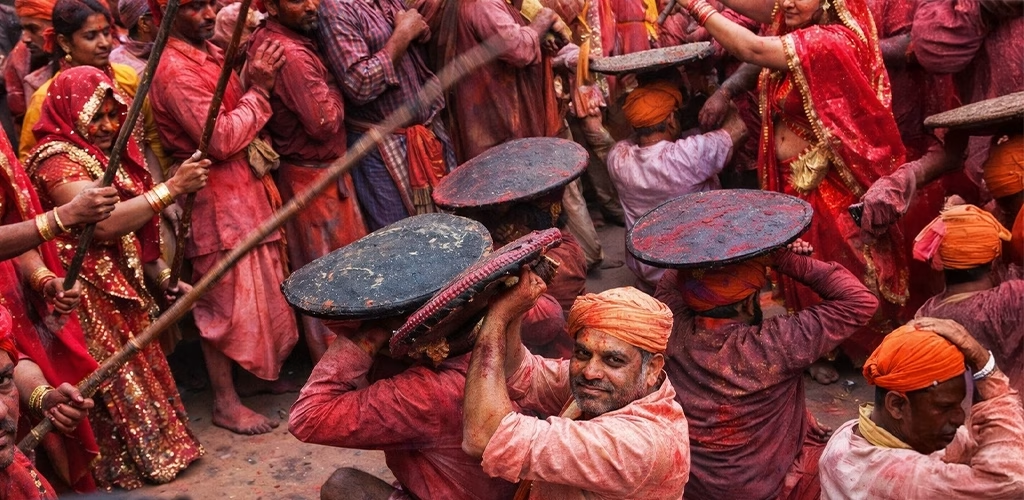
The first day of Lathmar holi takes place in Barsana, Radha’s village. Upon invitation from Barsaa, men from Nandgaon arrive to play Holi there, symbolising Krishna visiting Radha. But, women of Barsana greet them with lathis (sticks), recreating a legendary moment from folklore.
The men carry shields to protect themselves while colours fly, drums beat loudly, and folk songs fill the streets.
Why Lathmar Holi Is Celebrated
Legend says Krishna would often visit Barsana and tease Radha and her friends by throwing colours. One day, the gopis decided to chase him away with sticks. Lathmar Holi reenacts this playful episode every year — not as conflict, but as affectionate mischief.
Day 2 of Lathmar Holi
Nandgaon: The Role Reversal
The next day, the celebration shifts to Nandgaon. Now Barsana visits Krishna’s village, and the dynamic reverses.
This exchange completes the emotional arc of Radha-Krishna’s relationship — teasing, retaliation, and balance. Thousands gather to witness this cultural spectacle that feels both festive and theatrical.
Phoolon Ki Holi: When Devotion Softens the Mood
After the high-energy Lathmar celebrations, the tone shifts with Phoolon Ki Holi, one of the most beautiful parts of Vrindavan Holi.
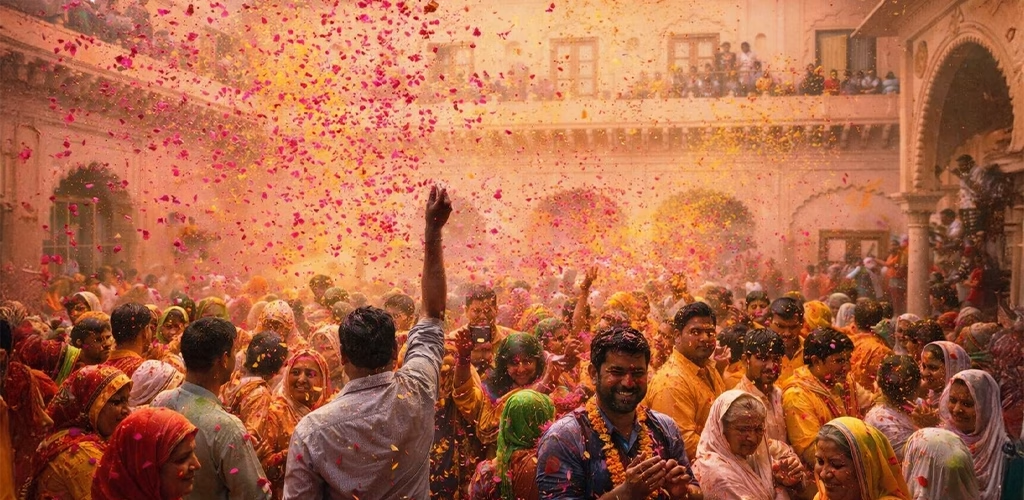
Instead of colours or water, flowers are showered inside temples. Rose petals, marigolds, and jasmine fill temple halls as priests gently swing the idols of Radha and Krishna on decorated swings.
This celebration often coincides with Rangbhari Ekadashi and represents a softer, more devotional phase of the festival.
Why Phoolon Ki Holi Is Celebrated
Flowers hold a deeply intimate place in Radha-Krishna lore. It is believed that Radha would lovingly decorate Krishna with flowers, adorning him with floral garlands and ornaments. Flowers symbolised tenderness, romance, and devotion in their divine relationship.
Phoolon Ki Holi recreates that emotion. It marks a shift in the Braj celebrations — from playful mischief to pure love. As if the teasing and colour battles are over, and what remains is only softness, fragrance, and devotion.
In this moment, Holi stops being loud and becomes deeply spiritual — a celebration not of colour, but of divine love in its most delicate form.
Chhadi Mar Holi: A Gentle Echo of Mischief
Celebrated mainly in Gokul, Chhadi Mar Holi is a lighter and more playful version of Lathmar Holi.
Instead of heavy sticks, women or temple priests use thin canes (chhadi) to gently tap devotees in a playful, blessing-like manner. Children participate in processions, run through the streets playing with colours, and recreate Krishna’s childhood mischief.
This celebration reflects the innocence of Krishna’s early years and offers a more family-friendly Holi experience within the broader Braj festivities.
Chhoti Holi: The Sacred Fire of Holika Dahan
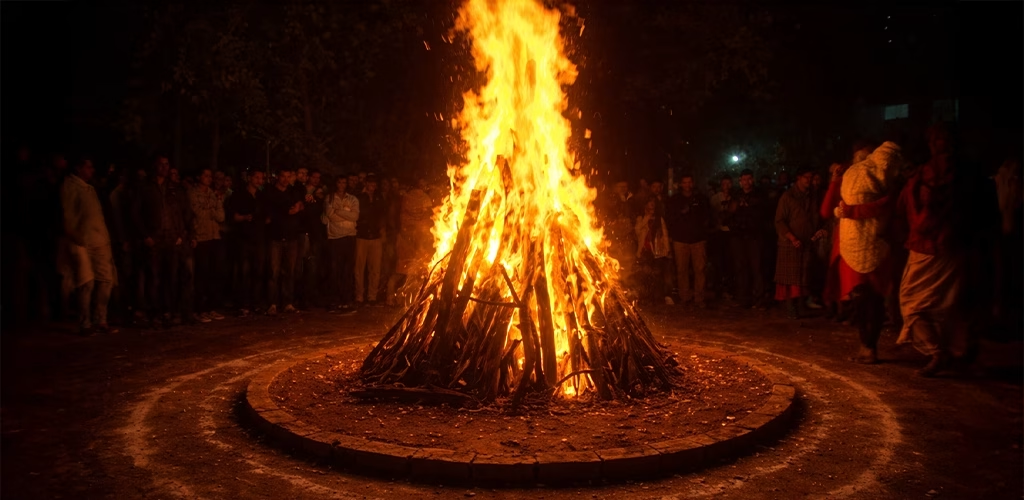
One day before the colours of Dhulendi arrive, Braj observes Chhoti Holi, marked by the ritual of Holika Dahan.
As evening falls, bonfires are lit across towns and temple courtyards. Families gather around the flames, offer prayers, and prepare spiritually for the main Holi day ahead.
The Legend Behind Holika Dahan
The ritual comes from the story of Prahlad and Holika. Prahlad, a devoted follower of Lord Vishnu, refused to worship his tyrant father, Hiranyakashipu. To punish him, the king asked his sister Holika, who was believed to have received a boon to stay protected against fire, to sit in flames with Prahlad on her lap.
But the plan failed. Holika was burned, while Prahlad emerged unharmed, protected by his faith.
Holika Dahan thus symbolises the victory of devotion over evil. In the context of Brij ki Holi, it grounds the vibrant celebrations in a deeper spiritual meaning — reminding devotees that before colour comes faith.
Huranga Holi: The Most Intense Celebration
Just when you think the colour frenzy has peaked on Dhulendi, Braj surprises you again.
The day after Dhulendi, the energy rises dramatically with Huranga Holi, most famously celebrated at the Dauji Temple in Baldev, near Mathura. If Lathmar Holi feels theatrical, Huranga feels raw and untamed.
By late morning, the temple courtyard fills with devotees from the Goswami Family. Traditional music plays, chants echo through the complex, and anticipation builds. Then the celebration begins.
Women, often in the role of playful “bhabhis,” grab hold of the men — symbolically the “devars” — and tear their shirts. The torn cloth is dipped into deep orange-red colour, traditionally made from tesu (palash) flowers mixed with water and natural elements. The women then playfully strike the men with the soaked fabric, laughing and teasing as the crowd cheers.
The men respond with buckets of colour and high-pressure pichkaris, drenching everyone in sight. Within minutes, the temple courtyard transforms into a sea of orange, red, and pink — loud, chaotic, yet rooted in tradition.
Dhulendi: The Grand Colour Day
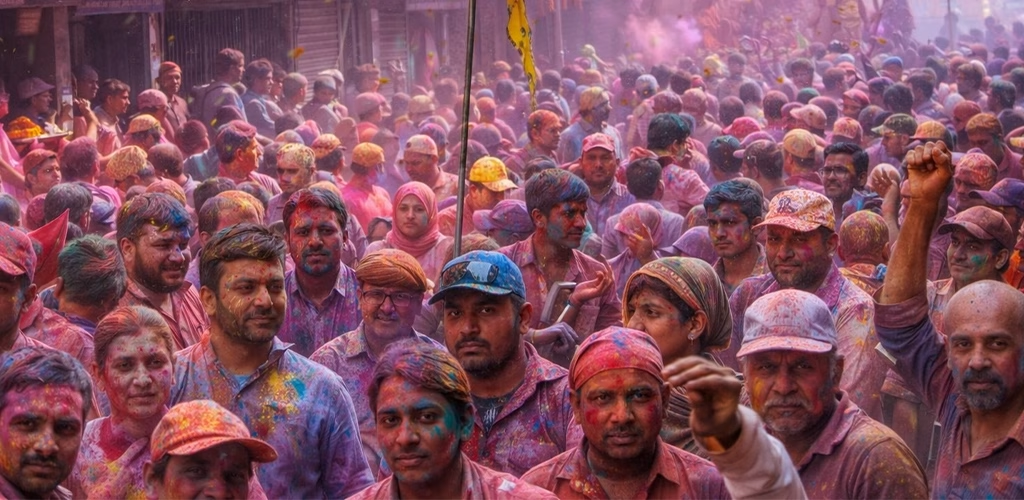
The day after Holika Dahan is Dhulendi, the primary day of colours and the emotional peak of Holi celebrations in Braj.
By morning, the entire region transforms. Streets turn red, pink, and saffron. Tesu (palash) flowers are soaked to create natural dyes. Gulal fills the air, and drums echo through the narrow lanes of Vrindavan and Mathura.
Unlike modern Holi parties, Dhulendi in Braj begins with devotion. Devotees first offer colour to the deity before applying it to each other. Strangers embrace, smear colour, and instantly become part of the same celebration.
Widows’ Holi: A Festival of Social Change
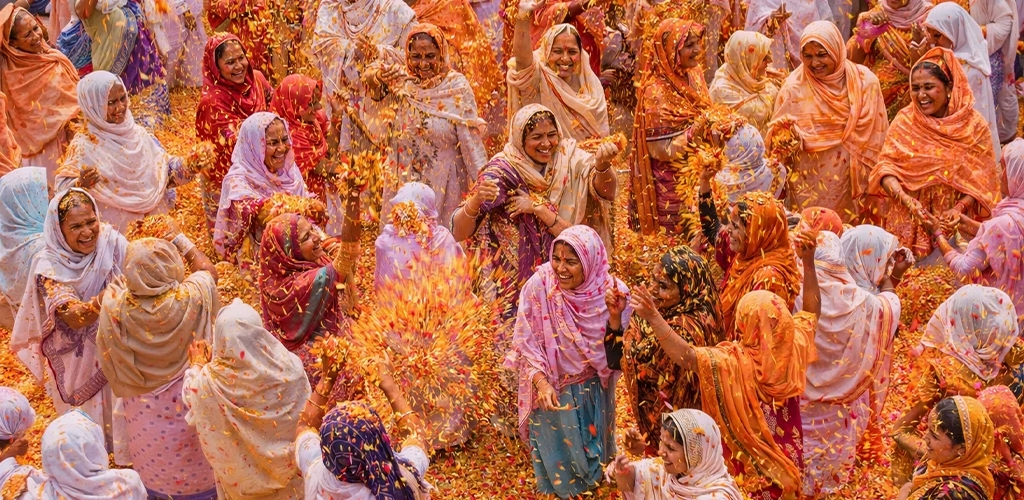
For decades, widows living in Vrindavan were excluded from Holi celebrations and pushed into lives of social isolation. Many had been abandoned by families and spent their years in ashrams, wearing white and staying away from festivals, colours, and public joy. Holi, a festival of vibrant colours, remained something they could only watch from a distance.
But that began to change around 2013, when social organisations and local communities initiated special Holi celebrations for widows. What started as a small effort gradually grew into a powerful movement of inclusion.
Today, Widows’ Holi is celebrated in Vrindavan during the days leading up to Dhulendi, as part of the wider Brij ki Holi timeline. It is usually organised a few days before the main colour day so that participants can celebrate in a safer, more comfortable environment.
The celebrations are most prominently held at places like Gopinath Temple and Pagal Baba Ashram, along with several widow ashrams across Vrindavan — a town that has long been home to thousands of widows.
Now, temple courtyards once defined by silence come alive with colour. Women apply gulal to each other, sing bhajans, and laugh freely. The white sarees that once symbolised withdrawal now carry streaks of pink and yellow.
Huranga Holi: The Most Intense Celebration
Just when you think the colour frenzy has peaked on Dhulendi, Braj surprises you again.
The day after Dhulendi, the energy rises dramatically with Huranga Holi, most famously celebrated at the Dauji Temple in Baldev, near Mathura. If Lathmar Holi feels theatrical, Huranga feels raw and untamed.
By late morning, the temple courtyard fills with devotees from the Goswami Family. Traditional music plays, chants echo through the complex, and anticipation builds. Then the celebration begins.
Women, often in the role of playful “bhabhis,” grab hold of the men — symbolically the “devars” — and tear their shirts. The torn cloth is dipped into deep orange-red colour, traditionally made from tesu (palash) flowers mixed with water and natural elements. The women then playfully strike the men with the soaked fabric, laughing and teasing as the crowd cheers.
The men respond with buckets of colour and high-pressure pichkaris, drenching everyone in sight. Within minutes, the temple courtyard transforms into a sea of orange, red, and pink — loud, chaotic, yet rooted in tradition.
Cultural Significance
Huranga Holi is dedicated to Balram (Dauji), Krishna’s elder brother. According to local belief, Balram celebrated Holi with greater force and enthusiasm than Krishna himself. This celebration reflects that bold, rustic spirit — energetic, earthy, and uninhibited.
Some also connect Huranga symbolically to playful reversals in Krishna’s leelas, where teasing and revenge were part of divine romance. Here, that spirit takes a more dramatic form.
Because of its intensity — especially with the use of strong metal pichkaris in some instances — the celebration is often monitored by local administration to ensure safety. Protective measures and crowd control have become necessary over the years.
Rang Panchmi: The Final Goodbye
Five days after Dhulendi comes Rang Panchmi, marking the formal conclusion of the 40-day Brij ki Holi.
Temples offer final gulal to Radharani and Shri Krishna, processions are taken out, and devotees play with colours one last time. Compared to Dhulendi, this phase is calmer and more reflective.
It feels like spring itself is slowly fading, leaving behind memories soaked in colour and devotion.
What Makes Brij Ki Holi Truly Unique
What sets Brij ki Holi apart from other Holi celebrations?
- It spans over 40 days
- Every town has its own ritual
- Each celebration is rooted in Radha-Krishna lore
- Devotion and drama coexist seamlessly
From the serenity of Basanti Holi to the intensity of Huranga, from laddoo showers to flower rains, every occasion of Brij Ki Holi reflects the fusion of mythology and community. And perhaps that is the true magic of Brij!
If you enjoy discovering such lesser-known cultural stories, explore more on The Unknown India, where we uncover the unseen layers of India’s traditions, festivals, and forgotten narratives.