
Dhanushkodi: A haunted town, where two Seas meet
At the South eastern tip of the Pamban island in the state of Tamil Nadu is an abandoned town where land thins into sand and sea appears endless. Often known as Ghost Town India, this is Dhanushkodi. It is not just a travel destination, but also a town whose history has been shaped by tragedy, devotion, and nature. Featuring ruins, uncrowded beaches, and sea winds, this town appears extremely haunting, but at the same time, it is astonishing.
An otherworldly town
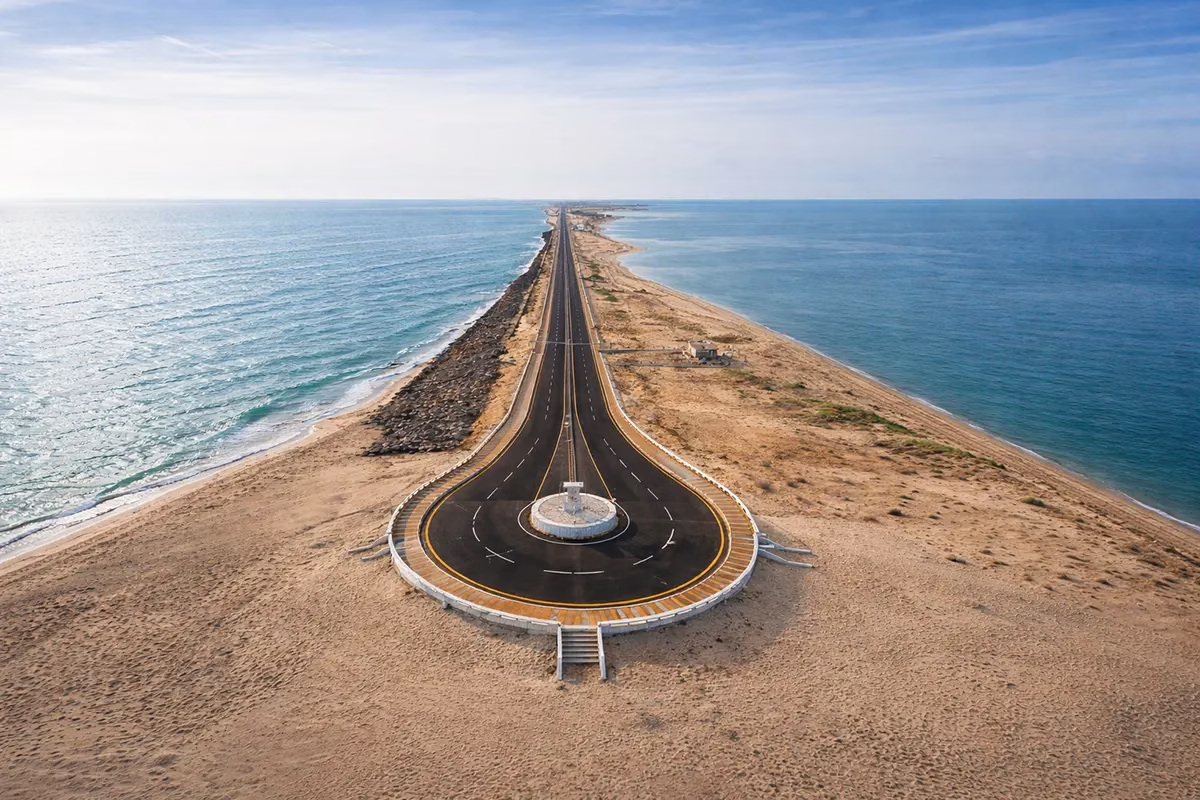
Nearly 20 km away from the city of Rameswaram, Dhanushkodi is at the southeast of the tip of Pamban Island. This is where the two water bodies, the Bay of Bengal and the Indian Ocean, meet, thus offering a dramatic visual contrast with calm water on one side and restless waves on the other. The stretch of land here is known as Arichal Munai, which is the end of Indian roads. Dhanushkodi is an isolated town, which looks more like a ruin than an infrastructure, rich place. With no hotels, street lights, or permanent structures, it simply features architecture that is shaped by sand, sea, wind, and stone structures shaped by the environment.
Connection to Ramayan
Today, Dhanushkodi is considered a ghost town India, but it also traces some connection back to the Indian epic Ramayan. It is believed that Lord Ram ended the Ram Setu here after rescuing Goddess Sita from Sri Lanka. He broke his bow here to signal that the bridge had been completed. Thus, this place gets its name from this story, as the name Dhanushkodi means the tip of the bow. It is even believed that Arichal Munai has spiritual significance, and therefore, many pilgrims visit it.
The story of the 20th century
Dhanushkodi went through a lot of change in the 20th century. Today it is abandoned. But in the early 20th century, it was a port town. It had a railway station, customs, office, post office, school, and even a church. It used to be a port where ferries between India and Sri Lanka were stationed. It was not just a town but a strategic and prosperous coastal region.
But on 22 December 1964, everything changed for Dhanushkodi. It was then that the famous Rameswaram cyclone 1964 hit the coastline of Pamban Island with wind exceeding 270 km/h and tidal waves being 20 feet high. This cyclone resulted in the destruction of the sport town. There was not only infrastructural destruction but also loss of lives. A passenger train that was travelling from Pamban to Dhanushkodi was hit by the cyclone and swept into the sea. This took the lives of more than a hundred people. People living in this port town had vanished. It is believed that thousands lost their lives due to the Rameswaram cyclone 1964.
Considering how the infrastructural development was ruined in a matter of hours, and numerous lives were lost, the government of Madras decided to take a step. The declared Dhanushkodi is not fit for human rehabilitation. Therefore, it is no longer allowed to live in this area, and thus, people started recognising it as a ghost town India. All this happened just because of the Rameswaram cyclone 1964.
The ruins of a prosperous coastal town
While the government refuse to develop any infrastructure in this ghost town India, history stands strongly as evidence of what was once habitable. Today, Dhanushkodi is featured by skeletal structures, which are the remains of the railway station, post office, schools, and Church. There are walls that stand without a roof, railway tracks that disappear beneath design, and ruins of infrastructure that are hardly recognisable. It feels haunting to walk through this town as everything is ruined and looks like a ghostly mess. The Dhanushkodi Beach is not crowded and is simply like a stretch of sand that is barely visited by visitors. There are seashells all over the shows and the view is simply of the sea. It is not allowed for visitors to swim at the Dhanushkodi Beach or enjoy it as a vacation spot.
But to imagine that this ghost town India is completely lifeless is only uninitiated. There are makeshift shelters at the beach here bear around 500 fisherman live. While there is no electricity, schools, or hospitals, there is still life at the shore which offers livelihood to the people relying on sea. However, this is not a tourism centre as there is entry restricted for private vehicles beyond appoint. People can only access Dhanushkodi via government buses or allowed local vehicles. Additionally, due to safety reasons, entry is restricted after daylight hours. Thus, if somebody is looking for visiting the Dhanushkodi Beach, they must plan only during the day.
Why is Dhanushkodi relevant?
What used to stand as a strong infrastructural and prosperous town is now completely devastated due to the Rameswaram cyclone, 1964. Today, it is recognised as a ghost town India and Dhanushkodi Beach hardly finds any visitors or vacationers. But, there are stories pertaining to India’s sacred history, infrastructural remains, and geographical astonishment that one can find here. This is where one can feel history through the sand, wind, water, and even the ruins.