
From Thirst to Power: How Ambedkar’s Childhood Shaped the Poona Pact
Every year on Ambedkar Jayanti, India celebrates B. R. Ambedkar.
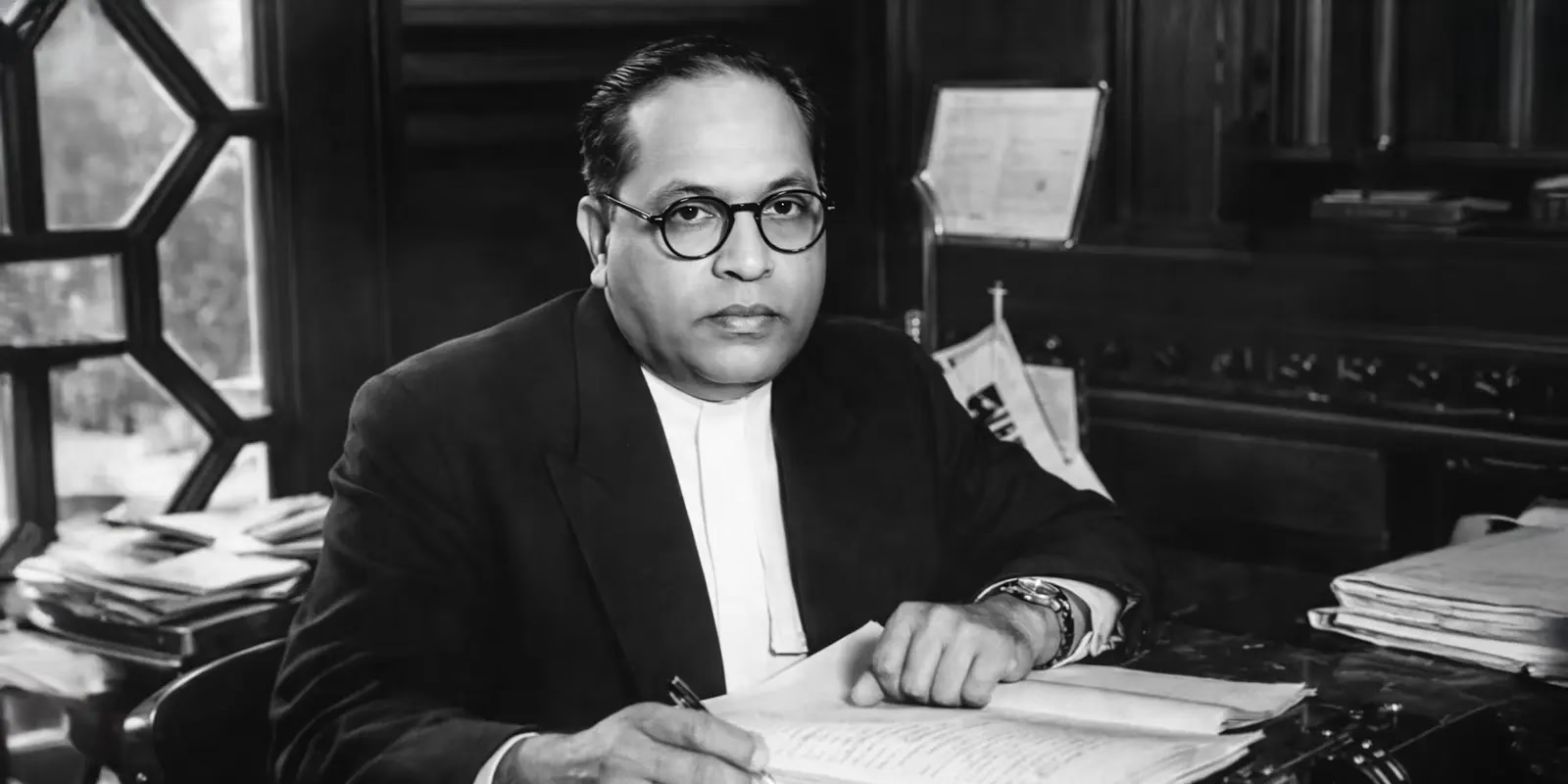
He was a thinker, a reformer, and the chief architect of the Constitution. But behind this towering figure lies a childhood marked not by opportunity, but by humiliation. There were unfortunate and unfair experiences so deeply etched in classism and discrimination that they would later shape one of the most defining political negotiations in Indian history: the Poona Pact.
But what inspired Ambedkar’s position in 1932?
This is a story that begins in a classroom in Satara, where a young boy was denied something as basic as drinking water.
A Childhood That Taught the Meaning of Inequality
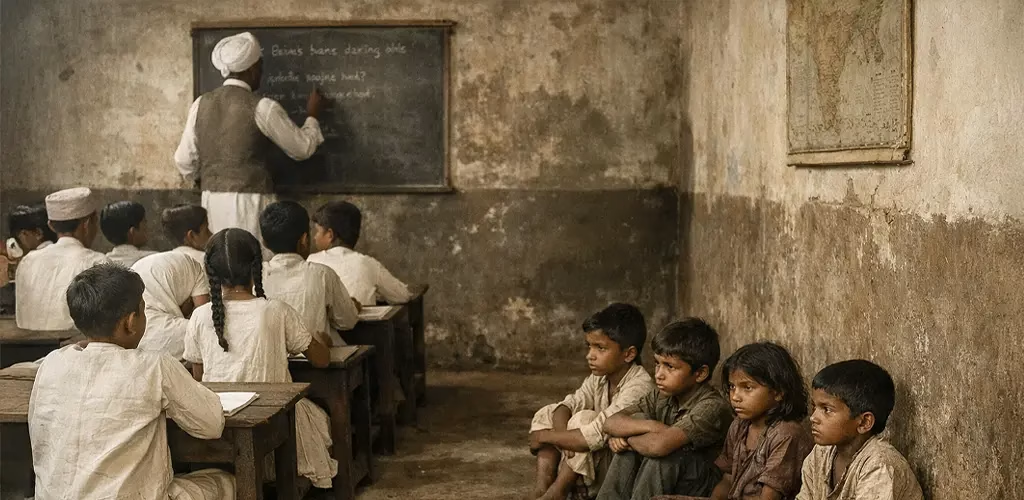
In school, Bhimrao Ambedkar was allowed to attend classes, but not to belong.
Ambedkar had to sit apart from other children, often on a sack that he had to carry for himself. Teachers avoided physical contact with him, and his notebooks were treated as if they carried impurity. These were not just acts of discrimination but a structured system that existed to constantly remind a certain class of their place in society.
The most painful reminder, however, came in the form of everyday thirst. While other children could walk up to a water source and drink freely, Bhimrao had to wait for a peon to pour water into his hands, but only from a safe distance. If the peon was absent, he simply had to pass the day without even getting a drop of water to quench his thirst, the entire day. For him and other kids from backward castes, school life was simply: no peon, no water.
The Journey That Became a Realisation
BR Ambedkar’s understanding of class differences and how society treated lower castes as an abomination deepened during a trip that he undertook in his childhood – this was an experience that should have brought him exploration, but instead, it offered him a glance into the harsh realities of the society, something that a child that young hardly deserved.
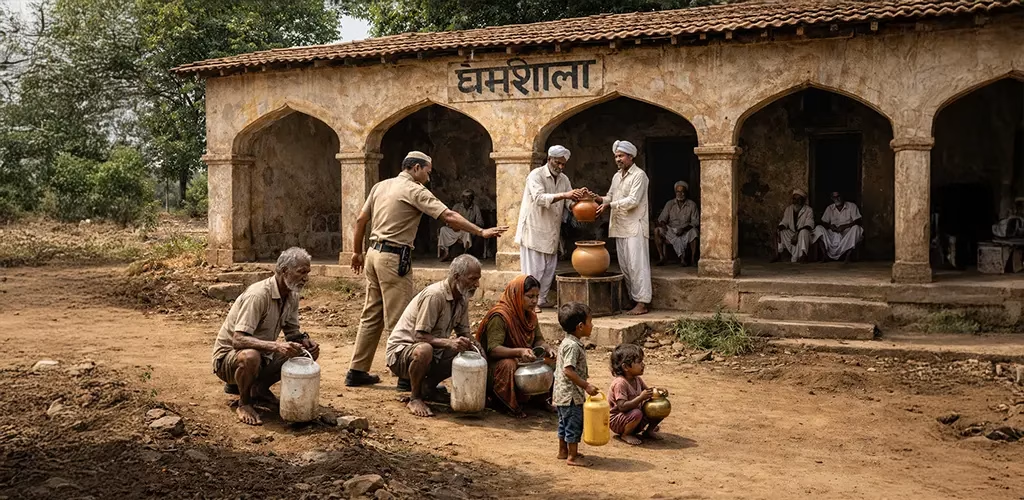
While travelling with his brother and nephews to meet their father, he stopped at a dharmashala in order to take a pause from the overwhelming journey. They requested food and a place to rest, but when the moment they asked for water, there were only refusals on their way. The reason was simple – their caste made them untouchable, even to a vessel of water, a non-living, basic need of life.
That night, they rested there, thirsty and afraid, taking turns to stay awake and ensure that they were safe – it felt as if their caste made them untouchable but not immune to the crimes and cruelty of the world. The incident, later recounted in his “Waiting for a Visa”, marked a turning point in Ambedkar’s consciousness. It was no longer just about exclusion in isolated spaces. It was the realisation that the system itself denied him basic human rights.
Education, Memory, and a New Understanding of Power
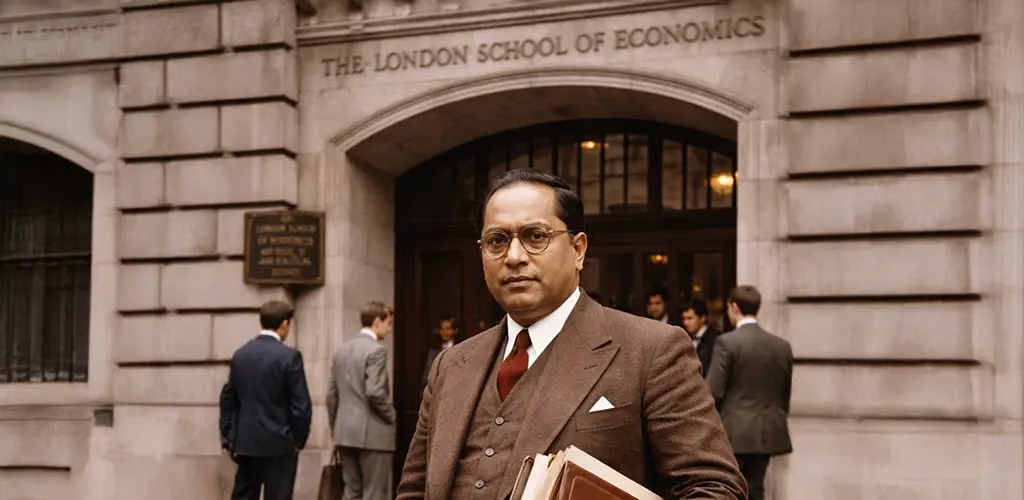
Ambedkar’s journey from these experiences to global institutions like Columbia University and the London School of Economics is often seen as a story of triumph and revolution. But despite his advancement in life and even reaching an international platform did not free from the torments of his past. It only sharpened his understanding of how he was denied basic human rights, and accessibility was in control of a section that did not achieve anything but was born into circumstantial privilege. He came to recognise that caste was not merely a social issue that could be resolved through reform, goodwill, education, or even achievement. It was a system sustained by power, and thus, it needed a structural revolution.
This insight defined his eminent politics. For Ambedkar, dignity was never to be left to the mercy of others. It must be secured through rights, representation, and institutional safeguards – something that restored humanity without any challenge.
1932: When Childhood Memory Became Political Strategy

In 1932, the British government’s Communal Award proposed separate electorates for Dalits, enabling them to elect their own representatives, independently and without any interference. For Ambedkar, this was the logical extension of everything he had learned as a child. A society that denied him water could not be trusted to represent him fairly. Thus, separate electorates meant autonomy, a voice that could not be overridden, something that BR Ambedkar deeply envisaged in an independent India.
However, this proposal was strongly opposed by Mahatma Gandhi, who saw it as a threat to Hindu unity. While imprisoned in Yerwada Jail, Gandhi began a fast unto death. This one move of Mohandas Karamchand Gandhi placed immense moral and political pressure on Ambedkar.
What followed was not a negotiation between equals, but a moment of profound dilemma. Ambedkar had to choose between holding onto a mechanism that guaranteed political independence for Dalits and preventing a situation that could lead to widespread violence against his community. And, the result was the Poona Pact.
Separate electorates were abandoned, and instead, reserved seats within a joint electorate system were increased. While this ensured greater numerical representation, it diluted the autonomy Ambedkar had fought for. He later viewed the agreement as a compromise made under duress, a moment where moral pressure overpowered structural necessity.
From Personal Humiliation to Constitutional Safeguards

The thread connecting Ambedkar’s childhood to the Poona Pact did not end in 1932. It continued into his later work as the chief architect of the Constitution of India. The same boy who had once depended on a peon for water went on to design a framework where no citizen would have to depend on another person’s understanding of humanity and basic human rights goodwill for their dignity. Fundamental rights, equality before law, and reservation policies were not abstract ideals – they were his answer to a system that had once denied him dignity at every step.
Why This Story, on Ambedkar Jayanti
BR Ambedkar’s life is often celebrated as a story of resilience, but it is equally a story of clarity. He understood early on that injustice was not accidental. It was organised, and thus, needed an organised response to counter.
The journey from a thirsty child in Satara to a leader negotiating the future of millions belonging to the backward classes in Poona was not just a personal story. It is a consistent reminder that true change does not come from constant negotiation and an approach to kindness, but from the creation of systems that make equality non-negotiable and compulsive.
While Ambedkar Jayanti celebrates his contribution to the India that we live in today, it is also vital to realise how an India that once discriminated against a little boy started working rationally only after his struggle in accessing basic human rights.