
Hornbill Festival 2025: The Festival of Festivals Returns to Nagaland
Every December, the mist-covered hills of Nagaland turn into a living celebration of identity, memory, and heritage. At the heart of this state is the Hornbill Festival, one of India’s most celebrated cultural showcases. Over the years, the Hornbill Festival has evolved into a symbol of pride and continuity, where ancient traditions meet modern expressions, and where diverse communities find a familiar rhythm of celebration.
As the 26th edition of the festival continues, the excitement around the Hornbill Festival Nagaland has been steadily growing. In 2025, this celebration will once again draw visitors from across India and around the world, reaffirming why the Hornbill Festival Nagaland is often described as a bridge between past and present, tradition and innovation, and local culture and global exchange!
A Festival Rooted in Cultural Wisdom
The tradition of hosting the Hornbill Festival in Nagaland started in 2000 with a simple yet determined purpose. The main aim of this tradition was to preserve, celebrate, and promote the ancestral cultures of the tribes of Nagaland.
With time, this festival has become a significant part of cultural storytelling in Northeast India. Named after the revered hornbill bird, which has deep symbolic meaning in Naga folklore, the Hornbill Festival Nagaland reflects values of courage, fertility, and unity.
Today, the festival not only stands as a cultural event in the state but also as a defining point for Nagaland tourism, drawing thousands of travellers who wish to explore and understand the legacy, resilience, and artistry of the region.
Dates, Venue, and Theme for 2025
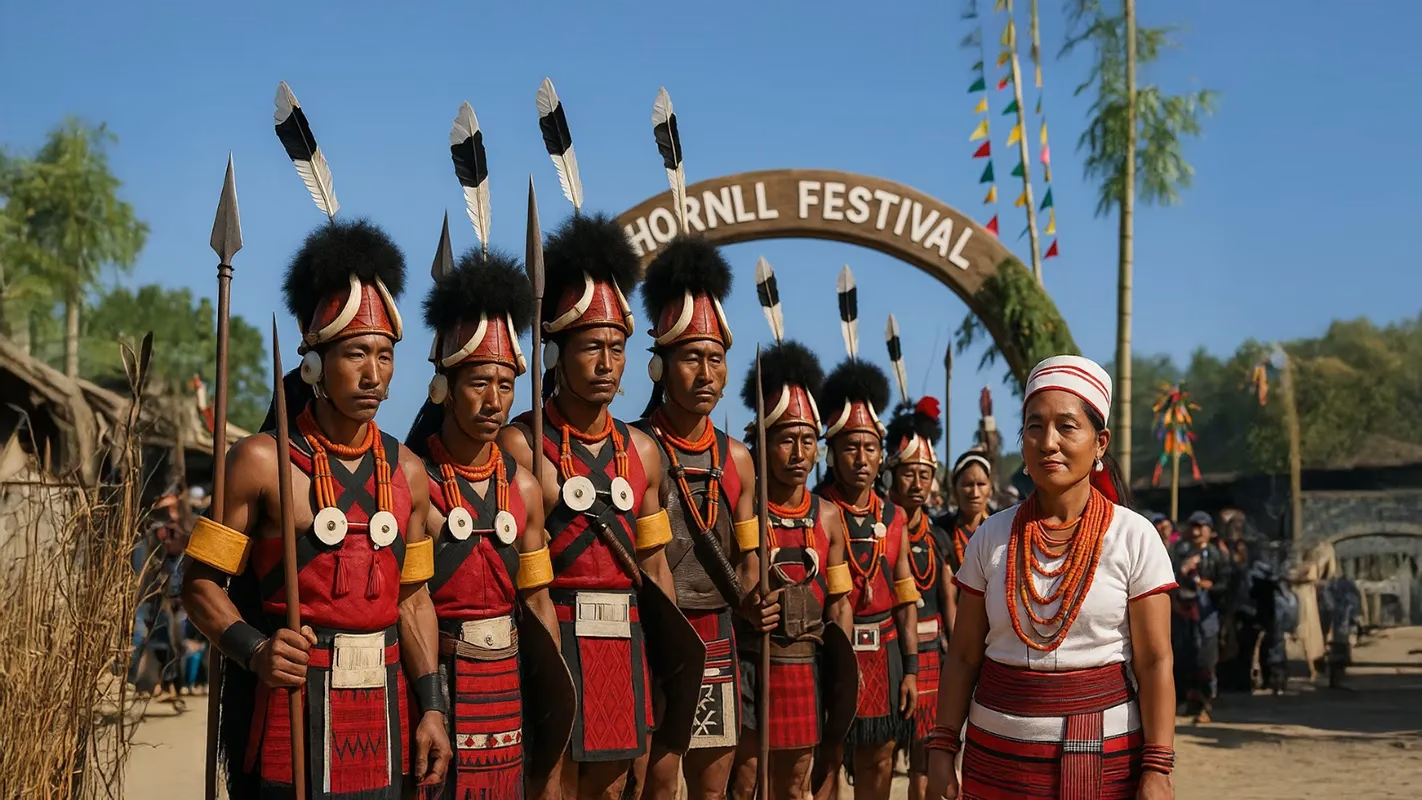
The Hornbill Festival has been hosted in Nagaland since 1st December 2025 and will be coming to a conclusion on the 10th December 2025, at the iconic Kisama Heritage Village, just 12 kilometres south of Kohima. Spread across scenic, terraced hills and traditional morungs, which the community houses, Kisama becomes a living museum during the Hornbill Festival Nagaland.
The theme of the festival in 2025 is “Cultural Connect”. This theme is a reflection of a vision of shared heritage. Switzerland and Ireland have joined this festival as the official partner countries, strengthening the global engagement and exhibition of cross-cultural performances, curated collections, and collaborative art workshops of the traditions and cultures of Nagaland.
The Experience of Culture, Tradition, and Legacy!
The Hornbill Festival is widely acknowledged for the immersive experiences it offers to travellers and communities. Each day at the festival unfolds differently, and every visitor gets to encounter the Nagaland culture and performances on a participatory level.
From the varied experiences that the festival offers, here are a few highlights:
- Traditional dances and war enactments
- Naga wrestling and indigenous sports
- Handmade textile, jewellery, and woodcraft markets
- Culinary experiences featuring smoked pork, bamboo shoots, and millet rice beer
- Hornbill International Rock Contest and fusion concerts
- Night Bazaar and fire performances
What makes the experience at the Hornbill Festival unique is the informal yet immersive rhythm. Visitors move freely between morungs, food courts, music stages, and activity arenas, not like spectators but like welcomed guests in a living cultural narrative that they get to live and participate in.
Permits, Tickets, and Travel Essentials
To attend the Hornbill Festival, domestic travellers require an Inner Line Permit, while international visitors must apply for a Protected Area Permit. Fees are modest, and daily entry tickets typically range between ₹50 and ₹300 depending on nationality and seating preferences.
Reaching Kohima is easy through Dimapur Airport or railway connections. Most visitors combine the festival with nearby attractions like Khonoma Village, the Kohima War Cemetery, or the breathtaking Dzukou Valley.
The Accommodation Planning
Accommodation options range from local homestays and tented camps to boutique hotels and luxury eco-lodges. Availability during the Hornbill Festival Nagaland is limited, making advance booking essential. Many travellers prefer staying in Kisama or Kohima to experience the full festival environment alongside the tribes of Nagaland.
Cultural Meaning and Ongoing Preservation
Beyond its music, colour, and festivities, the Hornbill Festival serves a deeper purpose. It safeguards intangible heritage in a rapidly modernising world. The festival allows the tribes of Nagaland to preserve traditional dances, attire, crafts, and oral stories that might otherwise fade with time. This cultural preservation effort aligns with long-term programs led by the Tourism Department Nagaland, which remains committed to responsible cultural tourism.
These efforts ensure that the Nagaland tourism continues to grow sustainably, encouraging respectful engagement with external visitors, while assuring environmental care and meaningful exchanges.
What Makes Hornbill Festival 2025 Unique
In 2025, collaborations with European countries like Ireland and Switzerland will bring a fresh cultural dimension to the Hornbill festival. Meanwhile, sustainability initiatives, such as zero-plastic zones and eco-workshops, reflect a festival identity that not just focuses on traditional growth but also ecological preservation. Digital upgrades, including real-time schedules and live streaming, ensure easier and larger participation for global audiences.
As conversations expand beyond celebration toward preservation, authenticity, and inclusivity, the role of the tourism department Nagaland becomes even more vital in shaping responsible Nagaland tourism and ensuring the festival remains rooted in community integrity.
The Hornbill Festival, a Living Legacy!
Over time, the Hornbill Festival has become more than just a cultural event. It has turned into a testament to belonging, pride, and cultural continuity for the people and tribes of Nagaland. With every war dance, tribal rhythm, carved artefact, and shared plate of traditional food, the Hornbill Festival Nagaland reminds the world that identity is not just inherited, it is celebrated, protected, and passed forward.