
The Burial Cloth of Jesus Has an Indian Connection. And Scientists Can Prove It
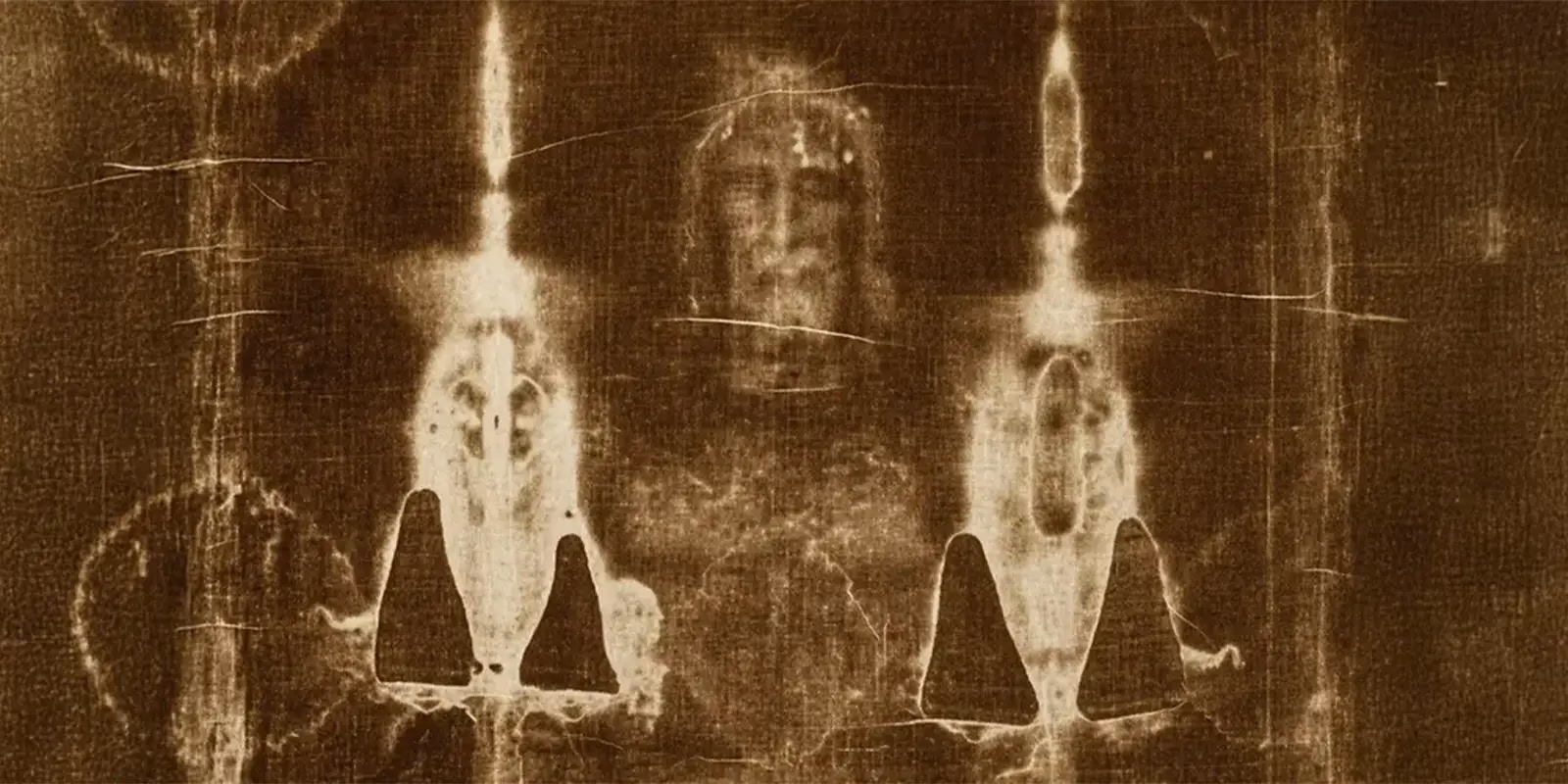
There is a piece of cloth sitting inside a cathedral in Turin, Italy, that has been making people argue for centuries.
Not just argue — but genuinely lose sleep over it. Dedicate entire careers to it. Question their faith because of it. It is 4.4 metres long, yellowed with age, and carries a faint human imprint that millions of people believe is the face and body of Jesus Christ — pressed into linen at the very moment of his burial.
Scientists have carbon-dated it. Photographed it in wavelengths the human eye cannot see. Prayed over it. Argued over it in peer-reviewed journals. And after all of that — nobody has definitively settled anything.
But now, a team of geneticists from the University of Padova in Italy has added something completely unexpected to this centuries-old puzzle. And if you are Indian, this one is going to make you sit up straight.
Nearly 40% of the DNA on the Shroud traces back to India
Let that sink in for a second.
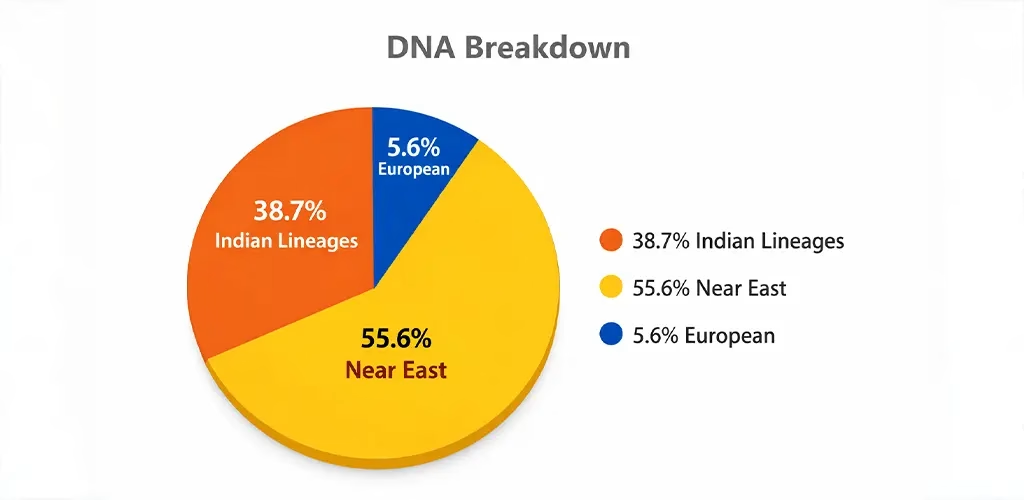
The latest DNA study of the Shroud of Turin has revealed that nearly 40% of the human genetic material found on the famous linen traces back to Indian lineages, raising the startling possibility that the cloth may have originated in the ancient Indus Valley.
The researchers – led by Professor Gianni Barcaccia – did not work with fresh samples. In 1978, a major international research effort called the STURP project ran exhaustive tests on the cloth. As part of that work, scientists vacuumed microscopic dust particles directly from the surface of the linen. That material was preserved. Barcaccia’s team put those same 1978 samples through Next Generation Sequencing — a modern genetic technique capable of identifying DNA from extraordinarily small and degraded fragments.
What they found was messy, complex, and deeply fascinating.
Beyond human DNA, the study uncovered genetic traces from a wide variety of sources — domestic animals such as cats and dogs, farm animals, and wild species like deer and rabbits and fish species. This cloth has been around a long time, and it shows.
But the human DNA – that is where India walks in.
So why does Indian DNA end up on a cloth in Turin?
There are two main theories behind this, and both are genuinely interesting.
First theory: The linen itself may have been manufactured in India. The Romans were known to import fine textiles from the Indus Valley, and some scholars have long noted that the original Latin name for the shroud, Sindon, may derive from Sindia or Sindien — referring to fabric from the Sindh region of India.
Think about that for a moment. The very word used in the Gospels to describe the burial cloth of Jesus – sindon – may literally mean “cloth from Sindh.”
Ancient India maintained robust maritime and overland trade with the Roman Empire, Mesopotamia, Egypt, and the Hellenistic world. Roman texts mention the high demand for Indian textiles, spices, and goods, with ports like Bharuch and Lothal facilitating these exchanges.
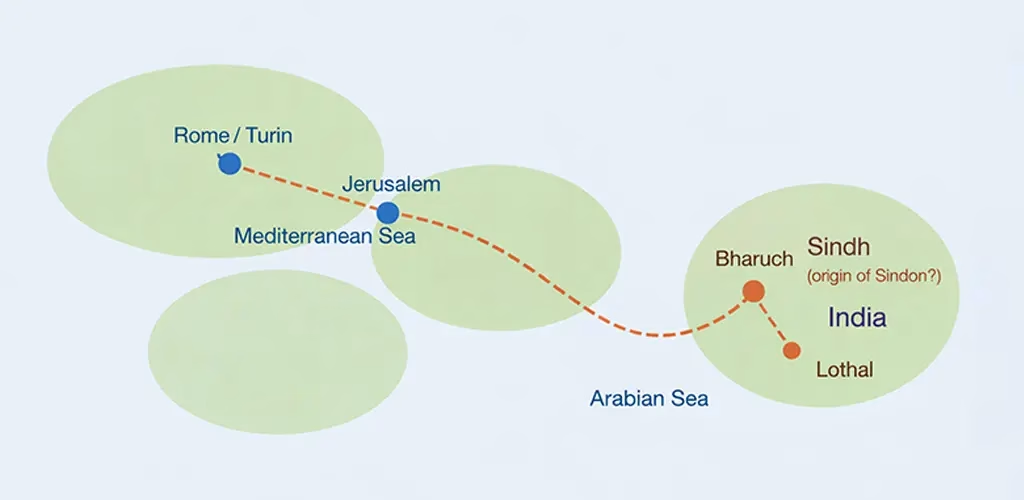
Second theory is slightly less dramatic but equally plausible: the cloth may have simply passed through the hands of people of Indian origin over many centuries – pilgrims, merchants, traders – each leaving behind a microscopic genetic trace.
The presence of Indian DNA can also be explained by the presence of fine Indian linen at the Temple of Jerusalem, used for the garments of the High Priest during the afternoon rituals of Yom Kippur.
Either way, India is in the story. Quite literally woven into it.
But wait - wasn't the Shroud proven to be a medieval fake?
Fair question. In 1988, three independent laboratories carbon-dated a sample from the cloth and concluded it was made sometime between 1260 and 1390 AD – which coincides with the first certain appearance of the shroud in the 1350s, much later than the burial of Jesus.
Case closed, right?
Not quite. Here’s the thing – the scientists who ran the test all used samples cut from the same single corner of the cloth. Just one corner. And that corner happened to be the most handled, most repaired, most contaminated part of the entire shroud. Later researchers went back and looked at the raw data more carefully, and found that the three labs were actually getting slightly different results from each other – which is not supposed to happen if the test is clean and reliable.
In other words, something was off. The sample may not have been representative of the cloth as a whole. And a compromised sample gives you a compromised date.
The 1988 result has never been fully overturned – but it has never been fully settled either. Scientists are still arguing about it. Which, for a cloth this old and this important, feels oddly fitting.
What does this actually mean?
Here is the honest answer: nobody knows for certain. The study invites renewed reflection on the Shroud of Turin not only as a religious artefact but as a historical textile that has traversed continents, carried human and ecological imprints, and connected cultures over the centuries.
What we do know is this – one of the most debated objects in human history has Indian fingerprints on it. Quite literally. And that is not a small thing.
The Indus Valley was producing some of the world’s finest woven fabrics thousands of years before Rome existed as an empire. Indian linen was moving westward through Persian Gulf ports and Arabian Sea shipping lanes long before anyone had thought to call those routes the Silk Road.
The idea that a thread from ancient India may have ended up as the burial cloth of the most written-about figure in Western history – that is not just a science story. That is history reminding us that civilisations have always been more connected than we imagine.
Whether the Shroud is authentic or not, that part of the story deserves to be told.