
Lonar Crater Temple (Maharashtra): Temple by a Meteor Lake
India has a lot of stories where science and faith intertwine. The Lonar Crater Temple in Maharashtra is one such example. It is located beside a lake that was not formed by time or river, but by the forces of the sky. This is a Maharashtra Temple shaped by a meteor lake, where geology and mythology exist mutually.
Lonar is not just a religious site. It is also one of the rarest natural wonders on Earth. A meteor lake created this land, and faith slowly grew around it. Even today, the temples by Lonar Lake remind us that history does not always follow one path.
A Lake Born from the Sky
Around 570,000 years ago, a massive meteor crashed into the Earth. The impact carved a deep crater in the basalt rock of the Deccan plateau. Over time, rain and underground springs filled this crater, creating what is now known as Lonar Lake.
This makes Lonar one of the very few confirmed meteor lake in India. Scientists across the world study this meteor lake because it formed in volcanic rock, which is extremely rare. The meteor lake is deep and circular. Because of minerals trapped in the rock, the water turned saline and alkaline. This harsh environment shaped everything around it, including the land where temples later rose.
A Maharashtra Temple on Rare Earth
What makes the Lonar Crater Temple unique is not just its age, but its location. The temples stand on rare alkaline soil found almost nowhere else in India. This unusual ground formed directly because of the meteor lake.
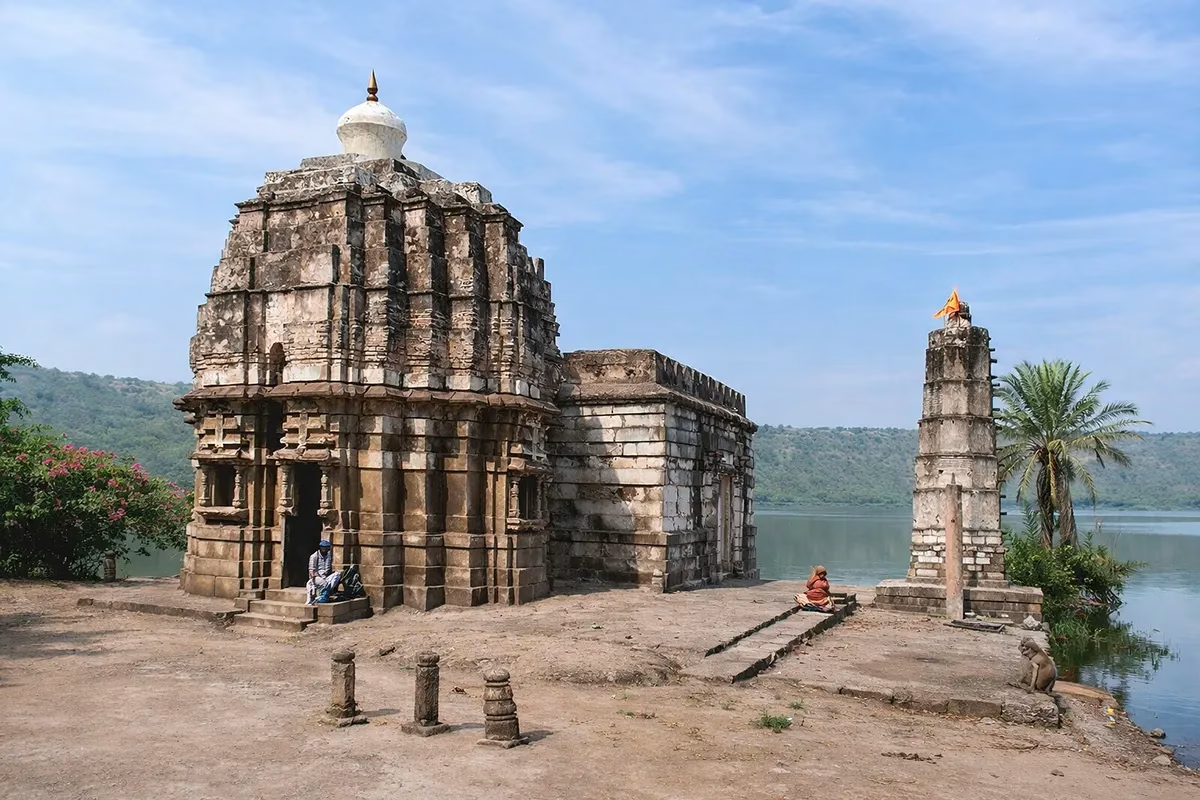
Between the 12th and 13th centuries, rulers built several stone temples around the crater. These structures now form an important group of Maharashtra Temple architecture. Basalt stone was used to build this temple, and the builders carved detailed figures that have survived centuries of heat, wind, and silence.
The most prominent temple here is the Daityasudana Temple, which is dedicated to Lord Vishnu. Its carvings show cosmic battles, divine forms, and calm expressions that contrast with the violent origin of the meteor lake.
Where Stone and Myth Meet
Science explains the crater as a meteor impact. However, the Hindu faith explains it differently. According to local legends, a powerful demon named Lonasura once ruled the area where the lake is today. Lord Vishnu struck the demon down, which eventually created the crater where the lake is now located. The salty water of the meteor lake is believed to be derived from the demon’s body.
Inspired by this belief, devotees consider the site sacred. They walk around the lake, visit the temples, and bathe in nearby freshwater springs. In this Maharashtra Temple complex, science does not cancel belief. Instead, both stories exist together.
Life in an Impossible Place
Despite its harsh water, the meteor lake supports marine life. Unique microorganisms live here, adapting to the extreme salt and high alkalinity, which is something unusual. Major studies have been run on the organisms because they resemble life forms that could exist on other planets.
At the same time, birds gather around the lake. Trees grow along its slopes. This makes Lonar not just a spiritual place, but also a living laboratory despite its geographical limitations, further proving that destruction can also inspire life in the most unexpected ways.
Temples That Watch Over Time
Several ancient temples surround the crater. Each one adds a different layer to Lonar’s story. While some sit close to the water, others stand quietly along the slope. Together, they form one of the most unusual Maharashtra Temple clusters. These temples do not dominate the land. Instead, they seem to observe it, as if aware of the power that shaped the ground beneath them.
For travellers exploring Temples near Mumbai, Lonar feels different. It does not overwhelm with crowds or noise. Instead, it invites slow walking, silence, and thought while offering a. unique scientific and mythological explanation.
A Place Between Past and Future
At present, Lonar Crater is protected as a heritage site. Scientists visit to study the meteor lake. Pilgrims arrive to seek blessings. Tourists come looking for places beyond the usual Temples near Mumbai. The water sometimes turns pink or green due to the presence of various microorganisms. The history of the lake and the temple continues to interest the visitors.
Lonar Crater Temple - A Faith that Lives On
The Lonar Crater Temple is still relevant and highly sought because it tells a layered story. It reminds us that this Maharashtra Temple did not always rise from a peaceful land but from an event that symbolises destruction.
The meteor lake beside it continues to astonish with its unique life support that is beyond the understanding of the Earth. In a country full of ancient temples, Lonar stands apart. It is not only one of the most unique meteor lakes in India, but also a reminder that Earth itself carries memory.