
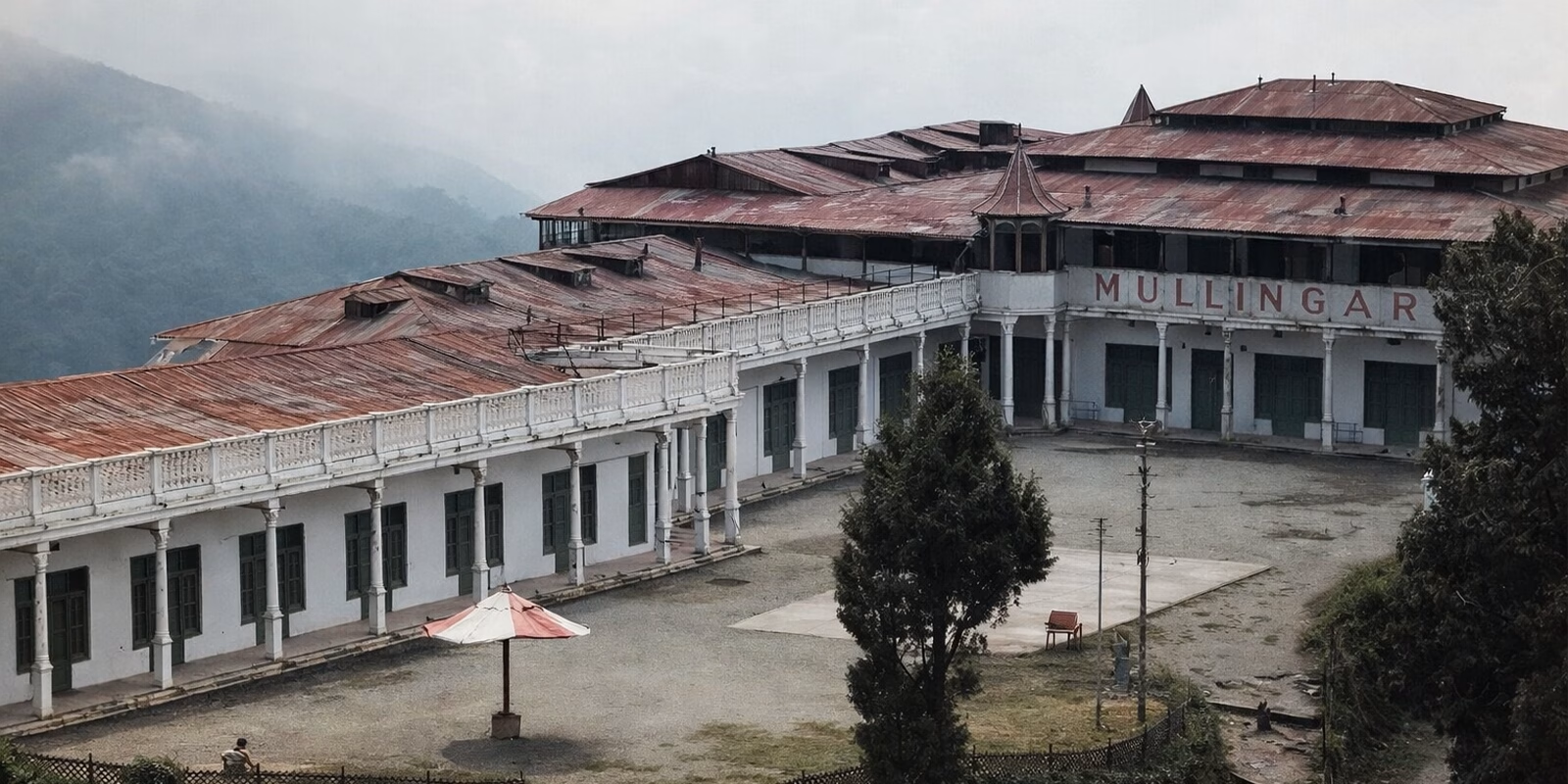
Mussoorie is often known as Queen of the Hills, but the kind of architecture that it fashions allows it to be called the crown jewel of the British colonial empire. Even today, the architecture, structures, hotels, and mansions of the British colonial era continue to interest locals as well as travellers. However, these places now attract attention not only for their Gothic architecture but also because of a series of unbelievable and eerie stories.
One of these stories is about Mullingar Mansion. It seems to have everything a haunted Hollywood film would require. An old haunted mansion, a mysterious man on a horse, a motive, haunting mountains, and petrified locals. But does it have what truly matters, the truth?
Let us find out.
Mullingar Mansion and Its Past
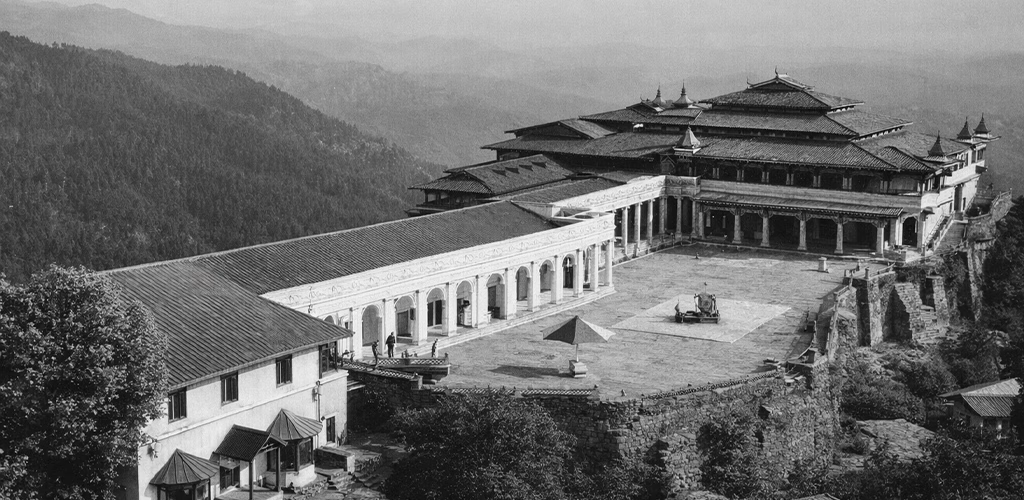
Located in the Landour Cantonment area, Mullingar Mansion is also known as Mullingar Lodge or simply Mullingar. It was the first permanent building constructed in Mussoorie. Built in 1825, the structure existed long before Mussoorie earned the title “Queen of the Hills.” While many hotels, roads, lodges, and homes were built later as Mussoorie grew in popularity, Mullingar Mansion stood much earlier, quietly witnessing the birth of the hill station.
The mansion was built by Captain Frederick Young, an Irish officer serving in the British East India Company’s army. Unlike many colonial officers who came to the hills for leisure, Young had a different vision. He wanted to develop Mussoorie in a way that encouraged others to explore and experience the region.
The story of Mullingar Mansion begins in the 1820s, when Young was stationed in Dehradun. He was drawn to the forested ridges above the Doon Valley. The cool climate, pine and oak forests, and mist-covered views reminded him of his homeland. For Young, Mussoorie felt like home.
In 1823, he built a small hunting lodge near what is now Camel’s Back Road. Although the lodge meant a great deal to him, it did not satisfy his ambitions. He wanted to create something far more enduring. This desire led to the construction of Mullingar Mansion, named after his hometown in County Westmeath, Ireland. Like many colonial officers, he used architecture to preserve memory, bringing a part of home to unfamiliar land.
Captain Frederick Young: The Man Behind the Mansion
Mullingar Mansion was not built out of wealth or property ambition. It was born from a deep emotional connection to the hills and their mysticism.
Captain Frederick Young was captured during the Anglo-Gurkha War, yet earned respect by learning the Gur language and customs, which was unusual for a British officer of that era. He later became the first commander of the Sirmoor Battalion, the earliest Gurkha regiment raised for British service.
His contributions to Mussoorie were significant. He advocated for the region to be recognized as a convalescent sanatorium. He also helped introduce potato cultivation and tea plantations to the area. Beyond this, he played a key role in establishing Landour as a British settlement.
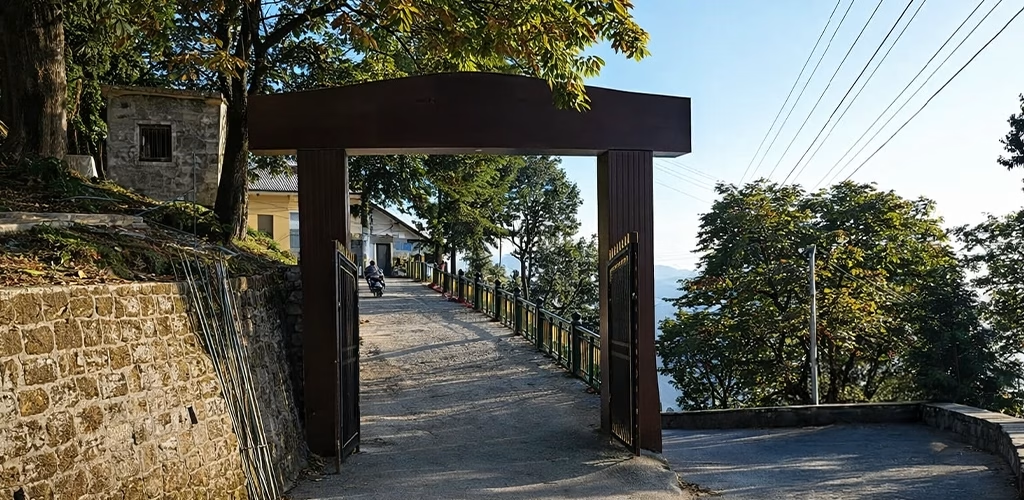
Mullingar was his summer home, overlooking wide valleys and evoking Ireland more than India. Even after retiring and returning to Ireland, his emotional attachment to Mullingar never faded.
And perhaps, some believe, it never truly ended.
Architecture That Breathes the Past
Unlike grand colonial hotels, Mullingar Mansion is a practical British-era bungalow, designed for endurance rather than display. Thick stone walls protect it from Himalayan winters. Sloping roofs withstand rain and snow. Wide verandas open out to sweeping views of the Doon Valley.
Constructed carefully on a hillside, the mansion forms an L-shaped compound with gardens and open courtyards that were once meant for horses, gatherings, and long, silent evenings.
Today, the iron railings are twisted and weathered. In local ghost stories of Mussoorie, these railings are said to play a chilling role.
From Home to Hotel to Forgotten Relic
As Mussoorie evolved, Mullingar changed identities. In the early twentieth century, it was converted into a hotel. During World War II, it served as a convalescing station for British troops and sheltered evacuees.
After India’s independence, the mansion slowly slipped into neglect. In recent decades, it has housed multiple tenants, including Tibetan migrant families. Prayer flags now flutter in its courtyard during Losar celebrations.

Today, parts of Mullingar Mansion are altered, encroached upon, or crumbling. This is the present reality of the once-grand structure.
Mussoorie’s Original Haunted Mansion
Mullingar is often referred to as Mussoorie’s first haunted mansion, a reputation older than many modern colonial ghosts of Mussoorie tales.
Unlike stories of revenge or murder, Mullingar’s legend is surprisingly simple. Captain Frederick Young loved this mansion too deeply to ever leave it behind.
Locals claim that on moonless nights, a ghostly rider on a white horse approaches the mansion. The rider is said to dismount, tie the horse to the iron railings, and stand silently, as if inspecting his beloved home. Anyone attempting to follow the figure reports that he vanishes into the darkness without a trace.
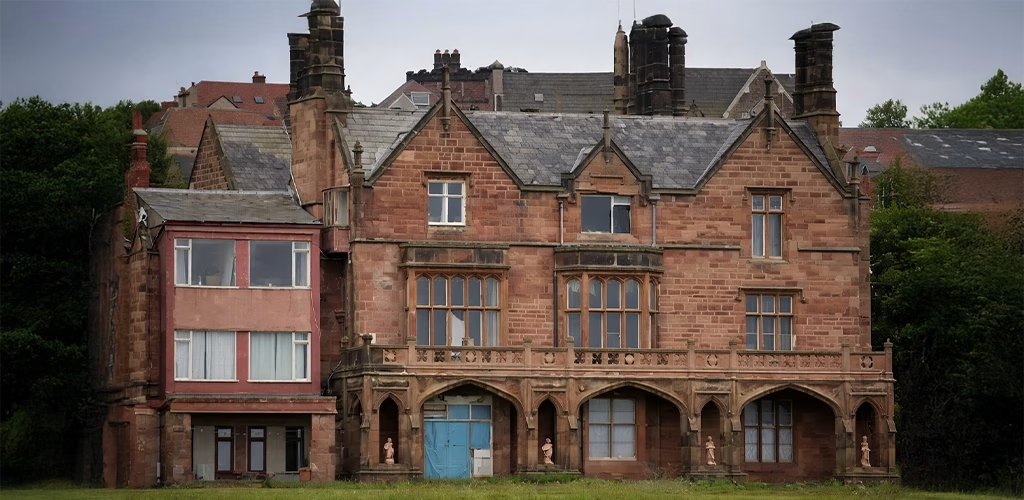
Stories speak of horse hooves echoing where no road exists, whispers inside empty corridors, and pale apparitions visible only for fleeting moments. Some dismiss these as imagination shaped by fog and forest silence. Others insist they have witnessed the rider with their own eyes.
A Ruin That Still Watches
Today, Mullingar Mansion stands dilapidated, wrapped in mist, memory, and folklore. Surrounded by Buddhist stupas, prayer wheels, and Tibetan influences, it is no longer just a residence from 1825.
Some visitors claim they constantly feel watched, sensing an unseen presence. Others believe such feelings are the result of exaggerated paranormal activity in Mussoorie narratives. Yet those who linger too long say they hear hooves where no horse stands.
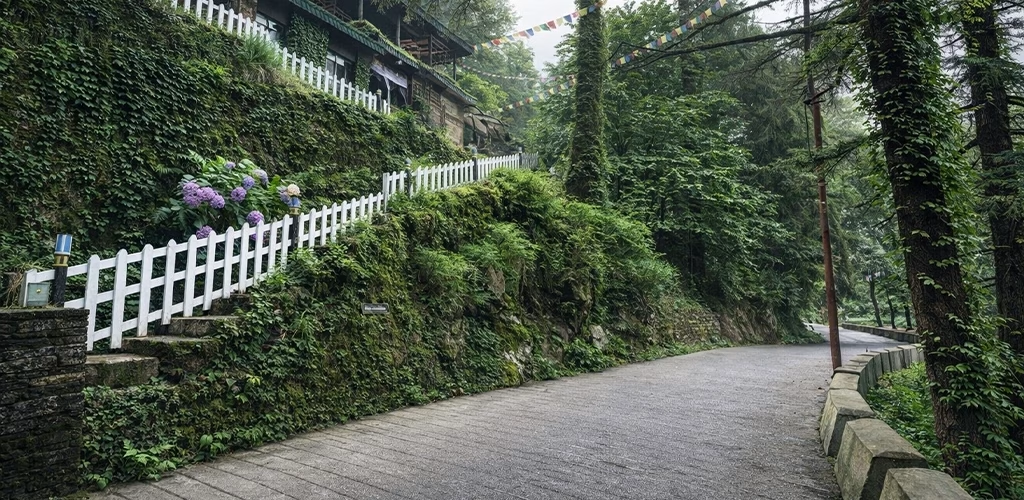
Perhaps Mullingar reminds us of one unsettling truth. Some founders never truly leave the places they built.
And among all haunted places in Mussoorie, Mullingar Mansion continues to watch silently, waiting.