
Noor Inayat Khan: India’s Forgotten WWII Spy
History often remembers warriors with weapons. However, some warriors do not fight wars with weapons. Instead, they use their intelligence and intellect to win. Noor Inayat Khan was one of them. She fought World War II with silence, courage, and loyalty. She never fired a gun yet she became one of the bravest figures of World War II.
Born in peace and raised to believe in love, she resiliently took her stand against hate. Today, Noor Inayat Khan remains one of India’s most forgotten heroes of World War II despite the fact that her sacrifices changed lives.
A Princess Raised on Peace
Noor Inayat Khan was born in 1914 into a Sufi family that believed deeply in non-violence. Her father, Hazrat Inayat Khan, was a spiritual teacher and musician from India. Through him, Noor Inayat Khan carried royal Indian lineage, which later earned her the title spy princess.
She grew up in France, surrounded by music, poetry, and teachings of peace. As a child, she was shy, gentle, and imaginative who loved writing stories for children and playing music. Nothing about her early life could predict that Noor Inayat Khan would have to become an Indian spy during World War II. But future had other plans for her.
World War II Changed Everything
In 1940, Nazi forces invaded France. Suddenly, war entered Noor’s quiet world due to which her family had to escape to Britain, leaving behind their home and safety.
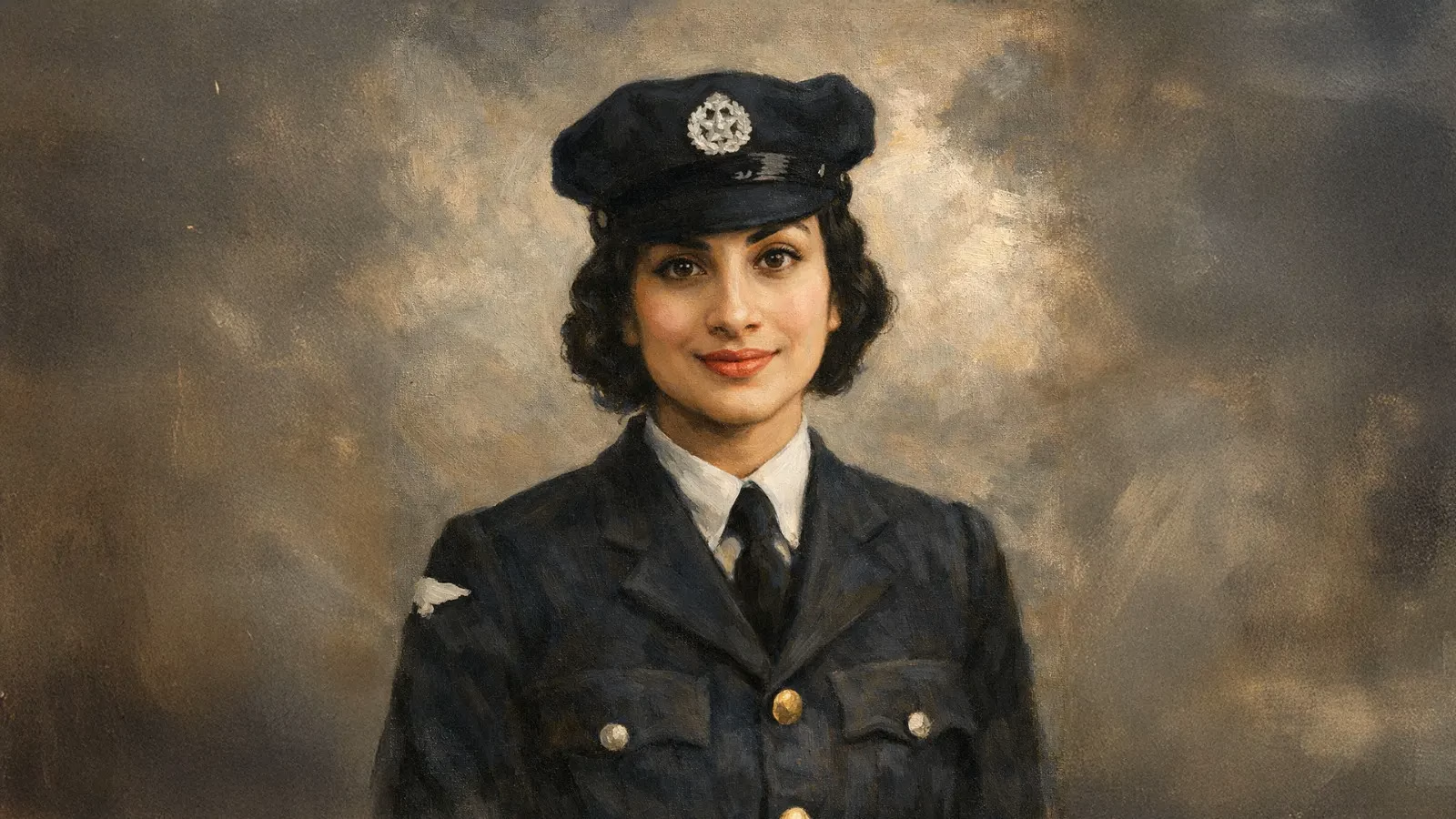
Initially, Noor Inayat Khan chose nursing in Britain. She wanted to help without harming anyone but, as World War II grew darker, she realised silence was no longer enough. Slowly but firmly, she chose resistance. Soon after that, Noor Inayat Khan joined Britain’s Special Operations Executive. This secret unit trained spies to work behind enemy lines. Although many doubted her, she refused to step back. Eventually, she became the first female wireless operator sent into Nazi-occupied Paris during World War II.
The Spy Called Madeleine
Every spy needs a cover. Noor Inayat Khan spy name was Madeleine. Under this identity, she entered Paris in 1943. However, her job was extremely complicated and full of danger as wireless operators had one of the shortest survival rates in World War II.
Nevertheless, Noor Inayat Khan continued sending messages day after day. She moved constantly, avoided detection, and kept communication alive between the French Resistance and Britain. When other agents were arrested, she refused evacuation. In that very moment, Noor Inayat Khan was the only link between Paris and London.
Capture and Cruelty
Eventually, the betrayal led to her arrest. The Gestapo captured Noor Inayat Khan in Paris. They interrogated her repeatedly. They beat her. They starved her. Still, she spoke nothing. Despite months of torture, Noor Inayat Khan never revealed codes, names, or locations. Even under unbearable pain, she protected others. Her strength during World War II shocked even her captors. Because of her repeated escape attempts, the Nazis declared her “highly dangerous.” They sent her to Germany in chains.
Final Moments of the Spy Princess
In September 1944, the Nazis executed Noor Inayat Khan at Dachau concentration camp. She was only 30 years old. Witnesses later said her final word was “Liberté,” which means freedom. That single word captured her entire life. An Indian spy in World War II and a true spy princess who chose courage over survival.
Recognition of her Silent Sacrifice
For years, the world forgot her name. Slowly, recognition followed. Britain awarded Noor Inayat Khan the George Cross, its highest civilian honour for bravery. France honoured her with the Croix de Guerre. Today, memorials across Europe remember her role in World War II. Films, books, and plays now retell her story. Yet, even now, many Indians remain unaware that Noor Inayat Khan stood among the bravest heroes of World War II.
Why Noor Inayat Khan Still Matters
Noor Inayat Khan world war 2 story matters because it goes against every stereotype. A woman who was trained to love, setting foot deeply in a situation where hate is the foundation. Nevertheless, she fought the greusome without wrapping her heart with it. Her life is a constant reminder that bravery is not always loud, evidently loaded with heroic arms and violence, but also silent and resillent. As we remember Noor Inayat Khan, we take notes that courage can be gentle, resistance can be quiet, and history still holds stories waiting to be heard.