
Nyenpa Gu-Zom: Sikkim’s Tradition where High Himalayas Burn Away the Nine Evils
India is a land of traditions and customs. There are hundreds of different cultures flowing through the cities, villages, and lands in this country. One such traditions exist in Sikkim. The Bhutia community of Sikkim follows a ritual that seems older than the North Sikkim mountains.
In the villages of Lachen and Lachung, below the Indo-Tibetan border, winter is challenged and confronted, and along with it burned. This happens with the Nyenpa Gu-Zom, which means “Meeting of the Nine Evils”.
What is Nyenpa Gu-Zom, the Sikkim Ritual?
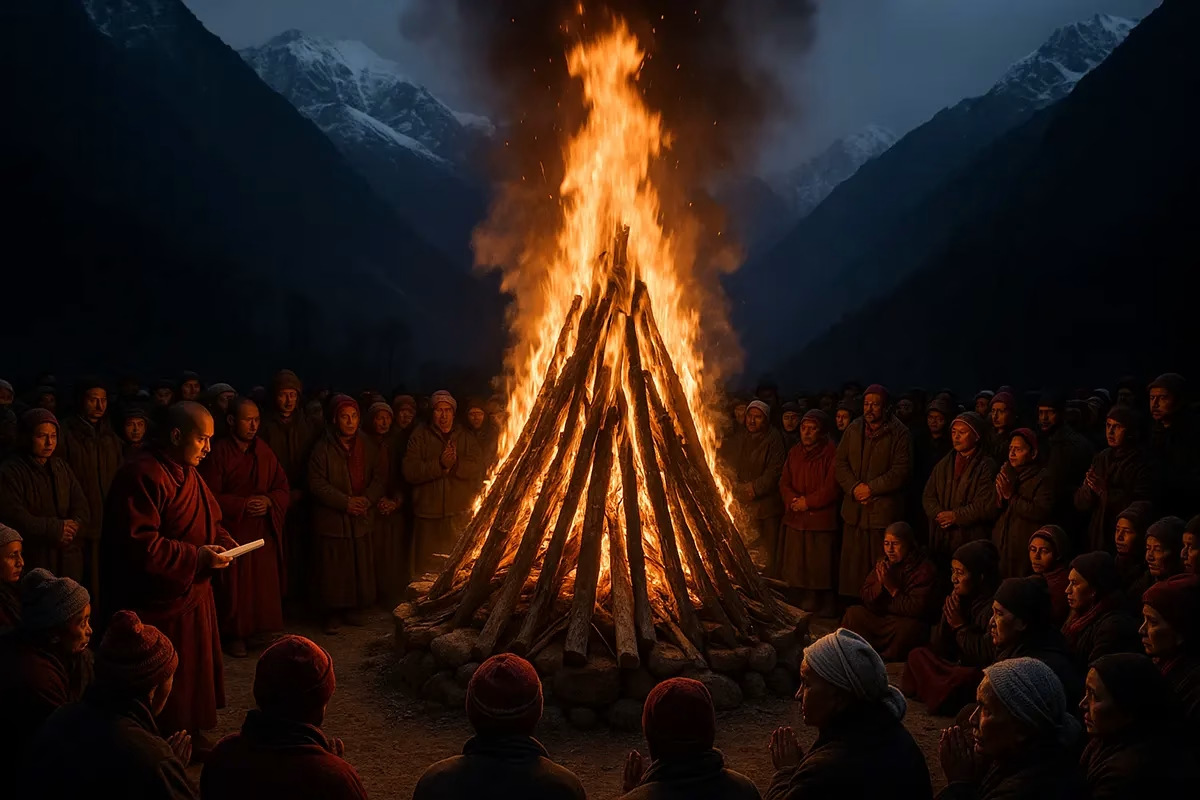
The rare Himalayan exorcism ritual of Nyenpa Gu-Zom is practised only by the Bhutias of Sikkim. It is deeply rooted in the ancient culture of Sikkim. On the 6th and 7th days of the 11th Tibetan lunar month, when the sun sinks early and shadows crowd the valleys, entire villages of the community gather around a blazing pyre built from nine sacred woods. For nearly twelve hours, flame turns into an unwavering faith, and smoke converts into a ritualistic shield to drive the winter’s worst omens away.
Among the many tribes in Sikkim, dominantly the Bhutias have preserved this ritual with fierce devotion. In the nearby forests of Dzongu, the Lepcha tribe of Sikkim follows this ritual in a twisted way by adding their own ancient prayers to it. By this, they create a syncretic ritual that belongs to Sikkim, a unique traditional ceremony shaped by glaciers, storms, and traditional folklore.
Where This Ritual Was Born: A Himalayan Inheritance
The origins of Nyenpa Gu-Zom stretch back to old Tibet. The origin stems from the geomantic lore of the land of Sikkim, where spirits, planets, and mountains negotiate the fate of seasons. Traditional legends state that Rahula, a wrathful planetary spirit, had a forbidden gathering at the top of Mount Meru. This gathering generated nine destructive forces that included avalanche demons, plague spirits, famine shadows, and ghosts that wander through the longest nights of the winter season.
When the Bhutia community migrated into Sikkim in the 17th–18th centuries, in search of safety and protection from political turmoil, they carried these folklores along with them across the passes. In the North Sikkim corridor, these beliefs blended with local Bon traditions, and later, matched the Buddhist rhythm of Losoong, the Bhutia-Lepcha New Year.
With time, the tradition and ritual of Nyenpa Gu-Zom evolved from what people believed was a “danger day” into a dramatic ritual of resistance. This ritual turned into a communal act of restoring luck before the new year.
The lamas joined in with mantras, village shamans conveyed fire offerings, and families participated with their fears, hopes, and an unwavering belief in this ritual. During the 1962 Indo-China diplomatic conflicts and tensions, the older people in Lachen reminisce about stacking extra wood. This was done not just to chase the spirits but also to safeguard themselves from any uncertainty that they might encounter across the border.
The Meaning of Fire in Sikkim’s High Mountains
At 2,700 to 3,000 meters, winter is not a season. Rather, it is an adversary bringing in intolerable temperatures, snowstorms, blizzards, avalanches, and so much more. These inevitable evils of winter steal fodder, freeze rivers, isolate villages, and test the resilience of the people of Sikkim. For the Bhutias, Nyenpa Gu-Zom is not only an essential traditional belief but an important shield against these seasonal evils.
During the Nyenpa Gu-Zom ritual, the fire of the ceremony symbolises:
- A purifier: Turns harmful energies into harmless ash
- A warning: Tells unseen spirits to retreat
- A healer: Protects yak herds, crops, and families
- A social glue: Binds the clans through shared fear and shared flame
- A prayer: Rises with the smoke toward the peaks
As per the tradition, the nine ritual woods of the ceremony are chosen by the women, while the men are responsible for reading and analysing the behaviour of the ceremonial fire. During the ceremony, the children are supposed to learn why the flames crackle a certain way. This is how the Sikkim tradition passes from one generation to the next, not through textbooks, but in firelight and with participation and practice.
In the present day, with the fragile Himalayan world filled with glacial bursts (GLOFs), landslides, and erratic snowfalls that haunt valleys, the ritual has adopted a new layer of meaning. It is now associated with battling the modern-day evils as well, such as the fear of melting ice, disappearing forests, and unpredictable winter seasons.
The Ritual: Twelve Hours of Fire, Chant, and Vigil
The night of the Nyenpa Gu-Zom ritual begins with the gathering of nine woods, namely juniper, pine, rhododendron, oak, walnut, cypress, birch, cedar, and a final composite mix. Each of these woods is chosen to specifically counter the evil they are symbolically associated with. A lama or bongthing sanctifies the pyre with chants. Further, as the dusk settles over the Himalayas, the first flame of the ceremony is lit. This ritualistic fire is built in stages, with each wood fed in sequence and each flame representing a battle.
The nine woods fight the following evils:
- Juniper: Gloom
- Pine: Family feuds
- Rhododendron: Avalanches
- Oak: Sickness
- Walnut: Hunger
- Cypress: Madness
- Birch: Infertility and frozen soil
- Cedar: Restless spirits
- The final inferno: Nature’s chaos
The ritual commences with the chanting of the mantras, and the elders go ahead to read the fire, carefully noticing how it bends, roars, and dims. Furthermore, the ashes are collected in order to bless the fields in the spring season. As the night inches towards dawn, the village shares thukpa, momo, and millet beer and the fear of winter fades away, and the Losoong celebrations can finally begin.
Presently, at the Edge of Disappearance, yet Burning Brighter
While only a few hundred Bhutia families in Lachen and Lachung continue the full ritual of Nyenpa Gu-Zom in the present day, the ritual is followed in its full glory and symbolism. However, with the increasing youth departures, forest restrictions, and climate change, the generational continuity of the ritual seems doubtful. Accessing these villages requires permits, and winters are no longer predictable; thus, the symbolic feelings behind this ritual are seemingly changing.
Nevertheless, there are some families and people who are trying their best to revive the ritual:
- Eco-homestays in Lachung host “fire vigil” experiences.
- Bongthing apprenticeships are funded by tourism revenue.
- Sikkim Organic Mission promotes sustainable wood usage.
- Cultural Heritage Cells are digitising mantras and oral histories.
Even the Lepcha communities of Dzongu contribute their grain-offering traditions, preserving the shared heritage.
Nyenpa Gu-Zom: Where Evils Gather and Sikkim Burns Them Away
In a world where traditions fade and seasons shift, the image of the Bhutia villagers encircling the fire remains powerful. As Sikkim’s leaders say during Losoong ceremonies, “These rituals carry the soul of our mountains.” And truly, in the glow of the Nyenpa Gu-Zom pyre, it feels as if the Himalayas themselves are watching, quiet, ancient, and approving. The nine evils arrive, and the nine flames continue to rise.