
Phooldei: When Flowers Become Blessings in the Himalayas
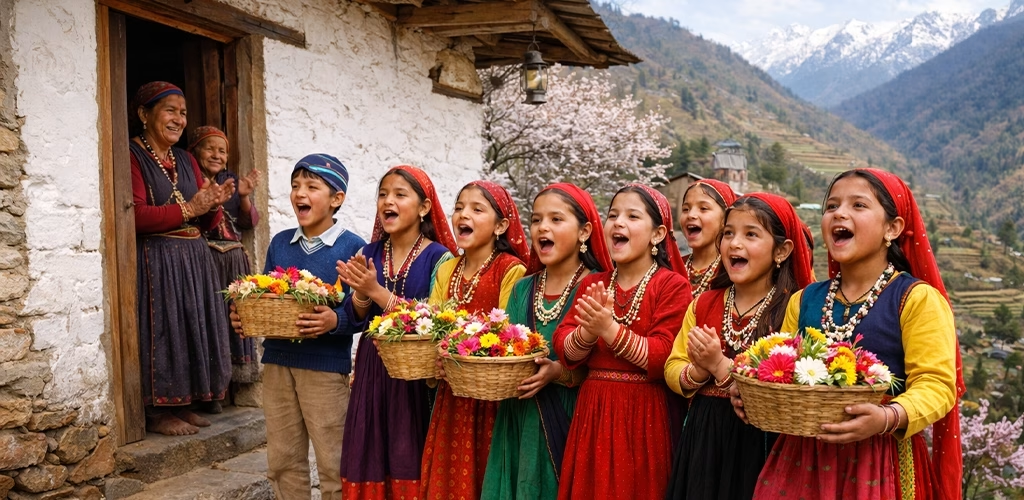
Something magical happens every spring in Uttarakhand. As the dawn breaks and villagers in rural regions of the state open their doors, they find small clusters of flowers gently placed on their thresholds. Soon after that, the soft voices of children echo through the village:
“Phool Dei, Chamma Dei,
Deno Dwar, Bhar Bhakar”
This beautiful ritual initiates the arrival of Phooldei, a beloved Uttarakhand festival that celebrates nature, childhood innocence, and community blessings. Unlike many festivals filled with grand rituals or temple celebrations, Phooldei is led entirely by children – no pandits or communities of grown-ups. This makes Phooldei one of the most heartwarming Uttarakhand traditions still prevalent in the Himalayan villages.
A Festival of Flowers and Blessings
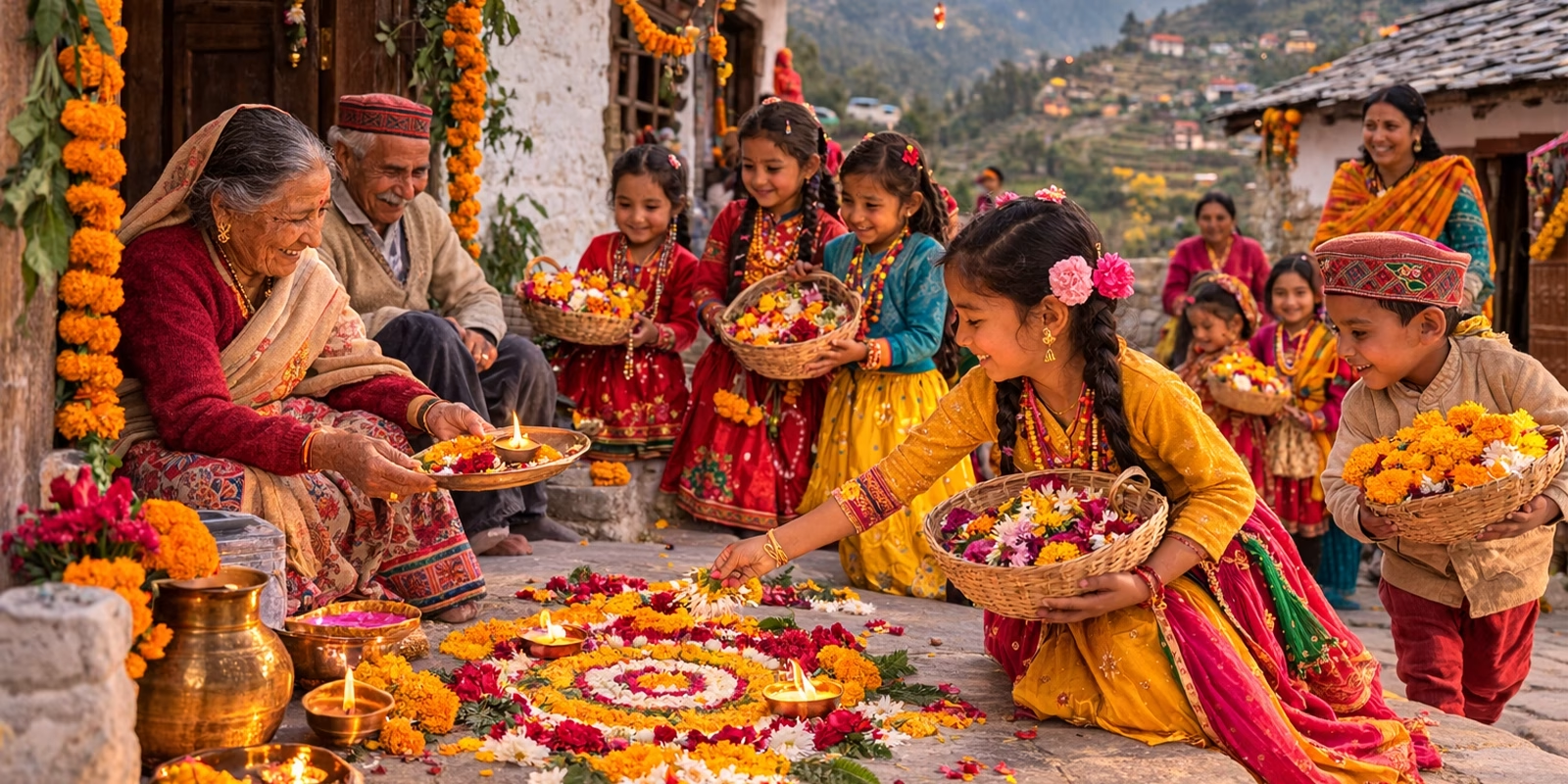
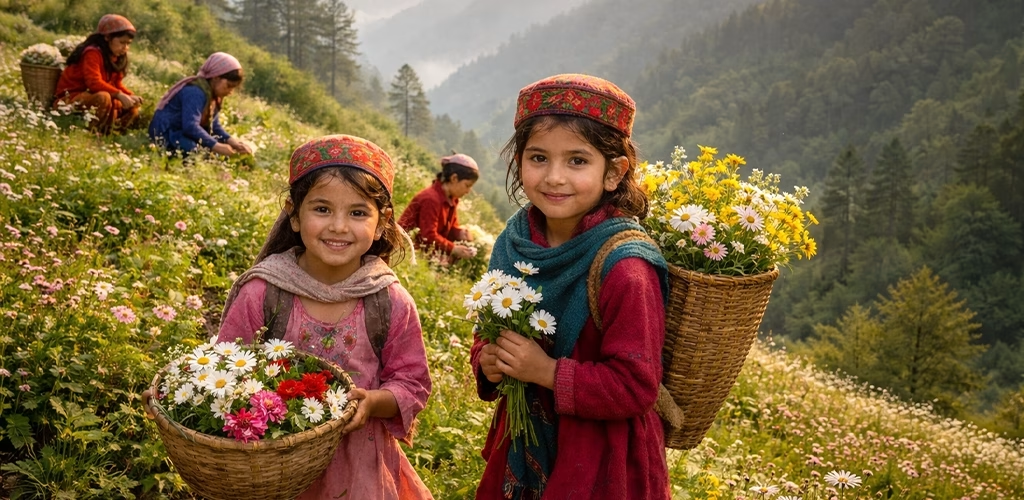
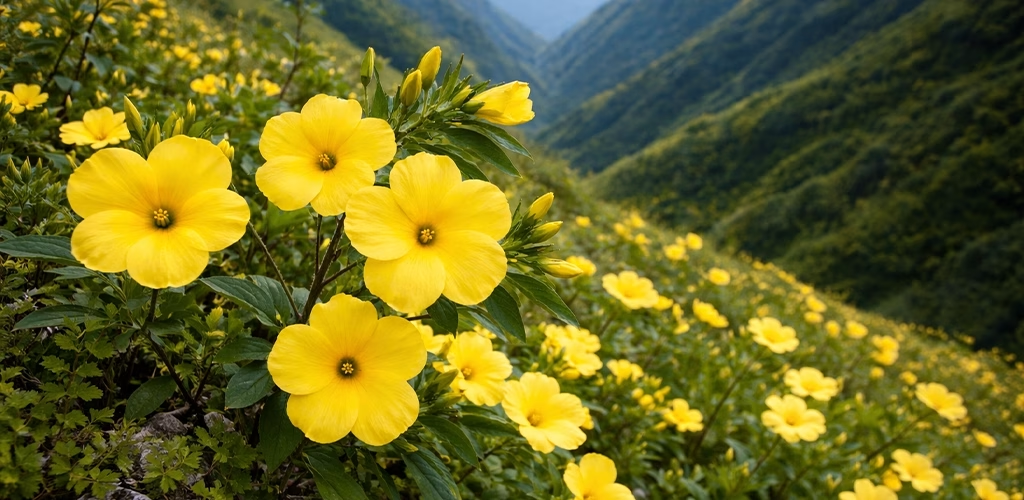
Phooldei is celebrated on the first day of the Hindu month of Chaitra. It marks the beginning of the spring season and the traditional Himalayan New Year. Early in the morning, children, especially young girls called Phoolyaris, venture into forests, fields, and mountain slopes to gather fresh spring flowers. These flowers often include Buransh (rhododendron), the bright yellow Fyonli or Phyuli, mustard blossoms, and other seasonal flowers that grow abundantly in the Himalayan landscape.
The children carry small baskets or plates filled with flowers and walk from one house to another in the village. At each doorstep, they place the collected flowers along the doors and sing traditional Phooldei songs. The intent is simple and beautiful – all they wish to do is bless the homes and families with prosperity, happiness, and abundance.
In return, the families of the homes offer them gifts like rice, jaggery, sweets, grains, or sometimes a few coins. This exchange is not materialistic; it is deeply symbolic. The children bring blessings, and the community responds with gratitude and warmth.
The Legend Behind Phooldei
Like many ancient traditions, Phooldei is also rooted in folklore that have stemmed down through generations of storytelling.
According to a popular story that is famous in the Kumaon and Garhwal regions of Uttarakhand, a young princess named Pyoli (or Fyonli) had grown up in the mountains, surrounded by forests, birds, and wildflowers. But after marriage, she moved to the plains where the heat and unfamiliar landscape instilled her with a feeling of homesickness. Longing for the cool air and blooming flowers of the Himalayas, she started falling ill. Before her death, she expressed one final wish. All she wanted was to be buried in the mountains she loved so dearly.
The villagers decided to fulfil her last wish, and soon after that, a delicate yellow flower bloomed at the spot where she was buried with love. People believed the flower carried her spirit, returning every spring to the hills she loved. That flower came to be known as Fyonli, and it holds a special place in the Phooldei festival even today.
A Festival for Children
One of the most unique things about Phooldei is that it is celebrated by children. There are no priests, elaborate rituals, or temple ceremonies that you need in order to celebrate this festival. All you need is the innocence, joy, and heartwarming presence of children.
In the Himalayan Hindu culture, children are considered pure and free from selfish intentions and their blessings are believed to carry goodwill, prosperity, and harmony. Through this tradition, children unintentionally take charge of the Himalayan culture. They learn about nature, community, and gratitude through this ritual that has been carried forward through centuries.
A Tradition Obstacles by Modernism
Like many rural traditions, Phooldei faces are challenged by the common enemy of traditions across the country – modernism. Uttarakhand has seen what can be termed as the worst cases of migration from Himalayan villages to cities. This migration has reduced the number of youth, and in fact, children in many Himalayan villages. As families move away for education and employment, festivals rooted in village life are gradually fading with time.
But consistent efforts are being made to revive the cherished Uttarakhand tradition of Phooldei. Schools, cultural organisations, and local communities have started celebrating Phooldei through cultural programs, storytelling, and public events. Even in cities with clustered Uttarakhand families, the festival is slowly finding new life.
Phooldei: A Festival that Blooms in Simplicity
At its heart, Phooldei is not just a festival but a consistent reminder that the true connection between nature, community, and tradition is unending. In an age where celebrations often revolve around noise and sparkling spectacles, this Himalayan ritual stands out for its simplicity. With a few flowers on a doorstep, children singing songs accompanied by the blossoming and refreshed mountain air, and blessings shared by neighbours throughout the villages, Phooldei is a timeless tradition.