
Qila Raipur Sports Festival: Punjab’s Celebration of Strength and Spirit
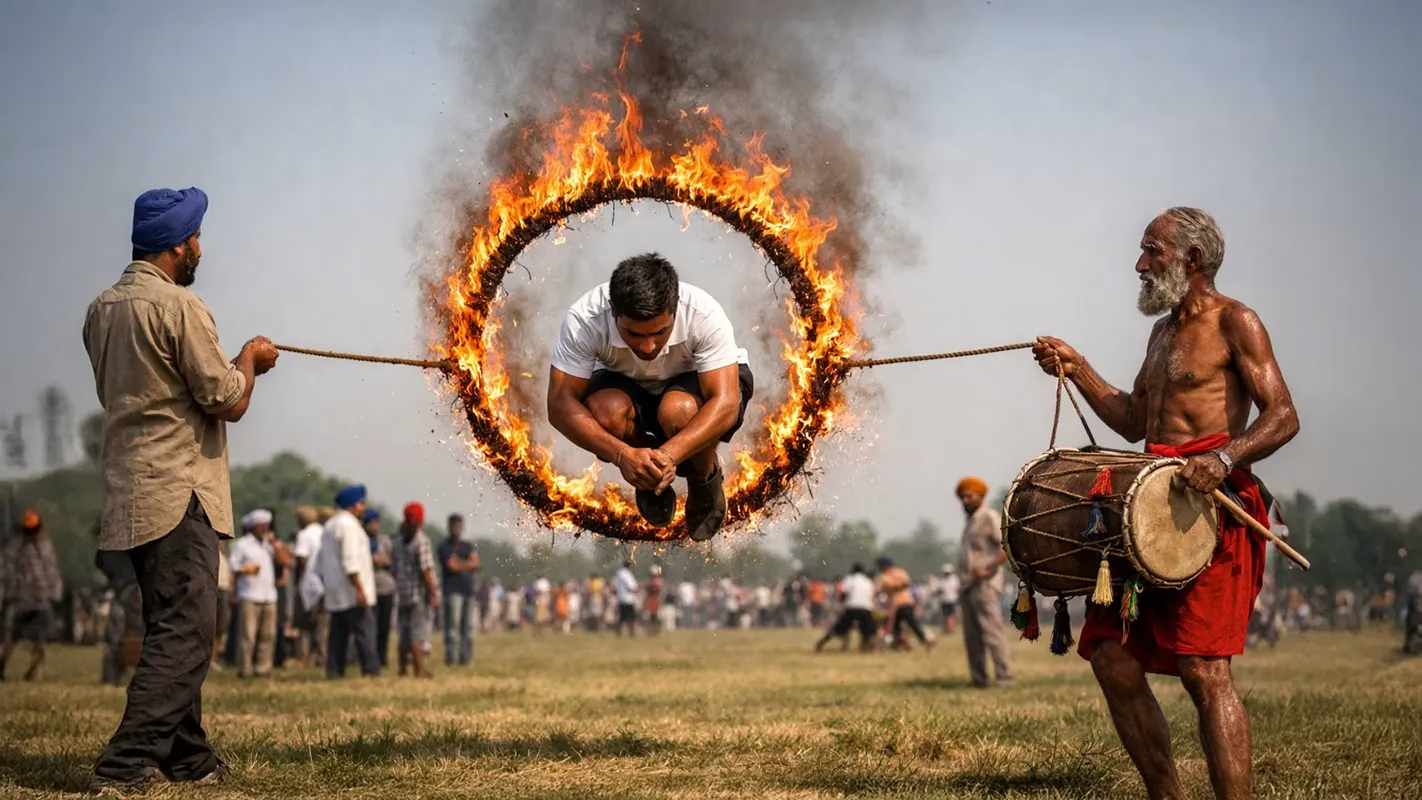
Near the city of Ludhiana, a village named Qila Raipur hosts one of the most exceptional rural events. Every year, the fields turn into a stadium filled with enthusiastic crowds, pounding victory music, and an unbelievable display of human strength. Popularly known as the Rural Olympics, the village of Qila Raipur hosts the Qila Raipur Sports Festivals.
This is one of the most unique events that happens in the regional areas of India during the lead of January and the beginning of February. The event lasts 3 to 4 days and is a celebration of the physical power, endurance, and cultural pride of rural Punjabi culture and communities.
The origin of the Qila Raipur Sports Festival
In the middle of January, Punjab celebrates the harvest festival of Lohri. In the year 1933, the post-harvest gatherings turned into a unique sports spectacle, which later became one of the most fascinating, but hidden cultural events in Punjab. A farmer named Inder Singh Grewal, who was also a philanthropist in the village of Qila Raipur, organised a sports meet among the nearest Punjab villages. He wanted to build community bonding and allow Punjab farmers to have an opportunity to test their physical strength after a successful harvest season. Additionally, he also wanted to ensure recognition of these farmers and their strengths beyond their agricultural capabilities.
What started as a community-building activity soon turned into a full Leziate festival that was expanded under the Grewal Sports Association and was hosted permanently at Grewal Sports Stadium, which was constructed in the 1940s. There were many legal disputes, interruptions, and bans that were imposed on this festival over time. However, the festival outlived any obstacle that ever hindered its progress.
Preparing for the Sports Season
Given the history of the Qila Raipur sports festival, the dates are fixed and scheduled for late January and the beginning of February. Thus, participants begin their preparation much in advance. The train rigorously uses improvised equipment like bicycles, farm tools, ropes, ploughs, and much more, which can be closely linked to the village life of Punjab.
As far as the stadium is concerned, it is decorated with colourful tents, interesting food stalls, a stage set for folk performances, and seating to accommodate large communities.
The Events: Where Strength Meets Spectacle
What sets the rural Olympics apart from the traditional sports events is strength-based stunts that feel unbelievable. Some of the most exceptional sports performances include pulling tractors or jeeps with hair, lifting motorcycles with teeth, running while carrying heavy ploughs or weights on the shoulders, and cyclists riding with multiple passengers or stones strapped to their bikes, turning balance and endurance into a test of nerves and muscle.
As unique and eccentric as these stunts appear, they require immense physical training and are very popular among the spectators. One of the reasons why there were so many hindrances with this particular event was regarding animal-based events, which is why many elements were often abolished. From Bolaka races to animal-based tractor pulls, these events not only test the strength and training of humans but also their animals. Traditional sports like kabaddi, tug-of-war, rope pulling, athletics, and Gatka, the Sikh martial art, highlight the culture and traditions of Punjab villages.
More Than Just a Sports Festival
While the rural Olympics seem spectacular and unique, it is also a celebration of the silent strength of Punjab farmers in the fields. It commemorates their resilience, endurance, and determination. Additionally, it also preserves folk traditions and sports while ensuring community growth and unity. Not only does it provide a stage to the youth of Punjab villages, but it also acknowledges the ones who are working hard in the fields but have certain hidden talent and performative capabilities. Thus, the Qila Raipur sports festival is an integral and appreciated part of the culture of rural Punjab villages.