
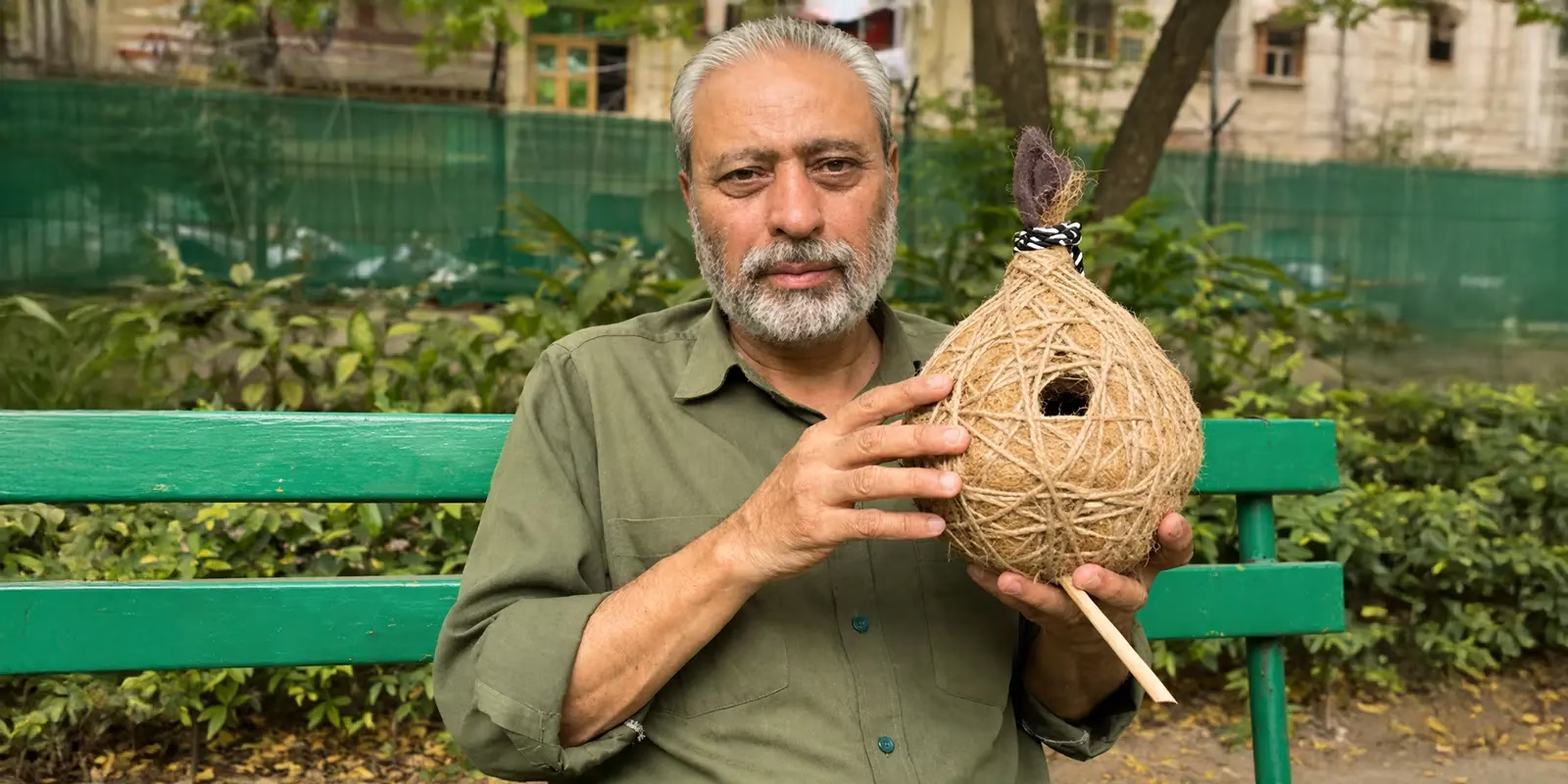
Rakesh Khatri: The Nest Man Of India Who Gave Birds Their Homes Back
One thing that cities do not grow in is biodiversity. They need the homes of every non-human being to get disrupted so that development can find a way. For the concrete walls and windows, the real hindrance is not the laws of geography but the other beings of it – trees, ponds, animals, plants, batcerias, and everything else.
Just like all these beings turn homeless with the obsessive infrastructure building, so do the flying creatures. Because where will they find rest if not on their nests on the trees, the branches, or any place else. And it is too late before we realise that they are gone.
For most, it is a passing thought. For Rakesh Khatri, it became a calling that changed the trajectory of his life.
A Childhood Filled with Chirping
Rakesh Khatri grew up in the narrow, bustling lanes of Old Delhi. These were not ordinary lanes but the ones alive with chatter. These sounds were not just of people, but of sparrows and other birds. They perched on windowsills, fluttered across courtyards, and filled mornings with an unmissable rhythm.
These were the memories that were associated with his childhood – a feeling so pure and nostalgic that it could never be forgotten. Years later, as a documentary filmmaker living in Mayur Vihar around 2008, he came across something seriously unsettling. The same spaces that once echoed with chirping sounded eerily quiet – no birds just the honking of cars and two wheelers in othe little spaces that there was. While the city lost its essence, arguably for the better, the open spaces shruk like anything and the birds never found a place in the edgeways to rest.

What one could feel was absence but whart Rakesh Khatri noticed was beyond that – it was displacement. And this triggered a question so deep that he could not have simply ignored: If humans can claim the homes of the innocent birds, shouldn’t they be the ones to return them.
The First Nest: A Question, Not a Solution
Not all ideas start with enthusiasm. Some even begin with a doubt. This was the case for Rakesh Khatri as well. He was met with a question that made, both sense and left him confused: Why would birds need help to build nests, had they not done so for eternity?
Khatyri was not trying to disrupt the laws of nature. He was trying to make a way for them. All he wanted to do was reverse the irreparable loss of homes of the beautiful birds. With basic materials such as coconut shells, shredded newspaper, discarded cartons, he put the doubts to rest and started getting to work.
The homes he started with were not perfect, crafted with architectural intelligence. They were simply a product of sincerity, optimism, and goodwill. But the doubts persisted – will the sparrows and other birds make them their own? These were the doubts that kept him awake at nights until a a sparrow moved in on one fine day. And in that very moment, a sincere attempt transformed into a revolution.
From One Nest to a Movement
What began as a solitary act soon grew into a remarkable mission. In 2012, Khatri founded the Eco Roots Foundation, turning personal effort into collective action. Today, his work has led to the creation and installation of over 7 lakh nests, with some estimates crossing 9,00,000 nests through the foundation’s initiatives.
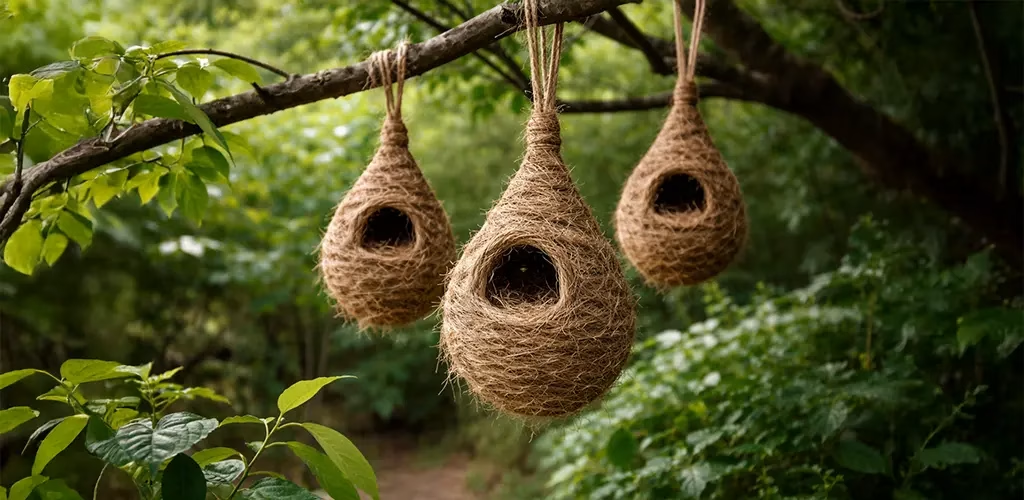
These nests are not merely structures but lifelines. Crafted from jute, coconut fibre, bamboo, cotton, threads, twigs, grass, and even water hyacinth, they are sustainabile at every level. Many of these nests are made with recycled materials, so that they remain accessible and eco-friendly. Installed across cities like Delhi, Bengaluru, Mumbai, Chennai, Kolkata, and Hyderabad, they offer refuge not only to sparrows but also to robins, bulbuls, and magpies. And as a result, in many areas, birds have returned.
Teaching Hands to Build, Hearts to Care
What makes Rakesh Khatri a special man is not just his dream but his pragmatism. He knew that his efforts alone will never make a difference. Thus, he started spreading his dream as a skill, that needed to be taught. Through workshops in schools, colleges, residential communities, and corporate spaces, he transformed nest-making into a shared experience.
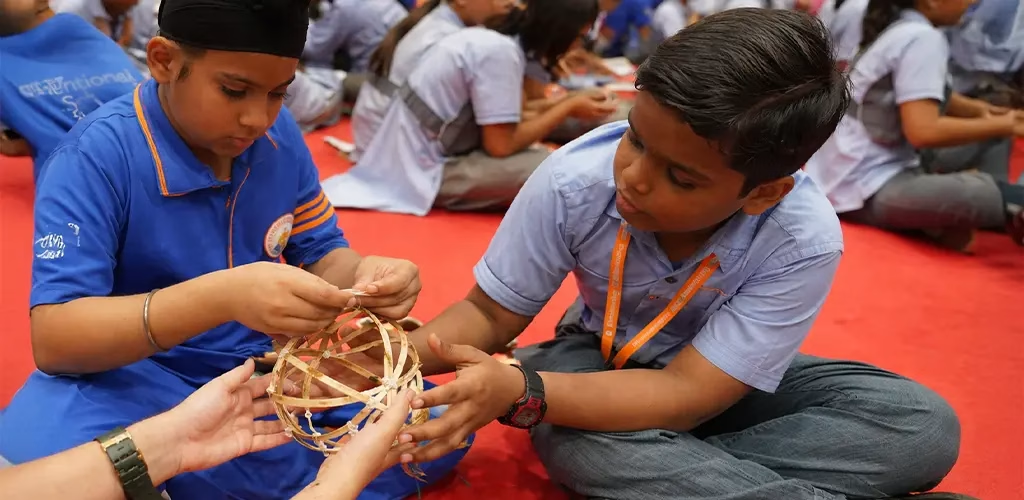
Over the years, he has conducted thousands of workshops, reaching tens of thousands of individuals, including over 60,000 students.
Beyond Birds: Restoring Balance
Khatri’s work extends far beyond nest-making. Through the Eco Roots Foundation, he has woven together a broader vision of ecological balance. Initiatives like “Jal Sparsh” utilise water hyacinth to create nests while simultaneously helping in the restoration of water bodies. Programmes in afforestation, climate education, e-waste management, and native plant cultivation further strengthen this ecosystem approach.
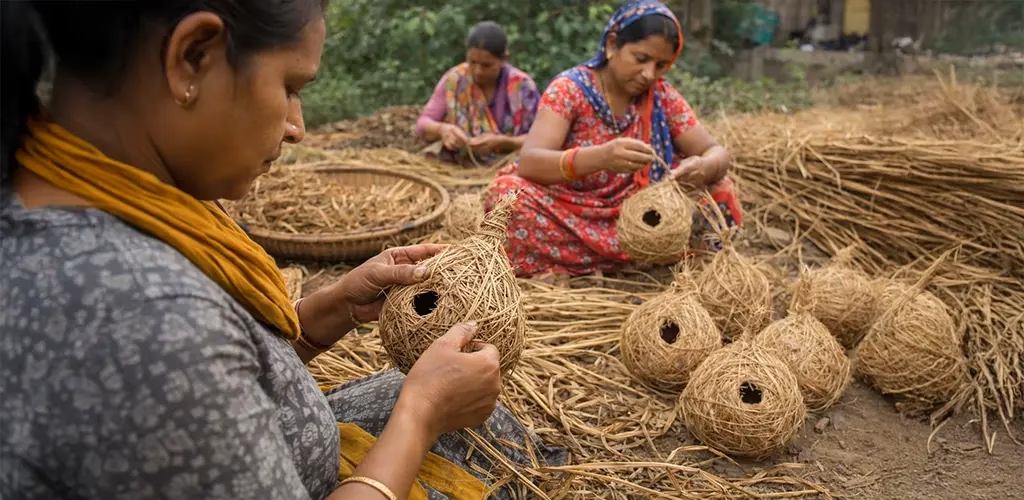
Equally significant is the dimension of women’s empowerment. Across states like Bihar, Uttar Pradesh, Haryana, and Uttarakhand, women are trained to create nest materials, process natural resources, and even serve as nature guides. What began as conservation slowly evolved into livelihood, dignity, and community resilience.
Recognition, Yet Rooted in Purpose
Over the years, Khatri’s work has earned widespread recognition, from the National Science Award (2020) to the Green Leadership Award (2023), the Shining World Compassion Award, and the Earth Champion title by Sony BBC Earth (2025). His initiatives have found mention in the Limca Book of Records, and his foundation has received international accolades such as the Green Apple Award.
Yet, beyond awards, his philosophy remains disarmingly simple: We can’t build our homes by taking away theirs.