
Ram Navami: When Dharma Took Birth on Earth
There are some moments that simply do not pass, but entirely transform the rhythm of life. They make us reminisce about some other worldly power and zen within us. One such moment is Ram Navami. It simply does not mark the commemoration of the birth of Lord Ram. But reminds us of the time when Dharma imagined itself in a human form and chose to walk on earth.
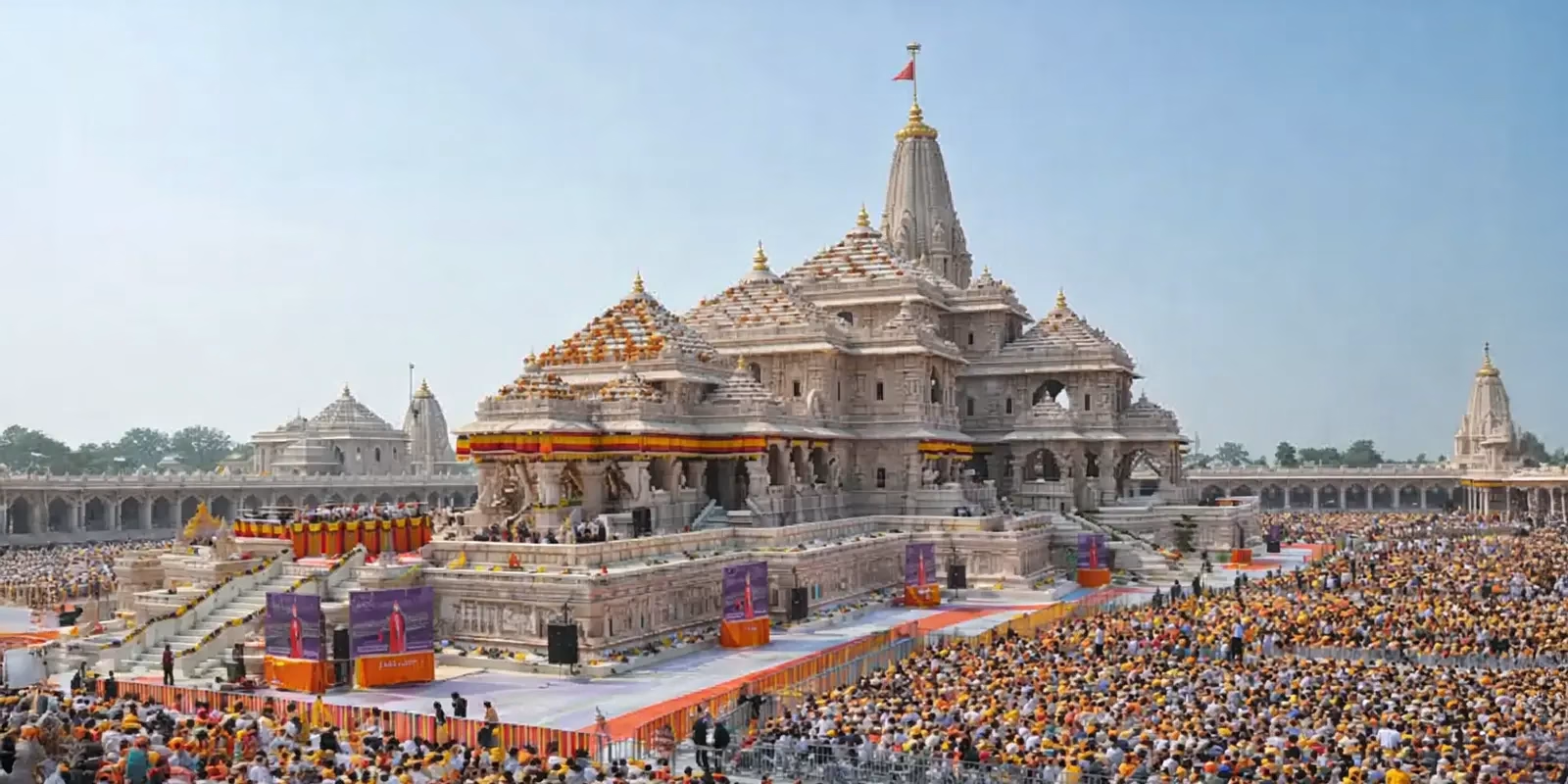
As the sun ascends to its zenith on the ninth day of Chaitra’s bright fortnight, celebrations begin in India and at Hindu homes and temples across the globe. They echo with spiritual chants, overwhelming sounds of conch shells, dedicated prayers, rhythmic bells, and unending gratitude for the birth of Lord Ram. It is this hour when the Maryada Purushottam, the embodiment of righteousness, was born in Ayodhya.
While most people know Lord Ram from the greatest epic of India, the Ramayan, they hardly realise that his character is not just limited to the tramlines of defeating one of the fiercest kings, Ravan. It is also a tapestry of stories which are divine, philosophical, and profound that shape the essence of his being.
The Divine Birth: When the Heavens Descended to Ayodhya
What makes the birth of Lord Ram very special to the people of Ayodhya is that he descended from the heavens at the moment when the entire kingdom bore silent sorrow. Once resplendent, Ayodhya had no heir to carry forward the legacy of its king, Dashratha. While he had three queens, namely Kaushalya, Kaikeyi, and Sumitra, there were no children whose laughter could echo around the palace.
It was not until the consultation of Guru Vashishtha that Dasharatha performed the sacred Putrakameshti Yagya that the magic happened. Just when the king offered the final offerings, and they dissolved into the sacred fire, the kingdom received a boon. Agni Dev emerged from the fire. With him, he brought a bowl of divine payasam that changed the destiny of the kingdom and the entire Bharatvarsha.
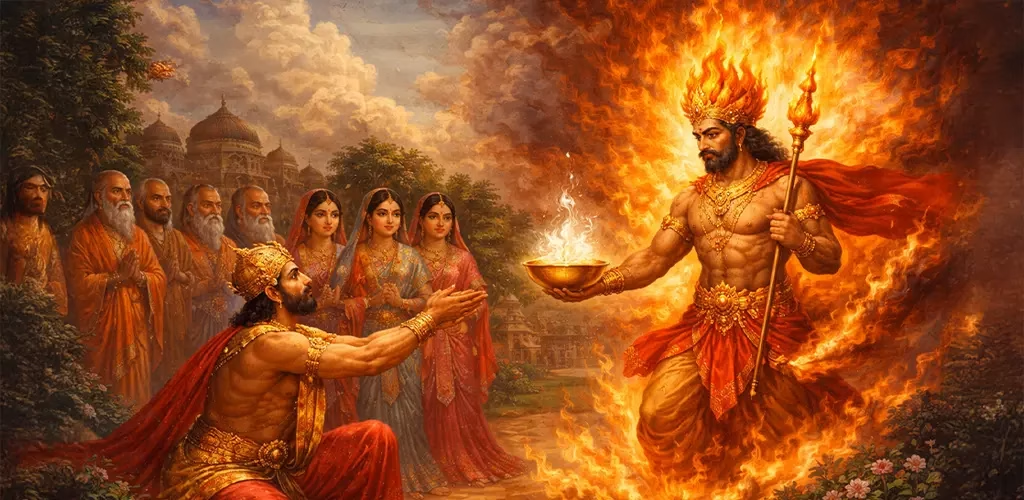
The payasam was distributed to the queens. The largest portion was acquired by Kaushalya and the next by Kaike,yi while two portions were offered to Sumitra. And it was just a matter of time before all three queens gave birth to four sons.
At noon, under the auspicious Punarvasu nakshatra, Lord Rama was born to Queen Kaushalya. He was not just any infant. When he was born, he revealed himself in his divine form of Lord Vishnu. It was the motherly prayers and maternal love of Kaushalya that convinced him to assume a human form, which she could embrace and parent. And it was then that the infinite became intimate.
A King Who Listened Even to a Dog
What makes Lord Ram truly celebrated and divine is not just the story of his birth. It is how he chose to let his morals define him and not the antiquated way of society. For him, justice was not reserved for the powerful and those who could easily get access. It belonged to each and every one who was present in his kingdom and even beyond.
One day, when Lord Ram concluded his Royal court, he asked around if an audience still awaited discussion on some matter. It was then that a stray dog stepped forward. The concern of the dog was simple. It brought forward a complaint against a man who had struck it with a stone.
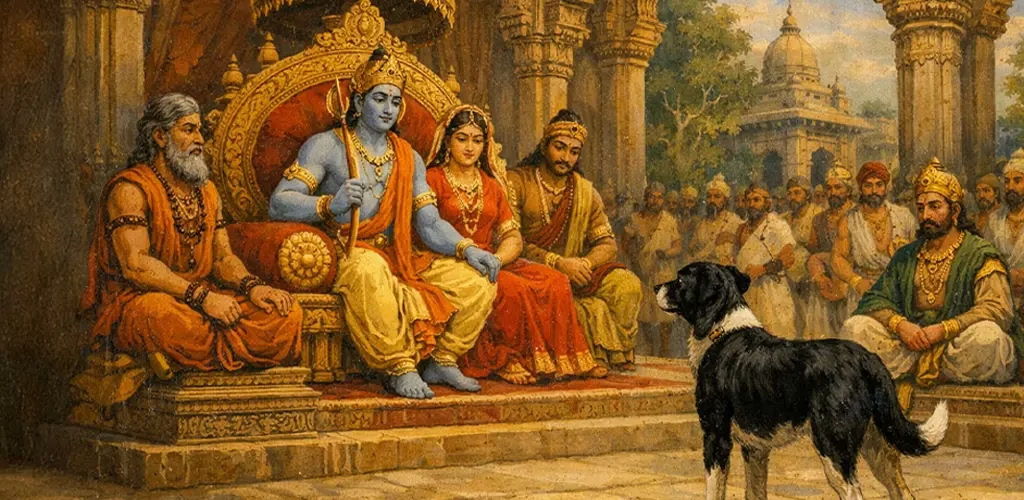
This was an unusual case and had never been such a complaint by any non-human that had been entertained by a king.
It spoke of injustice; a man had struck it with a stone. Rama summoned the accused and, with characteristic fairness, asked the dog what punishment it desired.
What followed was unexpected.
“Make him the head of a village,” the dog replied.
The court fell silent. Why reward wrongdoing?
The dog, wiser than it seemed, explained: a leader endures constant grievances, burdens, and criticism. The suffering of leadership, it is believed, would surpass the pain of a single blow.
Rama, recognising the depth of this reasoning, granted the request.
In that moment, justice transcended punishment. It became insight, empathy, and balance.
Patience Before Power: The Ocean That Tested Rama
Not all battles are fought with weapons; some are fought with restraint.
When Rama’s army reached the vast ocean on their way to Lanka, the path ahead seemed impossible. Yet, Rama did not resort to force. Instead, he prayed to the Sea God calmly, patiently, and with unwavering faith for three days and nights.
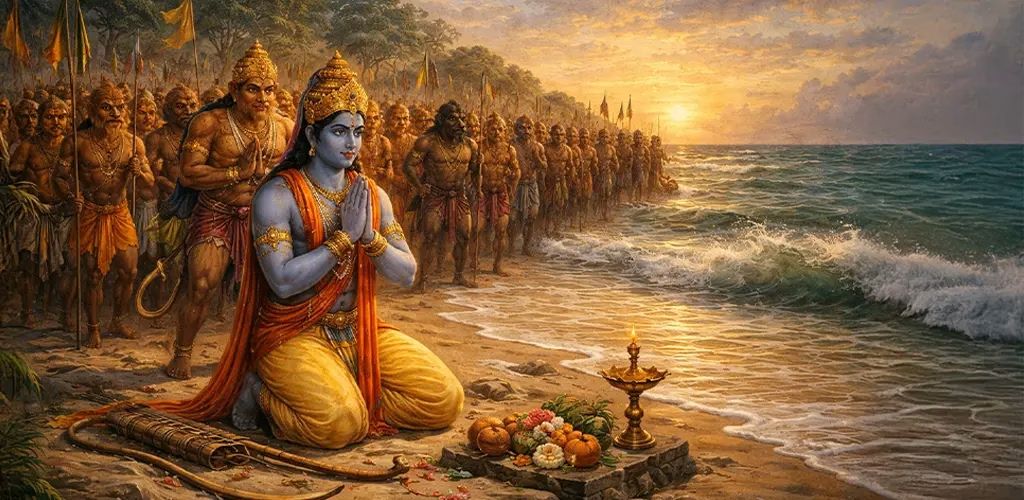
The ocean remained silent.
Only then did Rama prepare to act. His arrows, capable of drying the seas, stood ready. It was not anger, but necessity.
At last, the Sea God appeared, humbled and fearful, offering a solution: a bridge could be built across the waters. With the help of the vaanara sena, led by Nala and Neela, the legendary Ram Setu took form.
This episode reveals a profound truth that power, when guided by patience, becomes purposeful. Rama did not reject strength; he simply chose when to use it.
The Bow That Broke the Silence of Destiny
In the kingdom of Mithila, a challenge awaited, one that no king or warrior had conquered.
The swayamvara of Sita was no ordinary ceremony. To win her hand, one had to lift and string the mighty bow of Lord Shiva, Pinaka. Many tried; none succeeded. The bow remained unmoved, as if waiting. Then came Rama.
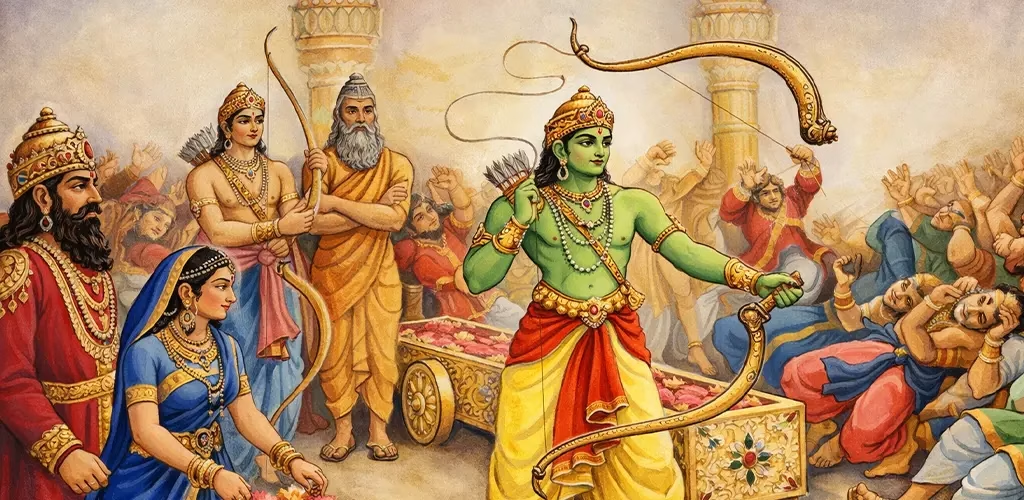
With effortless grace, he lifted the bow. As he attempted to string it, it broke with a thunderous sound that echoed across realms. In that moment, destiny revealed itself.
It was not a display of arrogance, but of quiet strength, power restrained within humility. The breaking of the bow was not just a feat; it was a declaration that divinity often arrives without spectacle, yet leaves an undeniable mark.
A Festival That Lives Through Stories
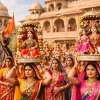
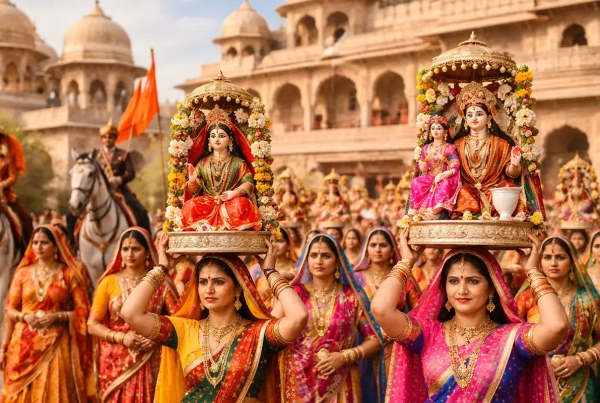
Ram Navami is not confined to rituals alone. It lives through recitations of the Ramayana, through fasting, through grand processions, and through the enactment of Ram Lila, where stories are not merely told, but relived.
In some temples, Rama and Sita’s wedding is symbolically celebrated. In others, particularly in places like Bengaluru, classical music becomes an offering of devotion expressed through melody.
Each tradition, though varied, converges on a singular truth: the triumph of righteousness, the strength of patience, and the enduring power of compassion.
The Eternal Relevance of Rama
What makes these stories endure is not just their divinity, but their humanity.
Rama listens, even to a voiceless creature. He waits, even when he has the power to command. He acts, not out of impulse, but out of principle. In a world that often rushes, reacts, and forgets, Rama’s life offers a different path, one of balance, dignity, and unwavering adherence to dharma. And perhaps that is why, year after year, Ram Navami is not merely celebrated, it is felt.