
Satyendranath Tagore: The quiet legacy of a different Tagore
When we hear the name Tagore, our mind straightaway refers to Rabindranath Tagore, the Nobel laureate poet who reshaped Indian literature. But long before Rabindranath turned around poetry and education, a different Tagore of the same family was quietly breaking barriers, rewriting societal norms, and making his way into spaces that no Indian had ever entered before.
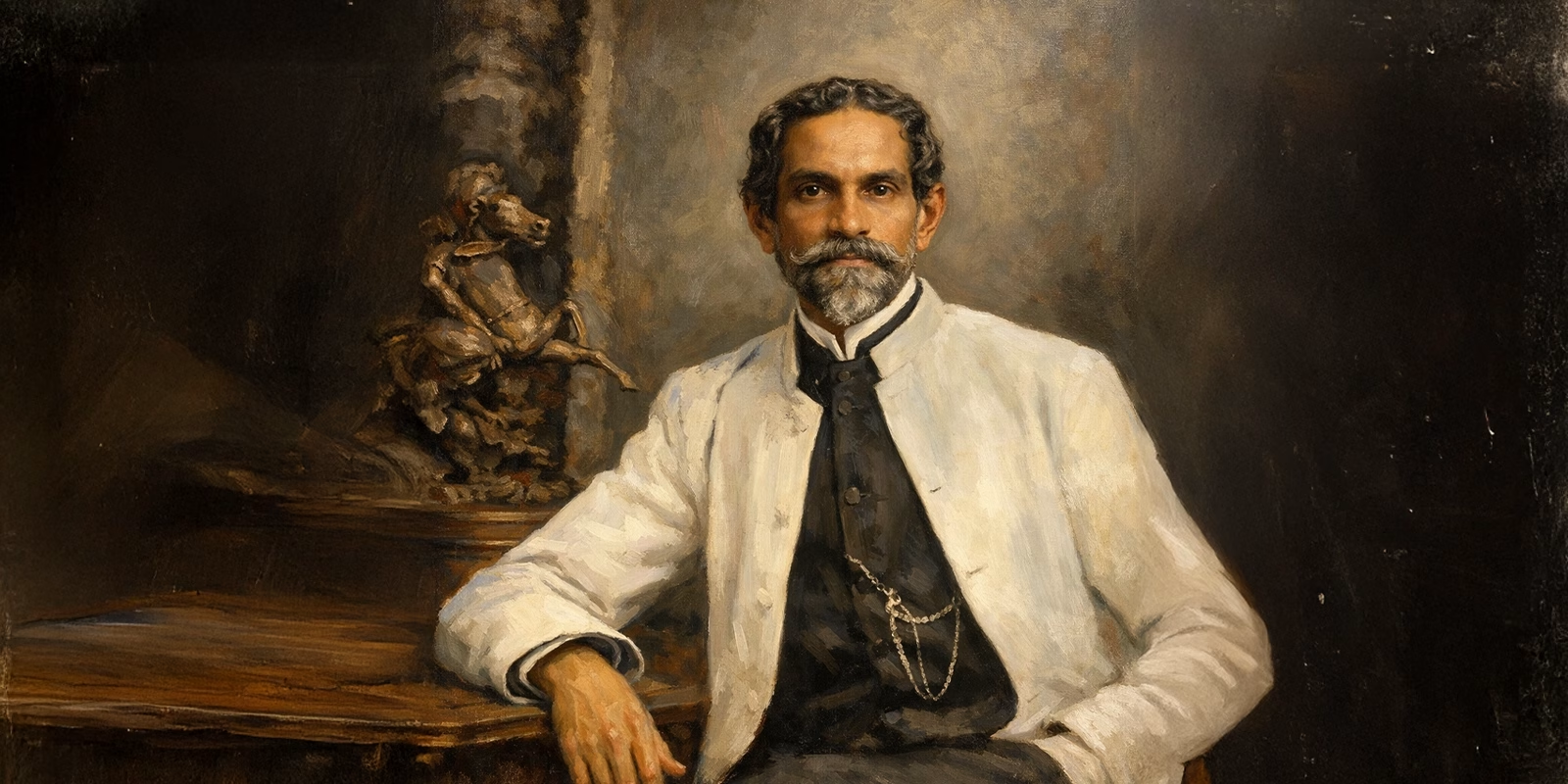
The name of that Tagore was Satyendranath Tagore. He was India’s first Indian Civil Service officer, a poet, a reformer, and a visionary who strongly believed that one can only progress when courage and conscience collaborate.
Raised In a House of Ideas
Satyendranath Tagore was born on 1 June 1842 in the Tagore family at Jorasanko, Calcutta. The family was not just wealthy. It was intellectually, spiritually progressive, and deeply reforming. His father, Maharshi Debendranath Tagore, was a philosopher and leader of the Brahmo Samaj. The movement consistently challenged orthodox Hindu practices and championed rational spirituality and social reform.
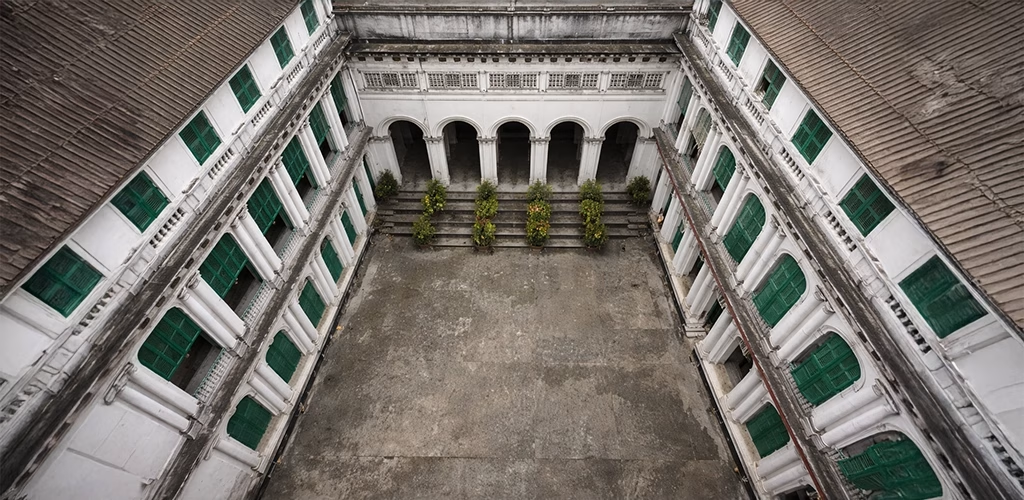
Satyendranath Tagore grew up in an environment where debates on religion, education, science, and society were daily conversations. His siblings went ahead to become poets, scientists, musicians, and thinkers. This created an environment at home that felt extremely educational. Among these intellectual siblings was his youngest brother, Rabindranath Tagore, who later won the Nobel Prize in Literature and lyricised the National Anthem of India.
But in this house of brilliance, Satyendranath was the one who stepped into the machinery of the British Empire itself and led the series.
The Young Man Who Entered the British Inner Circle
In the mid-19th century, the Indian Civil Service or ICS was the most prestigious administrative organisation of the British Empire. It was reserved almost entirely for British men, and for an Indian to dream of joining it was nearly impossible.
But Satyendranath not only dreamed but also achieved.
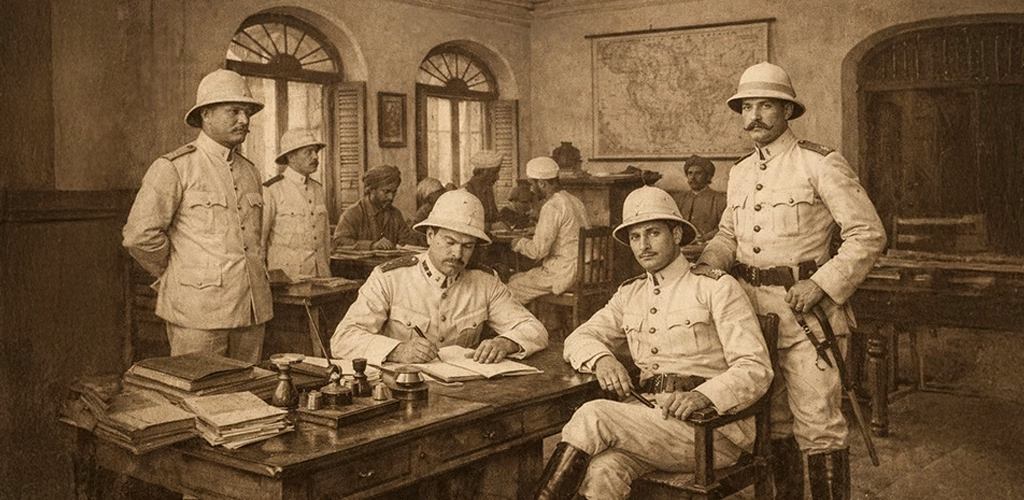
In 1862, he travelled to England to prepare for the competitive ICS examination. A year later, he passed, and in 1864, he officially joined the service, becoming the first Indian ICS Officer in history. This was more than just a personal achievement. It was a symbolic crack in the colonial hierarchy. This inspired many Indians, including Surendranath Banerjee and Romesh Chunder Dutt, to pursue the ICS. And what happened later was a revolution – Indian representation in governance increased rapidly. For three decades, Satyendranath Tagore served across western India, earning respect even within colonial workplaces that resisted Indians.
A Reformist at Heart
Despite his position, Satyendranath Tagore was never just an administrator. He was a reformer shaped by the ideals of the Brahmo Samaj, and one of his most powerful causes was women’s emancipation. In a time when child marriage, purdah, and limited education were what women’s lives contained, Satyendranath envisioned a different future. He encouraged his wife, Jnanadanandini Devi, to learn English, travel, and step into public life. This was something new for Bengal in the 19th century.
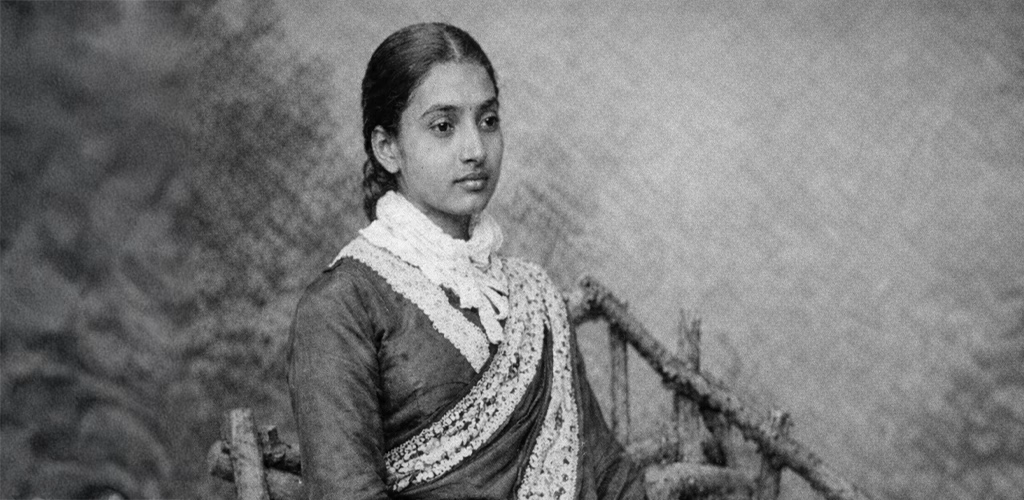
Together, they challenged orthodox societal norms. Jnanadanandini introduced the modern Bengali sari style with blouse and petticoat, enabling women to move freely and participate in public spaces. Satyendranath’s writings, especially Striswadhinata or Women’s Independence, argued for women’s education and autonomy. He firmly believed that a nation could never rise if half the population, which was women, remained confined to indoors and were not allowed freedom to access society.
A Poet and a Patriot
Satyendranath Tagore was a writer, translator, and composer. He translated Sanskrit texts, composed many essays and memoirs, and wrote novels. He talked about Indian society, colonialism, and spiritual philosophy.
His patriotic song “Mile Sabe Bharat Santan, Ektan Gago Gaan” urged Indians to unite beyond the societal, cultural, gender, religious, and case divide. Way before the freedom movement reached its peak, Satyendranath was already writing about unity, identity, and national pride, and this helped in shaping the base of nationalism in India.
The Brother Who Shaped Rabindranath
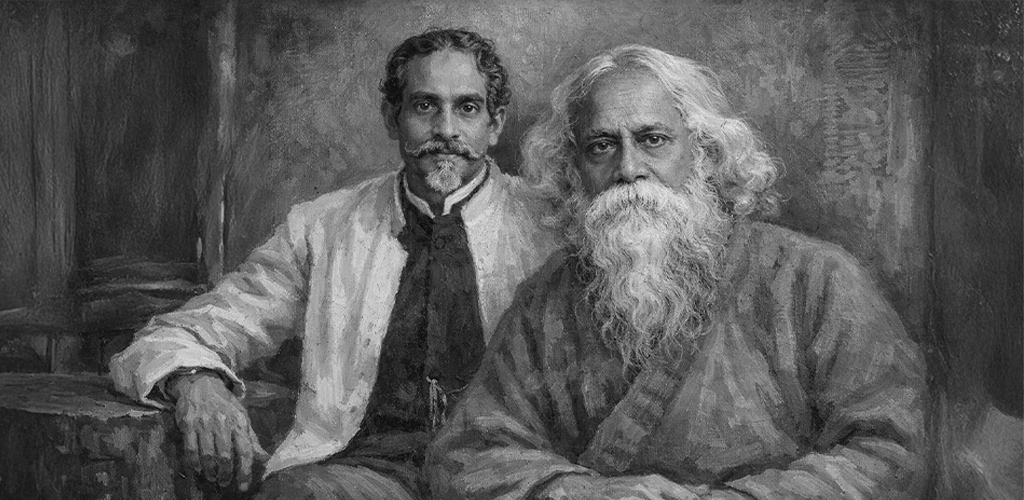
While Rabindranath Tagore transformed literature and education, Satyendranath Tagore shaped the intellectual and social environment in which Rabindranath grew up. He was that elder brother who opened doors, challenged conventions, and inspired the idea that Indians can compete with the colonial elite and make their own place in society. If Rabindranath Tagore was the soul of India’s cultural renaissance, Satyendranath Tagore was one of the earliest architects.
A Life Beyond Titles
After retiring in 1897, Satyendranath returned to Kolkata and dedicated himself to writing, cultural work, and Brahmo Samaj agendas. He passed away on 9 January 1923, leaving behind not just a legacy of books and songs, but a legacy of courage. Today, while thousands of Indians prepare for the UPSC Civil Service Examination and the Indian Administrative Service IAS post, hardly anyone realises that this path was once inaccessible to Indians, and it was Satyendranath Tagore who was the first to prove that it was possible.
Disclaimer:
This content is for educational and awareness purposes only. Information may be interpretative, culturally influenced, or drawn from multiple sources. The Unknown India does not claim absolute accuracy in all cases.