
The Ghoda Library: When Books Ride Horses to Reach the Hills
In Uttarakhand, where roads are simply narrow forest trails, and schools shut down with the first heavy monsoon rain, education can feel like a privilege. And, it suddenly turns into one because any accessibility to schools or books just stops. But the compassion for education inspires innovation. This innovation brings learning to the kids, not in vans or buses, but on horseback.
This is the story of the Ghoda Library, a mobile library in the hills of Uttarakhand, where books travel on horses to reach children in the remotest areas.
A Simple Idea Born in the Hills
The idea of the Mobile Library began with Shubham Badhani, a young librarian from Nainital. He noticed the gap in the education which textbooks and classrooms could not fill. In the villages of Uttarakhand, schools often remain closed due to landslides, floods, broken roads, and harsh weather. Libraries are almost non-existent. Children grow up surrounded by nature’s beauty but with limited access to books, stories, and learning resources.

And with this, Shubham thought of a simple question: If vehicles can’t reach these villages, what can? The answer stood quietly in front of him, and it was horses.
On June 12, 2023, with the help of a donated horse from a local farmer, the first Ghoda Library was initiated, and this experiment turned into a movement.
Books on Hooves: How the Ghoda Library Works
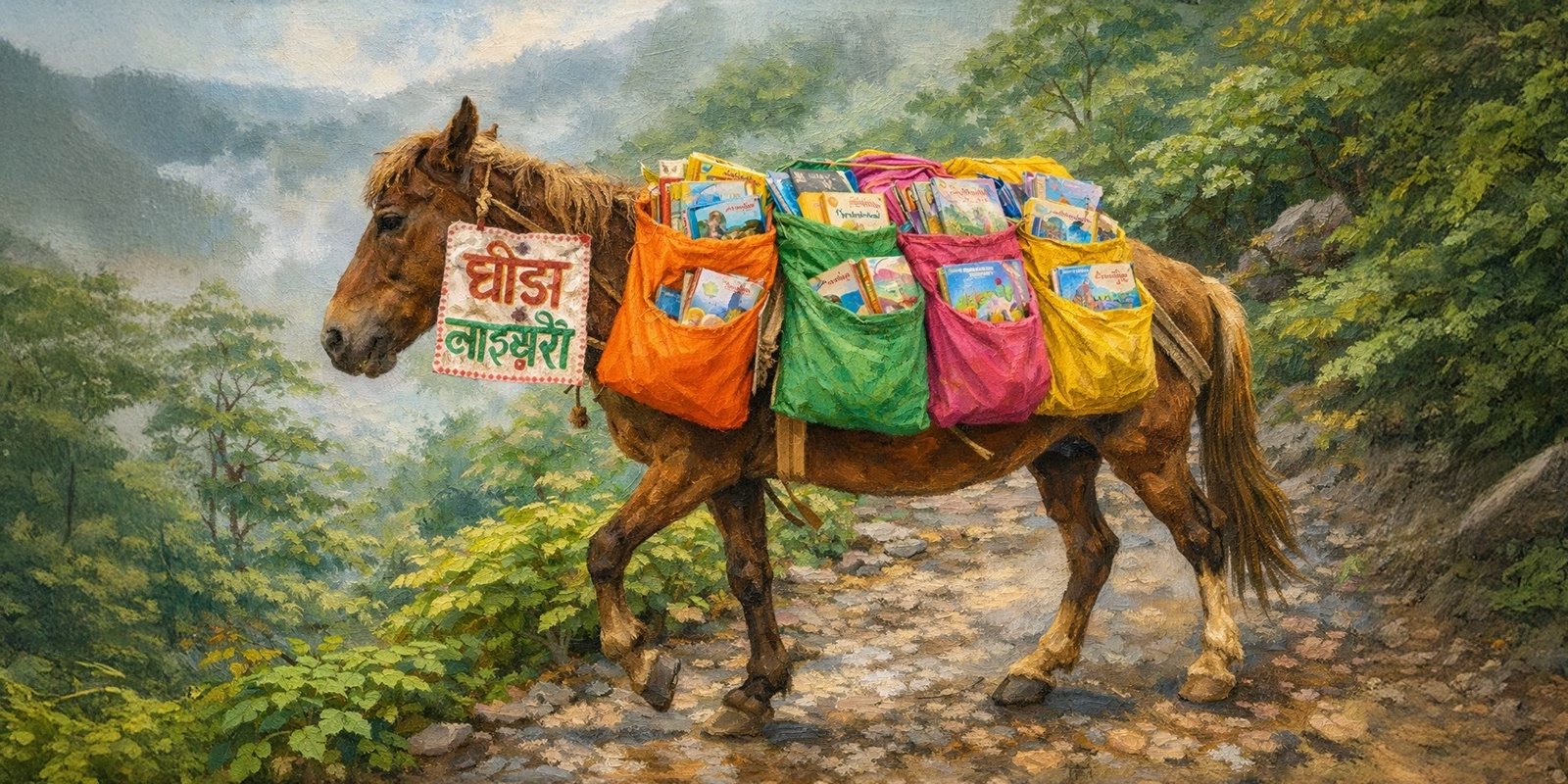
In this movement, horses, which are often called the four-legged librarians, carry bags full of books through mountain paths, forests, and remote villages. Placards reading “Ghoda Library” hang on their sides as they walk from village to village. Children gather around as the horses arrive, and they choose books, borrow them for a week or so, and return them when the ghoda library visits again. The volunteers also organise reading circles where children and parents sit on the grass and read together.
The project of the Ghoda Library expanded from just one horse to ten horses within a span of months. And, all this was only possible with the support of volunteer villagers. Books are usually distributed through donations, partner NGOs, and youth foundations. This is an exemplary initiative that never fails to show how community support can empower education.
Reaching the Unreachable Villages
The Ghoda Library mainly operates in the Kotabagh block of Nainital district, covering remote villages like Baghani, Jalna, Mahaldhura, Dola, Kalsi, and others. These are the villages where connectivity is relatively poor, schools are frequently disrupted due to weather, and children usually spend their afternoons playing or helping their families,s but simply not studying.
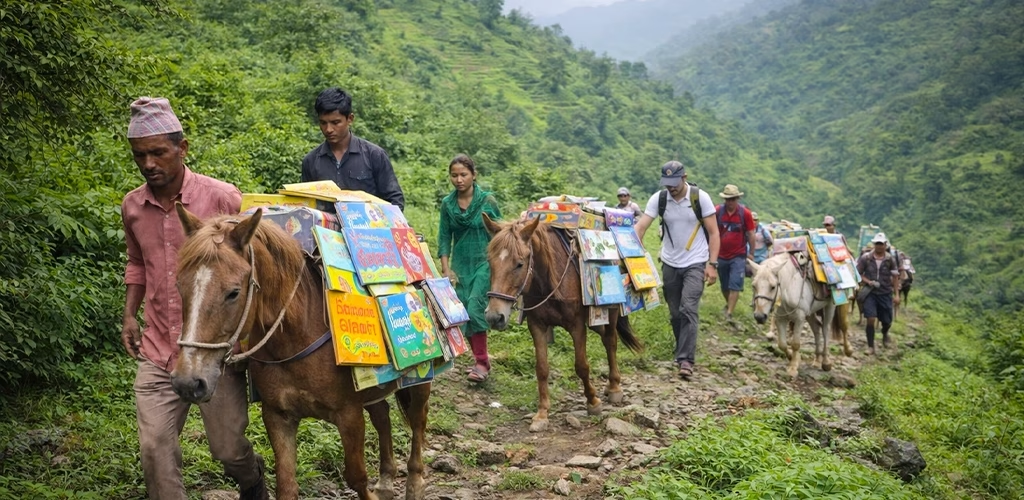
But ever since the Ghoda library reached their homes, they now borrow books, read, find educational grounds to communicate with each other, and get an exposure to different parts of the world through the means of reading. For many children, the books borrowed from the mobile library are the first real encounter with imagination and knowledge beyond the tramlines of their remote life.
Education Beyond Classrooms
If you think that the impact of the Ghoda Library is just limited to the lending and borrowing of books, you might be mistaken. Ghoda library builds reading habits, sparks curiosity, boosts confidence, and opens doors to imagination for the little children, unfortunately, who are devoid of consistent education. It ensures that learning continues even when schools in Uttarakhand shut down due to weather or disasters.
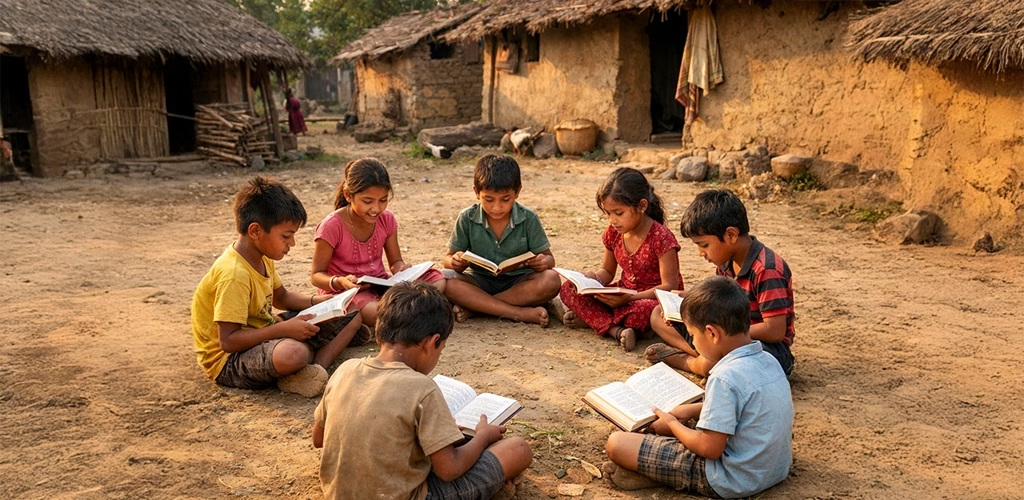
Moreover, the Ghoda library is simply not limited to young minds. It also extends beyond, supporting adults and turning education into a community celebration. Women participate actively, breaking social barriers and encouraging their children to learn. This is Uttarakhand Education that is not driven by a strong infrastructure, but by empathy and innovation.
A National Story of Inspiration
The initiative turned into national news when Prime Minister Narendra Modi mentioned the Ghoda Library in his “Mann Ki Baat” radio address in 2023. He praised the creativity and commitment of the people of Uttarakhand in ensuring that education reaches children in difficult terrains, by hook or by crook.

The project has also received appreciation from ministers, educators, and media outlets. Over time, it has turned into a grassroots innovation. From local villages to national conversations, the Ghoda Library has proved that education does not always need infrastructure. It simply needs intention.
More Than a Library: A Movement
The Ghoda Library is not just about books. It represents something deeper. It follows the intent behind Sabka Saath, Sabka Vikas, a movement that actively preaches inclusion and the power of simple ideas. The founder of Ghoda Library, Shubham Badhani, continues to seek funding and invite support in his expedition to expand the mobile library to more villages and age groups.

This is not just a story where books ride horses, and learning reaches even the farthest homes. It is a story of intent, hope, determination, positive adamancy, innovation, inclusion, and progress. The people of Uttarakhand did not wait for the government or God to turn their lives around. They si took the initiative into their own hands, and that is exactly how they have turned the tables!
Disclaimer:
This content is for educational and awareness purposes only. Information may be interpretative, culturally influenced, or drawn from multiple sources. The Unknown India does not claim absolute accuracy in all cases.