
The IRIS Dena Sinking: A Naval Strike, A Political Debate, And India In The Focus.
The US and Israel – Iran war has taken the entire world by storm. With many countries involved and attacked, this one conflict has changed the geopolitical dynamics and tilted the global balance. India stood afar, silent and analysing. But one incident has suddenly dragged it into a political debate and an internal dispute.
An Iranian warship that was a guest of the Indian Navy has been sunk in India’s backyard. IRIS Dena has been framed as everything from a diplomatic failure to a strategic embarrassment for India.
With everyone, even the Indian Opposition, pointing fingers at the Indian Government, does the Government of India stand scrutinised, suspicious, or narrative-driven controversy?
Because the facts tell a more layered story.
The Sinking of IRIS Dena
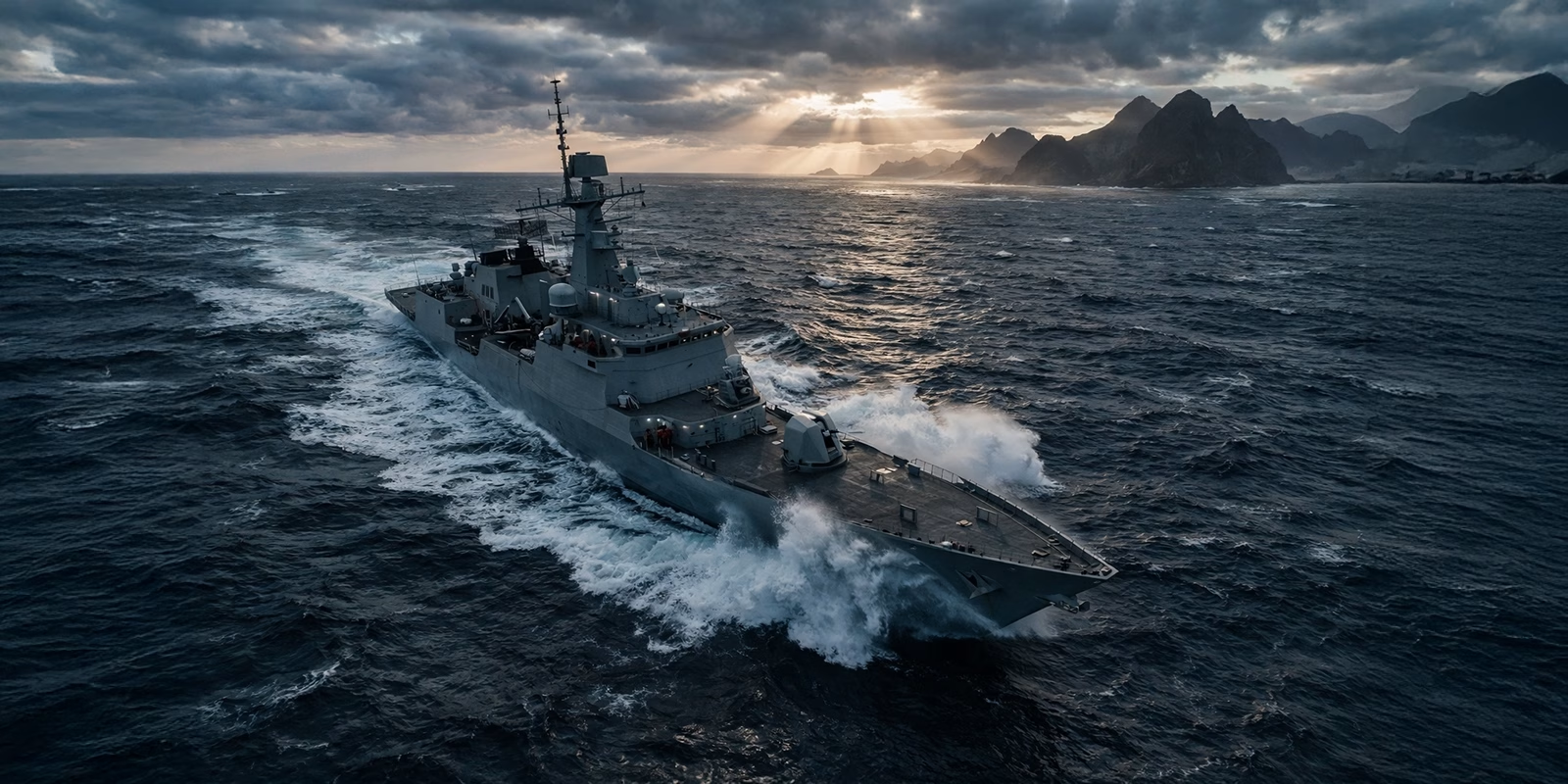
On March 4, 2026, the Iranian naval vessel IRIS Dena, also known as Frigate Dena, was torpedoed and sunk in international waters of the Indian Ocean, roughly 40 nautical miles south of Galle in Sri Lanka. The strike was strategised and executed by a United States submarine amidst the US-Iran military escalation that commenced at the end of February 2026.
The Frigate Dena was an exceptional vessel for Iran’s Naval Forces. It was one of the newer warships, equipped with anti-ship missiles, surface-to-air missiles, torpedoes, naval guns, and a helicopter deck. An attack on it seems strategic and effective from the viewpoint of US-Israel allies. The US officials have further strengthened that the attack was part of a broader campaign aimed at weakening Iran’s naval capabilities. U.S. Defence Secretary Pete Hegseth has even labelled this operation as a “quiet death” for their enemy.
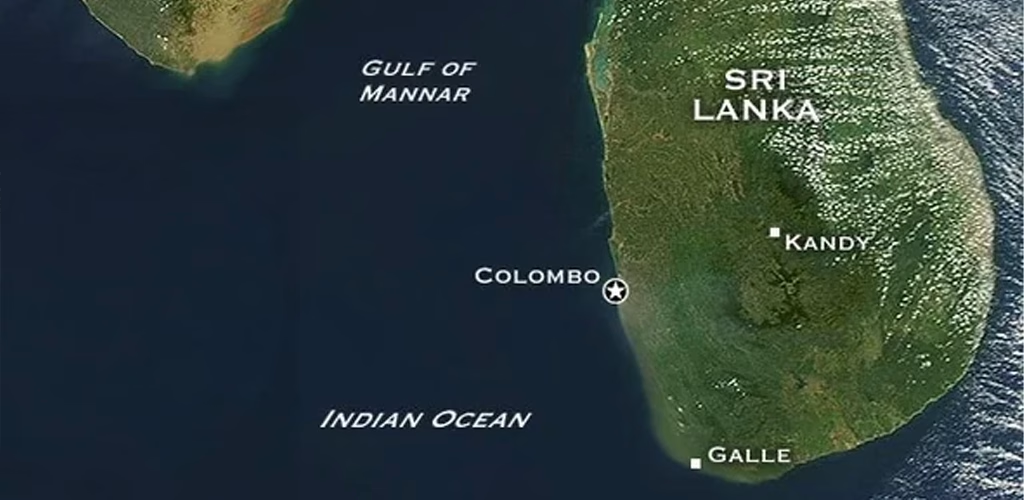
Around 130 to 180 sailors were believed to be on board when the IRIS Dena was struck and attacked by the US submarine. At the time of adversity, Sri Lanka’s navy responded to a distress call in the Indian Ocean soon after. And, what they found was grotesque – oil slicks, empty life rafts, and sailors struggling in the ocean for life. Rescue operations recovered 87 bodies and saved 32 survivors, many of whom were taken to the nearest hospitals in Galle, while the ship disappeared beneath the profound waters of the Indian Ocean.
Where the Indian Navy Comes Into the Story
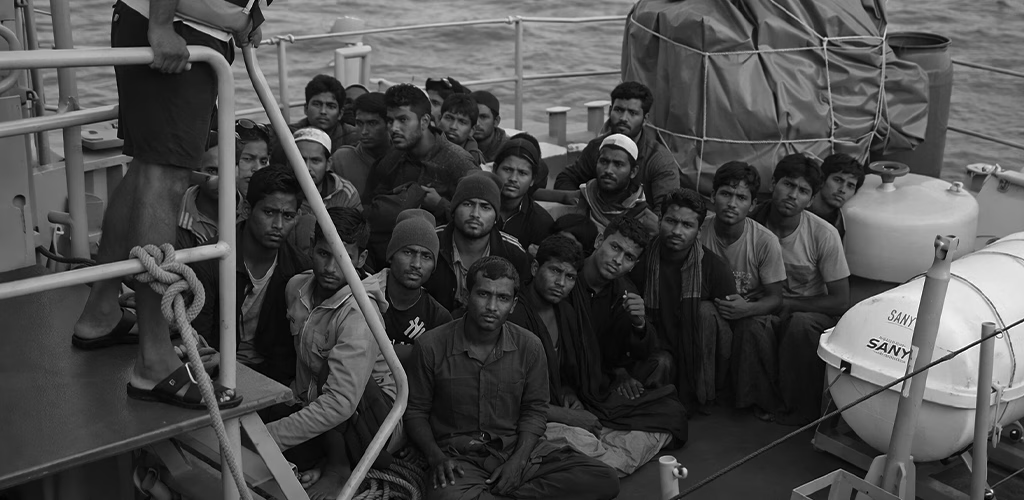
The connection between IRIS Dena and the Indian Navy might sound unlikely, but it arises from the precedent multinational naval exercise known as MILAN 2026. This event was hosted by the Indian Navy between February 19 and 25 in Visakhapatnam, India. It brought together naval forces from across 74 countries, and exercises like these are routine for India and reflect its growing role as a maritime security partner in the Indian Ocean. Iran participated, just like many other invited countries.
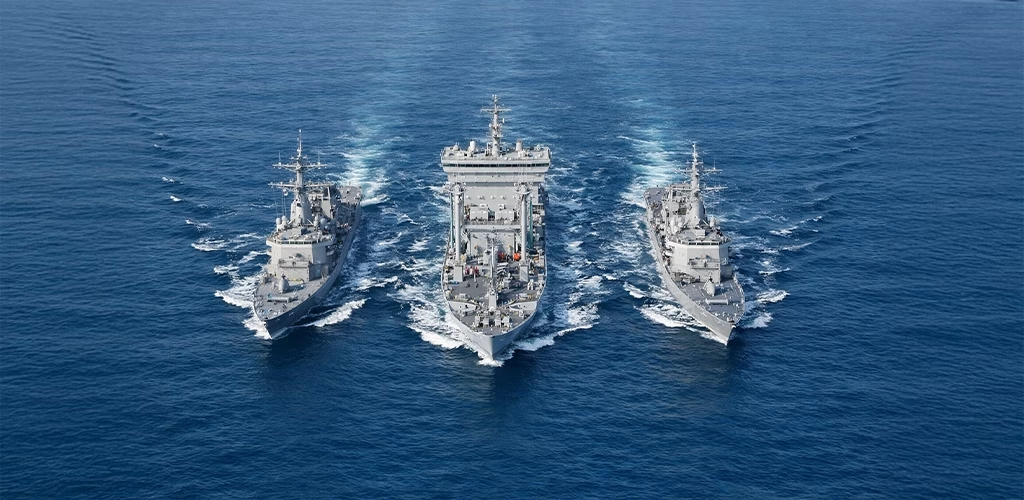
The Frigate Dena was one of the visiting ships on behalf of Iran’s maritime authorities. Once MILAN 2026 concluded, the IRIS Dena left Indian waters and began its journey back toward the Middle East in the hope of making it back to its war-hit homeland. Days later, while sailing through international waters of the Indian Ocean, it was unexpectedly hit by a US submarine, resulting in its sinking and landing on the ocean bed.
And that is the full extent of the ship’s connection with the Indian Navy in question.
A Political Storm in India
Despite the limited link, the incident has quickly entered India’s political arena. Opposition leaders have argued that the sinking of IRIS Dena occurred in India’s strategic neighbourhood and therefore deserves a stronger public response. Some have even described it as a “torpedo in India’s backyard.”
However, India’s official position has reflected measurement and thoughtfulness. The government has expressed concern about the US-Iran escalation and called for restraint, dialogue, and diplomacy. But it has only limited its response to the tramlines of the wider humanitarian and geopolitical crises and has not commented specifically on one particular incident.
Such diplomatic caution is not cowardice or callousness.
India maintains a very strategic relationship with both the United States and Iran, the two countries locked in a dangerous confrontation. Picking a side is hardly in the interest of India, and possibly, this is the reason behind the measured stance.
A Conflict Already Affecting Indians
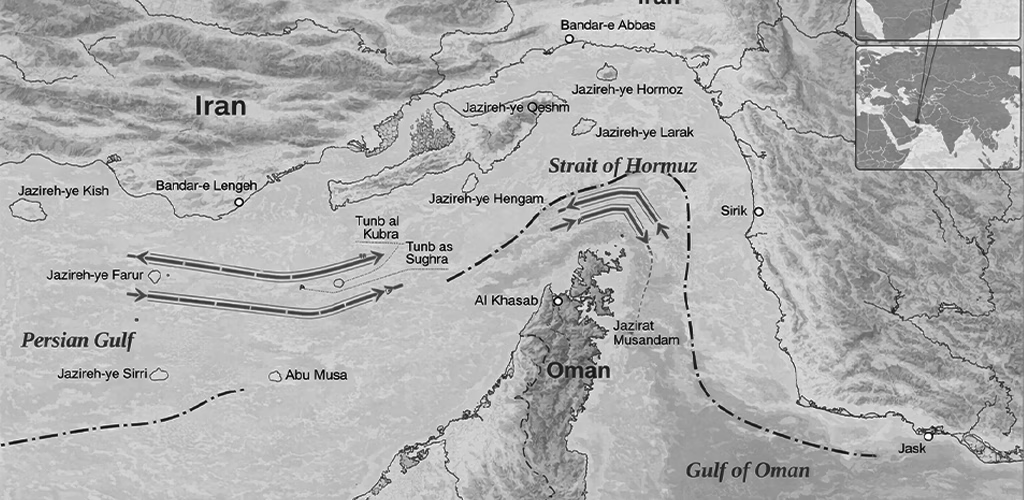
The wider US-Iran escalation has already inflicted tragic consequences for India. Just days before the IRIS Dena incident, an Iranian strike on the oil tanker MV Skylight near the Strait of Hormuz killed two Indian seafarers, including Captain Ashish Kumar and a sailor, Dalip Singh. The tanker attack happened in one of the most sensitive maritime chokepoints called the Strait of Hormuz. But Iran has refrained from issuing any apology for the deaths of the Indian sailors. This context has hardly made it to the heated debates between the Opposition and Indian Government supporters while questioning the sinking of the Frigate Dena in the Indian Ocean.
A Forgotten Agreement, A Renewed Path Of Involvement?
Another aspect that has quietly entered the debate is the Logistics Exchange Memorandum of Agreement, commonly known as LEMOA. This agreement was signed between India and the United States in 2016, and it allows the two militaries to use each other’s facilities for logistics such as refuelling, supplies, and maintenance during joint operations, exercises, or humanitarian missions. In the aftermath of the IRIS Dena sinking in the Indian Ocean, some online discussions and political commentators have loosely attempted to connect this deal to the incident. However, there is no credible evidence suggesting that LEMOA had any operational link to the strike.
The attack on the IRIS Dena was carried out by a US submarine in international waters as part of the ongoing US – Iran escalation, and no reports indicate that Indian ports, facilities, or logistical support were involved. As of now, any attempt to tie LEMOA to the sinking remains speculative rather than factual.
The Strategic Tightrope
For India, the situation is more complicated than a simple diplomatic reaction. The United States is one of India’s closest defence partners, and Iran, on the other hand, remains important for regional connectivity projects and broader Middle East diplomacy. Reacting strongly to the destruction of IRIS Dena could strain one relationship, while condemning Iran over attacks on commercial shipping could complicate another.
In an attempt to balance the situation and bolster its geopolitical position with the two countries locked at war with each other, India has preferred a familiar formula. It has perpetually called for restraint, encouraging dialogue and avoiding conflicts in rapidly escalating quagmires.
The Narrative vs The Reality
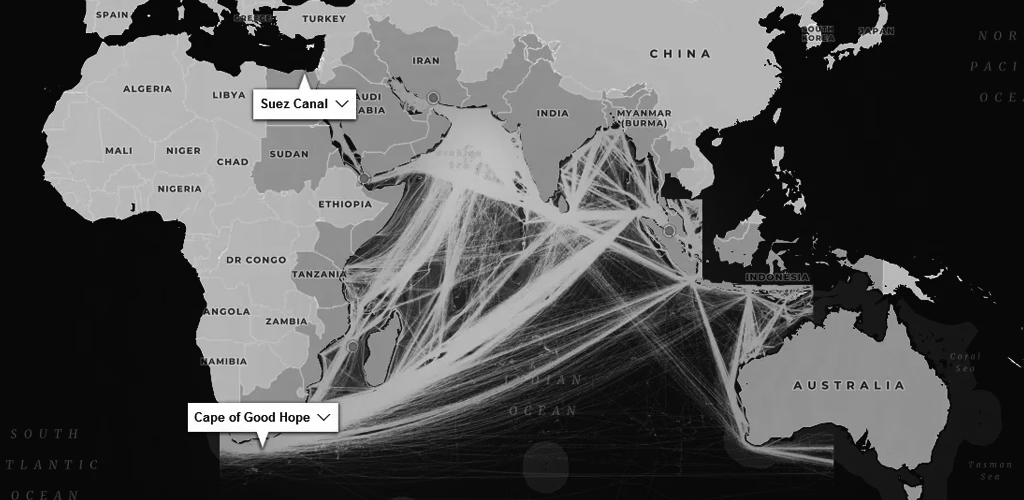
The online debacle around IRIS Dena suggests a dramatic geopolitical twist that concerns and involves India. But the reality is way different from what it seems to be. The Frigate Dena attended MILAN 2026 only as a guest of the Indian Navy, left Indian waters after the exercise, and was later sunk in the Indian Ocean, not in Indian waters, during the ongoing US-Iran conflict.
No credible evidence that ties India to the US attack on Iran’s warship. Yet in a world where geopolitics finds its credibility in the news, opinion blog pages and tweets more than the truth, the story of IRIS Dena is being reasoned more by plausibility than possibility. And this has become a political flashpoint and a strong reminder of how global conflicts can ripple through the waters of the Indian Ocean.