
The Morung: The Heartbeat of Nagaland's Culture
In the hills of Nagaland, where the clouds rest gently on ancient forests, one can still find a structure that has carried the soul of the people for centuries. These structures are called the Morung. Even today, the Morung stands as a powerful symbol of Nagaland culture, reminding us of a time when learning did not come from books but from life itself.
Although many Morungs have faded with time, their story remains alive. It is a story of strength, wisdom, community, and identity.
A Window Into the Past
Long before modern schools came to Nagaland, long before roads and electricity reached the villages, the Morung served as the first and most important learning centre. Every Naga tribe had its own version of the Morung, but the heart of the idea remained the same. It was a home for young men, a hall for warriors, and a classroom for life.
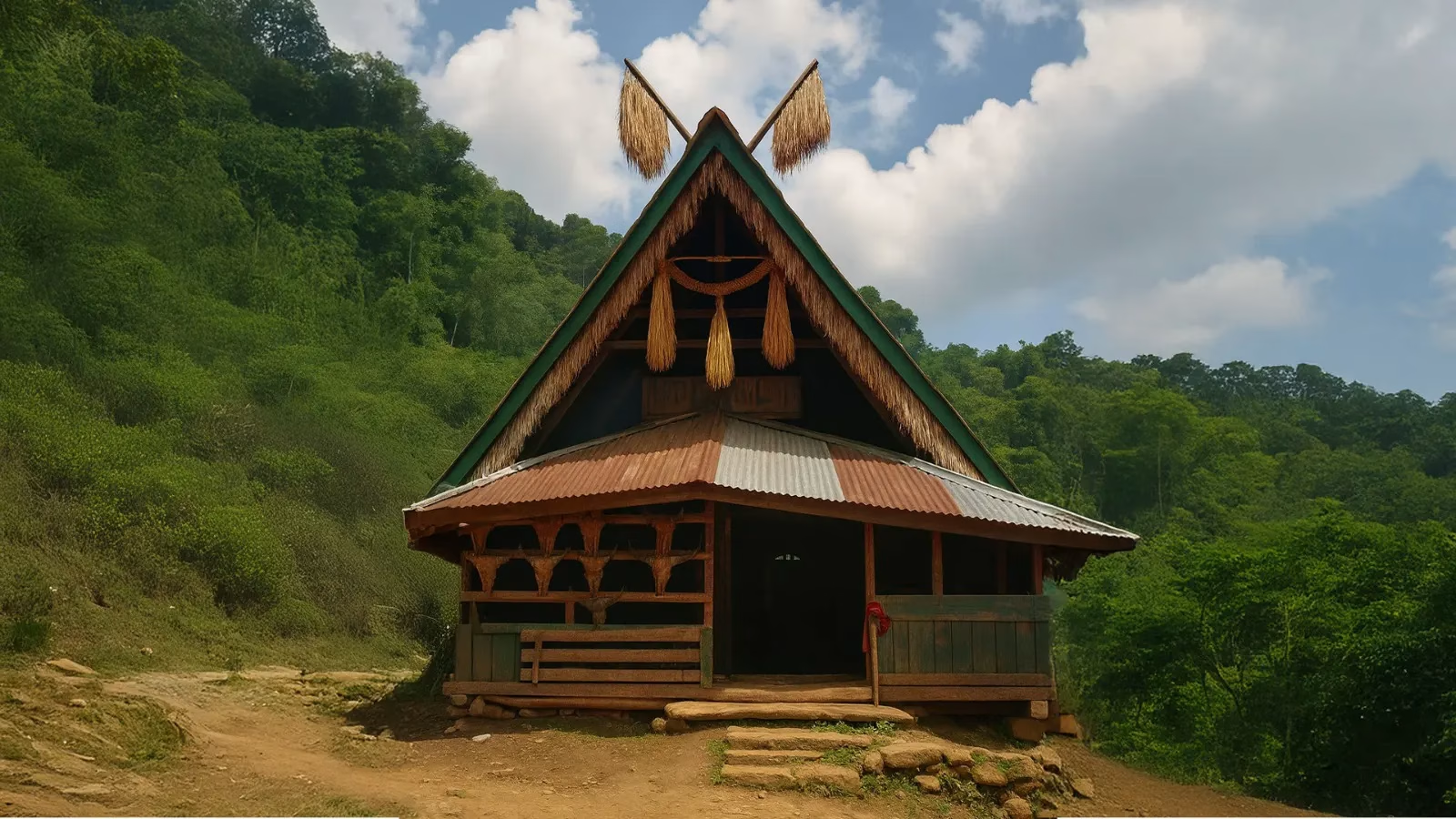
For tribes like the Konyak tribe, the Morung was a sacred space shaped by history. Built on hilltops, it watched over the village like a silent guardian. From a distance, its tall wooden pillars and sloping thatched roof looked simple. Yet inside, the Morung held generations of knowledge that kept Nagaland culture and tradition alive.
A Structure Built With Purpose
The traditional naga morung was made from bamboo, wood, cane, and palm leaves. Even if the materials were simple, the architecture was thoughtful. Because villages often faced threats from enemies in the past, the Morung was placed on elevated ground. This made it easier to watch for dangers and protect the community.
Outside almost every Morung was the log drum, a giant tree trunk hollowed out by hand. Whenever danger came close, the beating of the drum echoed through the hills, calling everyone to gather. During festivals, the same drum filled the air with celebration.
Inside, one could find large central pillars carved with symbols of animals, birds, and important stories. These carvings were more than decoration. They were lessons: visual records that told children who they were and where they came from.
A School Without Blackboards
To understand the true importance of the Morung, we must imagine a time before textbooks. In that world, the Morung was the only school. Young boys moved into the Morung as soon as they reached adolescence. Under the guidance of elders, they learned everything needed to survive and contribute to the village.
They learned the tribal dialect, history, and traditional songs. They learned wood carving, blacksmithing, and bamboo weaving. They learned leadership, courage, and discipline. They also listened to endless stories of creation, stories of bravery, and stories of morality that shaped their character.
Although girls did not enter the Morung, they learned their own skills in separate spaces or from their mothers. Gender roles were clearly defined then, yet both sides contributed equally to sustaining Nagaland culture and tradition.
A Centre of Community Life
Even beyond education, the Morung was the heart of festivals. During celebrations like Aoleang among the Konyak tribe, the Morung came alive with music, dance, and decorations made from bamboo and palm leaves. Young men danced inside, while women celebrated outside, creating a rhythm that connected everyone.
Because of this, the Morung was not just a building. It was a living, breathing part of the community, shaping identity, promoting unity, and preserving Nagaland culture for the next generation.
A Silent Decline of Naga Morung
However, as the world changed, so did village life. Modern schools arrived. Churches became new places for community gatherings. Roads and technology opened doors to towns and cities. As youth left in search of education and jobs, the Morung lost its daily purpose.
In many villages, boys no longer stay there at night. The log drums remain silent. Instead of carving wood or learning ancestral songs, young people sit around the fire checking their mobile phones. The Morung, once full of voices, now waits quietly, hoping not to be forgotten. This decline reflects a larger challenge, which is how to protect Nagaland culture while embracing the future.
A New Chapter of Revival
Yet, there is hope. Across Nagaland, people are now working to preserve the Morung and restore its place in society. Government policies today aim to protect heritage sites and promote sustainable tourism. Villages like Monyakshu, Pessao, and Khonoma use their Morungs to share culture with visitors. These Morungs are no longer only symbols of the past; they are learning spaces for people around the world.
At Kisama Heritage Village, seventeen Morungs, one for each major tribe, stand proudly during the Hornbill Festival. Tourists walk through these structures, watching cultural performances, tasting traditional food, and learning about Nagaland culture and tradition. Even solar-powered Morungs are being introduced, blending old wisdom with new technology.
Digital projects are also recording songs, carvings, and stories so that children living far away can still access their roots. Bit by bit, the Morung is returning, not exactly as before, but in a form that fits today’s world.
Morung: Symbol That Still Lives
Today, the Morung stands at a crossroads. It may not hold young warriors anymore. It may not prepare boys for night guards. Yet its spirit remains strong. It continues to inspire pride, unity, and identity among the Naga people.
The Morung, above all, reminds us of who we are. It teaches us that culture is not just something we inherit but something we must protect. It shows us that even in a fast-changing world, the lessons of the past still matter.
As long as the story of the Morung is told, Nagaland culture will continue to live, quietly, proudly, and forever rooted in the hills that shaped it.