
Tusu Idol Immersion Ritual: The Soul of the Tusu Festival in Rural Jharkhand
Makar Sankranti is a festival that is celebrated across India with various emotions, traditions, and customs. Be it Gujarat’s Uttarayan or Tamil Nadu’s Pongal, this festivity has multiple means or ways of celebration. In the red soil landscapes and fields of rural Jharkhand, a unique tradition of celebrating this festival, known as the Tusu festival, exists. Commemorated with songs, crafts, and traditional rituals, the most distinctive part of this festival is the Tusu doll immersion ritual.
While the other mainstream Makar Sankranti festivities are dominated by priests or temples, this ritual is led by unmarried girls, folk songs, villagers, and the rhythm of cultural traditions. Kurmi, Santhal, Munda, Oraon, and other Adivasi communities across the Chhota Nagpur Plateau observe this Tusu festival ritual called Tusu Puja.
What is the Tusu Festival?
Celebrated on the day of Makar Sankranti, the Tusu doll immersion ritual is a part of a month-long celebration of harvest, womanhood, and nature’s circular movement alongside time. Carried ahead through oral stories, the Tusu festival is mainly led by the unmarried girls in the regions of Chhota Nagpur plateau. This tribal community festival acknowledges the nurturing, delicate, and sustaining traits of nature.
The origins of this festival date back to the old generation. Neither its existence nor its rituals are scripted, but it is its strength that it has been passed down through generations. The main folklore that the communities and villages remember is about a young girl named Tusu or Tusumani, who was pure, resilient, and brave even in the face of adversity. She sacrificed herself to maintain and protect her dignity. As a young girl who was acknowledged for her unwavering spirit, she was defined as the harvest goddess. Over time, she became symbolic.
The word “Tusu” is linked to tush or rice husk. The Tusu purab of the Tusu festival aligns perfectly with the day of Makar Sankranti, where the winter harvest concludes, and there is also a renewal in the movement of the Sun. Thus, Tusu puja and festival blend folklore with nature and its celebration.
The Tusu Puja or doll immersion ritual on Tusu Purab
The festivities of Tusu Puja start a month before Makar Sankranti, when the Aman paddy harvest ends. The ritual is culturally focused on maidenhood, youth, fertility, and tradition. Thus, unmarried girls are the centre of attention for this festival, and married women celebrate them without participating in the doll immersion ritual.
In many regions of Jharkhand, the Tusu festival includes rice husks, uncooked grains, flowers, earthen pots, and cow dung. These are all treated as offerings and then placed in small wall niches or mud platforms. In the tribal belts, girls build idols using bamboo frames, clay, dried stems, and colourful paper. Then, they decorate these idols with paper sarees, foil crowns, garlands, and ornaments. There is no fixed requirement as to the size of the dolls. They can even range up to ten feet.
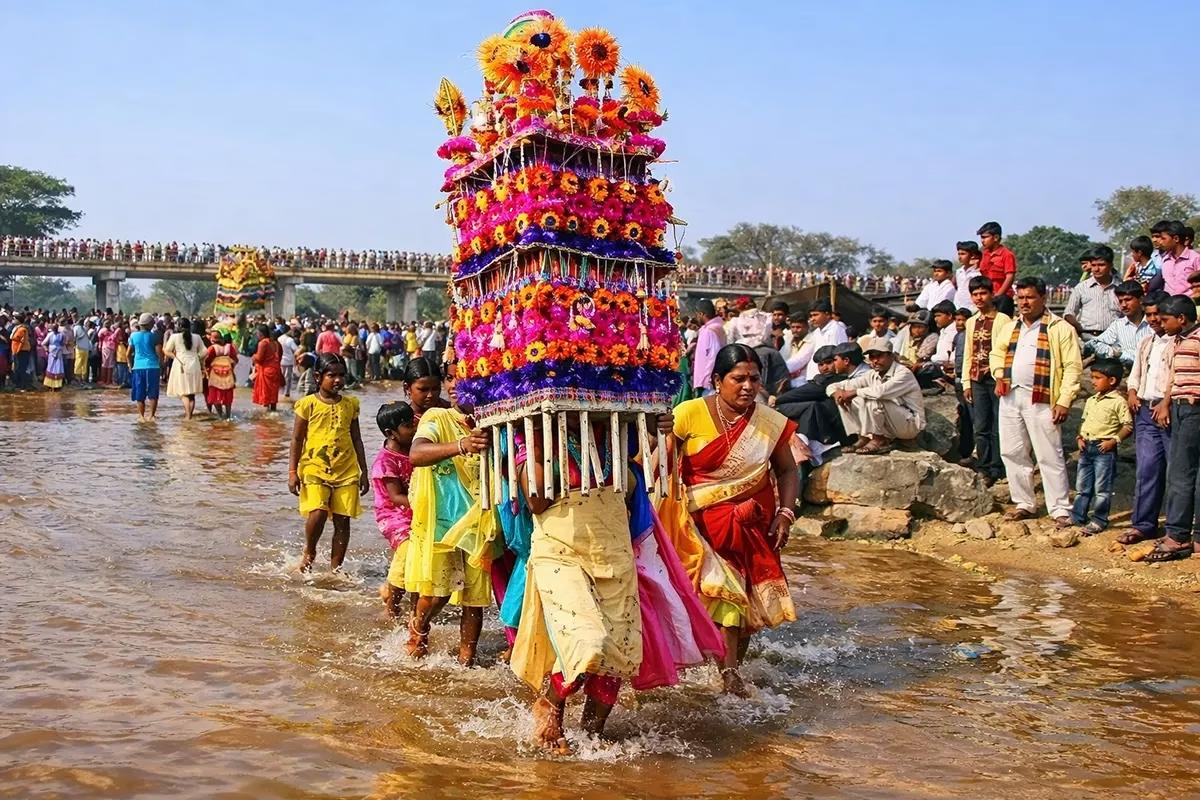
To embrace this ritual and festival, the homes are decorated with the traditional alpona designs, lamps, and paddy shelves. A structure called choudal is created from bamboo, and the Tusu are transported in these carriers for immersion. This whole process is an opportunity to bond, and thus, the Tusu puja turns into a shared act of creativity and devotion.
Tusu Geet and the Celebrations they inspire
The one thing that is very distinctly associated with Tusu purab is the folk songs, also known as Tusu geet. For the 30 days when the Tusu festival progresses, young girls assemble in the courtyards across villages to sing these folk songs. These songs are composed and sung in the Kurmali, Bengali, or local dialects, and are often improvised. Each song tells a story. They blend mythology with personal emotions to create beautiful melodies that tell a story.
The folk songs are often accompanied by drums, such as Damsa Madol, Tusu geet, which are a form of oral literature that is preserved due to the Tsus purab, puja, and festivities. Another extension of the Tusu geet is when the boys respond to the stories in these songs playfully and turn the geet gatherings into sweet exchanges of humour and affection. Thus, through the Tusu geet culture, the Tusu festivities are enhanced.
Tusu Doll Immersion ritual
The final culmination of the Tusu festival happens on the day of Makar Sankranti, also known as Tusu purab. In the afternoon, the young, unmarried girls are dressed in white sarees with red borders. They then carry the idols on the prepared choudal and proceed towards the rivers or ponds and sing Tusu geet while dancing and laughing. The Tusu doll immersions are the final offerings.
At the edge of the water, the villagers start offering fruits, flowers, flattened rice, and jaggery. This immersion is a symbol of Tusu’s departure and is a moment of happiness layered with gentle sadness. Once the immersion is completed, the villagers share the prasad, feed the birds, and start a community celebration.
The Festival of Female Fortitude
The prime significance of the Tusu festival is linked with Tusumani, her sacrifice, and all this is linked to the harvest. The essence of water in the Tusu puja acknowledges the Sun and the soil it has sustained over time. Furthermore, this ritual aligns the human life perfectly with the cycles of nature, promoting harmony over dominance.
Even in the consistently changing times, the Tusu festival remains a symbol of slow and steady living. Deeply rooted in the significance of Makar Sankranti, this ritual quietly preserves identity, community, and the enduring bond between women, land, and song.