
Unakoti Tripura: where Shaivism meets stones
Shaivism has its traces all across India, and even in the regions of Northeast India. There is much evidence and scriptures that prove dedication and commitment to Lord Shiva, and one of them is Unakoti Tripura. Often known as the Lost Hill of Faces or Angkor Wat of Northeast India, this heritage site narrates stories of devotion and myth in ancient India. There are stone carvings on forested slopes, and rock-cut monuments that feel unreal.
While not many people know about Unakoti Tripura, it still stands strong as one of the most committed evidences and expressions of Shaivism in Northeast India.
An ancient landscape
The structures and stone carving at Unakoti Tripura, can be traced back to the seventh and ninth centuries CE. It is believed that during the reign of the Deva Dynasty of Samatata, Tripura flourished as an important Shaivism pilgrimage spot. Hence, these stone curved sculptures in the hills reflect not only the artistic tradition and capabilities, but also the religious associations of the people of Tripura back then. What makes this site distinctive from other religious symbols or temples in the state is that the stone carvings are sculpted into the hillside. Today, it not only serves as an important religious pilgrimage site, but it is also an artistic marvel.
While the roots of Unakoti Tripura are strongly associated with Shaivism, it is also contested whether this site has also been a meditative space for Buddhist ascetics. Archaeologists have noted that the style of the stone carvings at Unakoti Tripura, is similar to the styles of the Pala period art from Bengal. This also indicates Southeast Asian influences, which is why Unakoti is often referred to and alluded to Angkor Wat.
Being an artistic marvel and religious evidence, which can be traced back centuries, Unakoti has made its case to get included in the UNESCO World Heritage recognition list. In 2022, the organisation released a tentative list with respect to the recognition of UNESCO World Heritage sites, and Unakoti was one of the inclusions. This is a strong recognition of Tripura heritage internationally.
Located in the hills
One thing about Unakoti, which makes it extremely picturesque, is that it is located in an extremely pleasing setting. Situated in the Koti district of Tripura and around 8 km from the Kailashahar town, this site is located in the Raghunandan Hills. It is completely surrounded by dense forest, seasonal waterfalls, and streams that add to the beauty of the location. Additionally, the route to Unakoti Tripura is extremely scenic. One can take an exciting road journey from Agartala, which is 180 km away or simply take a train ride from Dharmanagar.
Stories and tales about Unakoti
There are many legends and stories that are related to the stone carvings of Unakoti Tripura. The name Unakoti means 99,99,999 or simply one less than a crore. Local people and folklore suggest that this number is powerfully associated with Lord Shiva and Shaivism. It is believed that Lord Shiva was travelling to Kashi with an entourage of nearly 1 crore gods and goddesses. During the journey, they made a stop at Unakoti and decided to rest. Before dawn, Shiva tried to wake them up, but nobody woke up from their sleep, and thus, Lord Shiva cursed them to turn into stone. This suggests that the figures that we see might not be carved.
It is also believed that there was a devoted sculptor who believed in Lord Shiva and wished to carve one crore sculptures of him in a single night in order to impress Lord Shiva and seek his blessings. However, throughout the night, he fell short of one carving, which led to the name Unakoti. One thing that strikes about all the folklore and legends associated with Unakoti is that Shaivism was strongly followed in the state of Tripura, and Lord Shiva is not just a cosmic God for them, but a fierce, tribal, and accessible God.
Artistic illustrations and sculptures at Unakoti
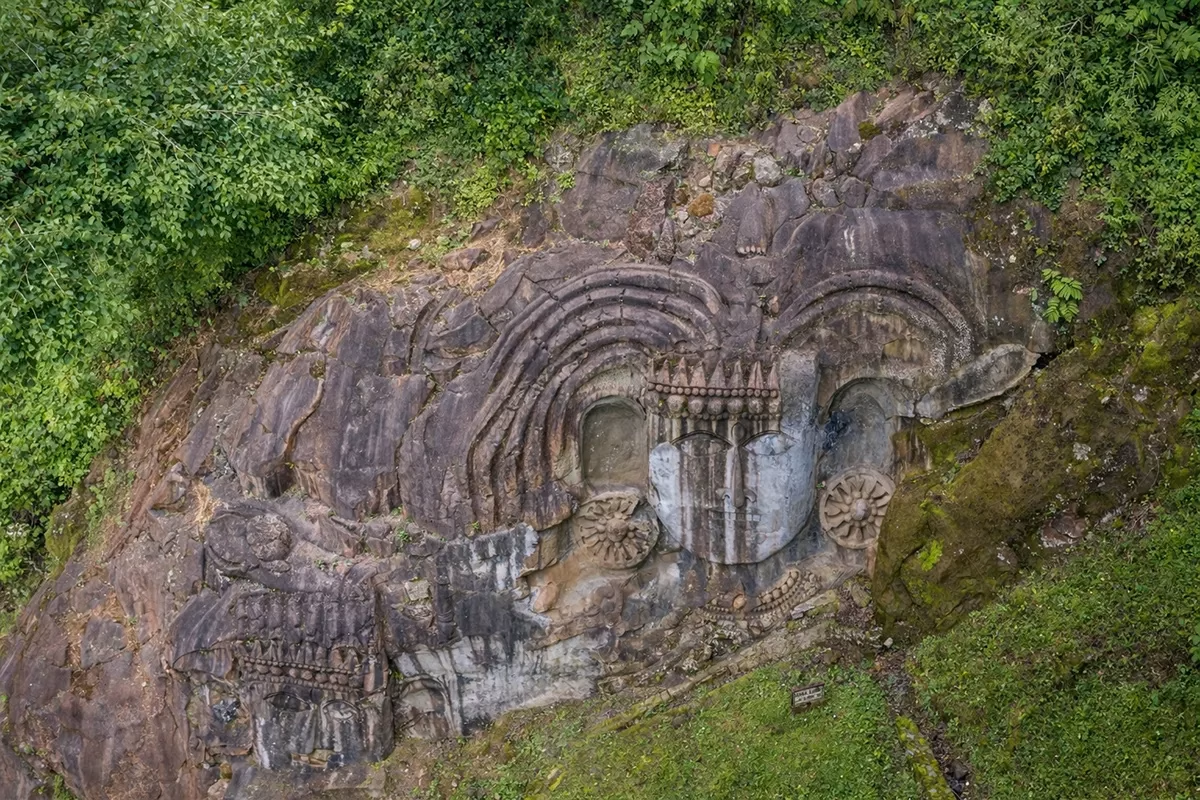
There are many sculptures and stone carvings at Unakoti Tripura. But one of the most outstanding features is the massive sculpture of Lord Shiva, which is also known as Unakotiswara Kal Bhairava. It is nearly 30 feet tall and has a head crowned with ornate elements carved into the stone. There are also idols of Goddess Durga, Kali, Ganesha, and Kala Bhairav at the site. Additionally, there is also a rare Chaturmukhi Shiva Linga at the site, which makes this place extremely important to Hinduism and specifically, Shaivism.
The carving, exceptionally and aesthetically, blends with the nature at the site of Unakoti Tripura. It is a rare part of Tripura heritage, where history blends with the environment so visually. Waterfalls often coincide with the faces carved on the stones, while plants, mass, and foliage grow from the edges as if an ancient art was being created from it. Even though the sculptures are stone, carved and years old, they are still vivid and have survived time and weather adversities. This is what makes Unakoti extremely special for Shaivism in Northeast India.
Spiritual relevance of Unakoti
Unakoti Tripura is not just about sculptures of Lord Shiva and other gods and goddesses. It is also about religious exploration, meditation, and spiritual reflection. The quiet atmosphere of this side helps visitors to meditate and experience nature on a different level. At the same time, the religious sculptures ensure a sacred interest for pilgrims. Home to rare sculptures and religious entities, Unakoti is sought by tourists, pilgrims, spiritualists, environmentalists, history enthusiasts, and artists. To celebrate the religious emotion of this sacred site, the Ashokastami Mela is held every year in the month of April to celebrate the local Tripura heritage, traditions, and cultures.
Unakoti and its link to heritage, art, and religion
As a potential UNESCO World Heritage site, a celebrated Shaivism spot, and an aesthetically pleasing artistic and environmental location, Unakoti Tripura stands out for its fragile and precious existence. It is relatively underexplored and unknown, which makes it even more interesting. It stands today as evidence of history and a celebration of art and religion. It is where, just like India’s cultural narrative, faith, art, environment, landscape, history, and culture meet.