
Unknown Rituals and Traditions of Uttarayan: Stories Beyond Kites and Sweets
January in India brings cold weather, winter vegetables, and sweater season. But it also brings various festivals across the country that celebrate light, warmth, and rebirth. In Gujarat, these celebrations are marked by Uttarayan. Also known as Makar Sankranti, this festival signifies the transition of the Sun into Capricorn and the beginning of a northward journey.
While this festival of Makar Sankranti exists in variations of names and traditions across India, in Gujarat, it is associated with kites and competitions. This sport is widely known and popular, but there are also some rituals hidden in communities and streets of the state that have been followed for ages, yet not many people know about them!
The Festival of Uttarayan and Its Different Traditions
Often known as Surya Uttarayan, the festival in Gujarat signifies longer days, the retreat of winter, and the start of a new harvest cycle. Often associated with just kite flying, til-jaggery sweets and delicacies, and river bathing, there is so much more to it. Across rural Gujarat, borders of Maharashtra, deserts of Rajasthan, Makar Sankranti is celebrated with traditions that differ interestingly from the known. But these rituals are not just followed for the sake of it. They have a layer of symbolism marked by agrarian wisdom, Vedic reasoning, and folklore. Here are five such interesting and unknown rituals and customs of the Gujarati Uttarayan.
Surya Arghya: Gujarat welcomes the Sun
In the rural regions of Kutch, Saurashtra, and Banaskantha, Uttarayan start with the ritual of Surya Argha. The elders of the villages start their festivities before the Sun rises. They wake up early, bathe in cold and chilling water, and face east. They do so in order to welcome the first rays of the Sun.
Just as the Sun appears, they offer arghya or sacred offerings to the Surya Bhagwaan or the Sun God. In order to do so, they use copper vessels filled with water, turmeric, rice grains, and red flowers. While chanting holy mantras dedicated to Surya Bhagwaan, they offer the water to the Sun.
The ritual in the Makar Sankranti is based on ancient Vedic reverence. The Sun is known as the source of life, light, and clarity. The villagers believe that offering the arghya to the Sun on Uttarayan will protect them against seasonal illness and bring them strength. Not only that, the offered water is considered so auspicious that some people even sprinkle some of it on crops and threshholds.
This meditative ritual of Uttarayan is a consistent reminder that Makar Sankranti is not just about outer celebration but inner alignment.
Bhogi Bonfire Ritual of Gujarat, Maharashtra Border
Border regions across Gujarat and Maharashtra, like Dang, Valsad, and Nadurbar, observe the Bhogi ritual. This ritual is an evocative bonfire ceremony where old farming tools, dried crops, and wooden equipment are gathered and burned in a fire. The families in the villages surround the fire and offer sesame seeds and sugarcane to it while singing folk songs.
This is one of the lesser-known rituals of Makar Sankranti, and it symbolises the practice of letting go of past hardships and welcoming a new energy. After the process of burning these tools, equipment, and dried crops is completed, the ashes are collected and scattered on fields. This further adds an agricultural significance and benefit to the ritualistic symbolism. Thus, this Bhogi bonfire ritual implies that the Uttarayan is not just about celebrations but renewal and refreshment.
First Grain Offering in Rajasthan
The neighbouring state of Gujarat also celebrates Makar Sankranti in a unique way. While many traditions and customs remain common, the regions of Jodhpur, Barmer, and Shekhawati celebrate the Uttarayan festival with “first grain offering”. In this ritual, families cook meals from the new harvest and offer the first portion to the fire or to the earth. They do so in order to express their gratitude to nature and the environment. Wheat, bajra, and gram are often associated with being the sacred symbols of survival and abundance. This ritual acknowledges that.
This ritual respects the process of sowing and reaping, reminding the people that they are dependent on land and climate for their existence. Furthermore, this practice extends beyond just offering the grains to the land. Some families also offer the grains to birds and animals. This reflects sustainability and offers an insight into the meaningful philosophy of the Uttarayan traditions.
Black Sesame Protection Rituals of Mewar and Konkan
In the Mewar and Konkan coast of Rajasthan and Maharashtra, black sesame seeds are used in a unique tradition. They are acknowledged as a protective force during Surya Uttarayan. Elders apply sesame seeds as a tilak or put them together in small pouches to scare negativity and negative energies.
But this ritual is not blindly followed. As per Ayurveda, sesame is considered warming. Thus, keeping it close or even applying it balances winter-related ailments, offering warmth and relief. Makar Sankranti, therefore, becomes a blend of multiple rituals involving sesame. While white sesame is used for sweet delicacies, black sesame is used for protection. This ritual has been passed through generations, and this is also a reflection of how older generations had an understanding of seasonal vulnerability and the ayurvedic properties of various ingredients.
Community Roof Sharing Traditions in Gujarat Cities
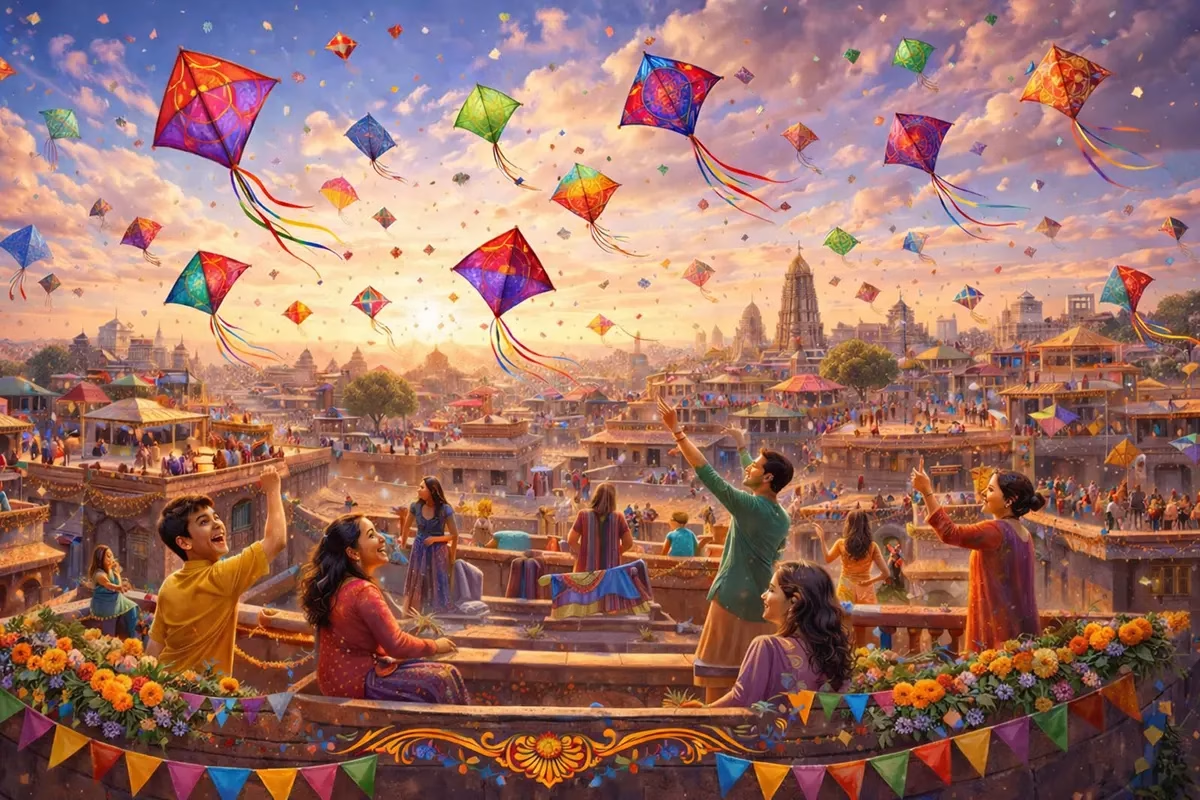
In the older cities of Gujarat, the Uttarayan Gujarati festivities are incomplete without community sharing and blending. The communities celebrate the rituals together on the rooftops. Everyone gathers on common roofs where they share traditional meals such as Undhiyu, fly kites, and chat.
This tradition extends beyond social boundaries and feels like a reminiscence of old pol communities where survival was supported by togetherness.
Beyond just a Festival
Makar Sankranti or Uttarayan is not just a festival. It is a celebration of communities, tradition, rituals, and nature. It brings together humans, nature, and time by binding them in a culture that has travelled through generations and is a mix of faith and science. Be it the Surya Uttarayan Gujarati traditions, Maharashtra’s Bhogi rituals, Assam’s Magh Bihu Traditions, or Sankranti’s festivities, this festival is an acknowledgement of gratitude, protection, and unity.