
Vaital Deul Temple (Odisha): Where Tantra Breathes in Stone
India is a land of mysteries, myths, and history. While some of these find their existence in records and inscriptions, some find their traces in the faith and beliefs of people. One of such faiths lies in the tantric tradition. Often considered unspeakable, mysterious, and even immoral, India has a religious sentiment attached to the tantras, and thus, they find their way to temples as well.
One of such temples is the Vaital Deul temple in Bhubaneswar, known for the tantric traditions that are often chanted through its walls. The purpose can be peace or destruction, but the seed is faith and belief.
The Tantrik Temple
In the city of Bhubaneswar, where temples are generally known for devotion, piety, pilgrimage, and positivity, the Vaital Deul temple is hidden from the eyes of followers seeking peace. The dark, fierce, and unsettling tone that this tantric temple sets does not cater to calmness but to fear, which was once the pathway to liberation. But the temple is much more than just that.
A temple that breaks rules
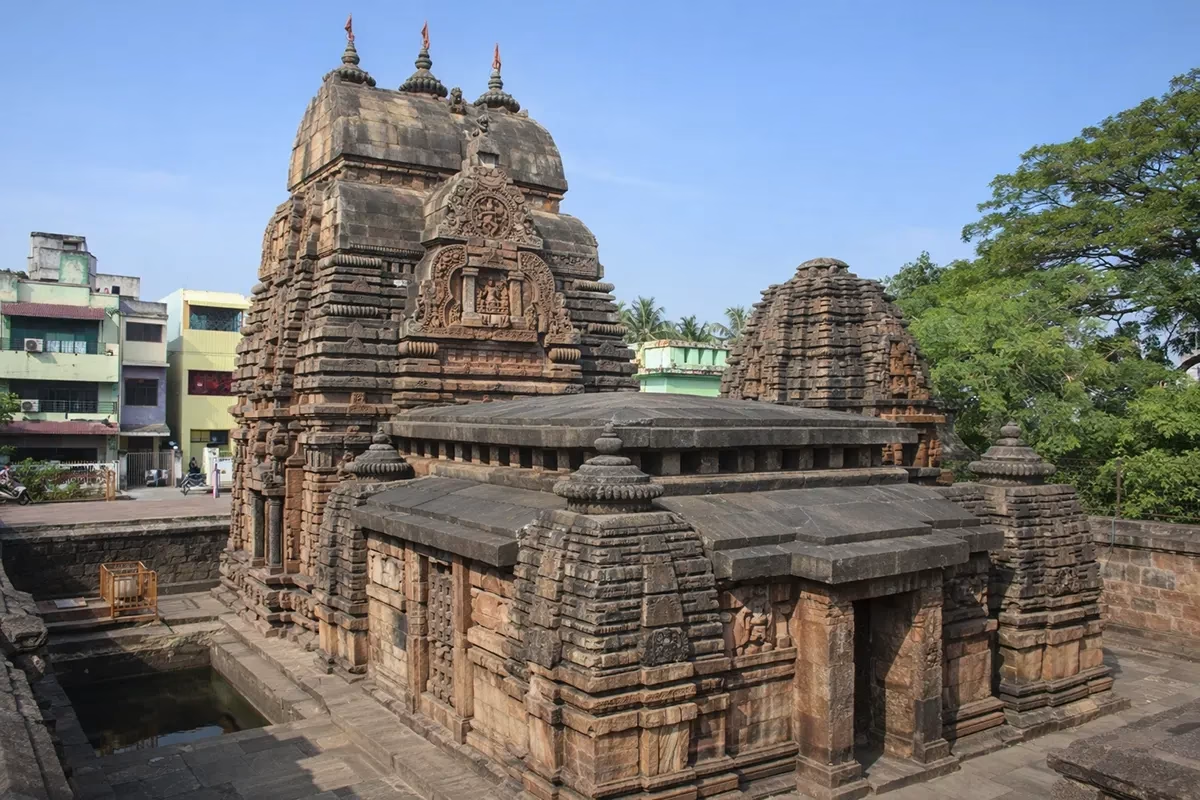
Vaital Deul temple is not just a simple structure standing tall in Odisha’s Bhubaneswar. It is a tantric temple, built in the 8th century CE. This temple is not just alive in its form and structure but also in spirit through the rituals and tantras that it follows. The locals respect the temple and often lower their voices near its walls because they do not wish to interfere with its processes.
The temple sets itself apart from the normal, not just through the religious practices it offers a home to, but also through its architecture. Unlike the curvilinear towers, which are generally found in the Kalinga Architecture, this tantrik temple follows a rare style. Inspired by the Khakara architecture, the sanctum is crowned with a boat-shaped, semi-cylindrical roof. This creates a resemblance similar to an overturned vessel drifting between worlds.
Usually, the architecture of Odisha follows the Kalinga style, but this temple follows a deviation which is deliberate. Many scholars believe that the shape and structure of the Vaital Deul temple follow tantric symbolism. The architecture is a representation of the womb, the passage, the crossing from fear to awakening.
A Symbol of Mahashakti
Another striking fact about the temple is that it is also called Tini Mundia Mandira, which means “three-headed shrine”. It represents the goddesses Mahasaraswati, Mahalakshmi, and Mahakali. The Goddess Mahasaraswati symbolises knowledge, the Goddess Mahalakshmi symbolise prosperity, while the Goddess Mahakali represent destruction. Together, the three forces unite to represent Mahashakti. Thus, this temple somehow reminds us that creation and annihilation are not separated, a message very common throughout Hinduism.
Chamunda: The Goddess Who Feeds on Fear
The tantric temple of the Vaital Deul temple is dim and dark. Inside the main sanctum is the idol of Goddess Chamunda, who is believed to be one of the most terrifying of Goddesses in Hinduism. She is skeletal, emaciated, seated on a corpse throne, wearing a garland of skulls. With a blood red and protruding tongue, she symbolises death, darkness, and forbidden knowledge, which is deeply associated with tantric education.
She holds the following ritual objects in her hands:
- A serpent (kundalini energy)
- A skull cup (kapala)
- A trident (cosmic trinity)
- A thunderbolt
- Severed heads
She is not intended to symbolise calmness like other Gods and Goddesses. Instead, she stands for confrontation. Tantra at Vaital Deul temple is all about decay, death, and desire.
Blood, Skulls, and the Kapalikas
Vaital Deul temple is linked to the Kapalika sect. They are radical tantric practitioners known as skull-bearers, who reject social norms. They perform rituals involving alcohol, meat, sexuality, cremation grounds, and skull worship.
Carvings on the temple walls of this Tantric temple often talk about:
- Figures collecting blood in skull-cups
- Decapitated heads offered in ritual
- Jackals feasting beside sacrificial scenes
- Erotic maithuna couples symbolising the union of cosmic energies
A yupa-stambha or sacrificial post is also found inside the Vaital Deul temple. Locals state that it was used for animal sacrifice, while the folklore mentions voluntary human offerings. These offerings are often associated with the pursuit of siddhis, or supernatural powers.
The Vetala and the Lunar Mystery
The name Vaital is derived from vetala, a spirit that inhabits cremation grounds and liminal spaces. Local folklore believes that these spirits are not demons but guides, and on certain nights, their energies are amplified. During full moons, tantra practitioners experience the sanctum’s vibrations shift along with the celestial cycles. But, this is a famous claim which is not formally accounted for but profoundly believed.
Why Vaital Deul Disturbs and Draws
Many ancient Indian temples that were once deeply associated with tantric traditions have lost their religious darkness with time and modernism, but Vaital Deul stands out. It still stands near the Bindu Sagar lake as a strong tantrik temple where practitioners find a home and faith takes dark turns.