
In the villages of Kinnaur in Himachal Pradesh, a tradition that hardly anyone outside the mountains knew about until recently existed in peace, silence, and sanctity. The Raulane Festival has now suddenly found itself trending on social media platforms, news articles talking about it, and tourists rushing to view it as a spectacle.
But what today is a reel on Instagram reaching millions of views is a sensitive culture that was never eyed upon by the world, and only for the good. The question stands – is it the sacredness of the festival that has local disappointment, enraging at the virality or is the localised sentiment resisting the sharing of traditions?
A Quiet Tradition, A Festival Now Running On Reels
For generations, Raulane Festival Himachal Pradesh has lived quietly in regions such as Kalpa, Kothi, Sangla, and Ropa. Villagers participated with devotion, and elders have passed down the rituals through memory, while the mountains witnessed a ceremony that is believed to be thousands of years old.
However, something changed recently.
Photos and short videos of the masked figures that are associated with the festival went viral on social media. Suddenly, people across the internet began sharing the images with fascination and amusement. For many viewers, the unusual costumes and masked dances looked mysterious, even entertaining.
But inside Kinnaur, the reaction has been very different. Many locals feel uneasy. The ritual that has belonged to their spiritual world now risks becoming a spectacle for outsiders. And this raises a difficult question. Sometimes, is it better for a tradition to remain unknown than to become viral?
A Festival That Welcomes Spring
The Raulane Festival marks the end of winter in the high Himalayan valleys. It usually begins just after Holi, when the snow slowly melts from the alpine meadows. In 2026, the celebrations in Kalpa started around 7 March and continued for about five days.
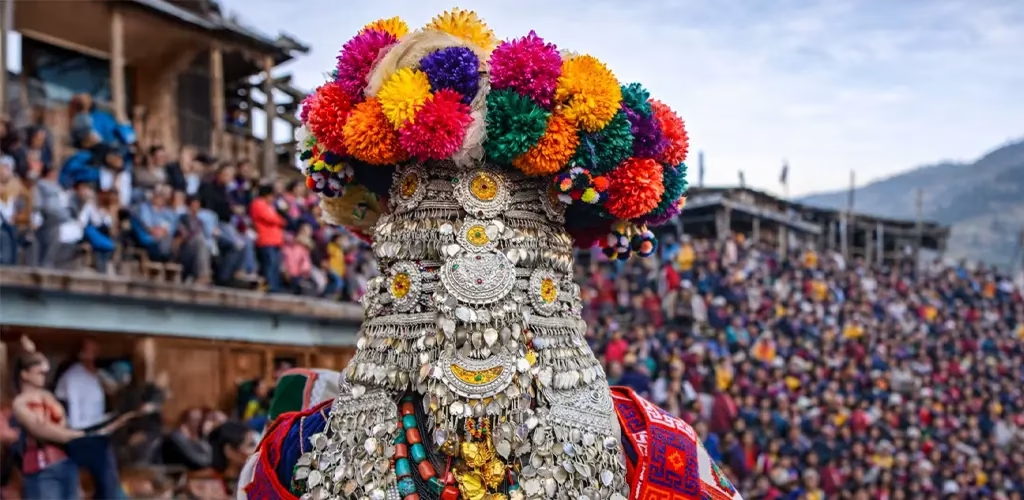
According to local belief, the valleys are protected during winter by celestial spirits known as Saunis. Villagers describe them as gentle beings woven from frost and moonlight. These spirits descend from the high mountains to guard livestock, crops, and people during the harsh winter months.
When spring arrives, the community gathers to thank these protectors and send them back to the mountains. Therefore, the festival is not simply a celebration. It is a farewell ritual, expressing gratitude before the agricultural season begins.
A Ritual Without Written History
Unlike many well-documented religious traditions, the Raulane Festival has no written origin story. There are no scriptures, historical documents, or formal records explaining when it began. Instead, the tradition survives entirely through oral memory.
Villagers simply say that the ritual has always existed. It is something that elders teach younger generations through participation rather than explanation. Historians often describe it as a rare example of pre-Vedic Himalayan folklore, rooted in indigenous nature worship rather than organised religion.
The Masked Figures of the Festival
One of the most striking elements of the festival is the appearance of its central figures. Elders secretly select participants from each neighbourhood cluster. Among them are two symbolic characters who represent a divine couple. The first is Raula, the groom. The second is Raulane, the bride. Interestingly, both roles are played by men.
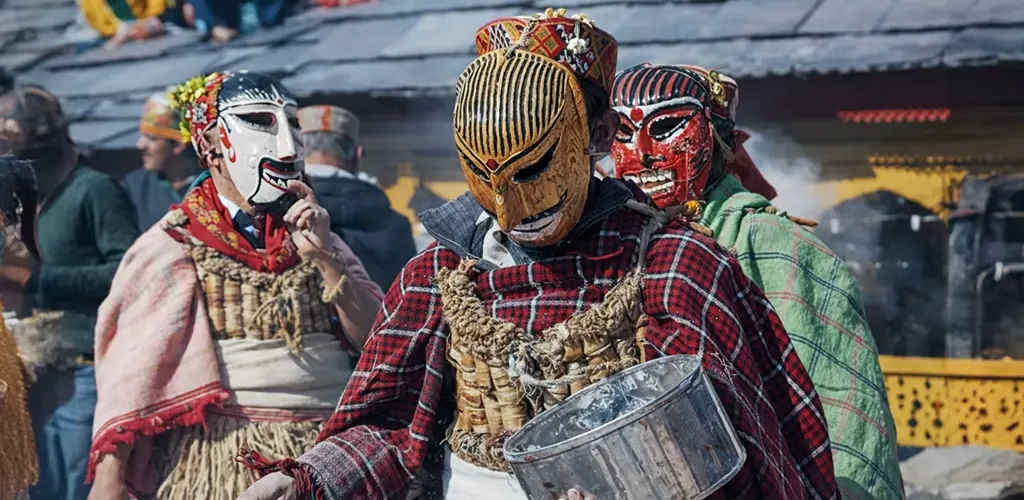
To transform into these figures, the participants cover themselves completely in heavy woollen clothing, masks, veils, and gloves. Not a single part of their identity remains visible. This anonymity allows them to become vessels for the spirits rather than individuals. Alongside them appear masked warders known as Zannpundulu, who protect the ritual space and symbolically ward off negative forces.
Processions, Blessings, and the Temple Dance
The festival begins with a slow procession through village lanes, accompanied by traditional drums. The masked figures move from house to house while villagers sing, chant, and offer grains, milk, flowers, or local liquor.
Gradually, the procession reaches the Nagin Narayan Temple, the spiritual centre of the ritual. Here, Raula and Raulane perform a slow, almost trance-like dance in the temple courtyard. The movements are deliberate and quiet, symbolising prayers for protection, good harvests, and harmony between humans and nature.

Over the next few days, more villagers join the celebrations. The festival grows into a collective expression of gratitude before concluding with a final farewell to the Saunis as they return to the mountains.
When the Internet Finds a Sacred Ritual
For centuries, the Raulane Festival existed only within the communities that practised it. However, viral videos on social media recently introduced it to a much wider audience. To many viewers online, the masked dancers appeared exotic or unusual. Yet for locals, the festival carries deep spiritual meaning.
This sudden visibility has created a sense of tension. Some residents worry that curiosity may turn into intrusion. Others fear that sacred rituals might eventually become tourist attractions rather than community traditions.
Because of this concern, local authorities and villagers now emphasise respectful behaviour. Visitors are asked to avoid intrusive photography and to remember that the festival is not staged for entertainment.
Known or Unknown?
The story of the Raulane Festival reflects a modern dilemma faced by many indigenous traditions. Visibility can bring appreciation. However, it can also transform something intimate into something performative.
For the people of Kinnaur, the festival is not a spectacle. It is a quiet conversation between the mountains, the spirits, and the community that lives among them. Perhaps that is why the question still lingers in the Himalayan air. Sometimes, is being unknown the truest way for a tradition to survive?