The land of Egypt is very popularly known for the sand dunes and pyramids, and in the midst of it, the tombs of pharaohs that have stood in silence for thousands of years. But today, the land of the River Nile is taking everyone by storm in history. The archaeologists have come across something unexpected and unprecedented.
Not hieroglyphs, and not even Greek inscriptions, but an essence of India – especially, Tamil.
A Silent Message of International Connection
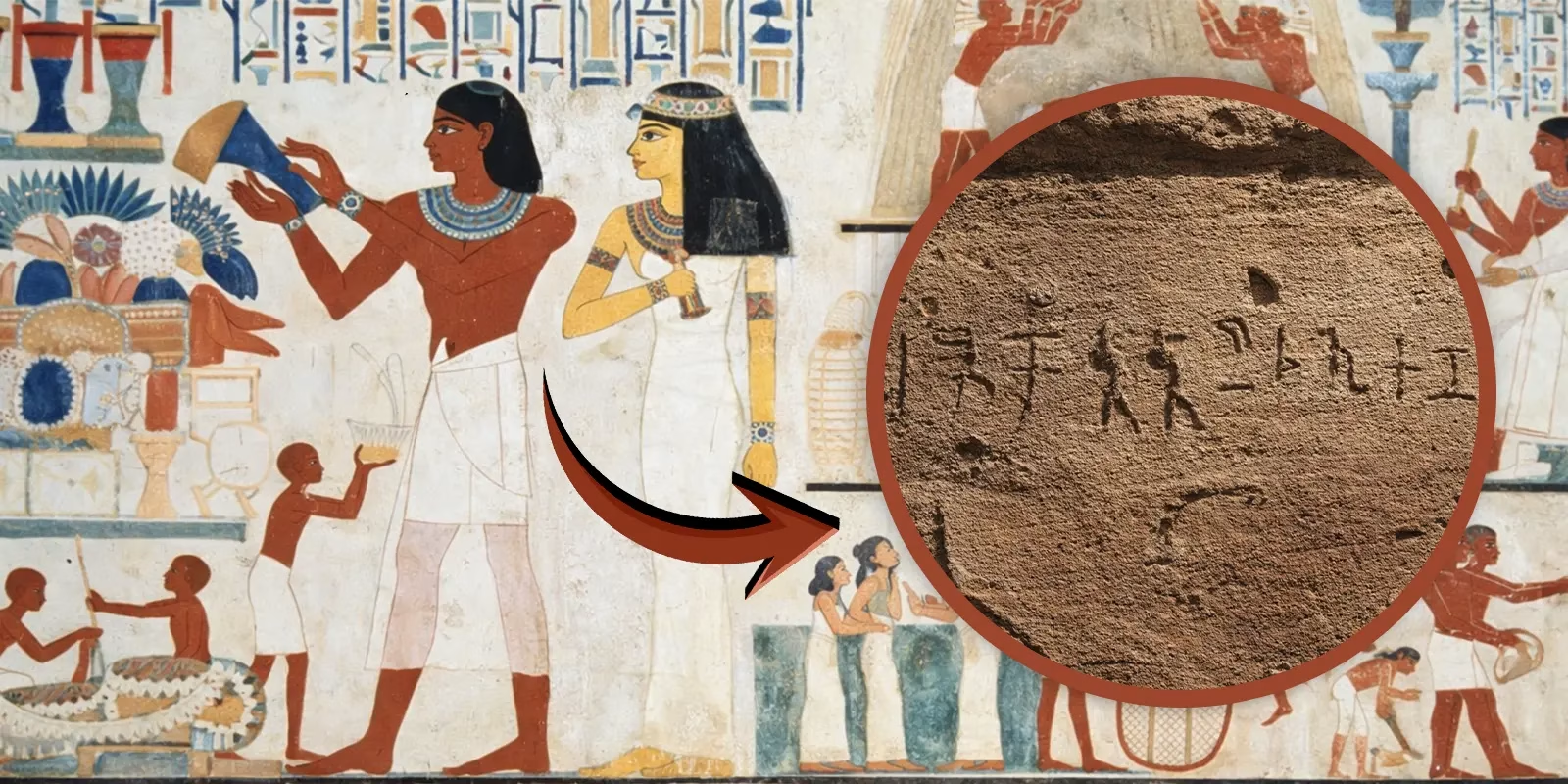
Carved into the walls of royal tombs of Egypt, including that of Ramesses VI, are nearly 30 inscriptions written in Tamil-Brahmi script that trace their origin back to almost 2,000 years. And, among them, one line appeared repeatedly.
“Cikai Korran came and saw.”
At first glance, this feels simple, nothing unusual and just a plain piece of information. But is it? What can be expected is a deeply complex story that quietly associated itself with the travels and human curiosity in the ancient world.
Beyond Trade: The Journey of Tamil Merchants
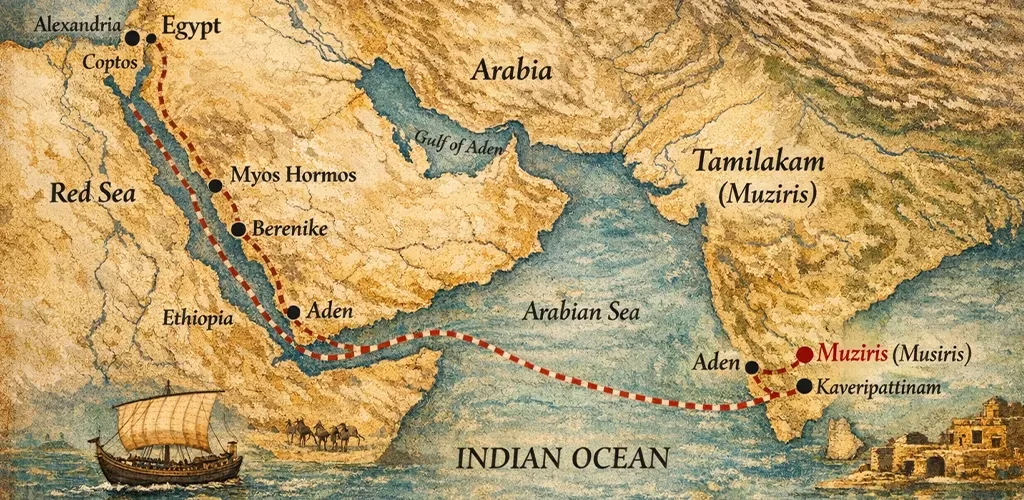
The presence of Tamil inscriptions in Egypt is reflective of nothing but the evidence of their presence. Back in ancient times, merchants from the Tamil regions sailed from ports such as Muziris to reach Egypt. They carried pepper, pearls, ivory, and fine textiles across the Arabian Sea to the Middle East. This is not new information. It has been known to mankind for far too long that the Tamil regions traded with the Egyptian land, but what is unknown is what happened after.
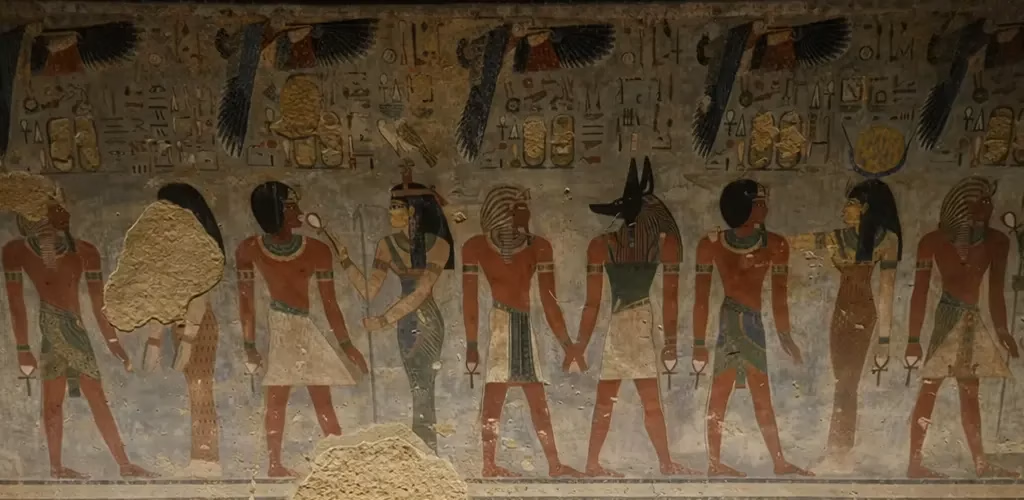
What is usually imagined is that these merchants simply arrived, traded, and returned. But the truth stands distorted because they travelled further ahead. From the Red Sea ports, they commuted more than 200 miles inland to reach the Theban necropolis. This is one of the most sacred spaces in ancient Egypt, and it was recognised for its faith and undying importance to the ancient civilisation of Egypt.
Thus, it is established that what happened between the Tamil lands of India and the inland of Egypt was no longer trade but passionate travel and exchange of cultures.
Cikai Korran: A Name That Travelled Across Continents
One thing that strikes about the Tamil inscriptions on the walls of ancient Egyptian walls is the repeated mention of Cikai Korran. This is a reflection of the importance that Cikai Korran held in society back in the time. It suggests Cikai was not an isolated visitor but a person of importance, a wealthy merchant.
The inscriptions suggest the description, “came and saw.” This is simply not a mention of a fact or information meant to be inscribed purposelessly for the future generation to read. This simply echoes a sentiment that, unlike Veni, Vidi, Vici, this was not about conquest. It was about travel experience and a curious exchange of cultures.
The Signs of Global Curiosity
In the scriptures of ancient Egyptian civilisation, the Tamil inscriptions appear alongside Greek and other scripts. This reflects that the tombs in Egypt were not merely a local interest. They were well acknowledged across the globe and were visited by people from different regions. This coexistence of languages reveals an interaction and curiosity rooted in cultural acknowledgement and respect.
While we often imagine the global relations in the ancient world as simply economic or consquestial, the truth is that curiosity governed expeditions too, and in fact, added meaningful purposes to trades. Thus, every merchant was not just a trader but in fact a curious traveller who aimed to fulfil their aspirations to explore with international traditions, architecture, cultures, and rituals.
From Stone to Screens
Nearly two thousand years later, the methods and purpose of travel have shifted and transformed. There are not just long voyages to trade and maybe, explore the world as an added benefit, but the intention to make curiosity the purpose of travel.
While we continue to cross distances, seek experiences, and document moments, the only difference lies in how we leave our mark. Where Cikai Korran carved his presence into stone, we capture ours through photographs and screens.
But these Tamil inscriptions tell a different story that trade was never just transactional, but it opened doors to travel in a way that Indian merchants could stand inside Egyptian tombs, not just as traders, but curious about a distinct culture.