Gangaur Festival: Where Devotion Blossoms Like Spring
What comes to your mind when you hear the word Indian festivals?
Probably, Diwali or Holi. We often tend to associate festivals with these two events of the Hindu calendar. For us, they are all about dressing up, praying to God, bursting crackers, or simply playing with the colours. It is either light or colour, accompanied by a celebratory gala.
But there are certain festivals in India that are not always loud. Sometimes, they unfold like poetry with a depth and soulfulness that lingers, even after the rituals have ended. This is the Gangaur Festival.
A Sacred Festival of Devotion
The Gangaur Festival is not just simply a celebration, but an emotion that weaves women of different generations. It has passed on like a sacred tradition through generations, and families celebrate it with devotion, patience, and optimism.
Just as the colours of Holi simply fade into the background as annual memories, the land of Uttar Pradesh and Rajasthan begins to feel a different rhythm. But this rhythm is gentler and profoundly enduring. From the courtyard of Jaipur and Udaipur to the heartland of Braj and Bundelkhand, this festival honours divinity, companionship, fertility, and strength of faith.
The word Gangaur is derived from “Gana”, which simply means Lord Shiva, and “Gaur”, which signifies Goddess Gauri. This festival is a tribute to the union of Lord Shiva and Goddess Parvati and is led by women, for women, in order to honour women.
The Ritual Begins: A Sacred Rhythm of Sixteen Days
The festival begins on the day after the Holika Dahan. This is the beginning of a sixteen to eighteen-day spiritual journey that the women go through. Every morning, women gather with clay or wooden idols of Gauri and Isar. They begin to carefully craft or repaint them, and adore them in hues of vermilion and gold. The idol of Gauri is decorated as the resplendent bride, while the idol of Isar is the eternal consort.
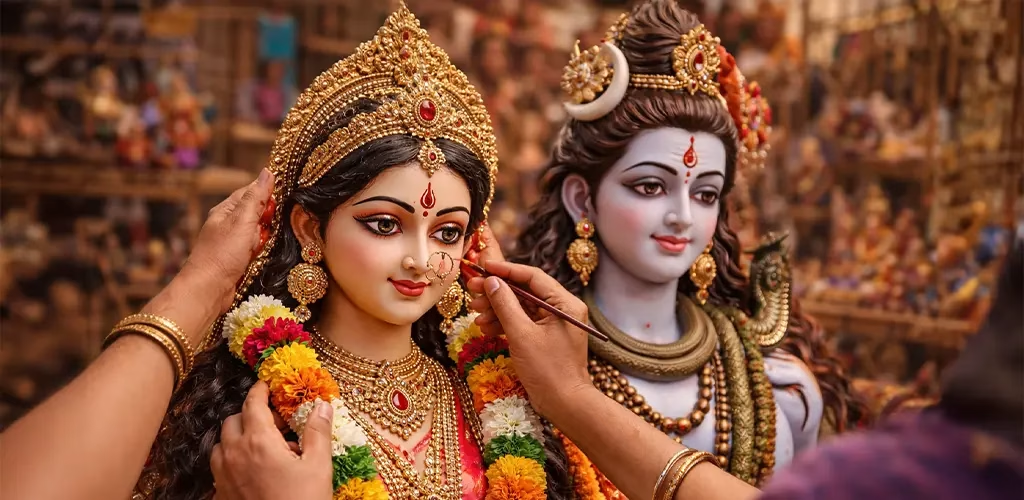
One thing about the Gangaur Festival is that the rituals and the festivities are never fast-paced. The proceedings are conducted in a manner that everything seems carefully intended,d and there is an ample amount of space for spirituality.
Throughout the festival, unmarried girls observe a fast and rely on one meal every single day. Meanwhile, married women fast discreetly, while praying for the longevity and happiness of their husbands.
During the ritual, wheat or barley seeds are sown in the earthen pots. The time passes, and they grow gradually. This symbolises life renewal at harvest. Additionally, women apply Mehndi or henna on their palms and feet. For many people, this might be just ornamentation, but for the women who celebrate the festivities of Gangaur, it is a sacred language of patterns: the sun, the moon, and blooming flowers. For them, each motif carries whispers of prosperity and love, signifying the beauty of this festival.
Songs, Lamps, and the Ghudlia Tradition
As the days pass, the Gangaur festival turns vibrant. Groups of women and young girls precede the celebrations by singing traditional folk songs. These are not just any songs, but melodies that have transcended through generations and centuries, each carrying a special meaning with it.
But there is one tradition throughout the festivities that outshines. It is the ritual of ghudlia. Unmarried girls carry beautifully crafted earthen pots, pierced with intricate patterns, with a lamp glowing within, while balancing them upon their heads. The girls move from house to house, singing the traditional melodies and collecting small offerings from them.
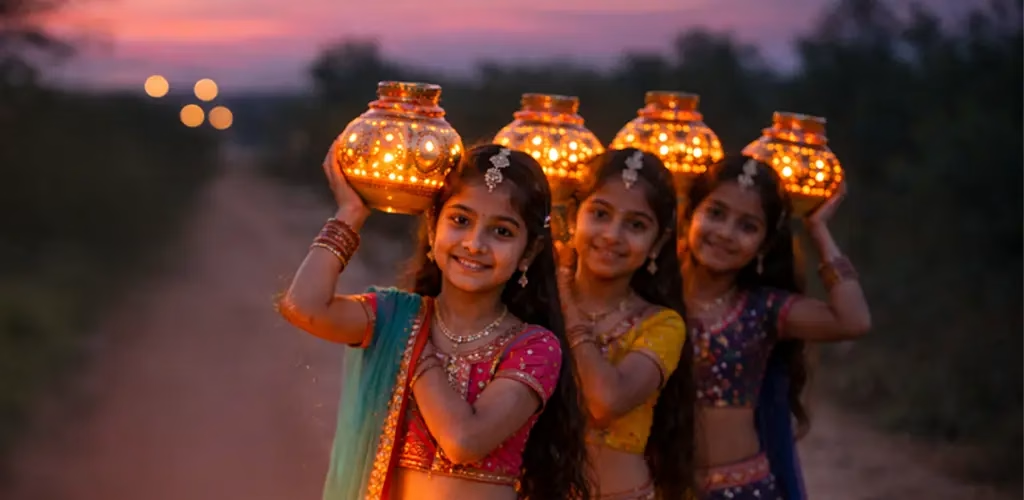
The glow of the lamp through the perforations casts delicate patterns on the ground, like fleeting constellations. On the final day, the pots are ceremonially broken, and then follows a feast to mark the celebration.
The Legend: When Devotion Became Eternal
Every ritual of the Gangaur festival is anchored in a tale that recites humility, devotion, and divinity. Legends believe that once, Lord Shiva, Goddess Parvati, and Sage Narada journeyed across the earth. In a humble village, poor women welcomed them with simple offerings like water, fruits, and flowers. Moved by their sincerity, Goddess Parvati blessed them with nectar, ensuring enduring marital bliss.
Later, when wealthier women arrived with lavish dishes, it was then that Goddess Parvati found herself with no nectar left. In an act of profound compassion, she pricked her finger. It was her blood that transformed into nectar in order to bless them as well.
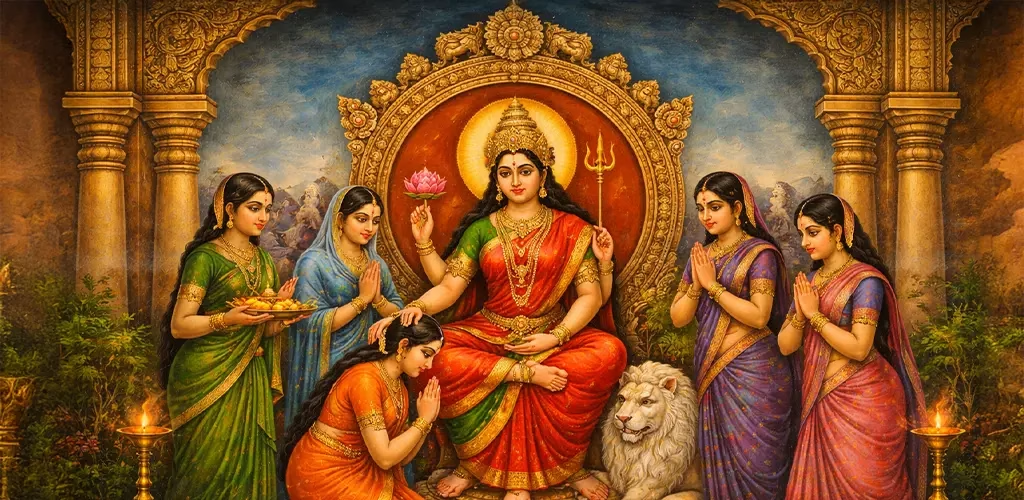
In that moment, devotion transcended material wealth. It became clear that sincerity of heart, not abundance of offering, invites divine grace. Thereafter, Parvati worshipped Shiva with a sand lingam by the river, and Shiva, pleased by her devotion, granted that any woman who observed this ritual on the sacred day of Tritiya would be blessed with conjugal harmony.
The Grand Finale: Processions and Farewell
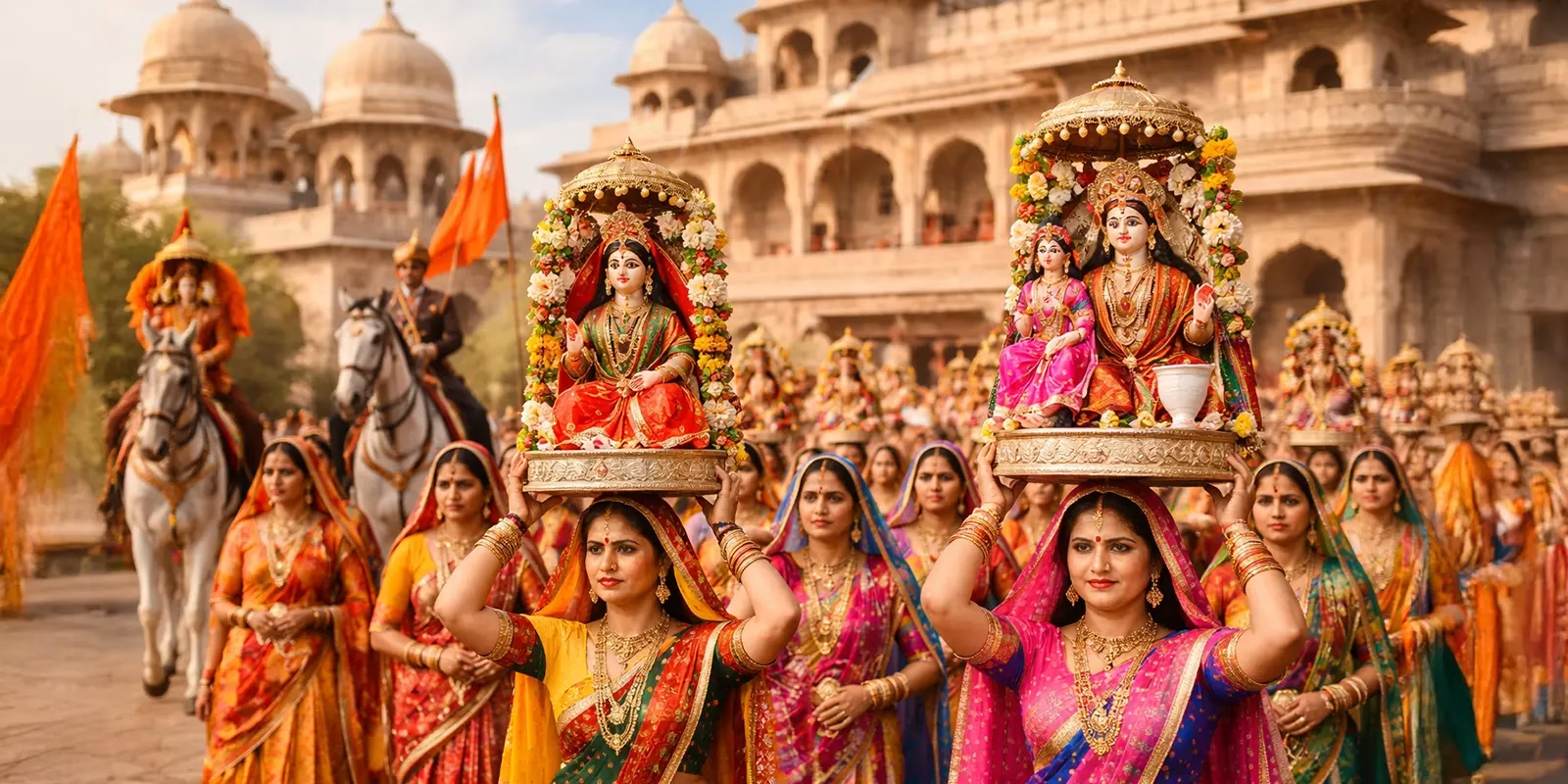
As the festival approaches its culmination on Chaitra Shukla Tritiya (21 March 2026), the air transforms. Idols are dressed anew, adorned with jewellery and vibrant garments. Women gather for the final procession, carrying Gauri and Isar towards gardens, wells, or riverbanks.
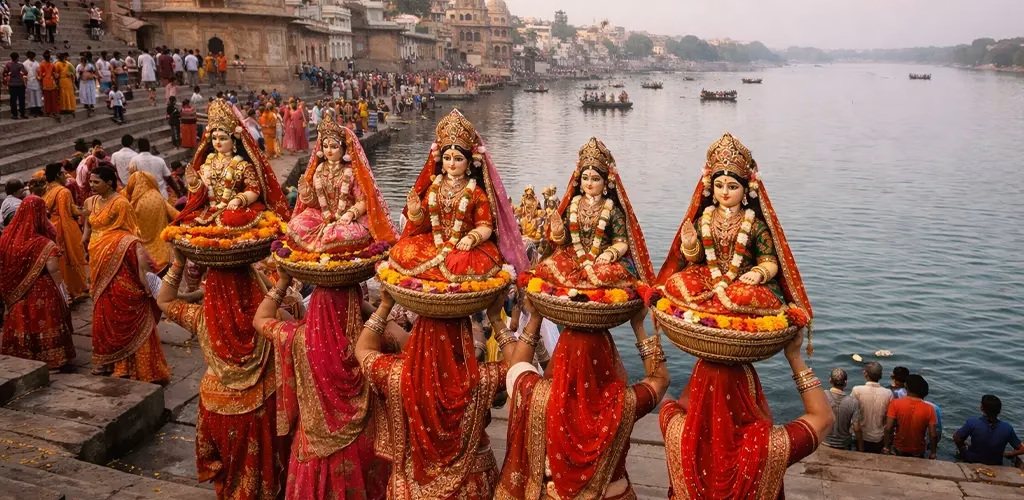
Songs take on a poignant tone, of departure, of a daughter returning to her marital home. It is a moment layered with symbolism: of love, of separation, and of the cyclical nature of life itself.
In Rajasthan, particularly in Jaipur and Udaipur, these processions are grand spectacles, with elephants, palanquins, and folk performers. In Uttar Pradesh, especially in the Braj and Bundelkhand regions, the celebrations are more intimate, rooted within homes and local communities, yet equally profound in their devotion.
The idols are finally immersed in water, marking both an end and a beginning.
A Festival Beyond Ritual
Gangaur is, in essence, a celebration of continuity of traditions carried forward, of relationships nurtured with care, and of faith that does not waver.
It is a festival where devotion is not declared loudly but practised quietly, where fasting is not an obligation, but a personal offering. Where women, often unseen in grand narratives, become the central force of cultural preservation.
Even today, as modernity reshapes the contours of life, Gangaur remains steadfast, bridging the past and present with remarkable grace.
And perhaps that is its greatest beauty: in a world that moves swiftly, Gangaur invites us to pause, to reflect, and to honour the enduring power of devotion, love, and the sacred feminine.