Trans Bill 2026: A Country That Once Worshipped Fluidity Now Questions It
What are the genders – Male and Female?
This was not the case in India because there was once a time when gender was not in a box. It was not defined by the tramlines built according to the likes and dislikes of society. It was rather a spectrum, a story, and a form of divinity.
And today, that same identity stands in queues, waiting for approval and recognition of their rights and dignity.
The Transgender Persons (Protection of Rights) Amendment Act 2026 has not just changed the law. It has raised a question that should never have been on the table: Who gets to decide identity, the self, or the state?
A Law That Redefines Existence
In March 2026, something happened that changed the way India operated: a new amendment came into force. This overturned the crucial principle established by the 2014 NALSA judgment. It questioned something that should have never been questioned: the right to self-identify.
In a country where history and even faith once defined identity as something that came from within, now required medical screening and state approval. The law narrows the definition of “transgender” to specific traditional groups like hijra or kinner, along with intersex variations. In doing so, it quietly removes space for trans men, trans women, and non-binary individuals, because, as per the new convention, they simply do not fit the category.
What was once an identity is now being treated as an eligibility, and this has shaken a section of the nation to its core. While many see this just as an exclusion, it is much more than that. It is an erasure of the ones being excluded, the ones who fought for their rights and identity throughout.
Before the Law, There Was Legacy
But here is where the irony begins.
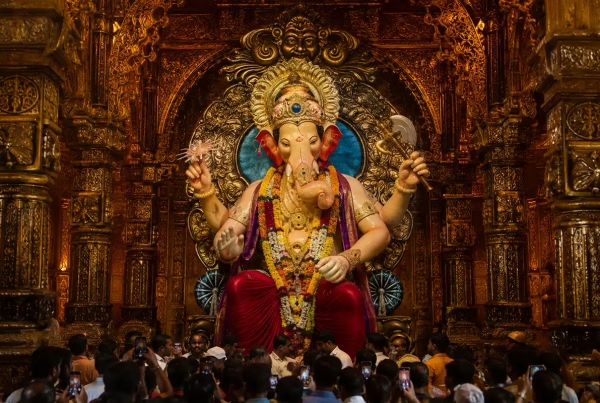
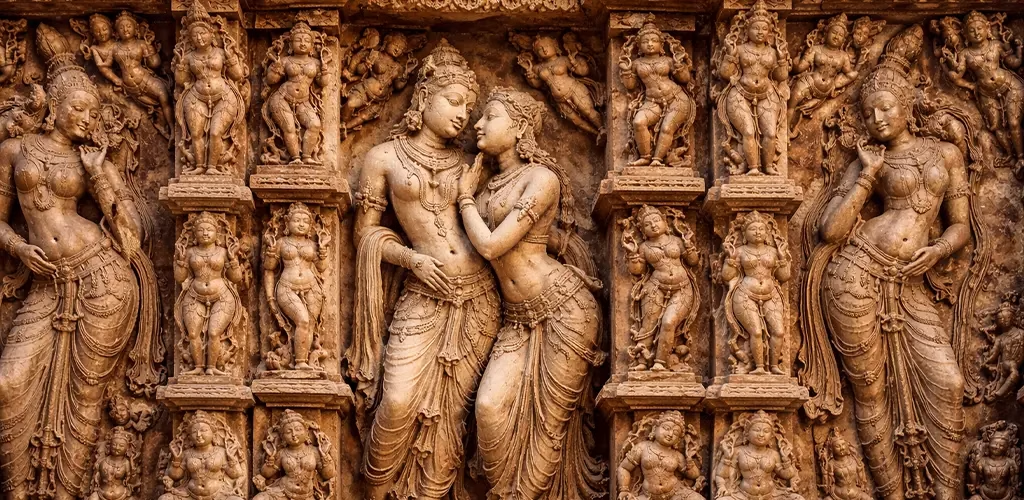
What was gender fluidity before 2014, when the NALSA judgment came into being? It was not an unfound entity waiting to be discovered. Rather, it was a truth that passed down through generations and even faith that draws its inspiration from what many call the Indian Mythology.
In the Mahabharata, one of the two greatest epics known to the Indian society for ages, Shikhandi transitions and becomes pivotal in the war between the Kauravas and Pandavas. Not only Shinkhandi, but even one of the greatest warriors and archers India can recall, Arjuna, spends much of his time as Brihannala, embracing a different identity. And, in Tamil traditions, Aravan is married to Krishna in female form. This form is still honoured today, unconditionally unquestioned.
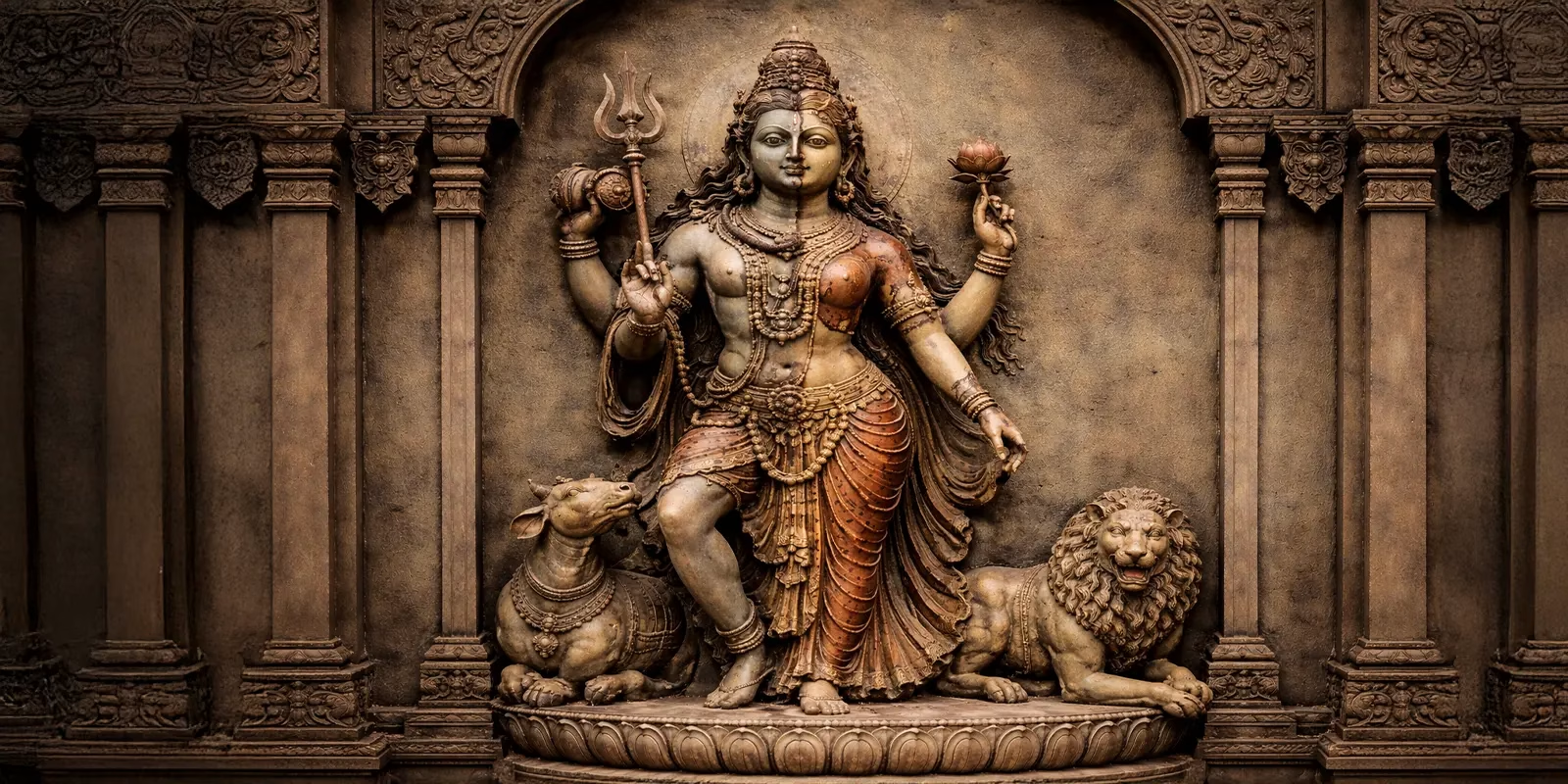
And then, there is Ardhanarishvara, an identity that no one even dares to deny or question. Ardhanareshvara is the deity that is both male and female, the Shiva and the Shakti in their inseparable and complete form – a representation that bolsters the case of trans identity in India.
Ancient India did not just accept fluidity. It worshipped it.
The Shift: From Power to Policing
How did a country so rich in culture, with a rigidity in religious belief, reach here – this is a question that consistently pinches.
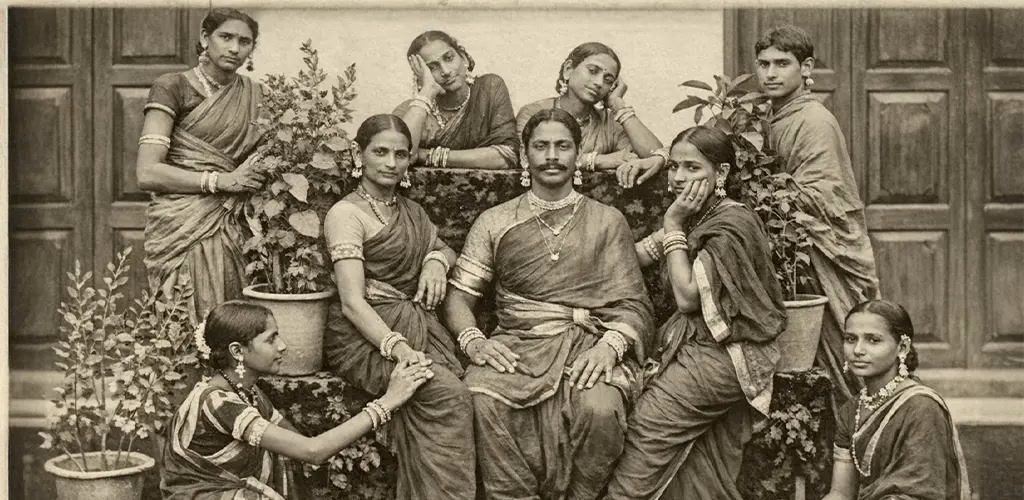
India has been through myriad changes of power and cultural influences throughout. Thus, the change with respect to the identities of the trans communities did not come from within. It was never a sudden realisation that changed everything. It was an influence that came in with the colonial rule.
The British, uncomfortable with what they could not categorise, introduced laws like the Criminal Tribes Act of 1871. This act strictly monitored and criminalised hijra communities. For the first time in India, an identity that sustained its existence and respect through various changes of powers and many ages, became something that was being controlled.
Post-independence, the stigma lingered until 2014, when it attempted to undo that damage. And now, in 2026, many argue, we are witnessing a return to that same surveillance-driven mindset that leads us to a new direction because we never went backwards with trans communities that we controlled and questioned their identities in any way or with any logic.
From Self to System
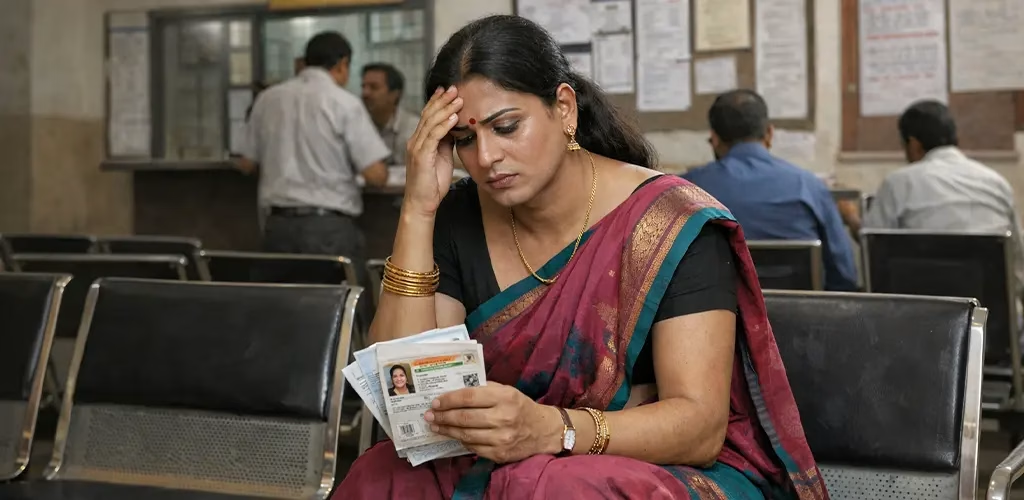
The most striking shift in the 2026 Bill is –
From “I am who I say I am” to “The system will decide who you are.”
A person must now undergo a medical evaluation, followed by approval from authorities, in order to be recognised as what they are, what they know themselves to be, or what they have always been.
While on paper, this is just a procedure. In reality, it is a question of dignity. Because identity, once questioned, stops being personal and becomes political.
The Present Tension
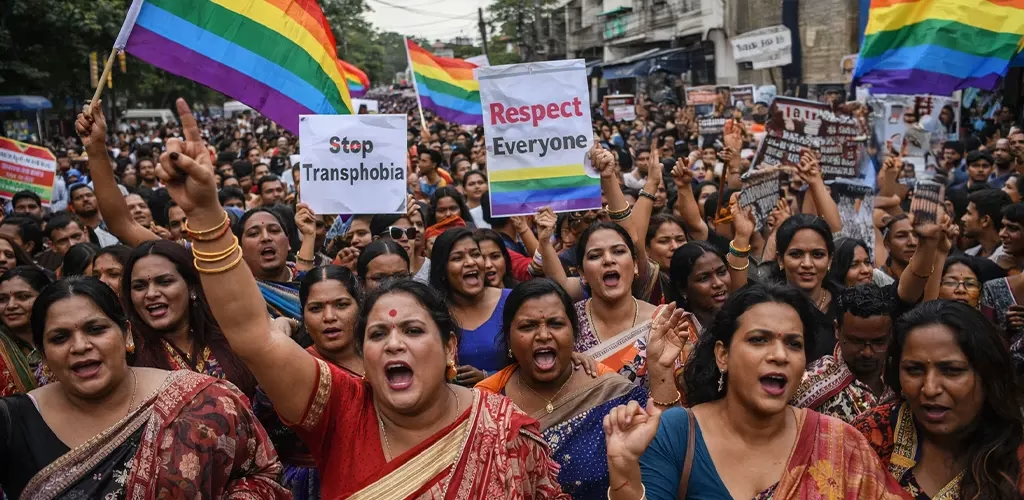
Protests across the country, starting from Jantar Mantar, state capitals, and quiet gatherings, are not just reactions to a law. They are responses to a deeper fear: That identity is being reduced to a checklist.
Activists continue to raise a simple yet powerful voice: “We existed before your law. We will exist beyond it.”
And, this is what makes the Trans Bill 2026 more than a policy debate – a cultural contradiction. Because India has always been a land of layered identities: fluid, evolving, complex. The real question is not whether transgender identities fit into Indian culture. They always have. The question is whether modern India is willing to remember what it once knew.