
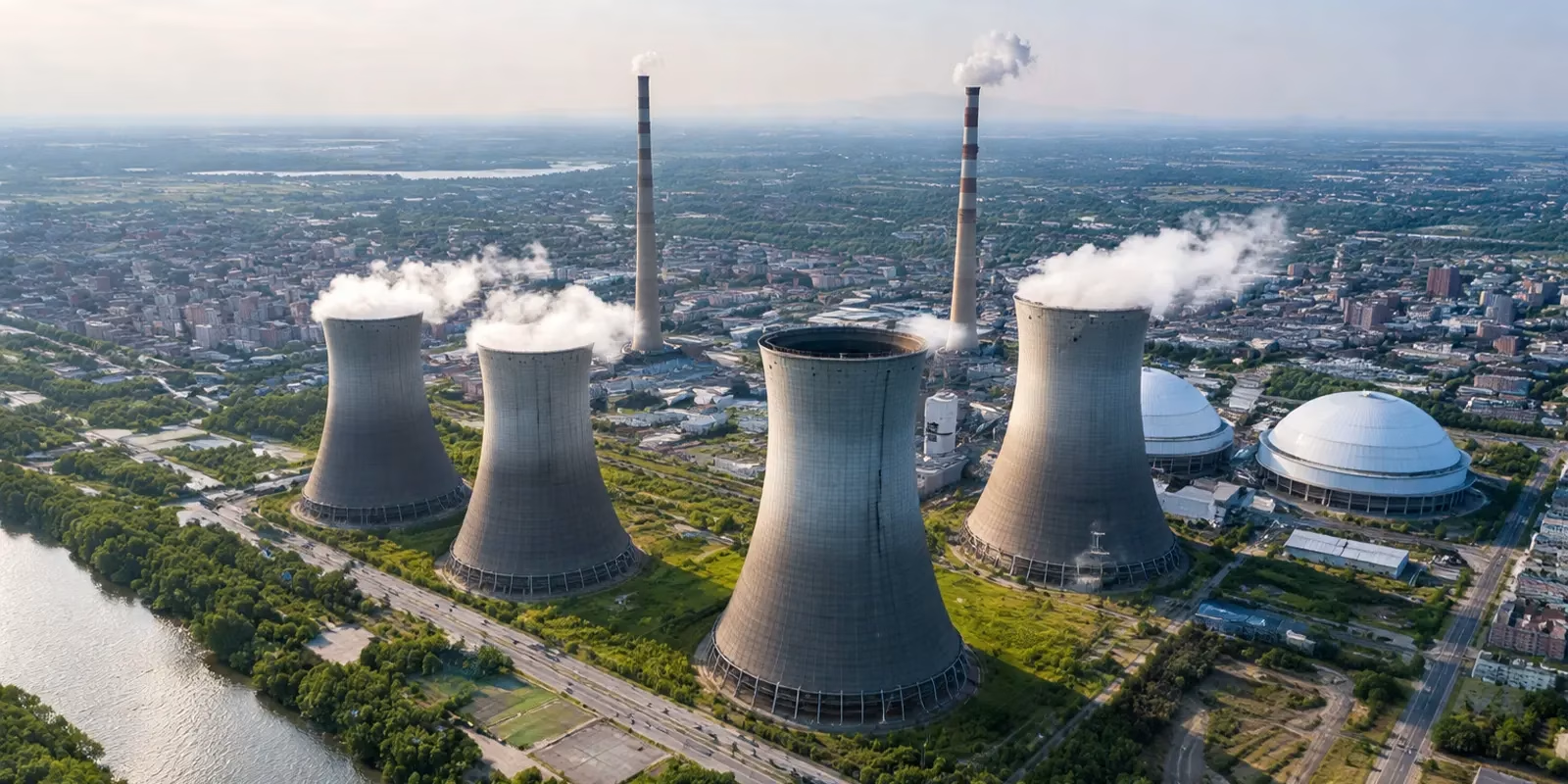
Step Towards Energy Independence: “Aatmanirbhar” in the energy sector at Kalpakkam
Imagine you have a machine that does a lot of your work. In order to run that machine, you need fuel, which you buy from the market. But what if that machine starts working in a way that the fuel not only produces energy but also regenerates its fuel?
Sounds impossible?
But this is exactly what India has achieved with its nuclear reactor in the nuclear energy sector – an incredible milestone that pushes us ahead towards energy independence and sustainability.
On 6 April 2026, India’s Prototype Fast Breeder Reactor PFBR at Kalpakkam, Tamil Nadu, successfully achieved first criticality. But what does this mean, and how does it change the global landscape in the nuclear sector for India? Find out!
What happened in Kalpakkam and the Nuclear Reactor?
India has been striving hard for years with the three-stage nuclear programme.
In the second stage of this program, India uses Plutonium, a byproduct of the first stage. In the breeder reactor, the main aim is to produce, or simply breed, more plutonium than it consumes. And this is exactly what India has started working towards.
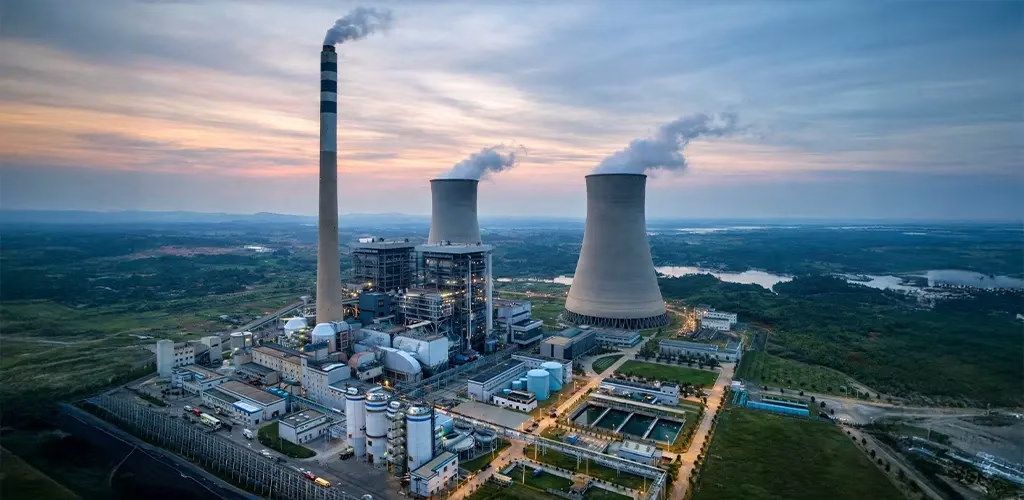
So far, the amount of fuel being used has been higher than the amount of fuel being produced. And now, after the achievement of the first criticality, a stable self-sustaining reaction has begun, which shall pave the way for the production of a larger amount of fuel than is being used.
A Dream That Takes Decades But Sustains Centuries
This is where things get interesting.
India has limited uranium resources, which we partly import since the mining of uranium in India is not only a difficult process but also an expensive one. But there are some of the world’s largest reserves of thorium present on the sand beaches of South India, and this is the material that can fuel nuclear reactors for centuries.
But there was one challenge – Thorium cannot be used directly as fuel. It needs to be converted into a usable form first, which is not an easy feat.
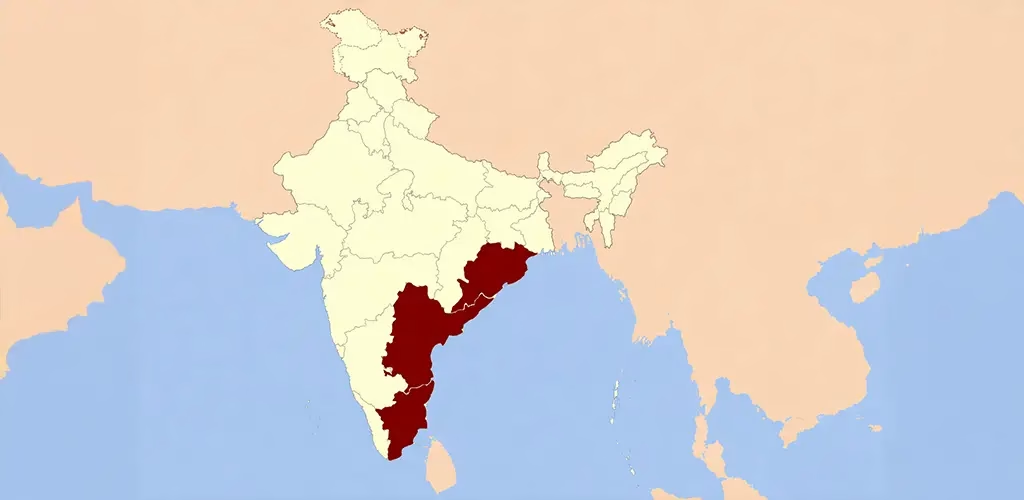
India had a vision back in the 1950’s, which was conceived by the legendary physicist, Homi J. Bhabha, and later defined by the critical funding and political momentum provided by the former Prime Minister Atal Bihari Vajpayee in 2003. The main aim was simple – to turn the limited uranium into a bridge that unlocks the vast thorium reserves.
Thus, the three-staged nuclear power programme was implemented from research into infrastructure. The Atal Bihari Vajpayee Government further incorporated Bharatiya Nabhikiya Vidyut Nigam Limited (BHAVINI) in September 2003 to support the programme with dependable infrastructure. This organisation was tasked with constructing and commissioning the Prototype Fast Breeder Reactor PFBR at Kalpakkam, which achieved the milestone in April 2026.
If the nuclear power programme meets its desired fate, it shall sustain the Indian energy requirement for centuries, without major dependency on Uranium and imports. But this process is not as quick and easy as it sounds. This is a difficult reaction to crack, and in order to sustain this process, the programme might even take decades to reach completion.
With no major global players apart from Russia having had success on such a large scale, India has now joined this elite group.
What is India’s three-stage nuclear programme?
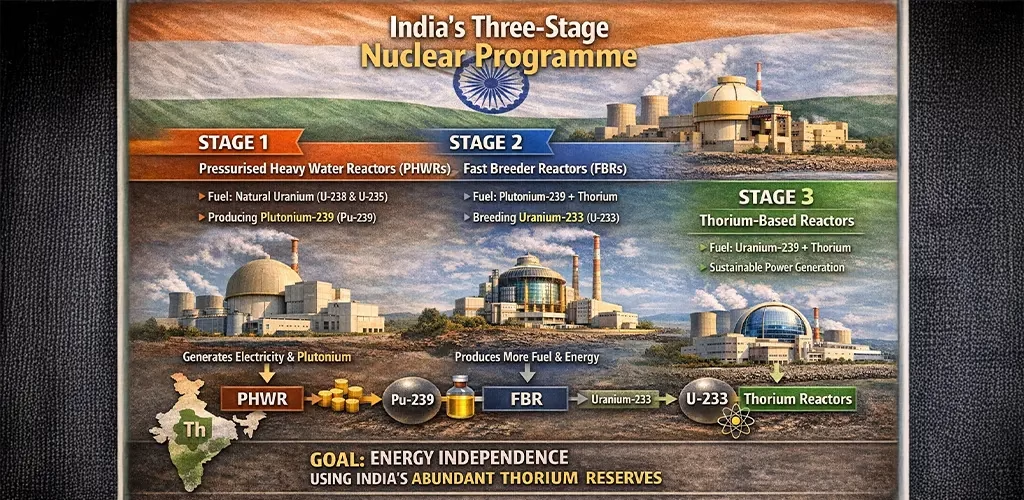
India’s vision for energy sustainability is working in three stages:
Stage 1: Current Operating Reactors
India uses natural uranium, mined from the earth, without expensive enrichment, to produce electricity in Pressurised Heavy Water Reactors (PHWRs). Some part of this Uranium is what India imports from countries such as Kazakhstan, Canada, Russia, and Uzbekistan.
As a by-product, these reactors produce plutonium, which is a valuable fissile material.
Stage 2: Fast Breeder Reactors
The PFBR is India’s first large Fast Breeder Reactor. It uses plutonium, recovered from Stage 1 as fuel. In this stage:
- The reactor produces more plutonium than it consumes, which is why the process is termed “breeding”
- At the same time, a thorium blanket is placed around the reactor core that uses fast neutrons to convert Thorium, which India has in abundance, into Uranium-233, a new fissile material that can be used as fuel.
As a coolant, India uses 1,750 tonnes of liquid sodium that circulates through the reactor core to remove heat produced by nuclear fission.
On 6 April 2026, the PFBR reached criticality, marking a major step towards sustainable breeding of fuel.
Stage 3: Thorium-Based Power
In the third stage, India aims to use the Uranium-233 produced in Stage 2, along with abundant thorium, to generate electricity on a large scale.
Once fully operational, this stage will allow India to produce nuclear power for hundreds of years using domestic thorium reserves, reducing dependence on imported Uranium.
What does the “first criticality” mean for India’s Nuclear Programme?
In Kalpakkam, India, the Prototype Fast Breeder Reactor began a controlled, self-sustaining nuclear chain reaction for the first time. This is a historic milestone in India’s nuclear journey.
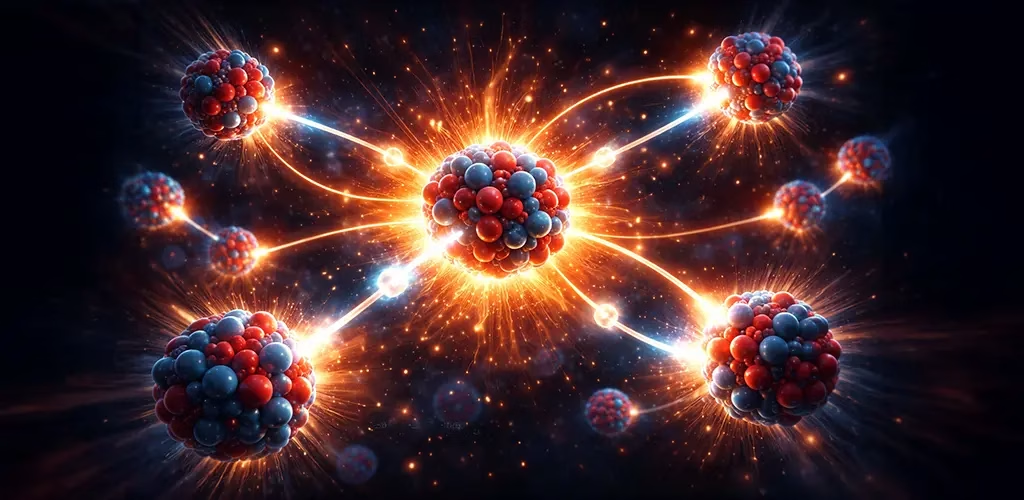
This simply means that a stable chain reaction has been achieved and the reactor is now ready to move towards the breeding phase.
A Rare Global Achievement
Only Russia currently operates large-scale fast breeder reactors. With the PFBR’s success, India has now become the second country in the world to achieve this milestone at such a scale. The dedicated teams at BHAVINI, IGCAR, and the entire Department of Atomic Energy have achieved this milestone for India.
And, this is not just about one reactor. It is a strategic step towards long-term energy independence for India. As the country’s energy demand grows rapidly, this programme offers a clean, reliable, and self-reliant path forward.
A country that was once sanctioned for its nuclear power programmes, both military and civilian, with funding halted and international backlash, has achieved this milestone largely through its own efforts.
Truly “Atmanirbhar Bharat” in the making!