Chhau Dance: Where Warriors Became Dancers
What if someone asked you to jump, spin, and fight with a sword while barely able to see you in combat?
It sounds impossible. Yet every year, in villages across eastern India, dancers do exactly that.
This is Chhau, one of India’s most thrilling dance traditions.
But these powerful movements were never created for entertainment. Their story begins somewhere far more dangerous.
From Combat to Celebration: The History of Chhau Dance
Long before the Chhau dance became a festival performance, it was a form of military training.
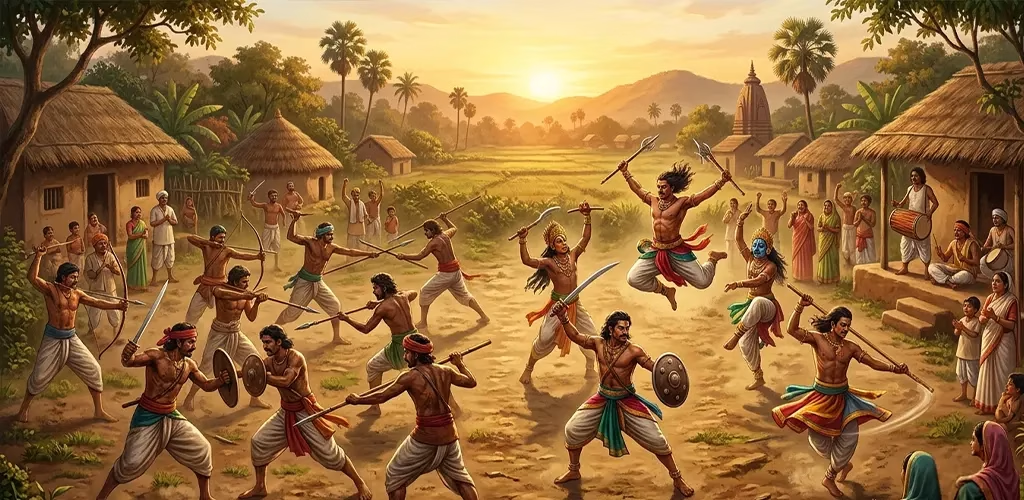
Hundreds of years ago, local soldiers and farmers practised Chhau to stay ready for battle. They trained with swords, shields, bows, and sticks. They learned to leap over obstacles, dodge attacks, and strike with speed.
Then history took an unexpected turn.
As battles became less common, these fighting techniques did not disappear. Instead, they found a new purpose on village stages. The powerful jumps, the fast spins, even the strong warrior stance became part of the Chhau dance. Over time, performers added stories about gods, heroes, nature, and everyday village life.
What began as combat training slowly evolved into a spectacular folk dance that could tell an entire story without a single spoken word. But if no one speaks during the performance, how does the audience understand the story?
The Silent Language of Chhau Dance
The moment the musical instruments start playing, a strict rule takes hold on the stage: nobody speaks.
There are no dialogues, no scripts, and no songs to explain the story. Instead, every movement carries meaning. Every leap, turn, and stance becomes part of the language of the Chhau dance.
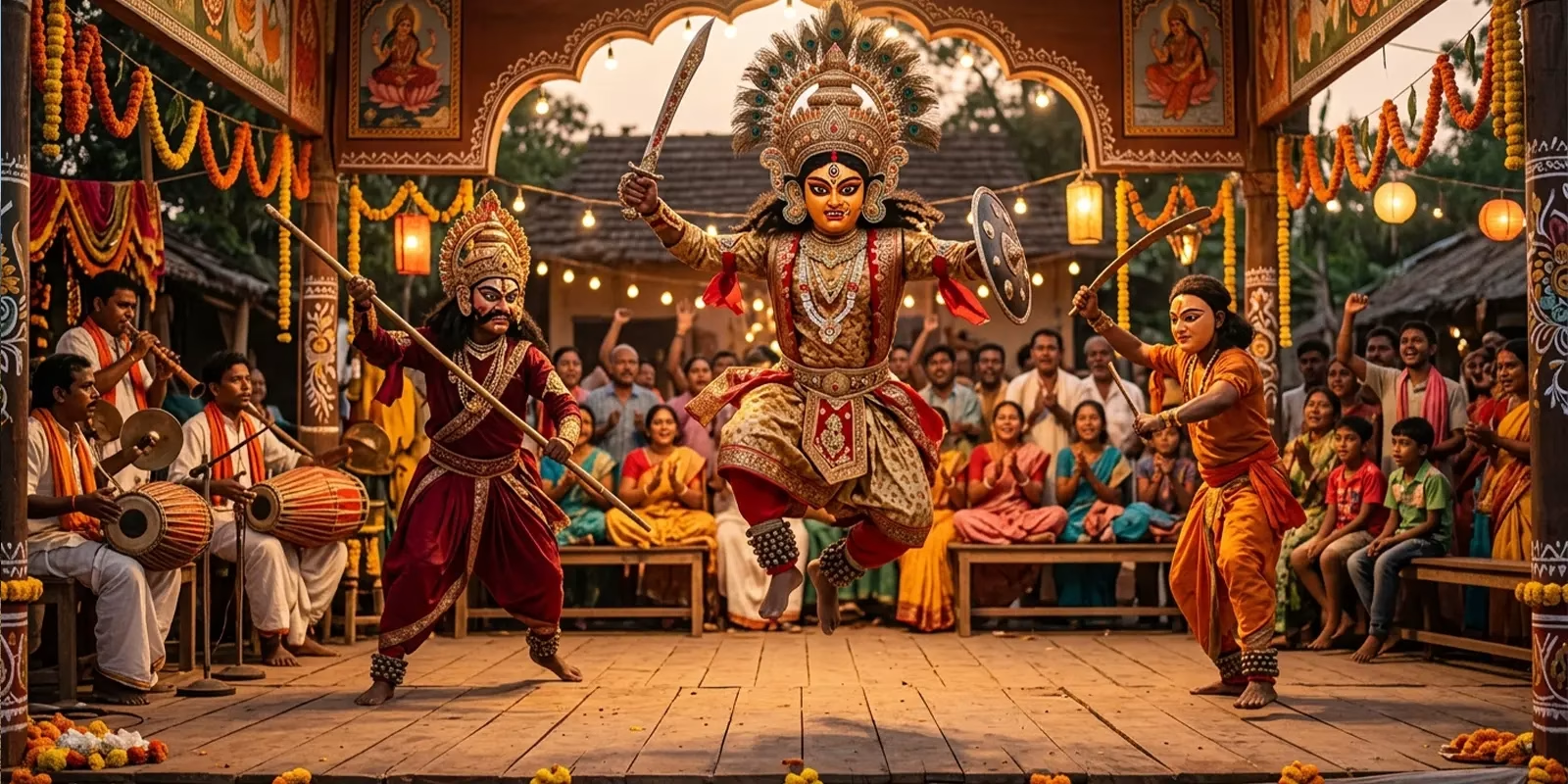
The performance takes place on an open ground surrounded by hundreds of villagers. The air gets thick with the sound of giant kettle drums and sharp reed pipes, growing louder and faster as the story unfolds. The local people never need an explanation because the performers’ body language is clear.
But just when you think this dance cannot get any more difficult, you realise the dancers cannot even see the stage properly.
The Giant Masks That Define Chhau Dance
Imagine performing flips and fast turns while wearing a colourful mask that covers your entire face.
That is exactly what Chhau dancers do.
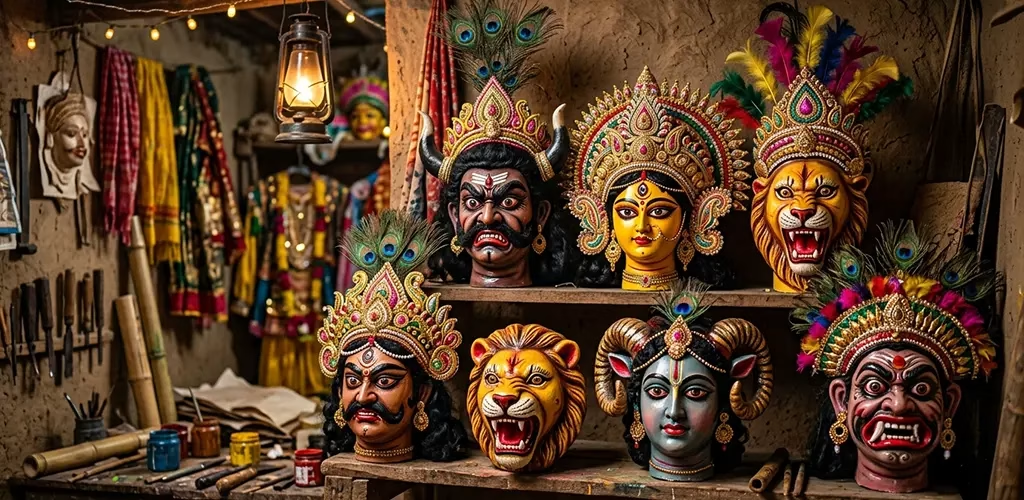
In the Purulia style of Chhau, the visual magic comes from huge, heavy masks that cover the dancer’s entire face. These masks are beautifully handmade from local clay, cloth, and bright paints. Gods and heroes wear calm faces painted in soft shades, while demons appear with bulging eyes, sharp fangs, and fierce expressions to scare the crowd.
The real challenge lies in the tiny eye openings.
Once the mask is tied, the dancers can hardly see what is around them. They cannot look down at their feet or easily spot another performer nearby. Every jump, turn, and landing depends entirely on practice and the rhythm of the drums.
These masks are true masterpieces, but they are not made in a modern factory. They come from one small village where creating them has become a way of life.
Charida Village: The Home of Chhau Masks
If you travel to the village of Charida in West Bengal, you will step into a world where mask-making is a way of life.
Here, almost every household is dedicated to this craft. The process starts with simple mud and clay. Artisans shape each face with care, layering paper and cloth over the mould to strengthen it. Once the base dries under the sun, they paint every detail by hand and add grand crowns decorated with beads, feathers, and shiny ornaments.
A single mask tells the audience everything they need to know about a character before they even take a step. A bright crown means royalty, while a green face with sharp teeth means trouble.
Yet, despite being the most iconic symbol of the Chhau dance, not every performer chooses to wear a mask. But why would an artist decide to drop the most famous part of the costume?
Purulia, Seraikella, and Mayurbhanj: Three Styles of Chhau Dance
The answer lies in the evolution of Chhau dance.
As the tradition spread across eastern India, different regions adapted it to their own culture and performance style. Masks or no masks, what truly defines Chhau dance is not the costume but its ability to evolve while preserving its martial roots and storytelling.
Purulia Chhau from West Bengal is famous for its colourful masks and breathtaking jumps.
Seraikella Chhau from Jharkhand is slower and more graceful. Here, dancers focus on smooth movements and delicate expressions rather than powerful action scenes.
Then comes Mayurbhanj Chhau from Odisha, which surprises everyone by completely leaving the masks behind. The dancers wanted a clearer view during difficult performances, so they chose to perform with their faces uncovered. This allowed them to express emotions naturally while performing faster, more complex movements.
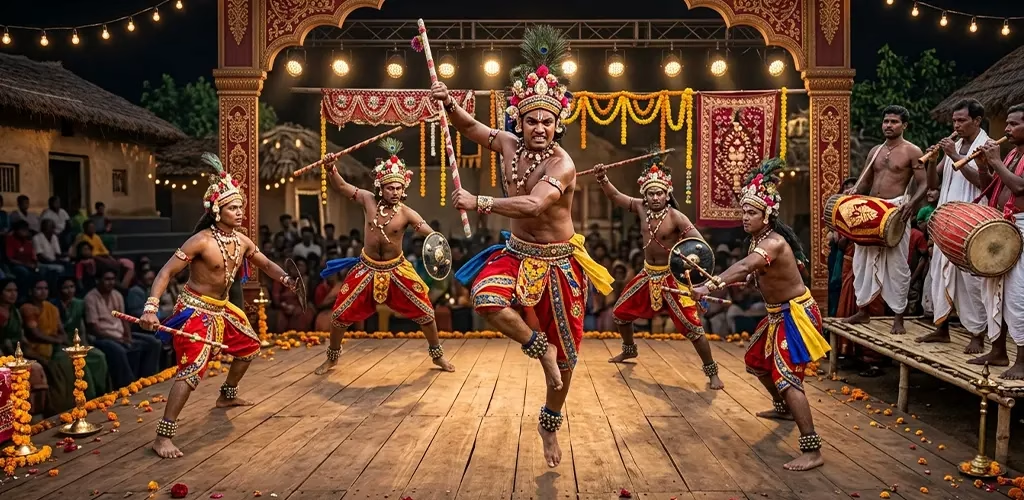
Even though these three styles look very different on the surface, they all share the same goal. Can you guess what kind of grand tales bring these diverse styles together?
The Stories Behind Chhau Dance
At its heart, Chhau dance is a living storybook that brings ancient Indian epics back to life.
Most performances draw their inspiration from the famous pages of the Ramayana, the Mahabharata, and old local legends. The villagers watching from the crowd already know every single twist and turn of these stories. However, they still return every single year because watching the physical struggle happen live is an unforgettable experience.
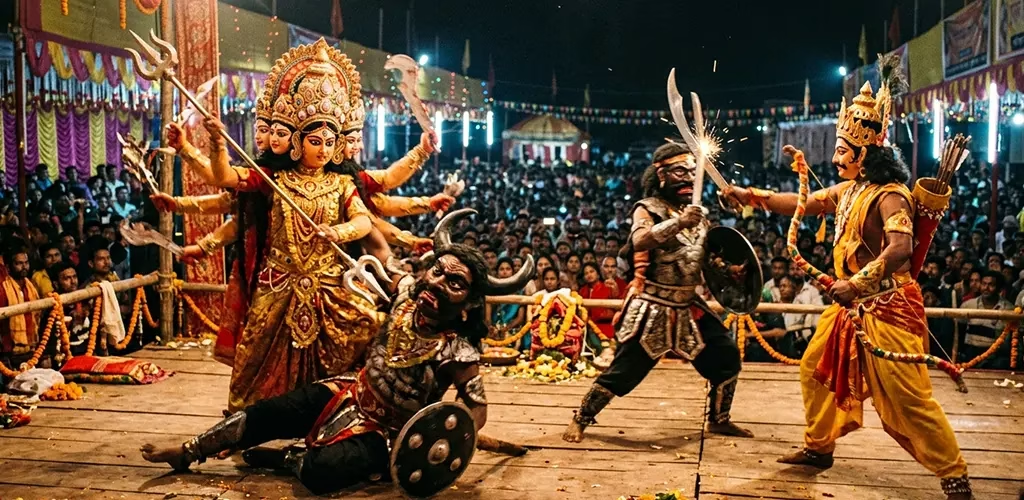
When the drums beat at their loudest, the grand finale begins. The crowd get to watch the multi-armed Goddess Durga battle the fierce buffalo demon Mahishasura, or the brave hero Arjuna standing tall against his enemies. Swords clash, heavy feet stomp, and the tension peaks until good finally triumphs over evil.
The show ends with loud cheers and clapping as the village celebrates another successful year of keeping its identity alive.
More Than a Dance. A Living Tradition!
As the drums fall silent and the dancers take off their masks, it is hard to believe that the warriors and gods on stage are once again ordinary villagers.
That is what makes Chhau so special.
If a group of simple village farmers can keep such a complex yet beautiful tradition alive for hundreds of years using nothing but clay and memory, it makes you wonder: what other incredible stories are hiding in the quiet corners of India, just waiting for the drums to beat?