UPI Merchant Discount Rate: The Fee That's "Not For You,"
What’s one thing we do on pure reflex now, without even thinking twice?
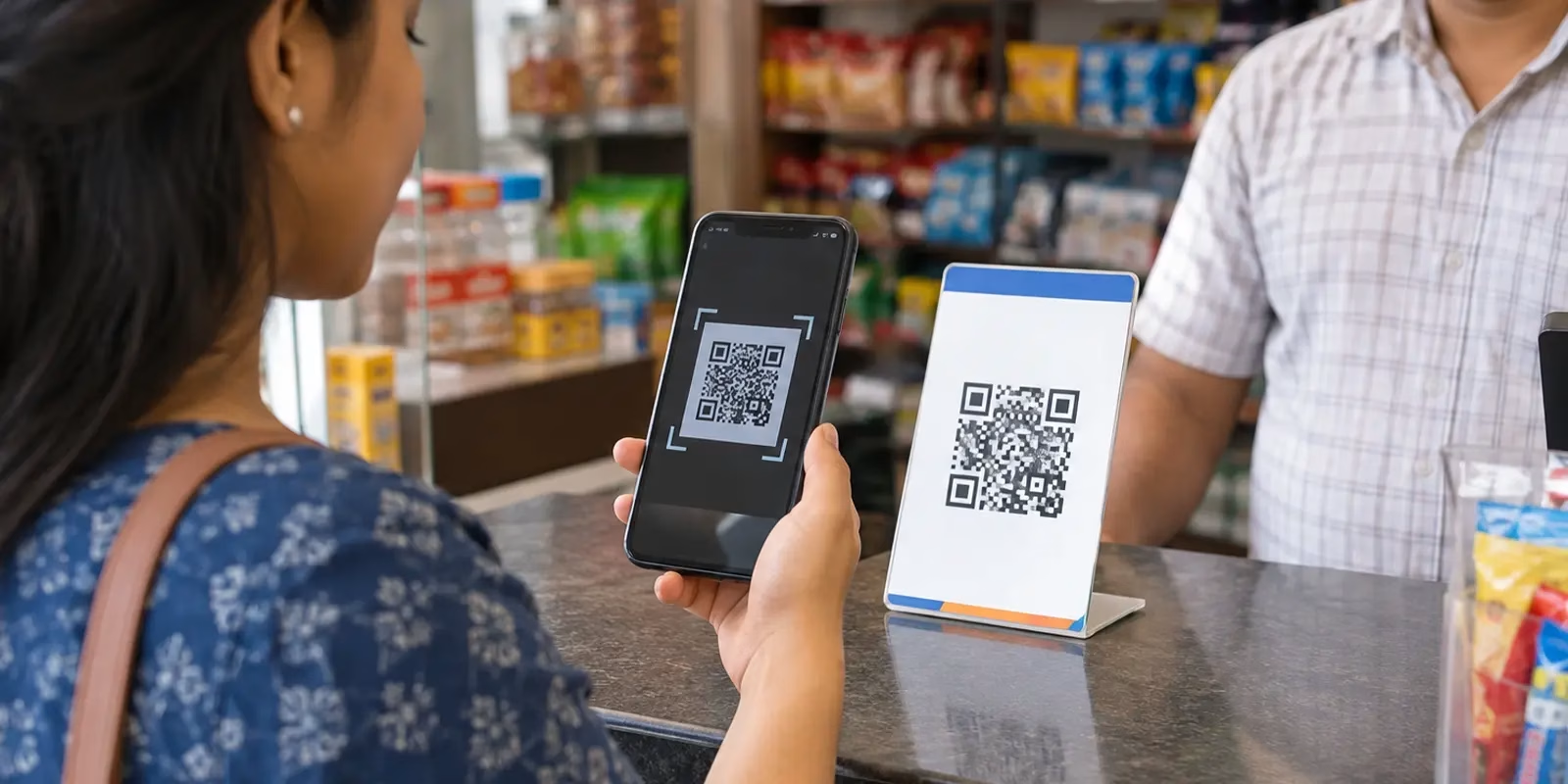
Scan the QR code, tap confirm, and walk away. No cash to count, no change to worry about. It’s become such a normal part of everyday life that most of us barely remember how we used to pay before UPI.
That reflex is about to get a little more complicated, and it starts with a change the government insists you’ll never even notice.
What the Government Is Saying
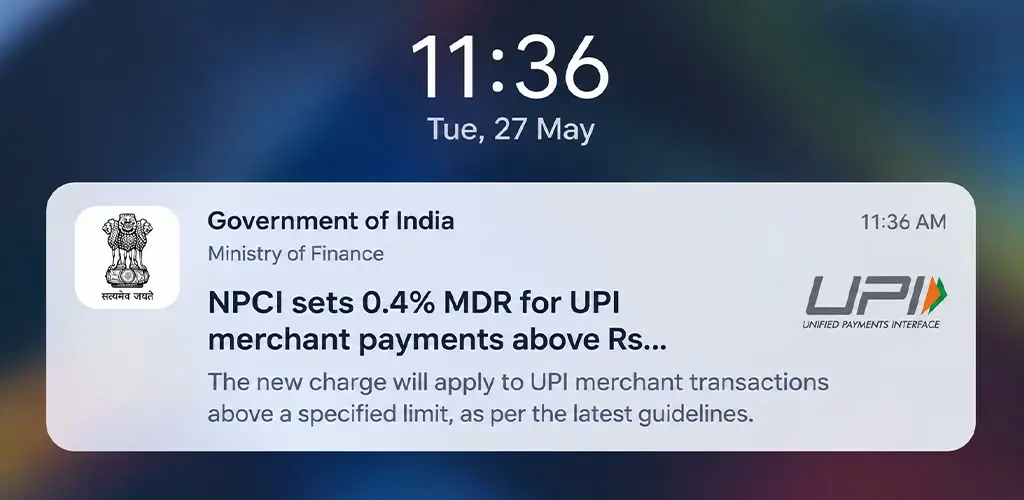
From 15 October 2026 onwards, the Government of India is planning to charge a Merchant Discount Rate (MDR) of 0.4% on UPI merchant payments above ₹2,000. The rule is being kept quite limited. Small transactions will remain free, person-to-person transfers will remain free, and the fee, officials keep saying, will be paid by the merchant, not the customer.
On paper, that sounds almost reasonable. UPI’s back-end infrastructure, banks, apps, servers and security all come with real costs, and someone has to fund them once government subsidies eventually dry up. The official line is simple: this is a business cost, not a customer cost. You won’t feel a thing.
But that promise depends on merchants absorbing the cost quietly.
And that’s exactly where things get complicated.
The Catch Nobody's Saying Out Loud
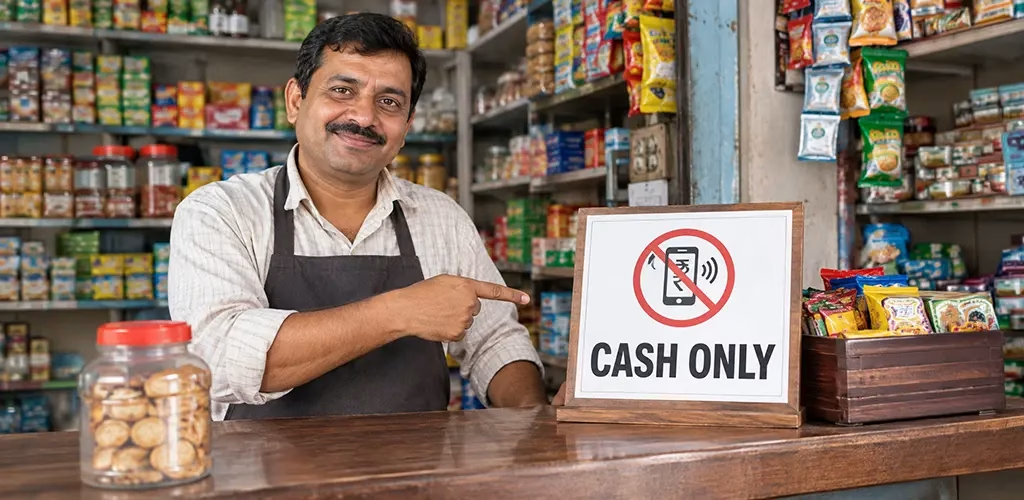
We’ve actually heard a version of this story before, and it didn’t stay this simple either.
You might have had an encounter where small stores or vendors have this two-tier payment system. If you pay in cash, the price stays exactly as marked, but if you pay online, suddenly there’s an “extra charge”, a “convenience fee” or a couple of per cent added at checkout.
None of this is officially sanctioned. But it happens anyway, often because there is little enforcement at the point of sale.
That’s what makes the new merchant discount rate interesting. For a small retailer, absorbing 0.4% on every eligible transaction isn’t an abstract policy detail. It’s a direct hit on margins that may already be thin.
And retailers don’t always absorb costs for long.
More often, they round prices up, add a “digital surcharge,” or simply nudge customers toward cash with a slightly better deal.
Which brings us to another question.
Is It Really "Optional" for the Merchant?
This is where the government’s promise faces its biggest practical test.
Officials insist merchants “must not” pass this cost on, but insisting and actually enforcing are two very different things, especially across millions of small shops, carts, and counters where no one is realistically checking the fine print.
If a merchant is free to absorb the (MDR) merchant discount rate or adjust how they price digital payments, the incentive is fairly obvious: either accept the lower margin or find another way to make up the difference.
If that pattern spreads even slightly, don’t be surprised if online payments start costing a little more than cash almost everywhere- not officially, just conveniently, the same way convenience fees already do.
The Bigger Irony
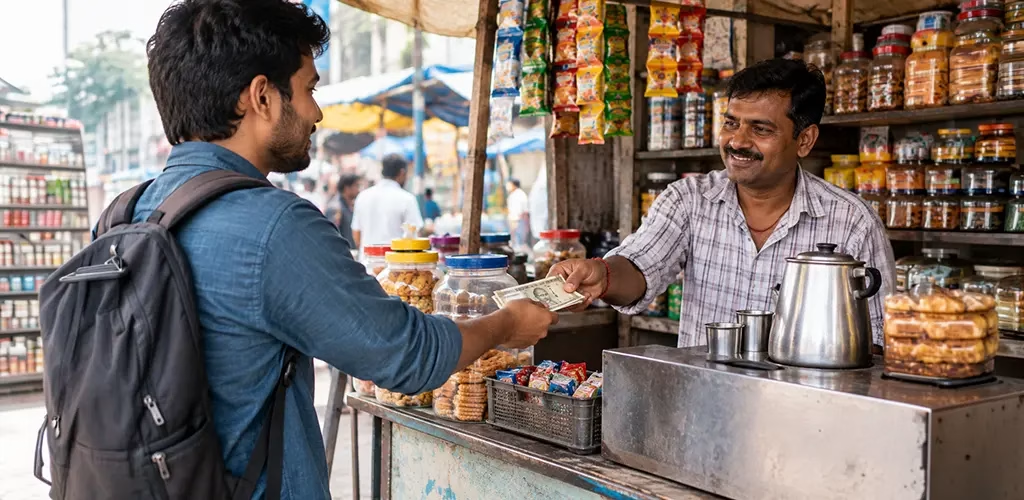
For nearly a decade, India pushed hard towards a cashless economy. Demonetisation, Digital India campaigns, zero-MDR UPI, all of it pointed in the same direction: move away from cash, embrace digital. It’s cleaner, faster and easier.
Now the very system built to make digital payments free is introducing a cost on some merchant transactions.
Whether that cost stays at 0.4% or changes over time is something only the future will tell. But once a fee enters a payment system, the question is no longer whether it exists. It’s who eventually ends up absorbing it.
Where This Really Leaves Us
Income is taxed.
Investments are taxed.
And now, in one form or another, even the simple act of paying for something is being taxed too.
It’s a strange kind of loop when you think about it: spend years convincing an entire country to go cashless, and then, right as it finally does, start charging it for the privilege. The government says this fee is invisible to you. The shopkeepers who actually run the counters you walk up to every day might tell you a very different story.
The QR code itself isn’t going anywhere; that much is certain. But the next time you scan one, don’t be too surprised if the price on the sticker quietly depends on how you’re planning to pay.