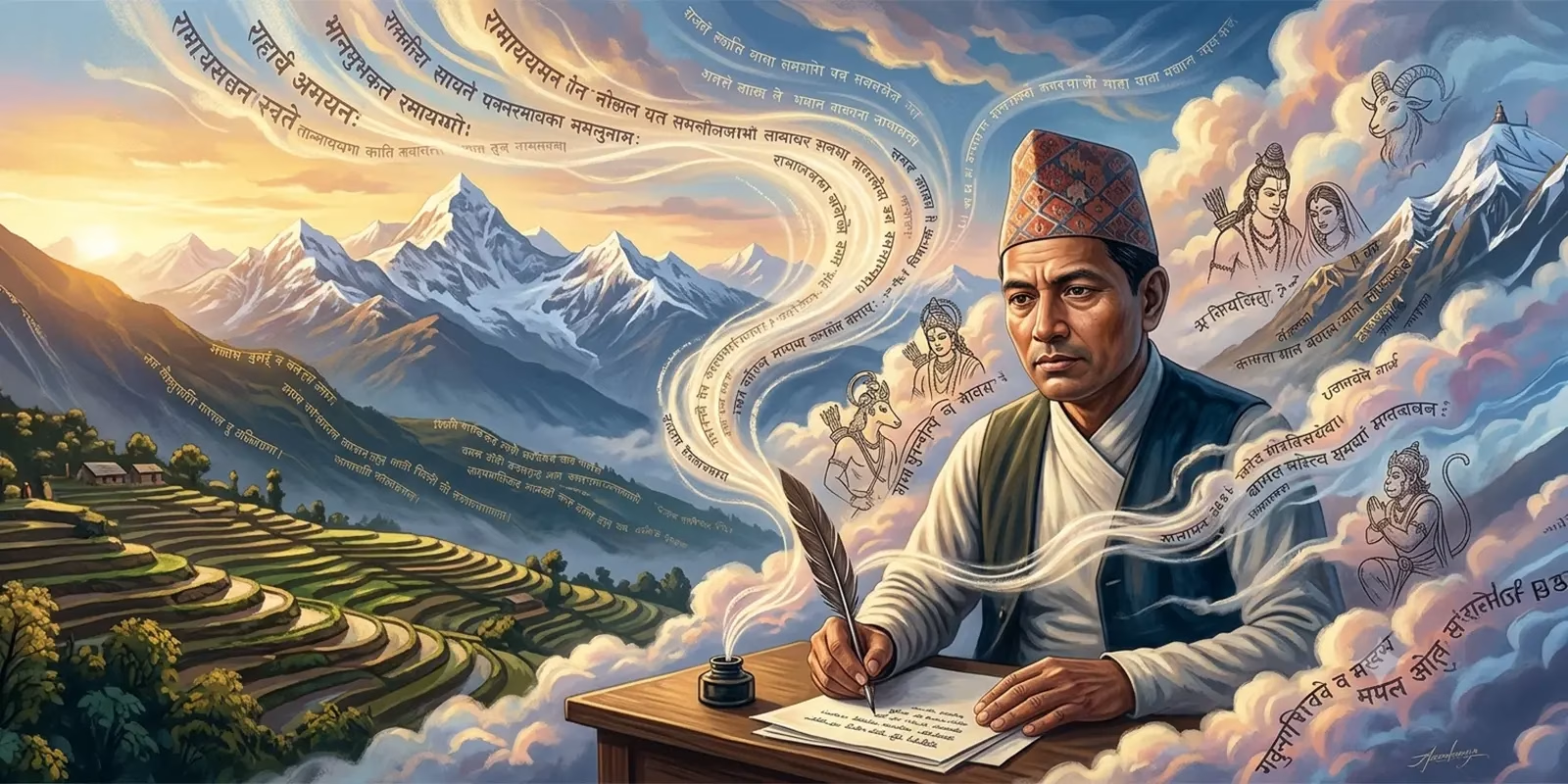
Bhanubhakta Acharya: The Man Behind Bhanu Jayanti
What makes a language truly come alive? Is it the number of people who speak it, or the stories that people can read and share in their own words?
Every year on July 13, people across Nepali-speaking communities in India celebrate Bhanu Jayanti. The day honours Bhanubhakta Acharya, remembered as the Adikavi, or the first poet of the Nepali language.
But Bhanu Jayanti is not just a celebration of a poet. It is the story of how one man helped bring an entire language closer to its people.
The World Before Bhanubhakta Acharya
Earlier, most religious and literary works were written in Sanskrit. While it was a respected language, only scholars and priests could easily read and understand it.
For ordinary people, this meant that many of the great stories and teachings remained out of reach. The Nepali language was widely spoken, but it had very little written literature that everyone could enjoy.
Everything changed when one man decided that great stories should belong to everyone, not just a few.
But what inspired him to take that first step?
The Grass-Cutter Who Changed Bhanubhakta’s Life
Born in 1814 in Nepal’s Tanahun district, Bhanubhakta received a good education from his grandfather, who was a Sanskrit scholar. Yet the turning point in his life came from someone very different.
One day, he met a poor grass-cutter, known as Ghansi, who was saving money to build a public well for his village. The man knew he would not become famous, but he wanted to leave behind something useful for others.
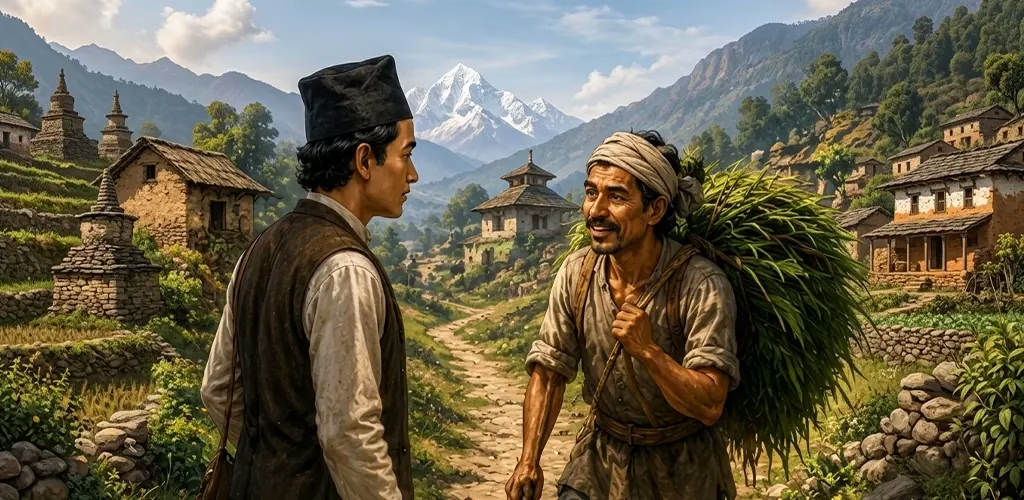
His simple dream left a deep impression on Bhanubhakta.
He began asking himself an important question. What could he leave behind that would help future generations? The answer, he realised, was through language and literature.
That decision would soon change the future of Nepali literature forever.
Bhanubhaktiya Ramayana: The Ramayana That Everyone Could Read
Bhanubhakta’s greatest achievement was translating the Ramayana from Sanskrit into simple and beautiful Nepali verse. This work later became known as the Bhanubhaktiya Ramayana.
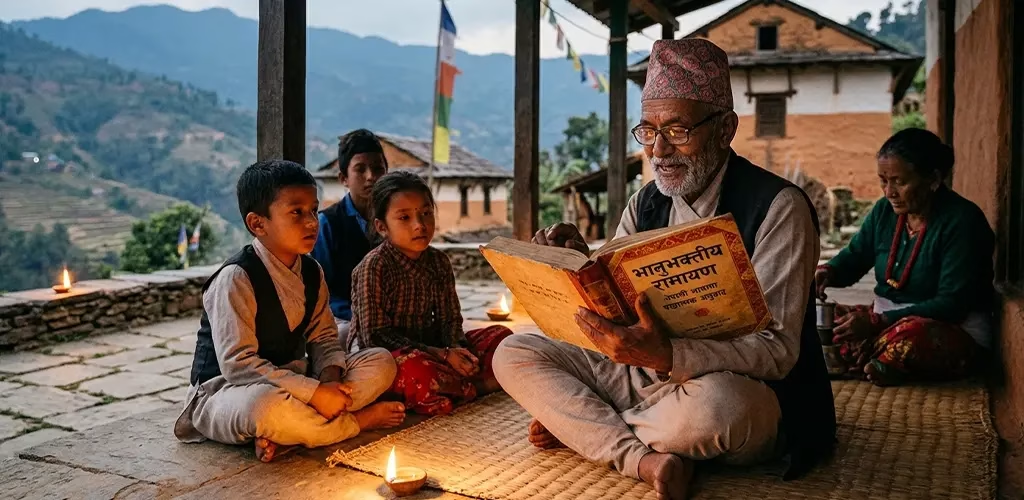
For the first time, ordinary families could read, understand, and share one of India’s greatest epics in their own language. People no longer had to depend on scholars to explain its meaning.
His translation felt natural because it used the words, expressions, and rhythm that people spoke every day. It showed that Nepali was not just a language for conversation, but a language that could express deep emotions, faith, and poetry.
But his work did not end with the Ramayana.
A Poet Who Kept Writing Through Difficult Times
Bhanubhakta wrote many other poems that reflected society, nature, and everyday life. His works, including Kantipur and Prashnottar, explored important social and moral questions in a simple yet meaningful way.
His life was not free from hardships. Due to legal disputes, he was imprisoned for a period of time. Even inside prison, he continued writing. His poems spoke about injustice and the difficulties he faced, showing that poetry could become a voice even during the hardest moments.
His words continued to inspire people, and over time, they helped shape something much bigger than literature.
The Lasting Legacy of Bhanubhakta Acharya
Bhanubhakta Acharya did more than write poetry. He gave the Nepali language a literary identity that ordinary people could read, understand, and connect with. His work laid the foundation for modern Nepali literature and continues to inspire generations even today.
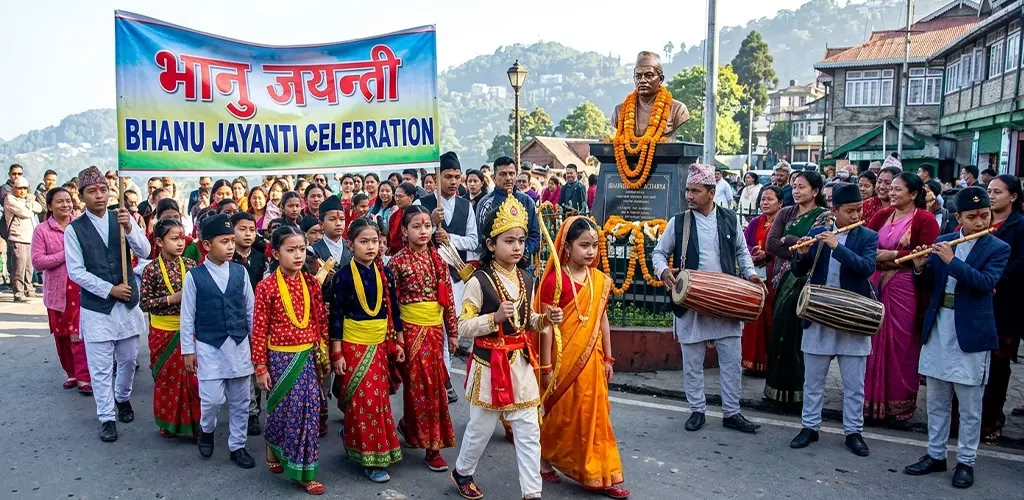
That is why Bhanu Jayanti is more than the birth anniversary of a poet. It is a celebration of the man who brought literature closer to the people and proved that language has the power to unite communities.
His work continues to shape Nepali literature, which makes us wonder: How different would Nepali literature look today if Bhanubhakta had never decided to write for ordinary people?