India’s Strangest Export: The Human Skeleton Trade
Ever wondered where the thousands of skeletons used in medical classrooms actually came from?
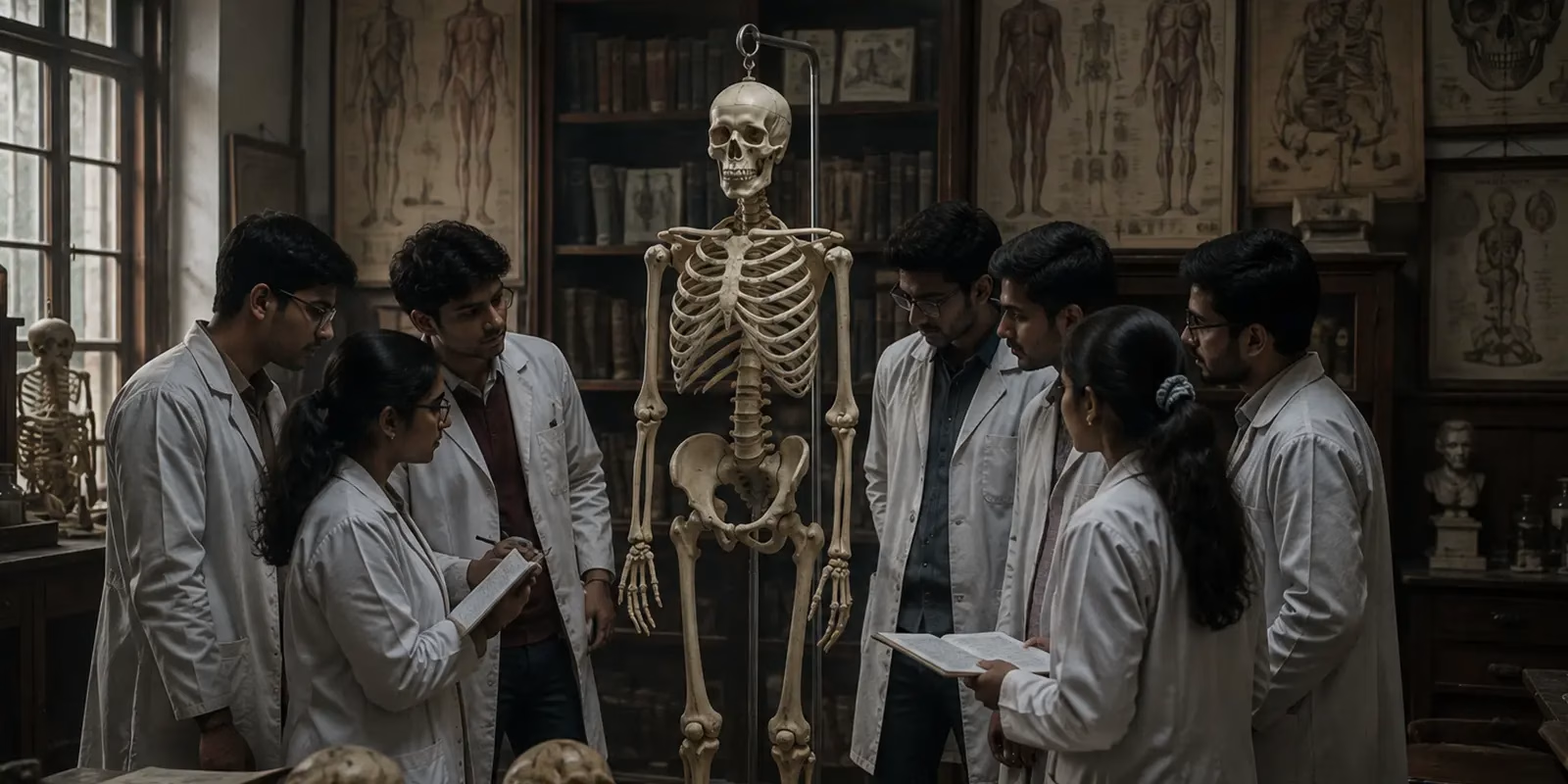
The ones students stand around every day, learning the femur, scapula and sternum, may seem like nothing more than tools for understanding anatomy. But before they became classroom specimens, these bones belonged to real people, with lives of their own. So how did they end up on medical stands?
The answer to this hides a dark reality from India’s past.
How the British Raj Built India’s Skeleton Trade
Today, when people think about India’s global exports, they think of software, medicines, textiles, and spices. But for a long time, India exported something far more unsettling.
Human skeletons.
And it wasn’t just a handful sent overseas as rare medical samples. It was thousands upon thousands every single year. Some reports suggest that between 1930 and 1985, an estimated two million human skeletons were shipped out of India to supply medical schools in the West, with Kolkata becoming the global epicentre of the business.
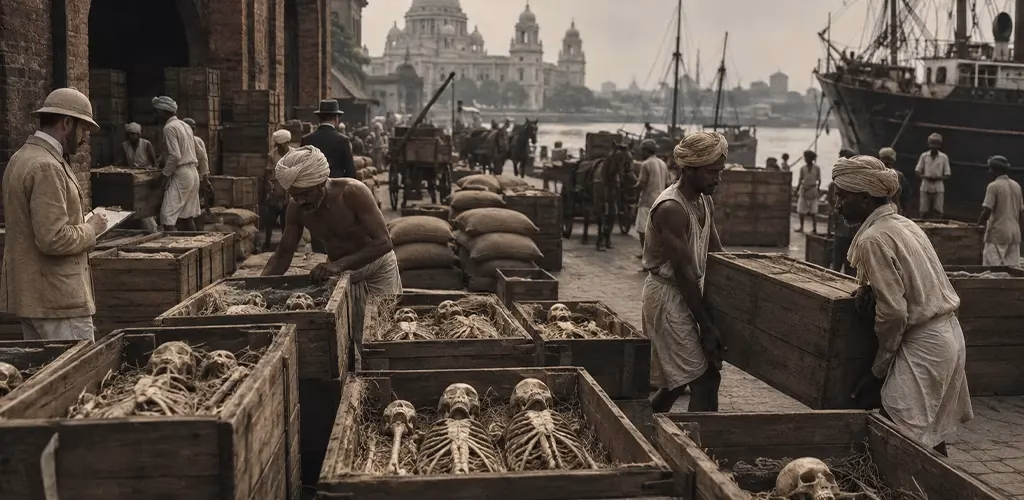
The story begins during the British Raj.
In the 19th century, modern medicine was developing rapidly. Medical colleges were expanding, more students were being trained, and anatomy became an essential part of medical education.
But there was a problem.
Europe faced a shortage of human bodies for anatomy lessons as the supply of human skeletons was limited. British doctors began looking towards India, and at Calcutta Medical College, British surgeon Allan Webb suggested using Indian remains to fill the gap.
What started as a simple medical suggestion quickly exploded into a massive supply chain. By the 1850s, Calcutta Medical College alone was processing around 900 skeletons every year for export.
And with that, Kolkata was quietly transforming into the capital of the international bone trade.
Inside Kolkata’s Bone Factories
Hidden in the narrow lanes of Kolkata were silent workshops that made no ordinary products. Instead, workers spent their days turning human remains into medical education.
First, the bones had to be carefully separated, cleaned, and bleached white. Then came the delicate task of putting them back together. A human body has 206 bones, and workers had to join each piece using thin wires and metal joints so the arms, legs, and spine could move naturally.
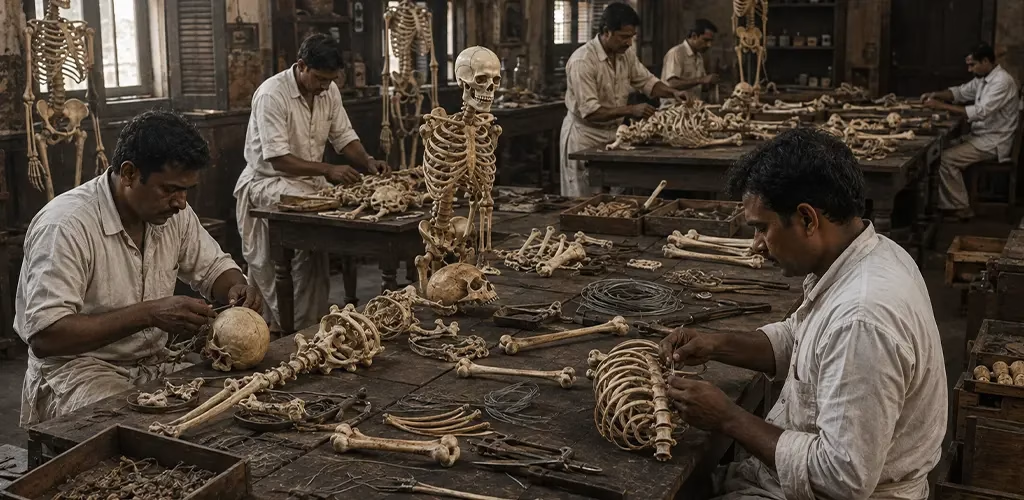
Once prepared, the completed skeletons were packed into wooden crates and shipped across the world: to Britain, America, Japan, and Australia.
For decades, foreign medical schools relied on these Kolkata workshops to train their future doctors.
But as crates of human remains left the city every week, one question became impossible to ignore: Where were these bodies coming from?
Where Did Skeletons Come From?
The answer on paper was safe and tidy: unclaimed bodies from hospital wards and morgues.
But the reality surrounding the trade was far more complicated.
The heaviest weight of this industry fell directly on the poorest communities. Facing absolute financial desperation, some families were reportedly pressured or forced by survival to sell the remains of their deceased loved ones just to buy food or pay off debts.
On one side was medical science, searching for bodies to teach future doctors. On the other was poverty, where a dead family member became a way to survive.
Somewhere in between was a human body – a real person, slowly turning into raw material.
But what happened when even these bodies weren’t enough to satisfy the world’s hunger for bones? This was when the trade took a completely different turn.
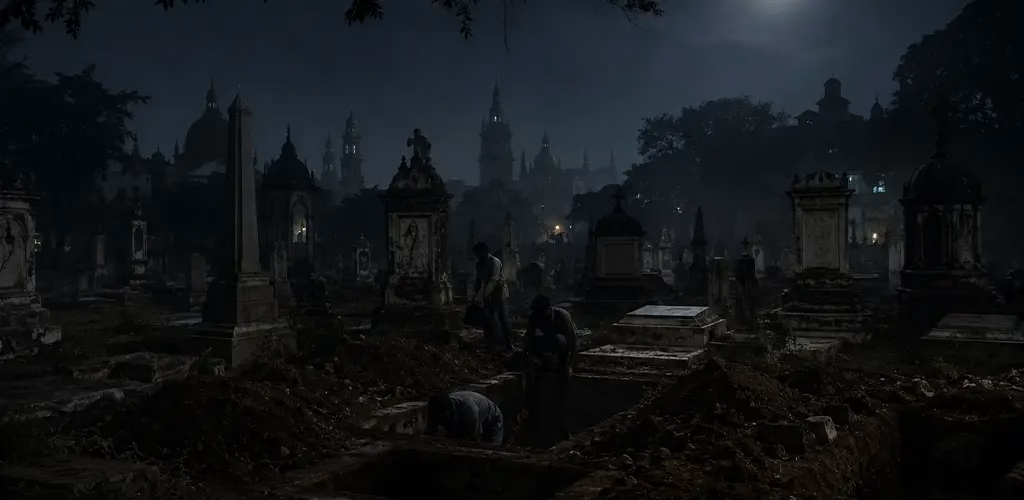
As global demand kept rising and legal sources completely ran out, a dark underground market took over: grave robbing. Reports of shocking grave robberies began to emerge, with graves being dug up at night and human remains being stolen for processing.
This trade did more than turn human bodies into products. It created a fear among people.
Families began to worry about what would happen to their loved ones after death. Would their graves be left untouched? Or would their remains disappear and end up as classroom specimens?
By the middle of the 1980s, India eventually banned the export of human skeletons, and the official trade came to an end, but the fear it created never completely disappeared.
Decades later, a disturbing incident in Kolkata showed that for some people, that fear was still very much alive.
The 2001 Kolkata Raid: The Smell That Exposed the Trade
In Kolkata in March 2001, sixteen years after the government officially banned the export of human remains, the trade resurfaced in broad daylight.
It all started with a smell.
A company called Young Brothers came under suspicion after local residents began complaining about a strange and persistent smell. The odour was reportedly so strong that people in the surrounding area noticed it.
Then came the sightings that horrified the neighbourhood: hundreds of human bones laid out to dry under the sun on a building’s rooftop.
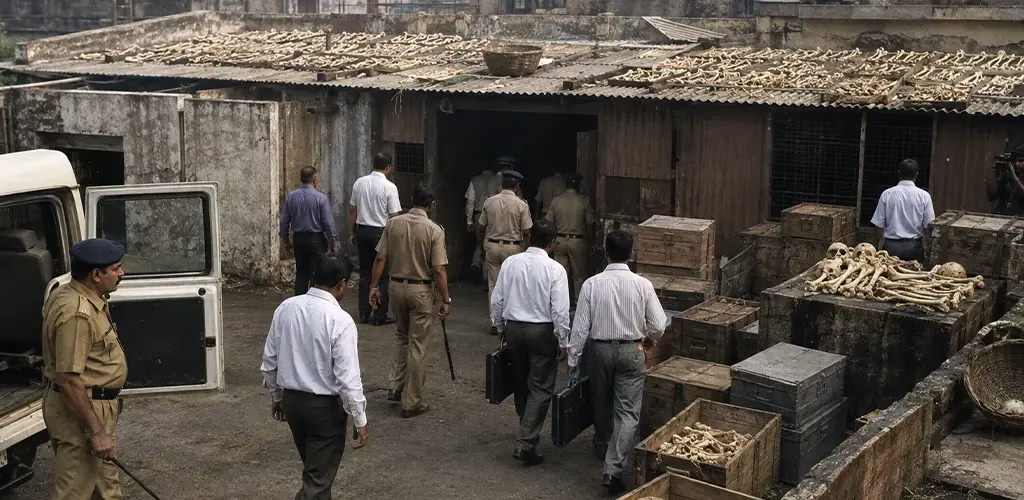
Authorities eventually moved in and raided the site. What investigators reportedly found was disturbing – bones, skeletons and large quantities of human remains.
The most shocking discovery was on the company’s desk: shipping papers ready for foreign countries, including the United States, Europe, and Singapore.
It left everyone asking one big question. If India had already banned the export of human skeletons, why were human bones still being processed and prepared for shipment?
The raid exposed a quiet, dark reality. The law might have changed on paper. But had the trade really disappeared?
Before the Bones, There Was a Person
What makes this incident even more complicated is that there is no one to blame.
Medical science genuinely needs anatomical specimens. Doctors need to understand the human body, surgeons need practical training, and anatomy cannot be learned entirely from textbooks.
A skeleton can be an invaluable tool for science. But before it became a skeleton, it belonged to a person. And that is where the ethical dilemma lies – not whether science needed human remains, but whether it had the right to obtain them without proper consent and dignity.
There is no easy answer.
Today, a medical student may see 206 bones arranged for study. But perhaps the most important question is not anatomical. It is human.
Who was this person? Did they have a name, a family, or dreams? Did someone wait for them to come home, only for them to end up on a classroom stand?
The names are gone. The stories are forgotten.
But the bones remain.
And the next time you see a skeleton, there is only one question left to ask: Who were they, before they became a lesson?