India's Ancient Guru-Shishya And Strange Tests That Decided A Student’s Worth
Imagine leaving home as a child and not coming back for years, not for festivities, and not even to see your own family.
That is how tirelessly learning worked for centuries in India, under what is called the Guru-Shishya Parampara.
Today, on 5 September, India celebrates Teacher’s Day with students expressing gratitude to their teachers through flowers, cards, and thank-you speeches. But once in India, there was a tougher idea of what students owed their teachers.
School That Was Truly Home
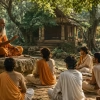
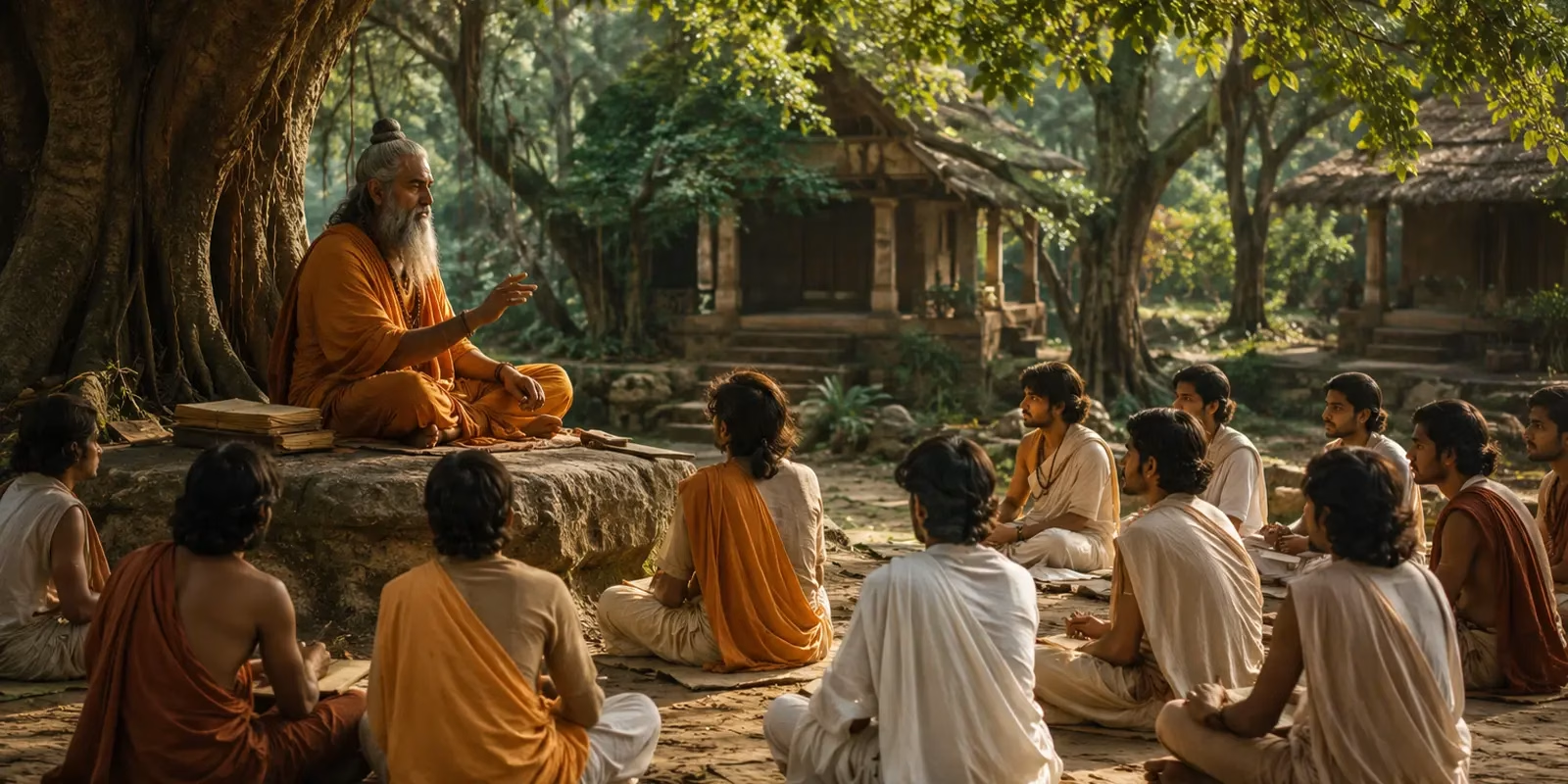
The story of the Guru-Shishya Parampara goes back thousands of years, to a time when there were no schools as we know them today. Instead, there were gurukuls, small forest homes run by a single teacher, or guru.
Around the age of seven or eight, a child would leave home and spend the next several years living with their guru. There were no fees paid in money. Instead, the student worked, cooked, fetched water, and served the guru’s family, learning simply by watching, listening, and doing.
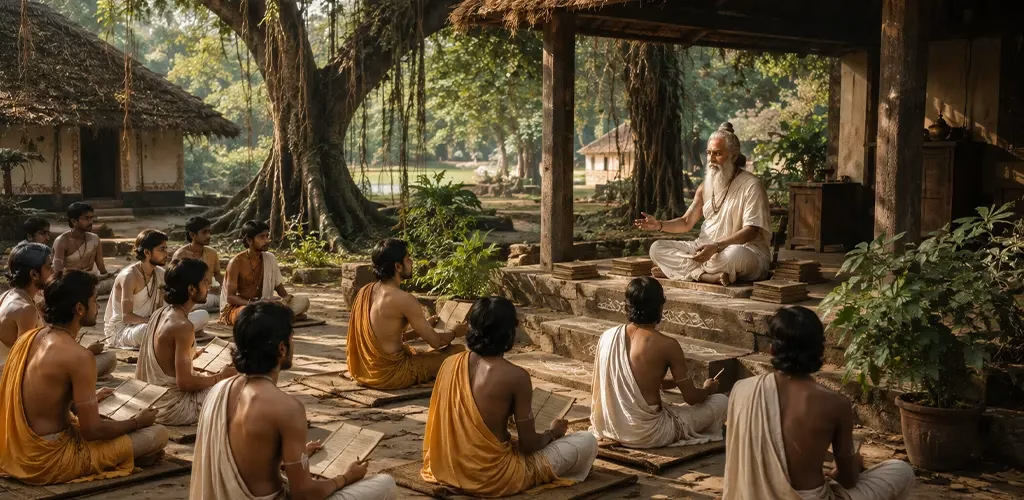
Lessons were not always taught through words. A guru might remain silent for months, give a student one unusual task, or simply let them find the answer on their own. The student was expected to figure things out, to earn knowledge rather than simply receive it.
The Student Who Became a Human Dam
One of the oldest and oddest stories from this tradition is that of a student named Aruni, one of the disiciples of Sage Dhaumya.
One evening, his guru told him to go and check on a dam holding back water from a nearby field. Aruni found the dam breaking, water rushing through a small gap that kept growing bigger.
With no tools and no help nearby, Aruni did the only thing he could think of. He lay down in the gap himself, using his own body to hold back the water.
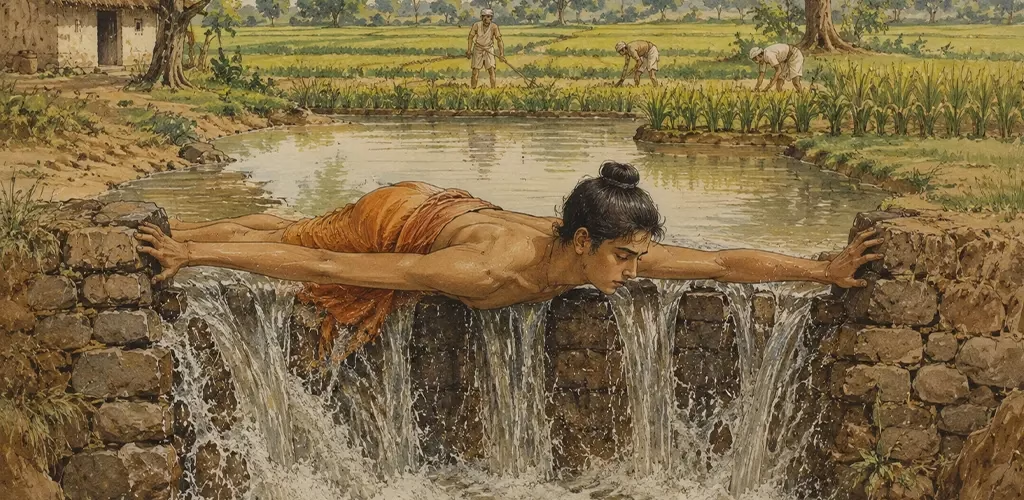
He stayed there through the night, cold and stuck in the mud, until his guru finally came looking for him the next morning. What looked like a simple errand had turned into a full test, one Aruni passed without even realising it was a test at all.
The Student Who Cut His Own Thumb
Perhaps the most well-known, and most unsettling, story from Guru-Shishya Parampara is that of Eklavya.
Eklavya wanted to learn archery from the great teacher Dronacharya, but Dronacharya turned him away, saying he already had his hands full teaching royal princes.
Rather than give up, Eklavya built a clay statue of Dronacharya in the forest and practised in front of it every day, treating the statue as his true guru. Over time, he became a more skilled archer than even Dronacharya’s own students.
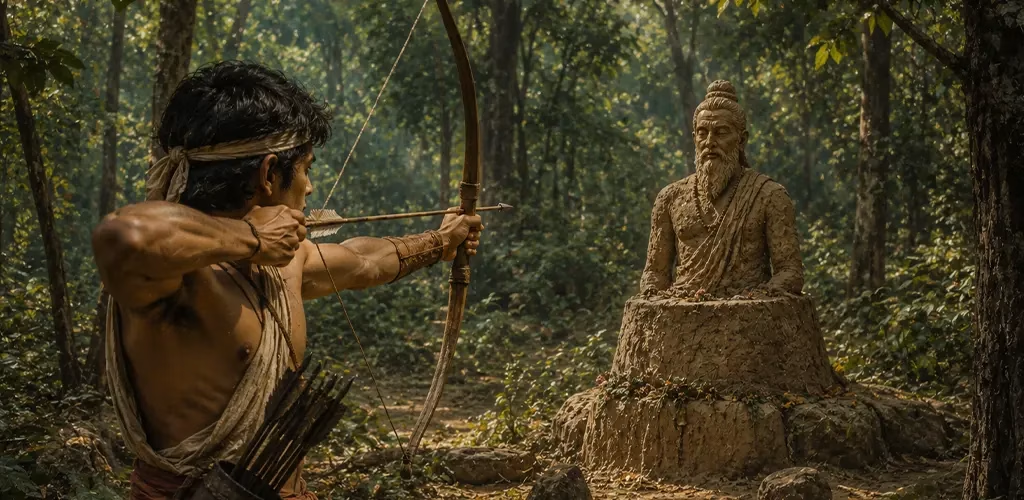
When Dronacharya found out, he asked Eklavya for an unusual gift, his right thumb, as guru dakshina, the fee a student pays a teacher out of respect. Eklavya, still calling him guru despite never being taught by him, cut off his thumb without any hesitation.
It remains one of the most debated stories in Indian tradition, seen by some as loyalty at its purest, and by many others as deeply unfair.
An Ancient Parampara Lost or Abandoned?
Today, expressions of gratitude like these can feel extreme, and in many ways, they are. But they point to something the Guru-Shishya Parampara valued above almost everything else: trust between a teacher and a student so strong that a task, however odd, was never questioned.
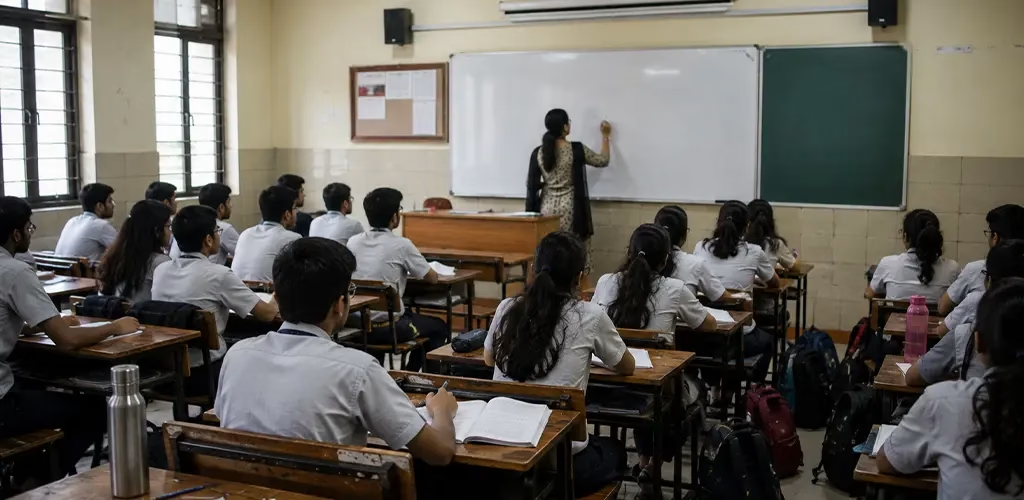
Modern schools look nothing like those forest gurukuls now. There is no lying across dams and no giving up a thumb for a lesson. But the basic idea behind Teacher’s Day, that a good teacher shapes a person far beyond what any book can, still traces its roots back to those years spent learning under a guru’s roof.
Maybe that is why, on Teacher’s Day today, an Indian student’s first instinct is still to thank a teacher not just for the lessons taught, but for the person that teacher shaped them into becoming.