Why Was Democracy Chosen for India
World’s largest democracy.
That’s India. But why?
We’ve all heard the argument that democracy is something a country earns once it gets rich, educated, and stable enough to handle it.
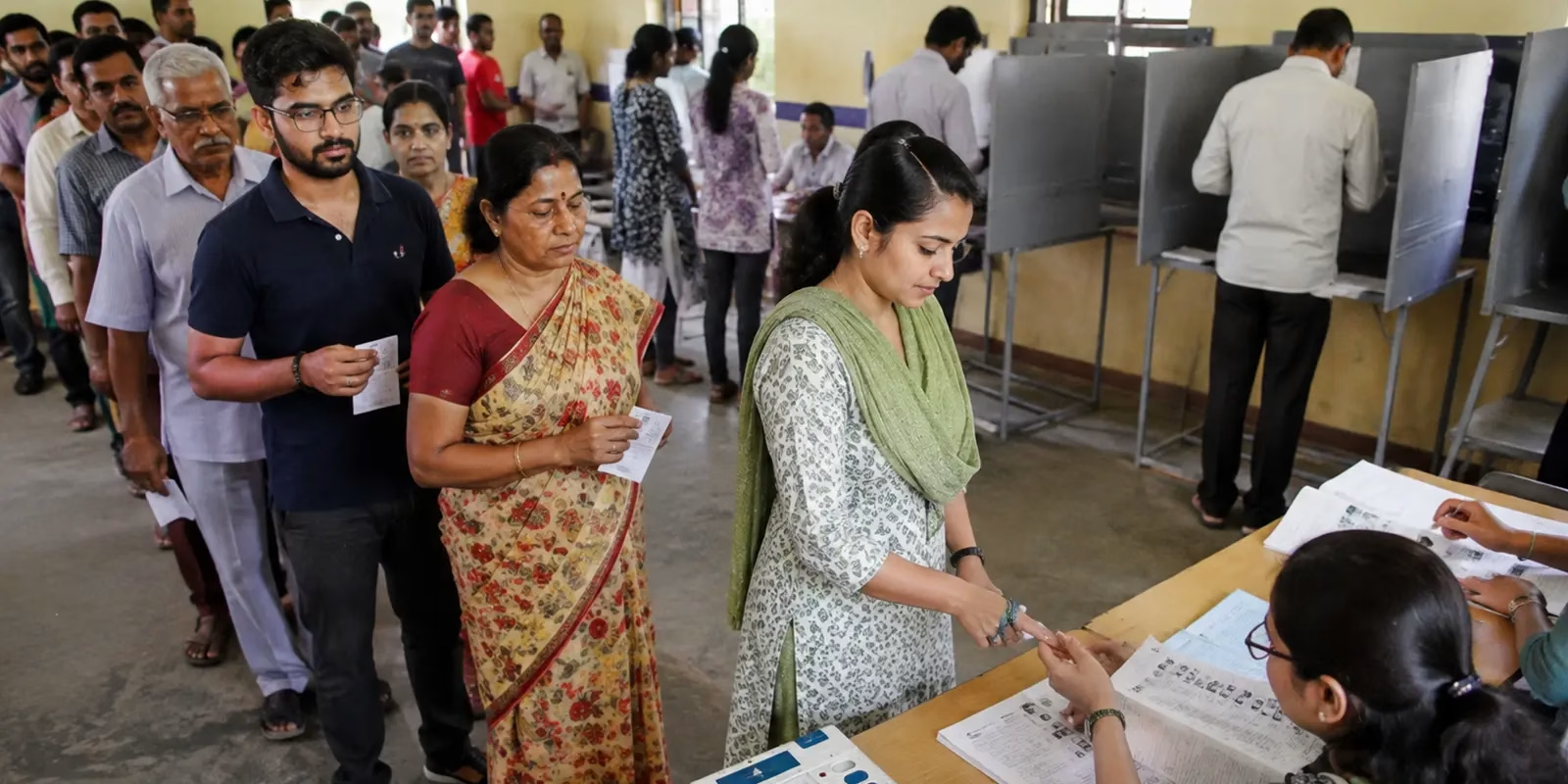
But imagine ignoring that advice completely. Handing the vote to nearly 340 million people, most of them poor, most of them unable to read, right after a haunting partition had just torn the country in two.
This is exactly what India did in 1947, and it is still trying to make sense of it.
A Rehearsal Long Before Independence
Long before India was free, Indians were already practising democracy without naming it.
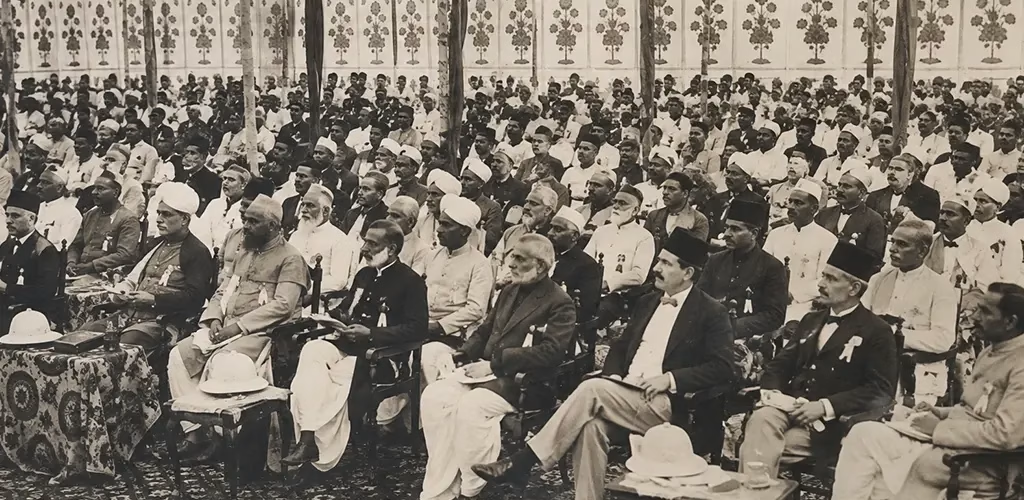
The Indian National Congress, founded in 1885, had already been practising democracy within its own ranks through elections, debates, resolutions and votes. But Gandhi’s mass movements took this further. They depended on ordinary people, from peasants and workers to students, coming forward and taking part rather than simply waiting for instructions from the top. By the time India became independent, generations had already experienced what democratic participation looked like: organising, debating, losing a vote, and coming back to try again.
A New Political System for a New India
Colonial rule ran on one simple idea: decisions made without asking the people they affected.
Having lived under that for nearly two centuries, India’s leaders had no appetite for swapping a foreign unaccountable ruler for a homegrown one. The freedom movement was never just asking “let Indians rule India.” It was asking for consent, voice, a real say. Democracy was the only system built to answer that honestly.
India was never really one thing. Hundreds of languages, several major religions, thousands of castes, and regions with almost nothing in common except a shared coastline. A country as diverse as India could not be held together by one group simply ruling over everyone else. Different groups needed a way to compete for power without turning that competition into a war.
Elections gave India exactly that. Every few years, the question of “Who governs now?” could be settled at the ballot box instead of on a battlefield.
The Vote Given to Everyone, Right Away
Between 1946 and 1949, the Constituent Assembly debated exactly what kind of country India should become. B.R. Ambedkar, who headed the Drafting Committee, understood India’s inequalities better than most, caste chief among them, and knew a vote on paper meant little without real social change to back it up.
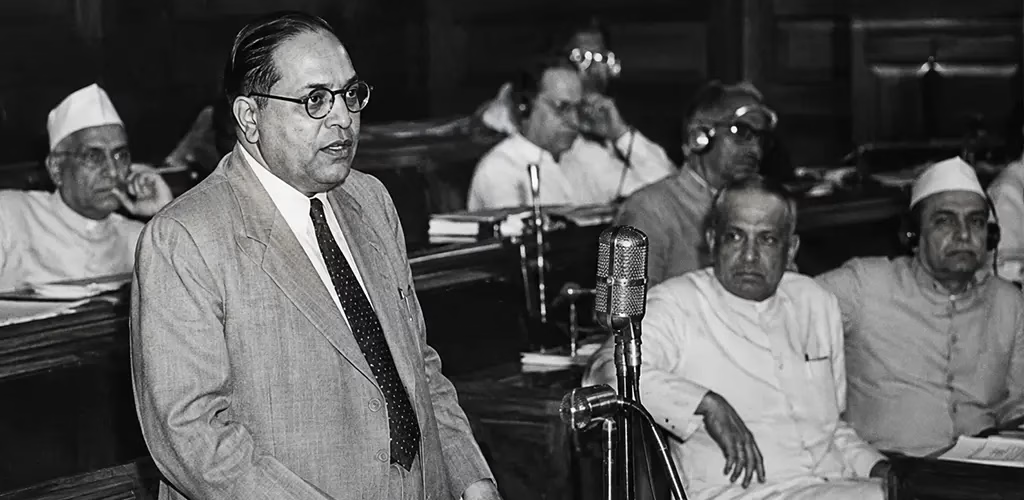
Even so, the Constitution gave every adult Indian the right to vote from day one, no property test, no literacy test, no exceptions for caste or gender. Many older democracies had taken decades, in some cases over a century, to extend that same right to all their citizens. India did it on day one.
Democracy as the Glue, Not Just the Government
The most Indian idea in all of this may be this: democracy wasn’t only meant to run the government. It was meant to hold the country together.
A nation this varied needed something everyone could share without needing to speak the same language or pray to the same god. Equal rights, equal votes, equal standing before the law, that became the one thing every Indian had in common. Choosing democracy also meant choosing what kind of country India wanted to be.
A Bet Others Didn't Take
Several newly independent countries, struggling with poverty and deep social divisions, took a different path. They turned to military or single-party rule, believing that a country first needed stability and development before it could truly become a democracy.
India had its own doubts.
Even among India’s founding leaders, there was a serious debate about how much freedom the new country could handle while it was still trying to hold itself together. Sardar Patel, known for his strong views on order and national unity, believed that a newly independent India needed a firm hand to prevent chaos and fragmentation. His concern was simple: before a young country could afford endless political battles, it first had to survive as one country.
But India ultimately made a very different bet.
It did not wait for poverty to disappear or for society to become less divided before giving people the vote. It chose democracy while it was still struggling with all of those problems.
India bet the opposite way: democracy wasn’t something to wait for once the country was ready. It was the very thing holding the country together while it figured everything else out.
Democracy Is Still Being Written
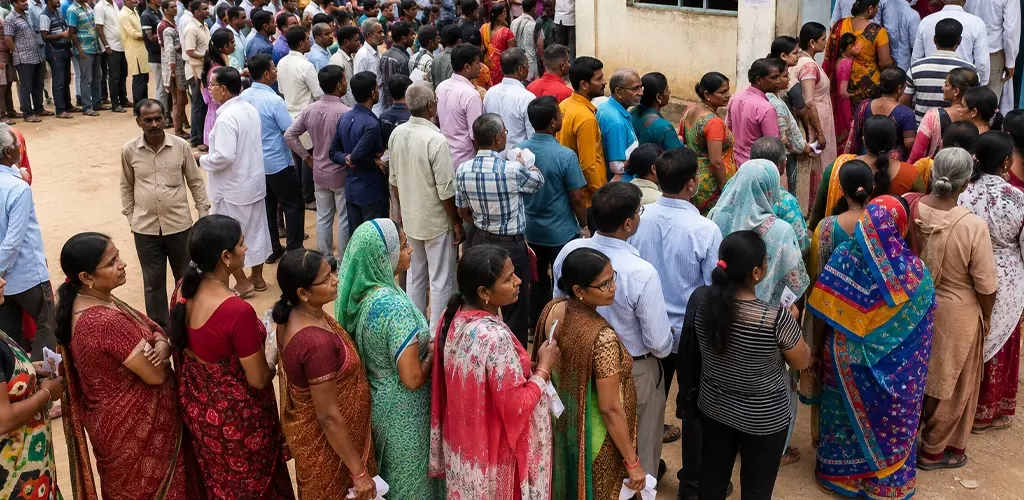
Nearly eight decades later, Indian democracy is still loud, messy and endlessly argued over. Governments change, parties rise and fall, voters change their minds, and every election brings a new contest over who should lead the country.
It has not always been smooth. India has seen political crises, periods of deep division and moments when democratic institutions have been tested. Yet elections have continued to bring people back to the same basic question: who should govern, and who gets to decide?
That question has never had a permanent answer. It is asked again and again, every five years, to hundreds of millions of voters across a country that remains deeply diverse.
And perhaps that is the most important part of India’s democratic story.
Democracy was never meant to decide leadership. It was always meant to sustain the belief of people in power.