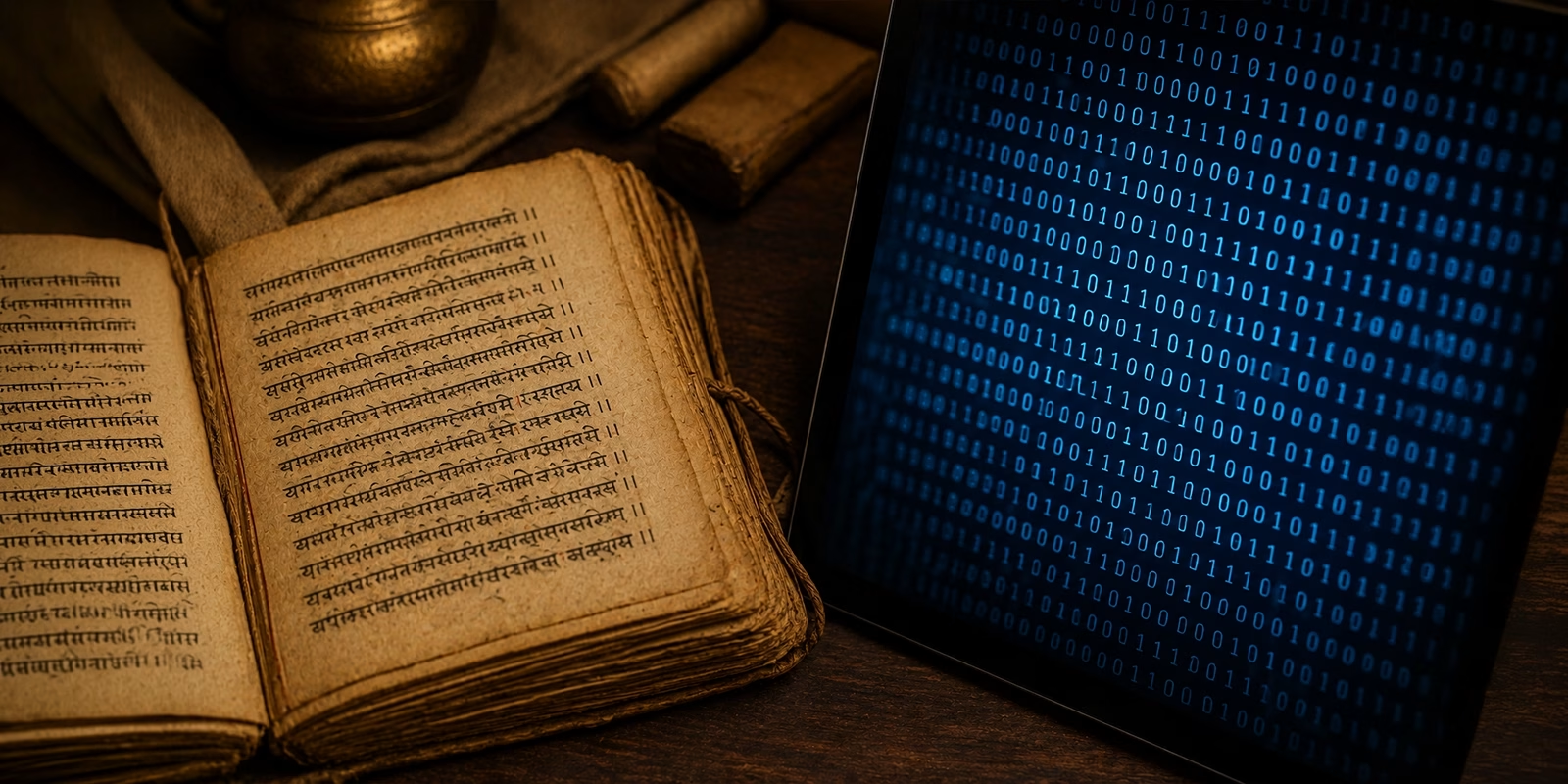
The Ancient Indian Coder Who Never Saw A Computer
When we hear the word “coder,” we picture someone sitting in front of a computer. But the idea behind coding is much older than computers, going back more than 2,000 years to an Indian scholar who was not thinking about computers at all.
They were thinking about poetry and language. And somehow, the way they broke language down into rules closely mirrors the logic behind computer code.
The Scholar Who Stumbled Onto Binary Through Poetry
Around the 3rd or 2nd century BCE, a scholar named Pingala was studying something that seems far removed from computers: the rhythm of Sanskrit poetry. In his Chandah-shastra, he classified poetic patterns using just two types of syllables: laghu, or short, and guru, or long.
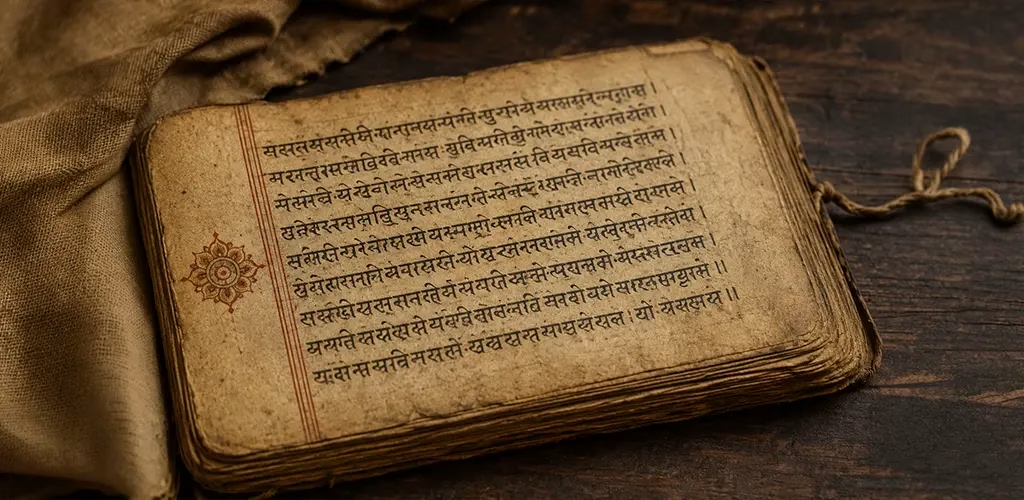
Two states, constantly combined to create different patterns. Sound familiar, right? Long before computers used 0s and 1s, Pingala was working with a system based on the same basic idea.
He even figured out how the number of possible patterns grows as more syllables are added, using logic that looks surprisingly similar to how digital systems count today. In a way, he was thinking in binary, centuries before computers existed.
But binary code was only one half of what this early coder’s world left behind. The other half came from grammar itself.
The Grammarian Who Wrote Rules Like Code
A few centuries before Pingala, another scholar named Panini took on an entirely different challenge: writing down every rule that governed the Sanskrit language. The result was his Ashtadhyayi, a collection of thousands of grammatical rules written in a surprisingly compact system of symbols and shorthand.
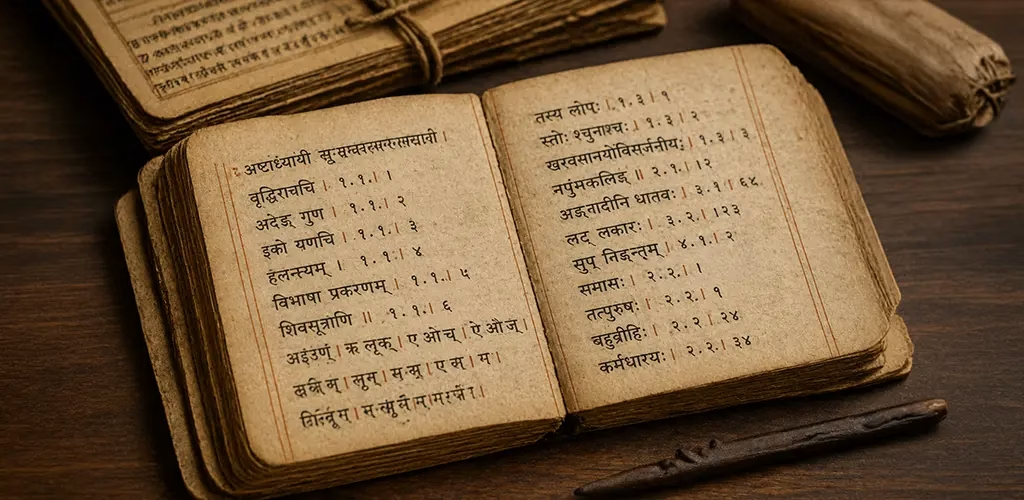
What made Panini’s approach unusual wasn’t just its size. It was the structure.
Rules referred to other rules. Symbols stood in for entire categories of sound or meaning.
The whole system worked almost like a set of instructions meant to be followed step by step, rather than a simple list of dos and don’ts.
Centuries later, when computer scientists began designing formal ways to describe programming languages, some noticed the resemblance. A notation called Backus-Naur form, still used today to define the structure of coding languages, has often been compared to Panini’s method, close enough that some researchers only half-jokingly suggested renaming it the Panini-Backus form.
Two Different Puzzles, One Unexpected Thread
Pingala was analysing poetry. Panini was standardising grammar. Neither had any concept of computing, because computing as an idea did not exist yet.
Yet both ended up building systems based on structure, repetition, and rules applied consistently across every case. That is exactly what a coder does today, translating an idea into a fixed set of rules a machine can follow without confusion.
Neither Pingala nor Panini set out to invent anything resembling modern technology. Both set out to understand language properly, and structure turned out to be structure, regardless of what it was eventually used for.
What This Really Says About Old Ideas
Pingala was trying to understand the patterns hidden in Sanskrit poetry, while Panini was trying to make sense of language without leaving loose ends. Neither was thinking about computers. Yet centuries later, computer science would circle back to many of the same ideas: patterns, rules, symbols and step-by-step logic.
Sometimes an idea doesn’t need a purpose to end up serving one. It just needs to be worked out properly, and left somewhere for the right people to eventually find it.