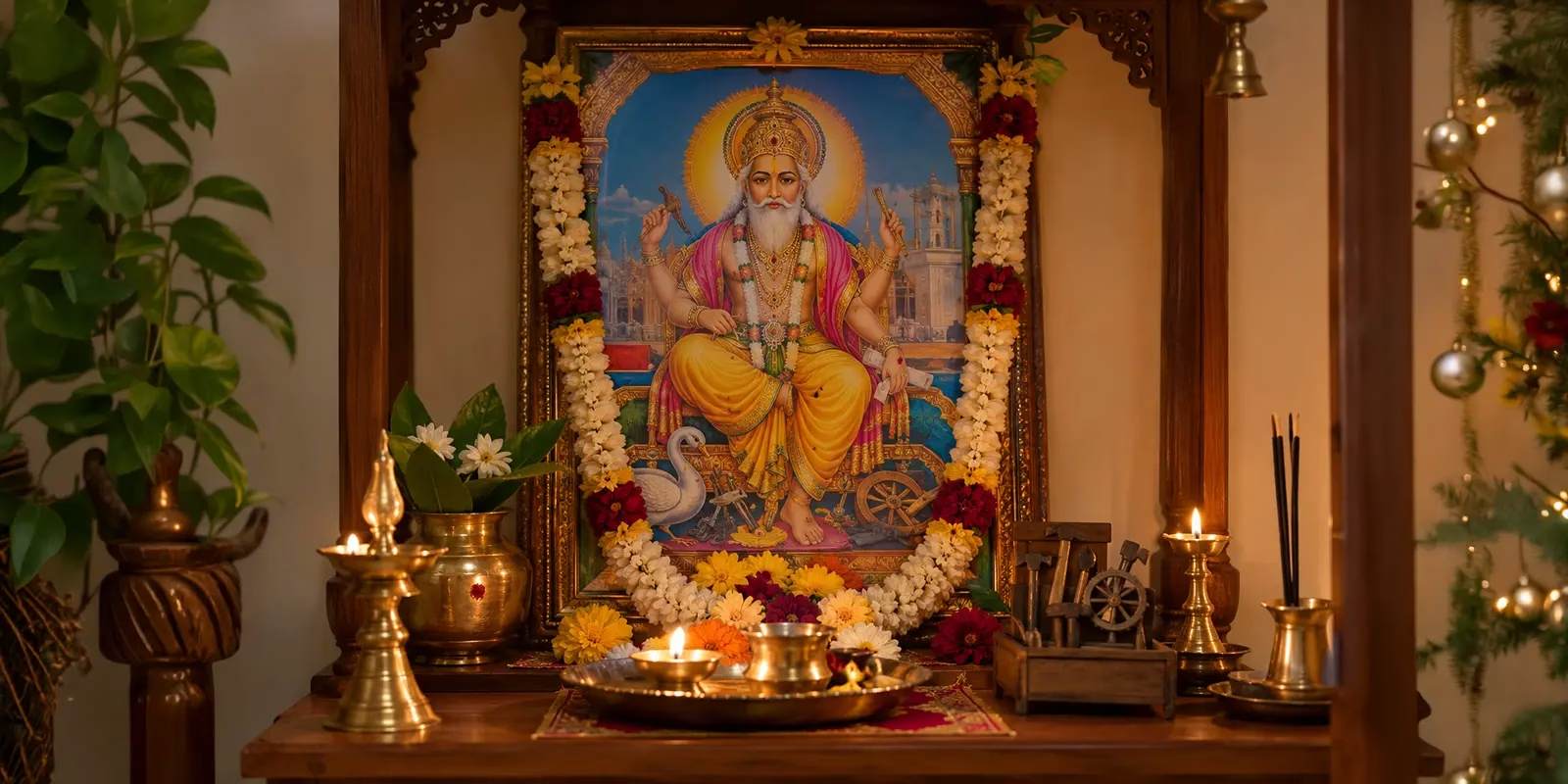
Vishwakarma: The Ancient Indian Architect Who Engineered Dwarka
Do you know an architect who could build a golden city, a floating palace, and even a chariot that could fly?
Sounds impossible, right?
But in Hindu mythology, one such architect exists. His name was Vishwakarma, the divine craftsman said to have designed the universe itself before turning his hand to everything in it, including the legendary city of Dwarka.
The Craftsman of the Gods
Vishwakarma appears early in Hindu texts, described as the presiding deity of all craftsmen, architects, engineers and builders.
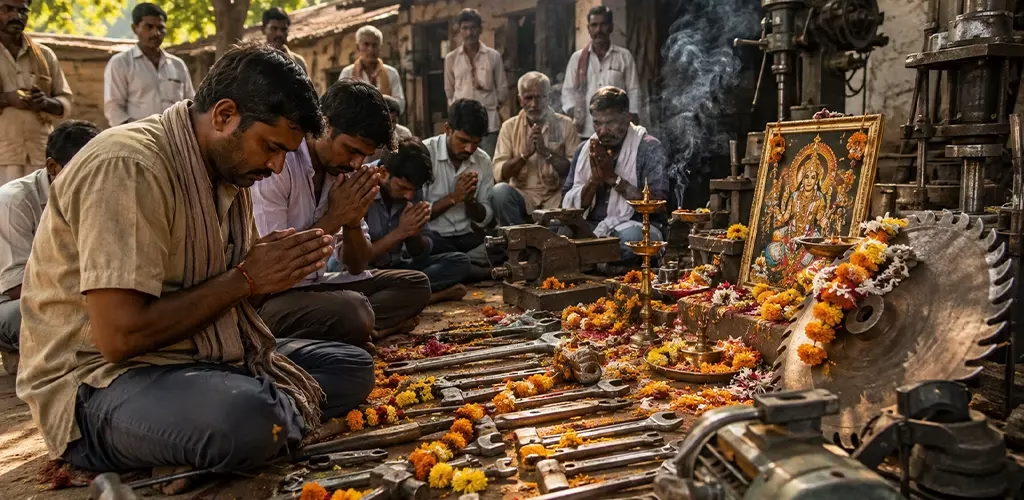
He is said to have designed the weapons of the gods, including Indra’s thunderbolt, the Vajra, and to have built the celestial city of the gods, Amaravati. Every skilled hand that has ever shaped wood, stone or metal is, in tradition, considered to be working under his blessing. To this day, artisans, mechanics and engineers across India mark Vishwakarma Puja each year, setting down their tools for a day to honour the one said to have first picked them up.
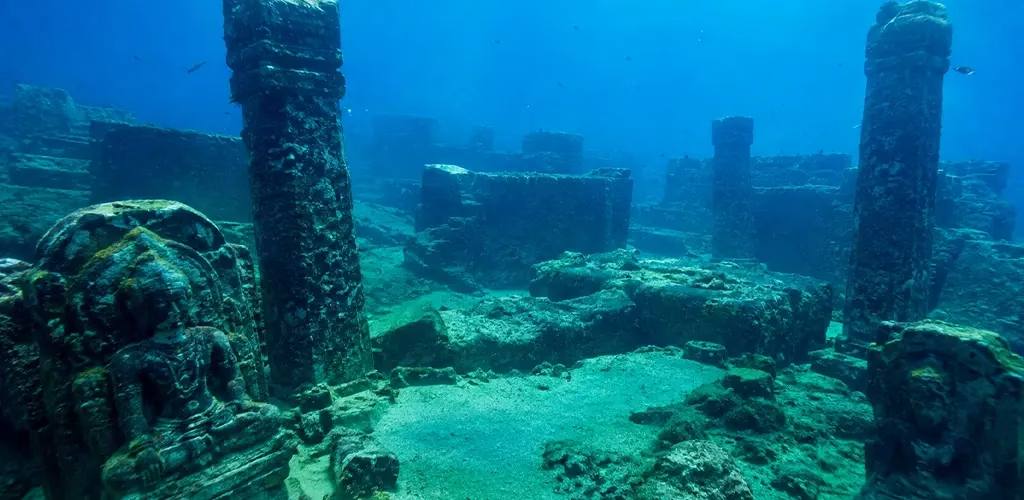
Dwarka, the City That Rose from the Sea
Among Vishwakarma’s most celebrated creations is Dwarka, the city built for Lord Krishna.
According to the Mahabharata and the Puranas, Krishna needed a new capital after leaving Mathura, and Vishwakarma is said to have raised an entire city on land reclaimed from the sea, complete with wide roads, palaces, and gates of gold. Later texts describe Dwarka as being swallowed by the ocean soon after Krishna’s death, a city so precisely built that its disappearance felt as significant as its rise. Marine archaeologists have explored submerged structures off the coast of present-day Gujarat, in a search that continues to this day.
The Chariot That Needed No Roads
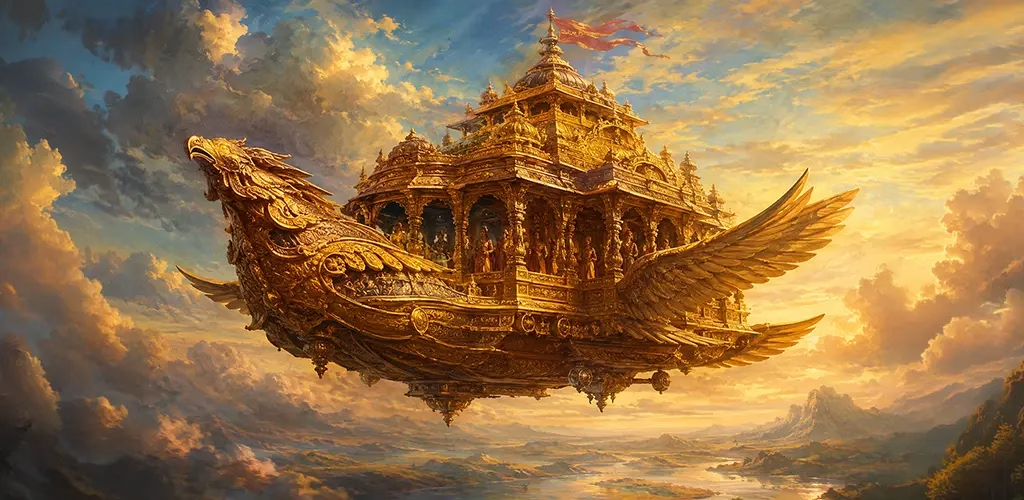
Perhaps Vishwakarma’s most astonishing creation was not a city at all, but a machine, the Pushpaka Vimana.
Described in the Ramayana as a self-moving flying chariot, originally built for Kubera and later seized by Ravana, the Pushpaka Vimana is said to have been large enough to expand or shrink depending on how many passengers it carried, needing no pilot but obeying the will of its owner. When Rama finally defeated Ravana, he is said to have used this same vimana to fly back to Ayodhya with Sita and Lakshmana, a journey still marked today as the very origin of Diwali.
One Name Behind Every Wonder
What ties Dwarka and the Pushpaka Vimana together is not just scale, but the idea that true craftsmanship carries something divine in it.
Vishwakarma never fought a war or ruled a kingdom, yet his work shaped the outcome of nearly every major story in Hindu mythology, from where gods lived to how an epic war was ultimately won. Every city he built eventually fell, to the sea, to an invading army, to time itself, and yet the name of their maker has outlasted every one of them.
Because in the end, kings and demons come and go, but the architect is remembered long after his buildings are gone.