Sign Language in Ancient India: A Silent Vocabulary Older Than Words
We’ve all seen someone talk with their hands before their mouth even catches up, using gestures to explain something that words alone can’t quite express.
We do it without thinking. But what happens when those gestures are no longer random, and start carrying meanings of their own?
Ancient India took that idea much further.
Centuries before sign language was formally documented in the West, Indian scholars had already written down a detailed system of hand gestures that could tell an entire story without a single spoken word.
But there is an important difference between those ancient gestures and the sign language used by India’s deaf community today.
A Language Written for the Stage
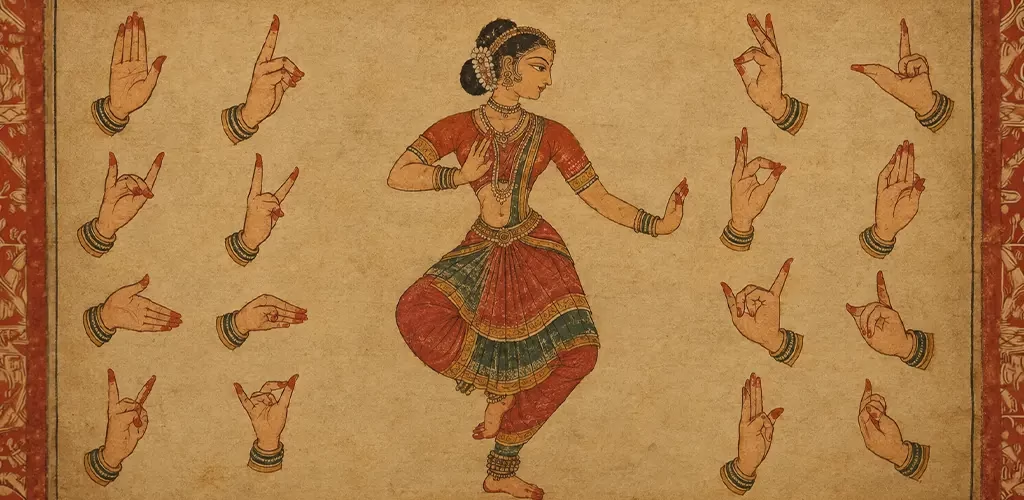
That original system has a name: mudra, or hasta, meaning hand gesture in Sanskrit.
One of the earliest detailed records of these gestures appears in the Natyashastra, a treatise on drama and performance composed somewhere between the 2nd century BCE and 2nd century CE and traditionally attributed to the sage Bharata.
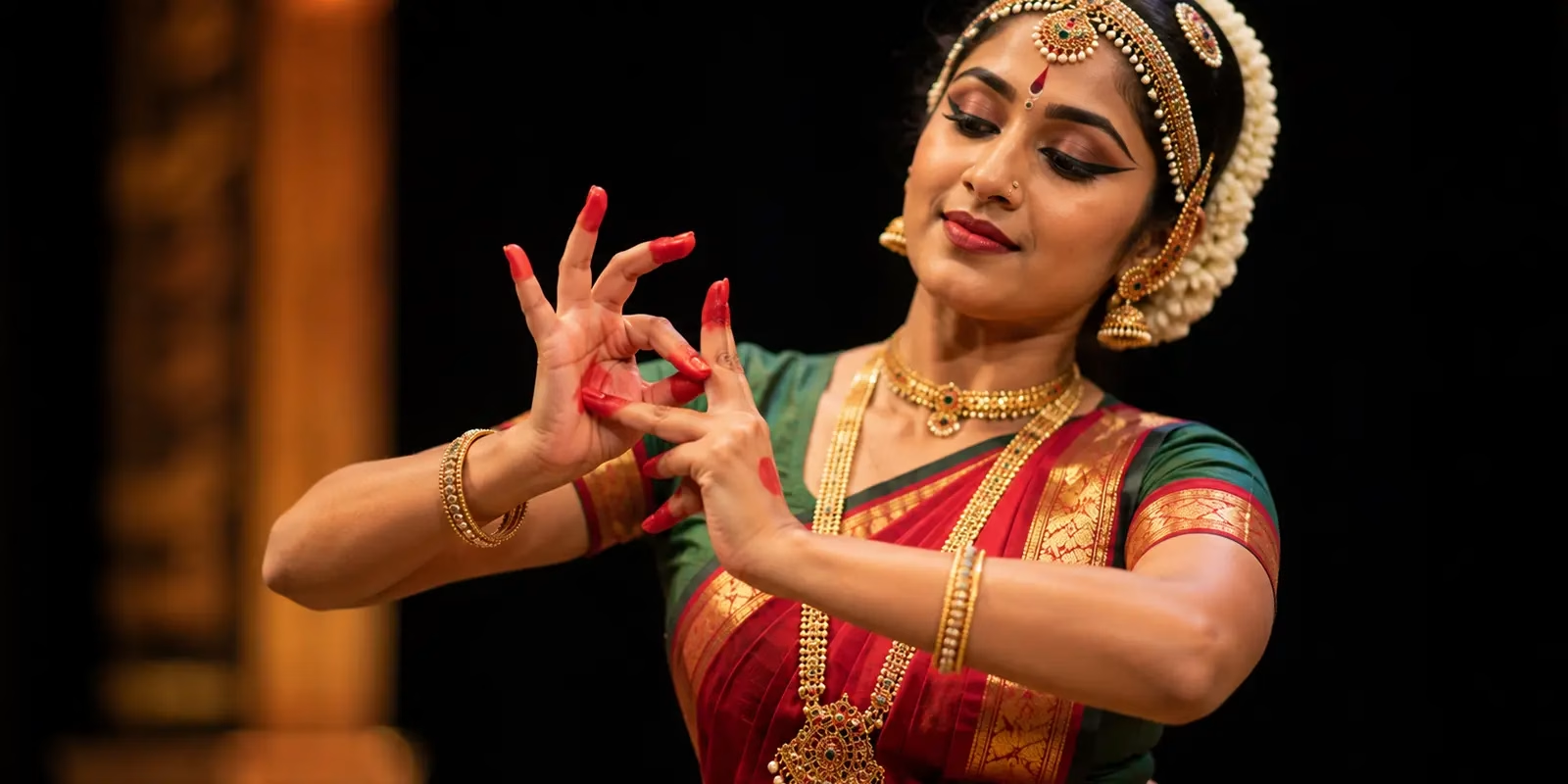
The Natyashastra wasn’t written as a guide for deaf people. It was written for performers. It described how a dancer’s fingers should bend, extend or come together to represent things like a bird flying, a river flowing or a king arriving.
A gesture could carry enough meaning for an audience to understand what was happening on stage, even without hearing every word or song.
And over the centuries, this system became much more detailed.
A Vocabulary That Kept Expanding
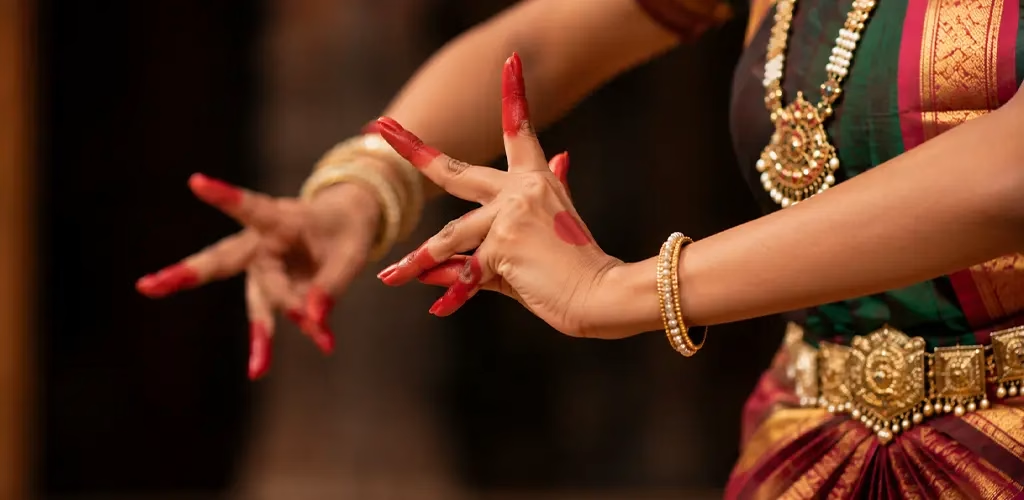
The Natyashastra described 24 single-hand gestures, known as asamyukta hastas, along with another group of gestures made using both hands, called samyukta hastas.
Centuries later, around 1000 CE, another text called the Abhinaya Darpana expanded and refined this vocabulary even further.
A single hand shape could mean a flag, a tree, an arrow, or even a weapon, depending entirely on context and movement. By combining a handful of these gestures with facial expression and rhythm, a trained dancer could communicate almost anything- love, grief, anger, devotion- without needing language at all. Classical forms like Bharatanatyam, Kathak, and Odissi still carry this exact vocabulary forward today, largely unchanged from what Bharata first described.
Given how sophisticated this system became, it’s tempting to call it India’s original sign language. That assumption, though, doesn’t quite hold up.
A Vocabulary Built for the Stage, Not for the Deaf
Mudras were mainly created for religious ritual, meditation, and performance, not as a communication tool for deaf people. Historical references to deaf individuals in South Asian texts are also relatively rare, and where they do appear, deaf people were often excluded from full participation in religious life rather than included through gesture.
So while ancient India produced one of the most sophisticated gestural systems the world has ever documented, calling it “sign language” in the modern sense, a full, independent language used by a deaf community for everyday communication, would be a stretch. What existed instead was something adjacent: an extraordinarily rich visual vocabulary that deaf communities would, centuries later, end up drawing inspiration and structure from.
The actual roots of what India’s deaf community signs today trace back to a much later, very different chapter of history.
When Colonial Rule Rewired the Script
As schools for the deaf began opening across during the 19th and 20th centuries, many of them adopted elements of British Sign Language, brought by missionaries and educators who helped set up these schools.
But India did not end up with one single system.
Different regions developed their own signs and local variations. Some communities were influenced by other systems too. A few pockets, including communities connected to schools around Bengaluru, developed closer links with American Sign Language.
The result was a patchwork rather than a single unified system, one language of the hands layered on top of another, centuries apart. That patchwork is essentially what modern India inherited, and what it has spent the last few decades trying to untangle.
The Language India Is Still Building
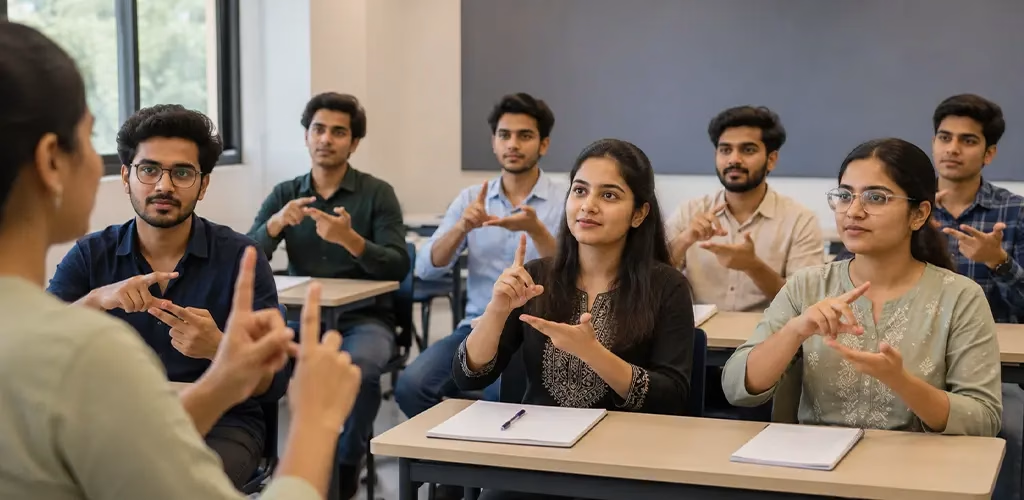
Only in recent decades has India pushed to formally standardise Indian Sign Language, or ISL, into a single, recognised system with its own grammar and structure, distinct from both the ancient mudras of classical dance and the colonial-era dialects layered underneath it. That effort is still ongoing, still evolving, still being documented in real time.
Seen this way, India’s story is really made up of two very different chapters.
One goes back to Bharata’s Natyashastra, where hand gestures were used to tell stories about gods, kings, emotions and everyday life on stage.
The other grew through schools for deaf people, shaped by local communities, colonial-era influences and the everyday need for people to communicate.
Over time, these different histories helped shape the wider world of signing in India today.
An Old Instinct, Still Being Written
India didn’t invent sign language for the deaf in antiquity, that part of the story belongs to a different, more recent chapter. But it did prove, thousands of years ago, that hands alone could carry meaning as complex and layered as spoken words.
That instinct never really left. It just kept finding new hands to live in.