Why Uttarakhand Never Does the Ganesh Visarjan
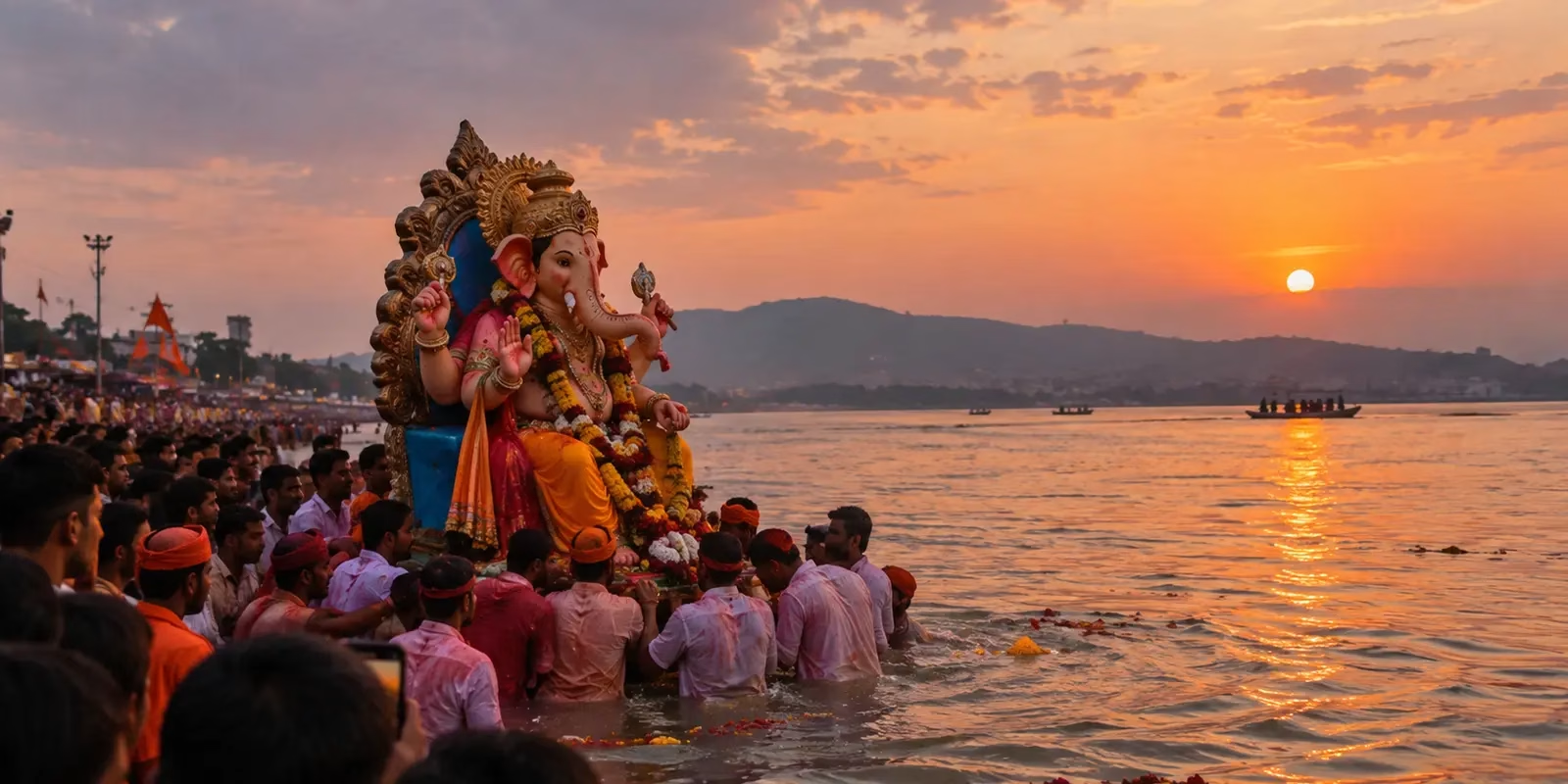
When the entire country counts down to Ganesh Visarjan, drums leading Lord Ganesha to rivers and seas for his farewell, one state doesn’t take part in all of this. And it’s not just any state. It’s the one called Devbhoomi, the land of the gods.
In Uttarakhand, no such concept of Ganesh Visarjan exists. And to understand why, you need to first understand what form of Lord Ganesha actually is here.
The God at the Doorway
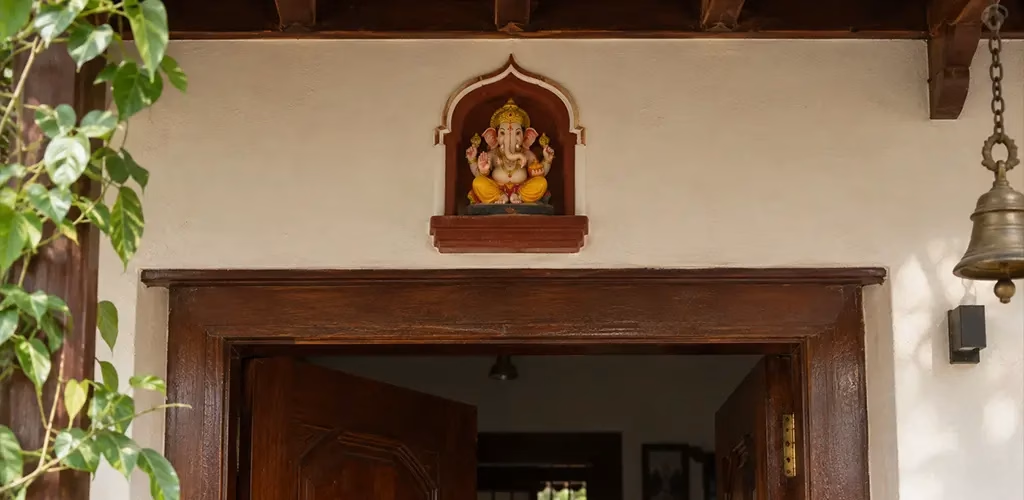
In a traditional Uttarakhand household, Lord Ganesha isn’t set up inside a decorated pandal for ten days and then carried out for immersion at the end of it, the way Ganesh Visarjan usually works across most of India.
He’s placed, often carved or painted, right at the entrance of the home, the kholi. People here call him Kholi ka Ganesha, the Ganesha of the threshold.
That one detail changes how the whole festival gets understood in these hills.
In most of India, Ganesh Chaturthi treats the god like a guest, someone who visits for a fixed number of days before Ganesh Visarjan sends him home again but here, Lord Ganesha was never a guest to begin with. He’s already home. He’s the one standing at the door, watching everyone who walks in and out.
A Resident, Not a Visitor
Ganesh Visarjan is, at its heart, a goodbye. And a goodbye only makes sense if someone actually arrived in the first place.
That’s the simple reason behind why Uttarakhand never performs the farewell of Lord Ganesha. If he lives at the household permanently, standing guard right at the line between home and the outside world, there’s nothing to send away. Performing Ganesh Visarjan here would run against the very relationship people have grown up with, one built on him always being present, never just visiting.
This isn’t a smaller version of devotion, either. A guest gets celebrated hard for a short burst and then let go through a farewell ritual. Someone who lives with you gets prayed to every single day, becomes part of the ordinary shape of a home rather than something saved up for one loud festival that ends with an idol immersion.
More Family Than Festival
There’s something genuinely moving in that difference, once you sit with it.
In most parts of India, the days leading up to Ganesh Visarjan are loud and public and collectively joyful, and rightly so. But in Uttarakhand, Lord Ganesha feels closer to an elder in the family than a festival guest, not someone you honour once a year and send off with Ganesh Visarjan, but someone who’s simply always there, at the door, every day, without fail.
It’s devotion built on staying rather than performing.
For generations, that daily, doorway kind of relationship with Ganesha held its ground here, even as Ganesh Visarjan grew into a massive public spectacle a few states away.
When the Trend Starts Creeping In
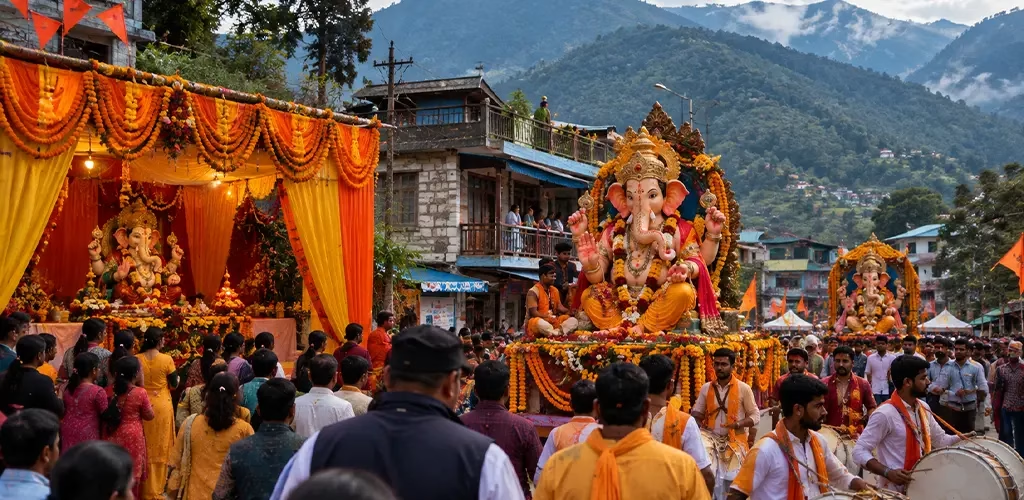
Pandals in the state today have started showing up in Uttarakhand’s towns now, and with them, versions of Ganesh Visarjan the region never observed. Idol processions and immersion ceremonies, once mainly associated with Maharashtra, are now slowly appearing in the hills too, through migration, television and changing traditions.
Which leaves an uncomfortable question hanging over all of it.
Is this two cultures naturally blending into each other? Or is it a local belief, one that’s held for generations, slowly getting replaced because a grand Ganesh Visarjan is more photogenic than a quiet doorway shrine?